Politics
Former L.A. deputy mayor goes on trial a second time in bribery and racketeering case


Federal prosecutors launched their second attempt at convicting former Los Angeles Deputy Mayor Raymond Chan on corruption charges this week by portraying him as a central figure in a sprawling “pay-to-play” scheme.
In opening arguments on Tuesday, Assistant U.S. Atty. Brian R. Faerstein told jurors that Chan and former City Councilmember Jose Huizar used the downtown real estate boom of the prior decade to enrich themselves and their allies.
Faerstein described Chan as a crucial intermediary between Chinese developers looking to build downtown high-rises and Huizar, who headed the powerful committee that served as a clearinghouse for such projects.
“[Chan] got bribes for himself, and he got bribes for other public officials,” Faerstein said.
Chan’s first trial on charges of racketeering, bribery, honest services fraud and lying to federal investigators was derailed after his lawyer, Harland Braun, was hospitalized and unable to return to work for months. A judge declared a mistrial in April.
Chan is the last defendant charged in the City Hall corruption investigation, dubbed “Casino Loyale” by the federal government, to go on trial. Huizar, who pleaded guilty to racketeering and tax evasion charges, was sentenced in January to 13 years in prison.
George Esparza, Huizar’s onetime aide, pleaded guilty to racketeering conspiracy but has not yet been sentenced. He is scheduled to testify against Chan. Real estate consultant George Chiang, who worked with Chan and also pleaded guilty to racketeering, is expected to testify as well.
John Hanusz, Chan’s new attorney, agreed that Huizar and the others were deeply corrupt, committing crimes on a level that was “cinematic in scope.” But while Huizar and Esparza accepted flights to Las Vegas, casino chips and lavish hotel stays, Chan received none of those things, he said.
Chan, while working with developers, was motivated not by greed but by a desire to make L.A. more business-friendly, Hanusz said.
“There was no quid pro quo in this case with Ray Chan,” he said. “With Jose Huizar, there absolutely was.”
Hanusz told the jury that some of the government’s witnesses are liars who committed crimes — and now hope that their testimony will result in a lighter prison sentence.
The case against Chan covers the five-year period from 2013 to 2018, when Huizar was in charge of the council’s Planning and Land Use Management Committee. In that position, Huizar had the power to decide when real estate projects received a public hearing and when they would be sent to the full council for a vote.
Chan was the top executive at the Department of Building and Safety until 2016, when he became the deputy mayor in charge of economic development under Mayor Eric Garcetti. He held that job for slightly more than a year, then left city government to become a private-sector consultant, representing real estate developers.
Prosecutors have accused Chan of secretly setting up a consulting firm while working for the city and overseeing government actions for which he was paid by a developer after he left his city employment.
The federal government also alleges that Chan helped Huizar obtain a bribe from a Chinese developer who later sought to build a 77-story skyscraper in Huizar’s district. Huizar later admitted that the developer helped him secure a $600,000 loan that he used to secretly settle a sexual harassment lawsuit filed by a former staffer, right before a reelection campaign.
Prosecutors said Chan helped Huizar obtain the funds after Huizar killed a proposed merger of the Department of City Planning and the Department of Building and Safety. That merger threatened Chan’s job as general manager at Building and Safety, prosecutors said.
Shen Zhen New World I, the company that proposed the 77-story tower, was convicted of providing Huizar a vast array of bribes, including trips to Vegas. A judge fined the company $4 million. Its owner, Wei Huang, fled the country and is now a fugitive, according to the Department of Justice.
Hanusz, in his remarks, called the government’s case against Chan a “fiction.” Chan was a respected city leader with decades of experience who focused on tearing down bureaucratic obstacles to new construction, he said.
“He rolled out the red carpet” for real estate development, the lawyer said. “And this city benefited.”


NEWYou can now listen to Fox News articles!
Democratic Gov. Wes Moore of Maryland, whom pundits consider a potential 2028 presidential contender, is one step closer to winning re-election this year.
Moore on Tuesday captured the Democratic gubernatorial nomination in the solidly blue Mid-Atlantic state, the Associated Press reports.
Moore and his running mate, Lt. Gov. Aruna Miller, easily dispatched a primary challenge from Eric Felber and his running mate, LaTrece Hawkins Lytes. Felber, a physician, unsuccessfully challenged Democratic Rep. Jamie Raskin in the 2024 primary in the state’s 8th Congressional District.
DEMOCRACY ’26: STAY UP TO DATE WITH THE FOX NEWS ELECTION HUB
Maryland Gov. Wes Moore speaks during an announcement at the South Court Auditorium of the Eisenhower Executive Office Building at the White House in Washington, D.C., on Jan. 16, 2026. (Valerie Plesch/Bloomberg via Getty Images)
Candidates for governor and lieutenant governor run on the same ticket in Maryland.
The Democratic ticket will face the winners of a nine-way Republican primary field.
Moore is running for re-election this year amid speculation that he also is eyeing a run for the White House in 2028, in the race to succeed term-limited President Donald Trump. Democrats are expected to field a large and competitive field in the race for their party’s presidential nomination.
The governor has consistently ruled out running for the White House in 2028, saying that his political focus is on his home state and his 2026 re-election.
But regardless, Moore remains a top Democratic Party surrogate in national politics. And Moore, a 47-year-old Army veteran, who is also a Rhodes Scholar and was CEO of the charitable organization the Robin Hood Foundation during the coronavirus pandemic, is viewed as a rising star in the party.
Maryland Gov. Wes Moore and President Donald Trump are pictured together in a split image. (Nathan Howard/Getty Images; Anna Moneymaker/Getty Images)
Moore, the nation’s only Black governor, has had a combustible relationship with Trump, which has included very public feuds and verbal sparring, and clashes over policy.
CLICK HERE TO DOWNLOAD THE FOX NEWS APP
Earlier this year, Trump initially excluded Moore from a National Governors Association dinner at the White House, charging that the governor was “not worthy” of attending.
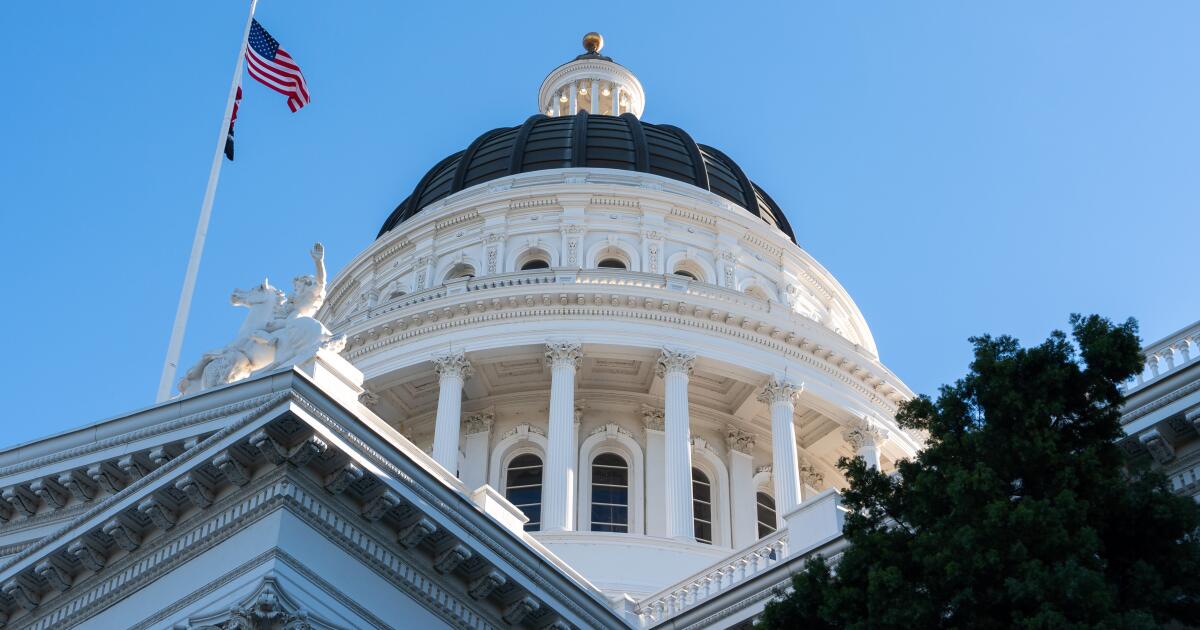
SACRAMENTO — Gov. Gavin Newsom and Democratic leaders of the California Legislature plan to approve a proposed constitutional amendment this week that would ask voters to give them more flexibility over state spending and allow them to save money that could otherwise go back to taxpayers.
The proposal seeks to exempt deposits into state savings accounts from a spending limit that voters adopted through a series of ballot measures dating back to the late 1970s and to increase the share of tax revenue that can be put into the rainy day fund.
“Putting money aside to protect ourselves from future uncertainties isn’t just good government; it’s common sense,” Newsom said in a statement. “California is strong and resilient, but we’re not immune to economic headwinds. At a time when our essential services are under pressure, we have a responsibility to safeguard the programs and investments that Californians rely on.”
Assembly Constitutional Amendment 20, which Democrats are calling the “Save for California’s Future Act,” could receive push back from taxpayer advocates.
Under an existing state appropriations restraint, also known as the Gann limit, lawmakers cannot spend more than an amount determined by a formula that takes into consideration annual tax proceeds and changes to the population and cost of living. Tax revenue above the limit must be divided between schools and refunds to taxpayers.
With few exceptions, the limit applies to most appropriations of tax revenue, including money that lawmakers tuck away into the rainy day fund and other reserves. California voters have also capped the amount of money lawmakers can set aside in the rainy day fund to 10% of general fund proceeds in a given year.
Since taking office, Newsom has argued that it doesn’t make sense for savings to count as spending under state law.
State budget revenue is subject to dramatic swings from year to year based on stock market activity. The law, Newsom has said, prevents the state from saving more money in good years to stave off cuts to programs in bad years.
The proposed changes would exempt deposits into the rainy day fund and a short term reserve, called the “Projected Surplus Temporary Holding Account,” from the state appropriations limit. The cap on the rainy day fund would grow from 10% of general fund tax revenue to 20%.
“Californians live by a simple, bipartisan truth: set money aside when times are good so you’re ready when they’re not,” Assembly Speaker Robert Rivas (D-Hollister) said in a statement. “The Save For California’s Future Act is what responsible leadership looks like — and future taxpayers will thank us for it.”
The measure could incentivize Democrats to save more money because funds tucked away in the rainy day fund would no longer be considered expenditures counted toward the spending limit. By allowing lawmakers to set aside more money that is not subjected to state spending limits, it could also allow them to hold onto money that would be returned to taxpayers under current law.
The measure is slated for a vote Thursday. If approved by two-thirds of lawmakers, voters will consider the proposal on the November ballot.
Politics
Social media erupts over Mamdani’s silence after Brooklyn coffee shop bans Jewish congressman

Socialists push progressive agenda in NYC primaries
Fox News national correspondent Bryan Llenas reports on the New York City primary, highlighting the influence of socialists. Candidates backed by Zohran Mamdani advocate for abolishing ICE and all deportations, even for convicted murderers.
NEWYou can now listen to Fox News articles!
New York City Mayor Zohran Mamdani is facing swift backlash after declining to condemn a local coffee chain that told a Jewish congressman with pro-Israel views that he was not welcome.
Mamdani has remained silent after the Williamsburg, Brooklyn-based Poetica coffee shop posted — and later deleted — a message on social media telling Rep. Dan Goldman, D-N.Y., not to return after he stopped by the shop with his daughter Monday. The mayor declined to comment through a spokesman when contacted by The New York Times on Monday.
“Shameful,” Fox News Radio analyst Josh Kraushaar wrote on social media in response to a section of The Times story detailing that Mamdani declined to comment.
“Well folks, we’ve reached the stage of antisemitism where Jews are being publicly barred from businesses,” the CEO and co-founder of the antisemitism-focused nonprofit Boundless Israel said on X. “A coffee shop in Mamdani’s New York City told Jewish Congressman Dan Goldman he wasn’t welcome in their store.”
Zohran Mamdani announces new members of his team at the Brooklyn Public Library Greenpoint Branch in Brooklyn on Dec. 17, 2025. (Shawn Inglima/New York Daily News/Tribune News Service via Getty Images)
MAMDANI SKIPS ISRAEL DAY PARADE DESPITE JOINING OTHER CULTURAL CELEBRATIONS
“The café is implementing Mamdani’s wishes,” journalist Melissa Braunstein said.
Fox News Digital reached out to Mamdani’s office for comment but did not immediately hear back.
In a since-deleted social media post, Poetica Coffee said it would have declined to serve Goldman had staff recognized him in the store. Goldman has notably declined to characterize Israel’s war in Gaza as a genocide and has received financial contributions from the pro-Israel lobby AIPAC, drawing criticism from some on the progressive left.
“Hey Congressman Dan Goldman, we see that you stopped by our shop today for a coffee. Do you see how it doesn’t taste like genocide juice? Or are you still having a hard time telling the difference?” the post said.
“See, here at Poetica, we don’t serve racists, fascists, homophobes, genocide enablers, or anyone in between,” the post continued. “Too bad we didn’t recognize you right away, or we would have turned you away. We issued you a refund—we don’t need your money (it’s probably coming from AIPAC anyways). Enjoy your loss on Tuesday. Don’t ever come to Poetica.”
The coffee chain has since deleted its Instagram page amid social media backlash.
Mamdani’s silence comes as he is working to unseat Goldman, despite the incumbent lawmaker being a leading Trump critic and embracing an array of leftist legislative proposals. Goldman notably did not endorse Mamdani’s mayoral campaign, citing concerns about how his administration would approach Jewish New Yorkers.
A Brooklyn, N.Y., coffee shop refunded a purchase made by Rep. Dan Goldman, D-N.Y., over the weekend over his support for Israel, saying the company doesn’t serve “genocide enablers.” (Getty Images; Google Maps)
The mayor publicly backed former New York City Comptroller Brad Lander to represent Goldman’s district, which spans Lower Manhattan and deep-blue, wealthy pockets of Brooklyn.
Democratic voters will decide whether to hand Goldman a third House term during the Empire State’s primary elections on Tuesday.
NY DEM WOULDN’T BACK MAMDANI FOR MAYOR — NOW MAMDANI IS BACKING HIS CHALLENGER
Since both men largely hold the same policy stances, the bruising primary battle has revolved around support for Israel — with Lander vowing to elevate the Palestinian cause if elected to the House.
Goldman has notably supported military aid to Israel following Hamas’ Oct. 7, 2023, attacks and distanced himself from inflammatory rhetoric used by some on the left to criticize Israel.
Goldman offered a tempered response after the coffee chain effectively banned him from their storefronts.
“I’m sorry to see this post,” he said. “The barista could not have been nicer to my 7-year-old daughter and me—allowing her to use the bathroom even though we had not purchased anything. I made sure to buy a coffee in return for her kindness. I hope you at least make sure she gets the tip that she deserved.”
New York City Mayor Zohran Mamdani speaks in support of Brad Lander, Democratic candidate for Congress in New York’s 10th Congressional District, in Carroll Park in the Carroll Gardens neighborhood of Brooklyn on June 14, 2026. (Shuran Huang/For The Washington Post via Getty Images)
CLICK HERE TO DOWNLOAD THE FOX NEWS APP
Assistant Attorney General for Civil Rights Harmeet Dhillon said Tuesday her office has opened an investigation into the matter.
“Federal law prohibits public accommodations such as coffee shops from discriminating against patrons based on their race, religion, or national origin,” Dhillon wrote. “These actions are not only reprehensible, they’re potentially illegal.”
-

 Arizona25 seconds ago
Arizona creates task force to crack down on cargo thefts
-

 Arkansas12 minutes ago
Razorbacks’ Guard Darius Acuff Selected No. Overall in 2026 NBA Draft
-

 California15 minutes ago
DOJ charges 10 Southern California defendants in largest federal healthcare fraud crackdown in US history
-

 Colorado20 minutes ago
Erie Town Council approves sale of Colorado mineral rights for major oil and gas development
-

 Connecticut27 minutes ago
Man charged with murder in death of Duxbury, Massachusetts woman in Connecticut home
-

 Delaware30 minutes ago
Vigil held for 2 teens killed in hit-and-run in New Castle County; driver in custody
-

 Florida35 minutes ago
Meet the Florida Democrats running for governor against David Jolly
-
Georgia42 minutes ago
Georgia Lottery Mega Millions, Cash 3 results for June 23, 2026

