Politics
Election denial returns as focus with Vance’s ‘non-answer,’ new Trump indictment details


In the waning minutes of Tuesday night’s vice presidential debate, Gov. Tim Walz hit on a question that has become central to the 2024 presidential race — and to America’s political future more broadly.
Walz, who is Vice President Kamala Harris’ running mate, was sparring with Sen. JD Vance, former President Trump’s running mate, over the Jan. 6, 2021, attack on the U.S. Capitol by Trump supporters intent on overturning the 2020 election of President Biden.
Walz called the attack “a threat to our democracy,” and one driven by Trump’s refusal to admit defeat. “He is still saying he didn’t lose the election,” Walz said to Vance. “I would just ask that: Did he lose the 2020 election?”
Vance, unwilling to buck Trump’s false claim that the last election was stolen, said he was “focused on the future.”
“That,” Walz said, “is a damning non-answer.”
Tim Walz speaks during Tuesday night’s vice presidential debate with JD Vance.
(Matt Rourke / Associated Press)
The next day, the issue was again magnified for voters when a federal judge in Washington released a new court filing from Special Counsel Jack Smith, in which Smith provided the most comprehensive accounting to date of what prosecutors allege was a sweeping criminal conspiracy by Trump and his allies to not just deny the election, but also subvert it.
“When [Trump] lost the 2020 presidential election, he resorted to crimes to try to stay in office,” Smith wrote.
Taken together, the two episodes served as a stark reminder of something Democrats have been eager for voters to focus on in the current race: the former president’s alleged willingness to undermine the will of voters in the last one.
State elections officials, independent elections experts and most Americans agree today that Biden’s victory over Trump was legitimate. Despite substantial efforts to do so by Trump’s backers, no one has produced evidence of substantial voter fraud or election irregularities, and experts have concluded there were none.

Special Counsel Jack Smith speaks about an indictment of former President Trump in 2023.
(Jacquelyn Martin / Associated Press)
Democrats have condemned Trump for his dishonesty and impeached him in the House for inciting the Jan. 6 attack, and Smith and prosecutors in Georgia have indicted Trump for his alleged scheme to remain in power illegitimately.
Trump, meanwhile, has maintained his position that the election was stolen from him, and many Republicans still believe the same. A Washington Post-University of Maryland poll in December, for example, found that 62% of U.S. adults said they believe Biden was legitimately elected. While 91% of Democrats believe it, just 31% of Republicans do, the survey found.
Trump has downplayed the Jan. 6 attack and promised to pardon those convicted in the fray. He also has begun already to cast doubt on the legitimacy of the upcoming election.
As voters begin casting their ballots in the current race, political experts say they will be weighing a host of issues, including the economy, immigration and reproductive rights. But particularly after the last week, they also may be thinking about Trump’s election denial and the fallout from it, the experts said — and for good reason.
“It’s not just about denying 2020,” said Bob Shrum, director of the Center for the Political Future at USC. “It’s about whether or not you are going to uphold the fundamental precepts of democracy.”
“It should be a major issue for voters,” said Richard L. Hasen, director of the Safeguarding Democracy Project at UCLA Law, “because, really, it was an unprecedented attempt to steal an election.”
More than just denial
After Smith’s lastest filing was released, Trump went into a rage on his social media platform Truth Social, accusing the Justice Department of “COMPLETE AND TOTAL ELECTION INTERFERENCE” and saying he did “NOTHING WRONG.”
Trump called Smith’s case against him a “SCAM,” and suggested that the timing of the filing so close to the election broke with Justice Department rules for avoiding unnecessary political influence.
The timing is in part due to Trump’s own efforts to fight the case. It was on an earlier trajectory before Trump appealed to the Supreme Court — which found in an unprecedented ruling in July that presidents enjoy broad immunity for actions taken as part of their official duties.
Smith’s latest filing is a response to that ruling and a detailed articulation of why Trump’s actions to subvert the 2020 election were taken not in his official capacity as president, but in his private capacity as a losing political candidate — and therefore not something for which he enjoys immunity.
The filing details how Trump allegedly “laid the groundwork for his crimes” well before the election even occurred, including by telling advisors that he would claim victory before ballots were even counted, and how he continued to push his election fraud narrative long after he was told, repeatedly, that no such fraud existed.
Smith wrote that Trump conducted a “pressure campaign” targeting Republican leaders, election officials and election workers in states he had lost in an effort to change the outcomes there — such as when he told Georgia Secretary of State Brad Raffensperger that he wanted to “find 11,780 votes,” a margin that would have won him that state.

Georgia Secretary of State Brad Raffensperger participates in an election forum in September in Ann Arbor, Mich.
(Carlos Osorio / Associated Press)
When those efforts failed, Smith wrote, Trump personally set into motion and monitored a brazen plan to send fake slates of electors to Washington to cast state electoral votes for him instead of Biden, who had won them. He continued his “stream of disinformation” on Jan. 6, Smith wrote, falsely suggesting Pence could unilaterally halt the certification of Biden’s victory and motivating his supporters to storm the Capitol.
Hasen said all Americans should read the filing to get a “good picture of the depths to which Trump was willing to go to try to turn himself from an election loser to an election winner.”
Most important, Hasen said, is the number of times it shows Trump ignored evidence that he lost.
“Just in terms of the morality of it, to know that the election was not stolen and to keep claiming it and undermining American democracy is incredibly dangerous and deserving of condemnation,” Hasen said.
Why it matters
Trump claims that a vast majority of Americans feel the 2020 election was rigged. It was not, and they do not, according to polling. However, a sizable minority do feel that way, and many leading Republicans have done little to dispel the notion.
During the debate, for example, Vance downplayed the historic threat of the Jan. 6 attack and suggested that Trump had adhered to democratic standards by ceding power to Biden at his Jan. 20, 2021, inauguration.
“It’s really rich for Democratic leaders to say that Donald Trump is a unique threat to democracy when he peacefully gave over power on January the 20th, as we have done for 250 years in this country,” Vance said.
In fact, Trump refused to attend Biden’s inauguration, making him the first president in 150 years to skip one.
Walz accused Vance of advancing “revisionist history,” and the next day told reporters that it should be “disqualifying” for Vance to not acknowledge Biden’s victory.
Experts said such election denial is indeed a serious issue, and a dangerous thing for Trump and Vance to advance.
Sophia Lin Lakin, director of the Voting Rights Project at the American Civil Liberties Union, said her organization is involved in dozens of legal actions across the country in advance of next month’s election, from groups that she said are “setting the stage for this narrative that there is something nefarious at play, that there is something questionable, that the results of the election aren’t valid.”
The litigation is clearly part of a broader strategy, largely on the political right and clearly borne out of what happened in 2020, to “launder” legitimacy for later election denial claims through the legal system, Lakin said.
Sean Morales-Doyle, director of the Voting Rights Program at the Brennan Center for Justice at New York University, agreed.
“The effort to overturn the outcome of the 2020 election and everything that followed did kind of spawn a whole election denier movement that has proliferated and has been funded and has been pushed forward by not just Trump but a number of other prominent figures, and it has led to a situation in 2024 where there is a much broader, more coordinated effort to undermine faith in our elections, to sow distrust, and to set the stage to subvert the outcome of elections in 2024,” Morales-Doyle said.
That said, both he and Lakin said there is room for hope. Among other things, prominent election deniers who ran for election offices in swing states in 2022 were resoundingly defeated, they noted. And some states have passed new laws since 2020 to shore up election systems and make frivolous challenges to election results more difficult.
Morales-Doyle said he wants people to be aware of election denial and the threats it poses, but also to not get discouraged by it — because the evidence shows American election systems are strong, and thinking otherwise based on misinformation only serves to weaken them.
“The best way to respond to these unprecedented attacks is to buy into democracy, to participate, to go and vote,” he said.
Shrum said Vance was clearly “talking to an audience of one, Donald Trump,” when he wouldn’t answer Walz‘s question about the 2020 election, but that his doing so didn’t do Trump any favors.
“Trump has convinced a substantial part of his base, of the people who are voting for him, that there was something wrong with the election, but I don’t think Americans generally think that,” Shrum said. “In fact, it drives voters away.”
Polling shows that many Americans take a dim view of election denial. One recent Monmouth University poll, for example, found that 58% of Americans believed that an unwillingness to accept election outcomes was a “major problem” for the country.
Republican elections officials are among those expressing concerns.
Late last year, the Johns Hopkins SNF Agora Institute and Gallup released polling that showed that only 40% of Republicans were very or somewhat confident in the accuracy of U.S. elections. Along with the polling, a group from Johns Hopkins and the conservative-leaning think tank R Street Institute released a set of “core principles” for restoring that trust — including having conservative leaders publicly affirm election system security and champion policy changes that build trust.
“As Republican state election officials, we believe in the power of citizens to choose their leaders freely and fairly, and we have faith in the integrity of election systems in place to carry out the voters’ will,” said the group’s members — including Raffensperger of Georgia, Idaho Secretary of State Phil McGrane, Kansas Secretary of State Scott Schwab and Utah Lt. Gov. Deidre Henderson. “We are also worried. Our democracy cannot hold if its citizens do not trust that elections accurately reflect the will of the people.”
Charles H. Stewart, a political science professor and director of the MIT Election Data + Science Lab, said many Americans already understand — at least in broad strokes — that Trump denied the election and worked to reverse the results.
Stewart doesn’t expect Smith’s latest filing or Walz’s debate efforts to swing voters in any major way, but said they “may keep the issue more visible” and increase the “enthusiasm” for voting among those most appalled by Trump’s actions.
Hasen said he hopes more Americans work to understand the full implications of Trump’s election denial, and vote accordingly.
“The question of whether we will have peaceful transitions of power,” Hasen said, “should be one of the top things on every voter’s list of considerations.”



new video loaded: Bill Clinton Says He ‘Did Nothing Wrong’ in House Epstein Inquiry
transcript
transcript
Bill Clinton Says He ‘Did Nothing Wrong’ in House Epstein Inquiry
Former President Bill Clinton told members of the House Oversight Committee in a closed-door deposition that he “saw nothing” and had done nothing wrong when he associated with Jeffrey Epstein decades ago.
-
“Cause we don’t know when the video will be out. I don’t know when the transcript will be out. We’ve asked that they be out as quickly as possible.” “I don’t like seeing him deposed, but they certainly went after me a lot more than that.” “Republicans have now set a new precedent, which is to bring in presidents and former presidents to testify. So we’re once again going to make that call that we did yesterday. We are now asking and demanding that President Trump officially come in and testify in front of the Oversight Committee.” “Ranking Member Garcia asked President Clinton, quote, ‘Should President Trump be called to answer questions from this committee?’ And President Clinton said, that’s for you to decide. And the president went on to say that the President Trump has never said anything to me to make me think he was involved. “The way Chairman Comer described it, I don’t think is a complete, accurate description of what actually was said. So let’s release the full transcript.”

By Jackeline Luna
February 27, 2026

NEWYou can now listen to Fox News articles!
U.S. Immigration and Customs Enforcement (ICE) accused Everett, Washington, Mayor Cassie Franklin of escalating tensions with federal authorities after she issued a directive limiting immigration enforcement in the city.
Franklin issued a mayoral directive this week establishing citywide protocols for staff, including law enforcement, that restrict federal immigration agents from entering non-public areas of city buildings without a judicial warrant.
“We’ve heard directly from residents who are afraid to leave their houses because of the concerning immigration activity happening locally and across our country. It’s heartbreaking to see the impacts on Everett families and businesses,” Franklin said in a statement.
“With this directive, we are setting clear protocols, protecting access to services and reinforcing our commitment to serving the entire community.”
ICE blasted the directive Friday, writing on X it “escalates tension and directs city law enforcement to intervene with ICE operations at their own discretion,” thereby “putting everyone at greater risk.”
Mayor Cassie Franklin said her new citywide immigration enforcement protocols are intended to protect residents and ensure access to services, while ICE accused her of escalating tensions with federal authorities. (Google Maps)
ICE said Franklin was directing city workers to “impede ICE operations and expose the location of ICE officers and agents.”
“Working AGAINST ICE forces federal teams into the community searching for criminal illegal aliens released from local jails — INCREASING THE FEDERAL PRESENCE,” the agency said. “Working with ICE reduces the federal presence.”
“If Mayor Franklin wanted to protect the people she claims to serve, she’d empower the city police with an ICE 287g partnership — instead she serves criminal illegal aliens,” ICE added.
DHS, WHITE HOUSE MOCK CHICAGO’S LAWSUIT OVER ICE: ‘MIRACULOUSLY REDISCOVERED THE 10TH AMENDMENT’
U.S. Immigration and Customs Enforcement blasted Everett’s mayor after she issued a directive restricting federal agents from accessing non-public areas of city facilities without a warrant. (Victor J. Blue/Bloomberg via Getty Images)
During a city council meeting where she announced the policy, Franklin said “federal immigration enforcement is causing real fear for Everett residents.”
“It’s been heartbreaking to see the racial profiling that’s having an impact on Everett families and businesses,” she said. “We know there are kids staying home from school, people not going to work or people not going about their day, dining out or shopping for essentials.”
The mayor’s directive covers four main areas, including restricting federal immigration agents from accessing non-public areas of city buildings without a warrant, requiring immediate reporting of enforcement activity on city property and mandating clear signage to enforce access limits.
BLOCKING ICE COOPERATION FUELED MINNESOTA UNREST, OFFICIALS WARN AS VIRGINIA REVERSES COURSE
Everett, Wash., Mayor Cassie Franklin said her new directive is aimed at protecting residents amid heightened immigration enforcement activity. (iStock)
It also calls for an internal policy review and staff training, including the creation of an Interdepartmental Response Team and updated immigration enforcement protocols to ensure compliance with state law.
Franklin directed city staff to expand partnerships with community leaders, advocacy groups and regional governments to coordinate responses to immigration enforcement, while promoting immigrant-owned businesses and providing workplace protections and “know your rights” resources.
The mayor also reaffirmed a commitment to “constitutional policing and best practices,” stating that the police department will comply with state law barring participation in civil immigration enforcement. The directive outlines protocols for documenting interactions with federal officials, reviewing records requests and strengthening privacy safeguards and technology audits.
CLICK HERE TO DOWNLOAD THE FOX NEWS APP
Everett, Wash., Mayor Cassie Franklin issued a directive limiting federal immigration enforcement in city facilities. (iStock)
“We want everyone in the city of Everett to feel safe calling 911 when they need help and to know that Everett Police will not ask about your immigration status,” Franklin said during the council meeting. ”I also expect our officers to intervene if it’s safe to do so to protect our residents when they witness federal officers using unnecessary force.”
Fox News Digital has reached out to Mayor Franklin’s office and ICE for comment.
Related Article


The morning after Netflix clinched its deal to buy Warner Bros., Paramount Skydance Chairman David Ellison assembled a war room of trusted advisors, including his billionaire father, Larry Ellison.
Furious at Warner Bros. Discovery Chief David Zaslav for ending the auction, the Ellisons and their team began plotting their comeback on that crisp December day.
To rattle Warner Bros. Discovery and its investors, they launched a three-front campaign: a lawsuit, a hostile takeover bid and direct lobbying of the Trump administration and Republicans in Congress.
“There was a master battle plan — and it was extremely disciplined,” said one auction insider who was not authorized to comment publicly.
Netflix stunned the industry late Thursday by pulling out of the bidding, clearing the way for Paramount to claim the company that owns HBO, HBO Max, CNN, TBS, Food Network and the Warner Bros. film and television studios in Burbank. The deal was valued at more than $111 billion.
The streaming giant’s reversal came just hours after co-Chief Executive Ted Sarandos met with Atty Gen. Pam Bondi and a deputy at the White House. It was a cordial session, but the Trump officials told Sarandos that his deal was facing significant hurdles in Washington, according to a person close to the administration who was not authorized to comment publicly.
Even before that meeting, the tide had turned for Paramount in a swell of power, politics and brinkmanship.
“Netflix played their cards well; however, Paramount played their cards perfectly,” said Jonathan Miller, chief executive of Integrated Media Co. “They did exactly what they had to do and when they had to do it — which was at the very last moment.”
Key to victory was Larry Ellison, his $200-billion fortune and his connections to President Trump and congressional Republicans.
Paramount also hired Trump’s former antitrust chief, attorney Makan Delrahim, to quarterback the firm’s legal and regulatory action.
Republicans during a Senate hearing this month piled onto Sarandos with complaints about potential monopolistic practices and “woke” programming.
David Ellison skipped that hearing. This week, however, he attended Trump’s State of the Union address in the Capitol chambers, a guest of Sen. Lindsey Graham (R-S.C.). The two men posed, grinning and giving a thumbs-up, for a photo that was posted to Graham’s X account.
David Ellison, the chairman and chief executive of Paramount Skydance Corp., walks through Statuary Hall to the State of the Union address at the U.S. Capitol on Feb. 24, 2026.
(Anna Moneymaker / Getty Images)
On Friday, Netflix said it had received a $2.8-billion payment — a termination fee Paramount agreed to pay to send Netflix on its way.
Long before David Ellison and his family acquired Paramount and CBS last summer, the 43-year-old tech scion and aircraft pilot already had his sights set on Warner Bros. Discovery.
Paramount’s assets, including MTV, Nickelodeon and the Melrose Avenue movie studio, have been fading. Ellison recognized he needed the more robust company — Warner Bros. Discovery — to achieve his ambitions.
“From the very beginning, our pursuit of Warner Bros. Discovery has been guided by a clear purpose: to honor the legacy of two iconic companies while accelerating our vision of building a next-generation media and entertainment company,” David Ellison said in a Friday statement. “We couldn’t be more excited for what’s ahead.”
Warner’s chief, Zaslav, who had initially opposed the Paramount bid, added: “We look forward to working with Paramount to complete this historic transaction.”
Netflix, in a separate statement, said it was unwilling to go beyond its $82.7-billion proposal that Warner board members accepted Dec. 4.
“We believe we would have been strong stewards of Warner Bros.’ iconic brands, and that our deal would have strengthened the entertainment industry and preserved and created more production jobs,” Sarandos and co-Chief Executive Greg Peters said in a statement.
“But this transaction was always a ‘nice to have’ at the right price, not a ‘must have’ at any price,” the Netflix chiefs said.
Netflix may have miscalculated the Ellison family’s determination when it agreed Feb. 16 to allow Paramount back into the bidding.
The Los Gatos, Calif.-based company already had prevailed in the auction, and had an agreement in hand. Its next step was a shareholder vote.
“They didn’t need to let Paramount back in, but there was a lot of pressure on them to make sure the process wouldn’t be challenged,” Miller said.
In addition, Netflix’s stock had also been pummeled — the company had lost a quarter of its value — since investors learned the company was making a Warner run.
Upon news that Netflix had withdrawn, its shares soared Friday nearly 14% to $96.24.

Netflix Chief Executive Ted Sarandos arrives at the White House on Feb. 26, 2026.
(Andrew Leyden / Getty Images)
Invited back into the auction room, Paramount unveiled a much stronger proposal than the one it submitted in December.
The elder Ellison had pledged to personally guarantee the deal, including $45.7 billion in equity required to close the transaction. And if bankers became worried that Paramount was too leveraged, the tech mogul agreed to put in more money in order to secure the bank financing.
That promise assuaged Warner Bros. Discovery board members who had fretted for weeks that they weren’t sure Ellison would sign on the dotted line, according to two people close to the auction who were not authorized to comment.
Paramount’s pressure campaign had been relentless, first winning over theater owners, who expressed alarm over Netflix’s business model that encourages consumers to watch movies in their homes.
During the last two weeks, Sarandos got dragged into two ugly controversies.
First, famed filmmaker James Cameron endorsed Paramount, saying a Netflix takeover would lead to massive job losses in the entertainment industry, which is already reeling from a production slowdown in Southern California that has disrupted the lives of thousands of film industry workers.
Then, a week ago, Trump took aim at Netflix board member Susan Rice, a former high-level Obama and Biden administration official. In a social media post, Trump called Rice a “no talent … political hack,” and said that Netflix must fire her or “pay the consequences.”
The threat underscored the dicey environment for Netflix.
Additionally, Paramount had sowed doubts about Netflix among lawmakers, regulators, Warner investors and ultimately the Warner board.
Paramount assured Warner board members that it had a clear path to win regulatory approval so the deal would quickly be finalized. In a show of confidence, Delrahim filed to win the Justice Department’s blessing in December — even though Paramount didn’t have a deal.
This month, a deadline for the Justice Department to raise issues with Paramount’s proposed Warner takeover passed without comment from the Trump regulators.
“Analysts believe the deal is likely to close,” TD Cowen analysts said in a Friday report. “While Paramount-WBD does present material antitrust risks (higher pay TV prices, lower pay for TV/movie workers), analysts also see a key pro-competitive effect: improved competition in streaming, with Paramount+ and HBO Max representing a materially stronger counterweight to #1 Netflix.”
Throughout the battle, David Ellison relied on support from his father, attorney Delrahim, and three key board members: Oracle Executive Vice Chair Safra A. Catz; RedBird Capital Partners founder Gerry Cardinale; and Justin Hamill, managing director of tech investment firm Silver Lake.
In the final days, David Ellison led an effort to flip Warner board members who had firmly supported Netflix. With Paramount’s improved offer, several began leaning toward the Paramount deal.
On Tuesday, Warner announced that Paramount’s deal was promising.
On Thursday, Warner’s board determined Paramount’s deal had topped Netflix. That’s when Netflix surrendered.
“Paramount had a fulsome, 360-degree approach,” Miller said. “They approached it financially. … They understood the regulatory environment here and abroad in the EU. And they had a game plan for every aspect.”
On Friday, Paramount shares rose 21% to $13.51.
It was a reversal of fortunes for David Ellison, who appeared on CNBC just three days after that war room meeting in December.
“We put the company in play,” David Ellison told the CNBC anchor that day. “We’re really here to finish what we started.”
Times staff writer Ana Cabellos and Business Editor Richard Verrier contributed to this report.

Joan Endres – San Diego Union-Tribune

Landmark Credit Union Live officially opens in Milwaukee

The Pulse: Are pajamas really banned at the airport?

Minneapolis construction workers call on developers to take stand against ICE

Highlights: Tri-West at Cardinal Ritter; February 27, 2026

Florida High School Football Rankings: Top 25 teams – Oct. 21

Cleary's 21 help Le Moyne down Central Connecticut State 69-64 in OT

How old is Bo Nix? What to know about Oregon quarterback ahead of 2024 NFL Draft

99th annual Pony Swim held in Virginia

Indiana Members Credit Union announced as new anchor tenant at Bottleworks District

ICE blasts Washington mayor over directive restricting immigration enforcement

Did the EU bypass Hungary’s veto on Ukraine’s €90 billion loan?
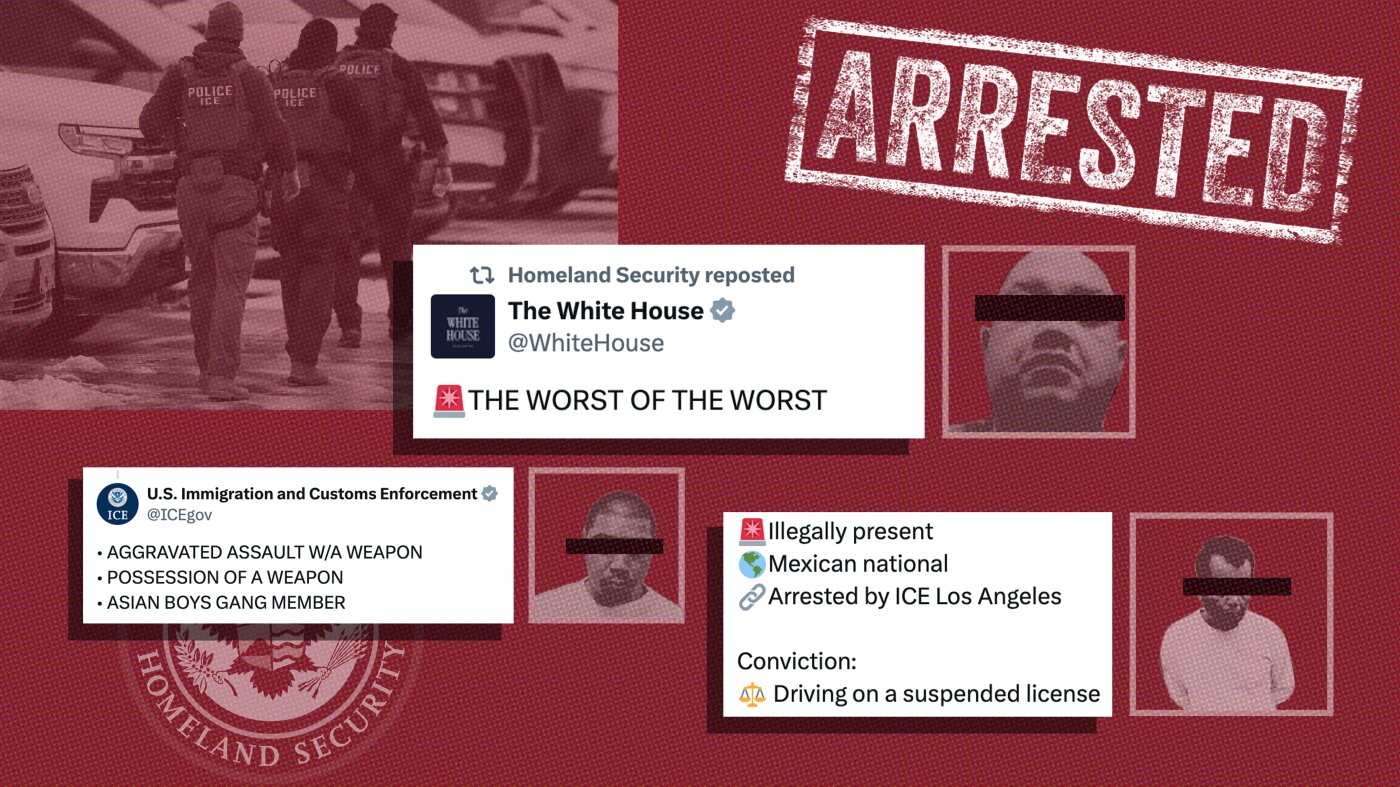
How the federal government is painting immigrants as criminals on social media

Where Iran’s ballistic missiles can reach — and how close they are to the US

Has India’s influence in Afghanistan grown under the Taliban?
-

 World2 days ago
Exclusive: DeepSeek withholds latest AI model from US chipmakers including Nvidia, sources say
-

 Massachusetts3 days ago
Mother and daughter injured in Taunton house explosion
-

 Montana1 week ago
2026 MHSA Montana Wrestling State Championship Brackets And Results – FloWrestling
-

 Louisiana5 days ago
Wildfire near Gum Swamp Road in Livingston Parish now under control; more than 200 acres burned
-

 Denver, CO3 days ago
10 acres charred, 5 injured in Thornton grass fire, evacuation orders lifted
-

 Technology7 days ago
YouTube TV billing scam emails are hitting inboxes
-

 Technology7 days ago
Stellantis is in a crisis of its own making
-

 Politics7 days ago
OpenAI didn’t contact police despite employees flagging mass shooter’s concerning chatbot interactions: REPORT