Politics
Defense Department to undergo review after over failures during Austin’s hospitalization


The Department of Defense will review the process by which top leaders are notified of the transfer of duties from the secretary of defense following a week in which senior officials, the public and news media were kept in the dark about Lloyd Austin’s hospitalization and work absence.
Jennifer Walsh, the director of Administration and Management, will lead the review “to identify the relevant facts and circumstances during this period and evaluate the processes and procedures through which the Deputy Secretary of Defense was notified that she should carry out the functions and duties of the Secretary of Defense under 10 U.S.C. § 132(b) and Executive Order 13533,” a Defense Department statement said Monday evening.
“The purpose of such review is to better understand the facts surrounding these events and to recommend appropriate processes going forward,” the statement said.
SECRETARY OF DEFENSE LLOYD AUSTIN REMAINS HOSPITALIZED AFTER MYSTERY PROCEDURE; DOD REMAINS MUM ON RELEASE
The Pentagon is facing mounting backlash from reporters on Sunday after failing to disclose Defense Secretary Lloyd Austin was in the hospital. Austin and the Pentagon are facing mounting criticism after key leaders weren’t told of the secretary’s hospitalization last week. (Left: (Photo by Celal Gunes/Anadolu Agency via Getty Images), Right: (Photo by Anna Moneymaker/Getty Images))
The goal of the review is to ensure clarity and transparency when certain authorities are transferred and proper and timely notification to the president, Congress and the public, according to a memo to senior DOD staff by Austin’s Chief of Staff, Kelly Magsamen. The review is to be completed within 30 days.
President Biden and top officials weren’t immediately alerted about the hospitalization of Defense Secretary Lloyd Austin because his chief of staff was out sick, resulting in a breakdown in the notification process, the Pentagon said Monday.
Austin, 70, was admitted to the intensive care unit at the Walter Reed National Military Medical Center on Jan. 1 for severe pain for complications following a recent elective medical procedure,” Pentagon press secretary Maj. Gen. Pat Ryder said last week.
Biden and the National Security Council weren’t told about the hospitalization for a few days and the press and Congress weren’t notified until Friday.
“The best I can tell you is that the secretary’s chief of staff was ill with the flu, which affected the notification timelines,” Ryder said Monday. “We’re we’re going back now and looking at the processes and procedures, as I mentioned, to include both the White House and congressional notifications to ensure that we can improve those processes. You know, the bottom line is we know we can do better and we will do better.”
PENTAGON FACING BACKLASH OVER FAILING TO DISCLOSE SEC. AUSTIN’S ILLNESS: ‘HARMS CREDIBILITY’
The Pentagon building in Arlington, Virginia, on Friday, April 21, 2023. (Photographer: Tom Brenner/Bloomberg via Getty Images)
Magsamen was “unable to make notifications before then” but she informed Deputy Defense Secretary Kathleen Hicks and national security adviser, Jake Sullivan, on Thursday. The National Security Council and Biden weren’t notified of Austin’s hospitalization until Thursday as well.
Ryder acknowledged that he and other public affairs and defense aides were told Jan. 2 that Austin had been hospitalized but did not make it public and did not tell the military service leaders or the National Security Council until days later.
“I want to offer my apologies and my pledge to learn from this experience, and I will do everything I can to meet the standard that you expect from us,” he said.
Hicks, who was on a previously scheduled vacation and not physically in the Pentagon, partially assumed some of Austin’s duties last week, an official told Fox News. She wasn’t told Austin was hospitalized at that time, the Pentagon said.
Austin was taken to the hospital via ambulance on Jan. 1 and he was conscious during the ride, Ryder said Monday.
“The secretary did participate, in a call with the president on New Year’s Day,” Ryder said. “This was, of course, prior to him being admitted to hospital.”
A Jan. 4 strike that killed a a militia leader in Baghdad was pre-approved by Austin and the White House before the secretary was admitted into Walter Reed, Ryder said.
He added that Austin has no plans to resign. No senior Defense Department officials have been asked to resign as well.
Ryder said staff in Austin’s front office will review notification procedures, including whether regulations, rules or laws were broken, and will take steps to improve the notification process. Those staff members, however, are among those who did not disclose the secretary’s hospitalization.
The Pentagon’s failure to disclose Austin’s hospitalization has enraged congressional leaders and the news media responsible for covering the Pentagon.
“I was informed by the assistant to the Secretary of Defense for Public Affairs on Tuesday afternoon that the secretary was in the hospital,” Ryder said. “He didn’t have any additional information to provide, but I recognize that I should have tried to learn more and to press for an earlier public acknowledgment.”
In a statement issued Saturday evening, Austin took responsibility for the delays in notification.
“I am very glad to be on the mend and look forward to returning to the Pentagon soon,” he said. “I also understand the media concerns about transparency and I recognize I could have done a better job ensuring the public was appropriately informed. I commit to doing better. But this is important to say: this was my medical procedure, and I take full responsibility for my decisions about disclosure.”
The Associated Press contributed to this report.



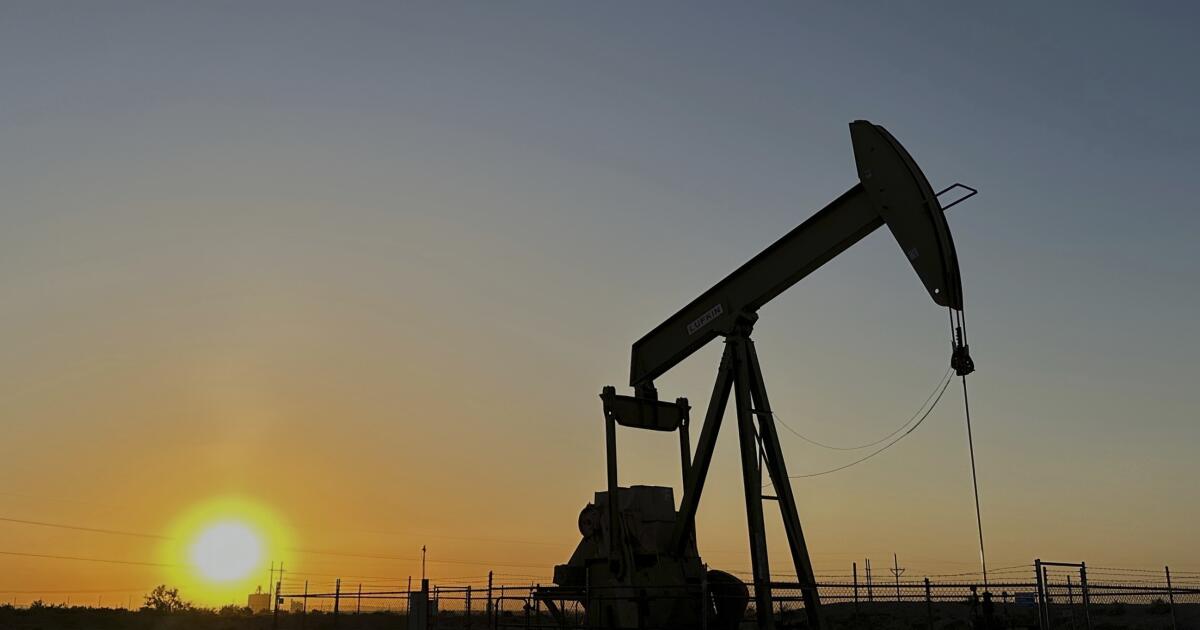
When the speaker of the Texas House recently outlined his priorities for the next legislative session, he mentioned tax relief, the development of data centers and a notion that sent many eyebrows skyward.
Dustin Burrows, a Republican from Lubbock, directed the chamber’s governmental oversight committee to study the legal and economic implications of Texas absorbing one or more counties in eastern New Mexico.
The “conversation,” Burrows told the Dallas Morning News, “is ultimately about culture, opportunity and the right to choose a path that reflects the shared values of the Permian and Delaware basins,” a vast desert expanse awash in oil and natural gas.
Apparently, Texas lawmakers have time and money to burn.
The notion of the swaggering state swallowing a chunk of its resistant neighbor is completely far-fetched. Just four states have been carved from the territory of others: Kentucky, Maine, Vermont and West Virginia. And it’s been quite a spell since the last time that happened. West Virginia split off from Confederate Virginia in 1863.
Realistically, there is no end of hurdles — legal, political, practical — that would have to be surmounted for a partial Texas-New Mexico merger to occur. Both states would need to agree — New Mexico is a hard no — and Congress would also have to approve.
But the impulse to bust up, break away and move on is as old as America itself and, at the same time, as fresh as the latest provocation to pass the lips of the nation’s frothing commander-in-chief.
“Calexit,” the idea of California breaking away from the U.S. and becoming its own nation, took root during President Trump’s turbulent first reign and gained renewed support as soon as he returned to power. Texas toyed with the idea of secession when Barack Obama was president.
“The driver,” said Syracuse University professor Ryan Griffiths, an author and expert on secession, “is politics and polarization.”
The notion being if you don’t like it, then leave.
Or, at least, make noise about doing so.
Eastern New Mexico — dry, desolate — looks and feels very much like an appendage of West Texas. Its residents have long been estranged from the rest of their state and, especially, the Democratic leadership in Santa Fe, the state capital. That is not to say, however, the slightest inch of New Mexico territory will be going anywhere anytime soon.
Earlier this year, two Republican state lawmakers introduced a measure to give voters a say on whether they wanted their counties to break away — or, as one of the legislators put it, “Get the hell out of New Mexico.” The constitutional amendment died without a hearing.
When Burrows renewed talk of a takeover, Javier Martinez, speaker of the New Mexico House, responded without equivocation. “Over my dead body,” he said.
But the notion has garnered Burrows plenty of attention in the Lone Star State, a place with no lack of self-regard. And it certainly hasn’t hurt his standing with Texas’ arch-conservative Republican base, which has sometimes viewed Burrows with suspicion.
“People in Texas have a lot of fun with the idea that Texas … is entitled to secede and that maybe it can restore lost lands in New Mexico, Kansas, Colorado and beyond,” said Cal Jillson, a longtime student of Texas politics at Southern Methodist University. “It [appeals to] the conservative base, but also to everyone who loves to chuckle.”
Serious or not, secession — or independence, as some prefer to call it — has long been the dream of dissenters, of the discontented and those who feel put upon or politically unrepresented. America, after all, was birthed by divorcing itself from Britain and King George III.
For the longest time, residents in the ruddy north of blue California have agitated for a breakaway state called Jefferson. In recent years unhappy conservatives in eastern Oregon have spoken of splitting from their Democratic state and becoming a part of Republican Idaho. (Lawmakers in Boise passed a measure in 2023 inviting Oregon to the negotiating table; Oregon has so far declined to show.)
Since 2020, voters in 33 rural Illinois counties have voted to separate from their state and its Democratic leadership, a move welcomed in a measure passed by the Republican-run Indiana Legislature and signed by the state’s GOP governor, Mike Braun. (Illinois Gov. JB Pritzker dismissed the 2025 legislation as “a stunt.”)
Which, indeed, it appeared to be.
But Richard Kreitner said there is a certain logic behind secession movements, as governments from Washington to the statehouse are seen as increasingly unresponsive and dysfunctional.
“As people become more disenfranchised … more disillusioned from the political process, you’re going to start looking outside of the political process, the political structure, the constitutional structure, for a possible solution,” said Kreitner, who hosts a history podcast, “Think Back,” and has also written a book on secession. “If you’re going to do that in a country founded with a secessionist manifesto, the Declaration of Independence, at some point people are going to start thinking about that.”
Legitimate grievance grounded in serious concern is certainly worthy of attention. But exploiting that discontent to draw notice or score cheap political points — as Burrows seems to be doing in Texas — is something altogether different.
The chance of New Mexico ceding a part of itself to Texas is precisely zero, meaning the legislative study is less about “culture” and “opportunity” than the speaker and fellow Republicans evidently looking to troll their blue-state neighbor.
There are better, more productive ways for lawmakers to spend their time.
And their taxpayers’ dime.

NEWYou can now listen to Fox News articles!
With the deadline to file taxes a week away, a record number of voters say their taxes are too high, according to the latest Fox News Poll. They are also bothered by the rich not paying their fair share and how the government uses their money. In addition, three-quarters feel government spending is wasteful — up almost 20 points since last year.
Last year, 57% said a great deal (44%) or almost all (13%) of government spending was inefficient; now that’s up 18 points, with 75% feeling that way (53% a great deal, 22% almost all).
FOX NEWS POLL: BROAD ANXIETY ABOUT AI DOESN’T EXTEND TO JOBS
The increase in those thinking spending is wasteful is seen among most demographics, with the biggest bumps among Democrats and independents. Three-quarters of Republicans think government spending is wasteful, down from more than 8 in 10 in March 2025.
Voters are also down on how the Trump administration has handled identifying and cutting wasteful government spending, with nearly two-thirds, 64%, calling their efforts only fair (20%) or poor (44%), up from 56% last March (13% only fair, 43% poor).
While there is broad bipartisan agreement that a significant share of government spending is wasteful and inefficient — with roughly three-quarters of Democrats, Republicans, and independents saying so — a sharp partisan divide emerges on the Trump administration’s handling of identifying and cutting that waste: nearly all Democrats (90%) and a large majority of independents (80%) say it is not doing a good job, while 7-in-10 Republicans (69%) give it a positive rating.
A record 70% of voters think the taxes they pay are too high — up 11 points from last March and surpassing the previous high of 64% in March 2024. It also marks the largest year-over-year increase since the question was first asked in 2004, when 51% felt taxes were too high. A majority of voters have consistently said their tax burden is too much.
FOX NEWS POLL: SOUR VOTERS SAY WASHINGTON IS OUT OF TOUCH
Compared to last year, groups showing the highest increase in concern over how much they are paying include voters with graduate degrees (+24 points since 2025), very liberal voters (+20), Democratic men (+19), moderates (+19), rural voters (+17), White voters without a college degree (+16), and women ages 45+ (+16).
What bothers people most about federal income taxes is the wealthy are not paying enough (38%), although that figure has dipped slightly from last year’s record high of 45%. Close behind is concern about how the government spends their tax dollars, up 3 points from a year ago to 29%.
Other irritations are the amount of taxes paid (14%), feeling too many people don’t pay enough (10%), and the complexity of the system (9%).
Democrats (57%) and independents (40%) are the most concerned about the rich not paying enough, while Republicans’ biggest issue is the amount the government uses (39%).
“The data show why Democrats persistently frame budget, spending, and tax policy questions as a matter of the rich paying their fair share,” says Republican Daron Shaw, who conducts the Fox News survey with Democrat Chris Anderson. “It’s one of the only ways the party is competitive on these issues given public skepticism about government performance.”
Disapproval of how President Trump is handling taxes has reached a record high of 64%, up 11 points from a year ago.
CLICK HERE FOR CROSSTABS AND TOPLINE
Dissatisfaction is up across the board, including among Democrats (+9 points disapproving since April 2025), independents (+14) and Republicans (+9).
One more thing…
AI use is on the rise, but not for tax prep.
Nearly 9 in 10 voters (87%) say they are not using AI to help with their taxes this year, while roughly 1 in 10 (13%) say they will or already have. Those most likely to say they will use AI are Republicans under age 45 (29%), voters under 30 (23%), Hispanic voters (21%), Black voters (20%), and employed voters (19%).
Conducted March 20-23, 2026, under the direction of Beacon Research (D) and Shaw & Company Research (R), this Fox News survey includes interviews with a sample of 1,001 registered voters randomly selected from a national voter file. Respondents spoke with live interviewers on landlines (104) and cellphones (641) or completed the survey online after receiving a text (256). Results based on the full sample have a margin of sampling error of ±3 percentage points. Sampling error for results among subgroups is higher. In addition to sampling error, question wording and order can influence results. Weights are generally applied to age, race, education and area variables to ensure the demographics are representative of the registered voter population. Sources for developing weight targets include the most recent American Community Survey, Fox News Voter Analysis and voter file data.

WASHINGTON — A day after the United States and Iran agreed to a two-week ceasefire, the tentative truce showed early signs of strain amid continuing attacks across the region and reports that Iran moved to restrict traffic through the Strait of Hormuz.
The developments tested President Trump’s ability to convert a fragile pause in fighting into a lasting peace deal with a country he has spent weeks threatening to destroy, and raised questions about whether the Trump administration had the diplomatic leverage to hold the deal.
Defense Secretary Pete Hegseth and the White House sought to project confidence at separate news briefings on Wednesday, and warned Iran to keep its end of the bargain or face the consequences.
Hegseth said the U.S. military plans to maintain a presence in the region to ensure Iranian compliance, saying American troops are ready to “go on offense and restart operations at a moment’s notice” if the truce broke down.
“We’ll be hanging around,” he said. “We are going to make sure Iran complies with this ceasefire and then ultimately comes to the table and makes a deal.”
The warning came as several Gulf nations reported Iranian missile and drone attacks on their territories despite the ceasefire being in effect. Kuwait said its air defenses intercepted drones, while Bahrain reported that an Iranian attack has sparked a fire at one of its facilities.
Hegseth downplayed the continued Iranian attacks in the region, saying that “it takes time sometimes” for ceasefires to take hold, but advised Iran to “find a way to get a carrier pigeon to their troops in remote locations” and ensure compliance moving forward.
Israel added to the regional turmoil on Wednesday, carrying out its largest strike against Hezbollah since the militant group began launching rockets in solidarity with Iran last month. Lebanese health authorities said hundreds were killed and wounded in the strikes.
Trump and Israeli Prime Minister Benjamin Netanyahu have both maintained that Lebanon is not subject to the agreed upon terms to pause the hostilities.
Pakistani Prime Minister Shehbaz Sharif, who helped broker the ceasefire, wrote on X that violations to the ceasefire had been reported at “a few places across the conflict zone” and urged all parties to exercise restraint. Though he did not detail the violations, he said the attacks “undermine the spirit of the peace process.”
The regional instability appeared to push the Iranian Navy to restrict traffic through the Strait of Hormuz, a crucial waterway whose opening was key in the ceasefire negotiations, according to Fars News, an Iranian news outlet aligned with the Islamic Revolutionary Guard Corps.
“Any vessel trying to travel into the sea … will be targeted and destroyed,” the Navy told shipping vessels, according to the Fars News report.
At a press briefing Wednesday, White House Press Secretary Karoline Leavitt said Trump was aware of the media reports that the Strait of Hormuz had been closed, a move that she called both “completely unacceptable” and “false.” She added that the president’s expectation is that the waterway will be “reopened immediately, quickly and safely.”
Hegseth told reporters earlier in the day that “commerce will flow” through the Strait of Hormuz with the ceasefire in effect. Leavitt, however, sidestepped questions about who currently has control over the oil route.
The situation in the Strait of Hormuz underscores how much remains uncertain about the agreement between the United States and Iran. The full terms of the ceasefire have not been publicly disclosed, and Trump wrote on Truth Social the “only group of meaningful ‘POINTS’ that are acceptable to the United States” will be discussed behind closed doors.
Trump also seemed to take issue with the 10-point peace plan that Iran publicly released on Wednesday. He said that there are terms being floated by people that have “absolutely nothing to do” with the negotiations between the United States and Iran. He said that “in many cases, they are total Fraudsters, Charlatans, and WORSE.”
Leavitt declined to offer details about the working proposal being negotiated, saying the talks will take place privately. Both Leavitt and Hegseth, however, mentioned that the United States wants to ensure Iran does not have stockpiles of enriched uranium, the fissile material that is key in developing nuclear weapons.
“This is on the top of the priority list for the president and his negotiating team as they head into the next round of discussions,” Leavitt said.
Hegseth told reporters earlier in the day that Iran may “hand it over.” If they don’t, Hegseth said: We will take it out, or if we have to do something else ourselves like we did [with] Midnight Hammer or something like that, we reserve that opportunity.”
Leavitt reiterated that administration officials “hope it will be through diplomacy,” but left open the possibility that it could be retrieved through ground operations.

Meta, Oracle and Qualcomm share details on layoffs across California

Tell us: What’s the best book you’ve ever read in a book club?

How Selfridges Plans to Lock in the 1%
Commentary: In Texas and beyond, a political impulse: If you don’t like it, leave

Jim Whittaker, first American climber to scale Mount Everest, has died

Florida High School Football Rankings: Top 25 teams – Oct. 21

How old is Bo Nix? What to know about Oregon quarterback ahead of 2024 NFL Draft

Cleary's 21 help Le Moyne down Central Connecticut State 69-64 in OT

99th annual Pony Swim held in Virginia

Indiana Members Credit Union announced as new anchor tenant at Bottleworks District

Newsletter: NATO holds amid fragile Iran ceasefire
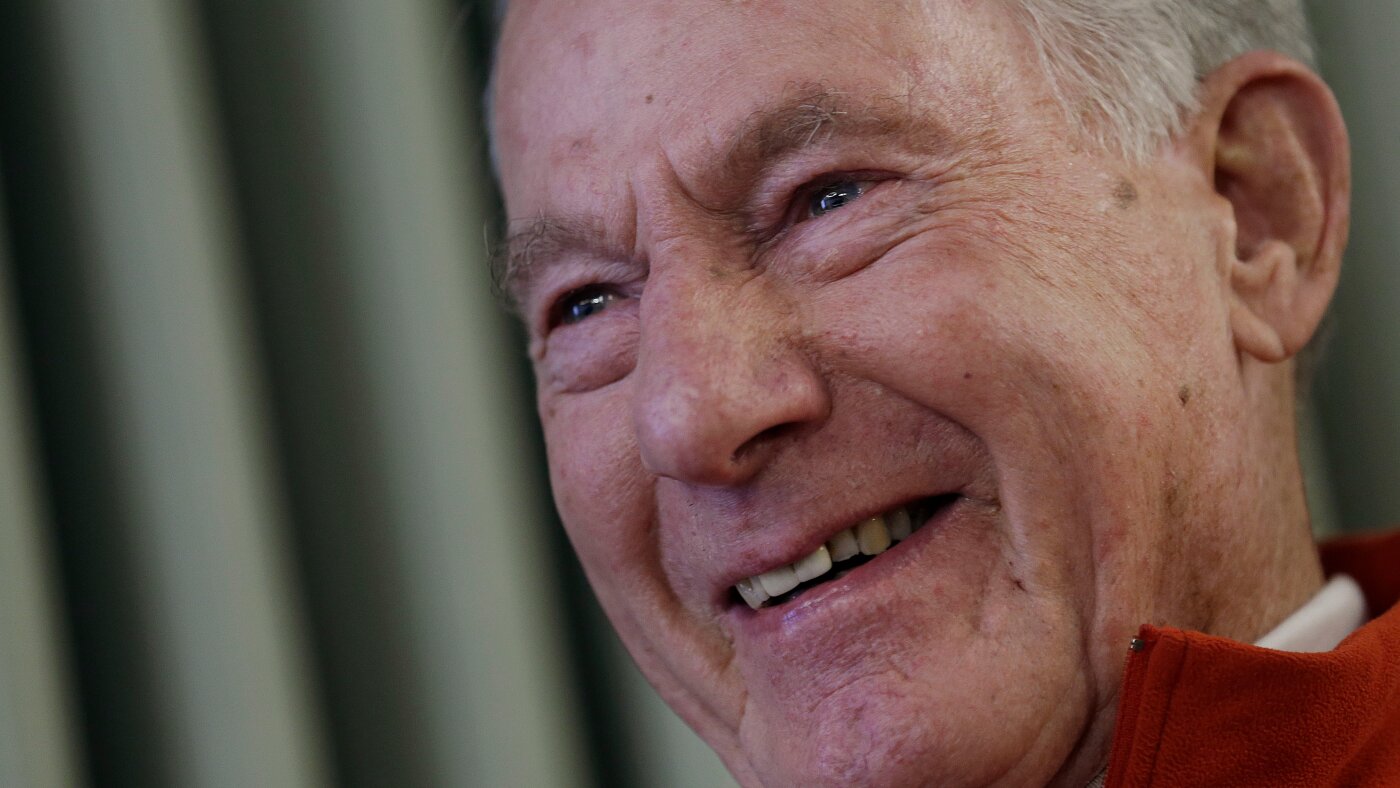
Jim Whittaker, the first American to summit Mount Everest, dies at 97

Video: Military Families Bear the Burden of War, Again

Fox News Poll: Record number say taxes are too high; government spending seen as wasteful

‘Even the street cats ran’: Inside Israel’s deadliest attack on Beirut
-

 Atlanta, GA4 days ago
1 teenage girl killed, another injured in shooting at Piedmont Park, police say
-

 Culture1 week ago
Do You Know Where These Famous Authors Are Buried?
-

 Movie Reviews7 days ago
Vaazha 2 first half review: Hashir anchors a lively, chaos-filled teen tale
-

 Georgia2 days ago
Georgia House Special Runoff Election 2026 Live Results
-

 Pennsylvania2 days ago
Parents charged after toddler injured by wolf at Pennsylvania zoo
-

 Education1 week ago
Video: We Put Dyson’s $600 Vacuum to the Test
-
 Milwaukee, WI3 days ago
Potawatomi Casino Hotel evacuated after fire breaks out in rooftop HVAC system
-
 Entertainment1 week ago
Inside Ye’s first comeback show at SoFi Stadium