Politics
Commentary: Front-runner or flash in the pan? Sizing up Newsom, 2028

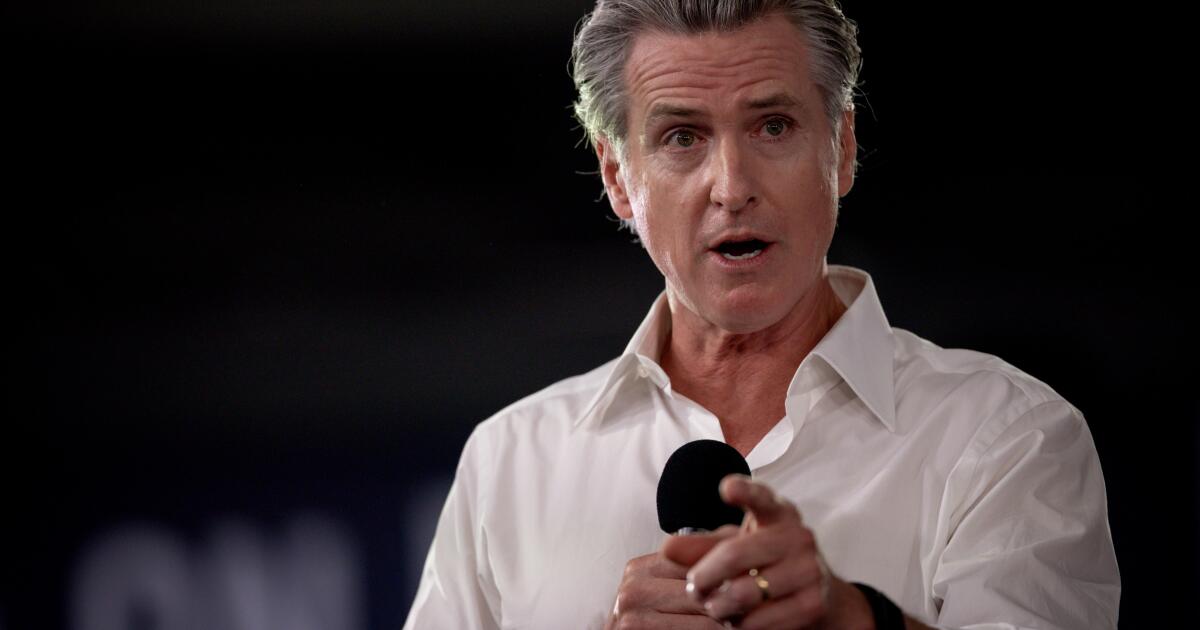
The 2028 presidential election is more than 1,000 days away, but you’d hardly know it from all the speculation and anticipation that’s swirling from Sacramento to the Washington Beltway.
Standing at the center of attention is California Gov. Gavin Newsom, fresh off his big victory on Proposition 50, the backatcha ballot measure that gerrymandered the state’s congressional map to boost Democrats and offset a power grab by Texas Republicans.
Newsom is bidding for the White House, and has been doing so for the better part of a year, though he won’t say so out loud. Is Newsom the Democratic front-runner or a mere flash in the pan?
Times columnists Anita Chabria and Mark Z. Barabak disagree on Newsom’s presidential prospects, and more. Here the two hash out some of their differences.
Barabak: So is the presidential race over, Anita? Should I just spend the next few years backpacking and snowboarding in the Sierra and return in January 2029 to watch Newsom iterate, meet the moment and, with intentionality, be sworn in as our nation’s 48th president?
Chabria: You should definitely spend as much time in the Sierra as possible, but I have no idea if Newsom will be elected president in 2028 or not. That’s about a million light-years away in political terms. But I think he has a shot, and is the front-runner for the nomination right now. He’s set himself up as the quick-to-punch foil to President Trump, and increasingly as the leader of the Democratic Party. Last week, he visited Brazil for a climate summit that Trump ghosted, making Newsom the American presence.
And in a recent (albeit small) poll, in a hypothetical race against JD Vance, the current Republican favorite, Newsom lead by three points. Though, unexpectedly, respondents still picked Kamala Harris as their choice for the nomination.
To me, that shows he’s popular across the country. But you’ve warned that Californians have a tough time pulling voters in other states. Do you think his Golden State roots will kill off his contender status?
Barabak: I make no predictions. I’m smart enough to know that I’m not smart enough to know. And, after 2016 and the election of Trump, the words “can’t,” “not,” “won’t,” “never ever” are permanently stricken from my political vocabulary.
That said, I wouldn’t stake more than a penny — which may eventually be worth something, as they’re phased out of our currency — on Newsom’s chances.
Look, I yield to no one in my love of California. (And I’ve got the Golden State tats to prove it.) But I’m mindful of how the rest of the country views the state and those politicians who bear a California return address. You can be sure whoever runs against Newsom — and I’m talking about his fellow Democrats, not just Republicans — will have a great deal to say about the state’s much-higher-than-elsewhere housing, grocery and gas prices and our shameful rates of poverty and homelessness.
Not a great look for Newsom, especially when affordability is all the political rage these days.
And while I understand the governor’s appeal — Fight! Fight! Fight! — I liken it to the fleeting fancy that, for a time, made attorney, convicted swindler and rhetorical battering ram Michael Avenatti seriously discussed as a Democratic presidential contender. At a certain point — and we’re still years away — people will assess the candidates with their head, not viscera.
As for the polling, ask Edmund Muskie, Gary Hart or Hillary Clinton how much those soundings matter at this exceedingly early stage of a presidential race. Well, you can’t ask Muskie, because the former Maine senator is dead. But all three were early front-runners who failed to win the Democratic nomination.
Chabria: I don’t argue the historical case against the Golden State, but I will argue that these are different days. People don’t vote with their heads. Fight me on that.
They vote on charisma, tribalism, and maybe some hope and fear. They vote on issues as social media explains them. They vote on memes.
There no reality in which our next president is rationally evaluated on their record — our current president has a criminal one and that didn’t make a difference.
But I do think, as we’ve talked about ad nauseam, that democracy is in peril. Trump has threatened to run for a third term and recently lamented that his Cabinet doesn’t show him the same kind of fear that Chinese President Xi Jinping gets from his top advisers. And Vance, should he get the chance to run, has made it clear he’s a Christian nationalist who would like to deport nearly every immigrant he can catch, legal or not.
Being a Californian may not be the drawback it’s historically been, especially if Trump’s authoritarianism continues and this state remains the symbol of resistance.
But our governor does have an immediate scandal to contend with. His former chief of staff, Dana Williamson, was just arrested on federal corruption charges. Do you think that hurts him?
Barabak: It shouldn’t.
There’s no evidence of wrongdoing on Newsom’s part. His opponents will try the guilt-by-association thing. Some already have. But unless something damning surfaces, there’s no reason the governor should be punished for the alleged wrongdoing of Williamson or others charged in the case.
But let’s go back to 2028 and the presidential race. I think one of our fundamental disagreements is that I believe people do very much evaluate a candidate’s ideas and records. Not in granular fashion, or the way some chin-stroking political scientist might. But voters do want to know how and whether a candidate can materially improve their lives.
There are, of course, a great many who’d reflexively support Donald Trump, or Donald Duck for that matter, if he’s the Republican nominee. Same goes for Democrats who’d vote for Gavin Newsom or Gavin Floyd, if either were the party’s nominee. (While Newsom played baseball in college, Floyd pitched 13 seasons in the major leagues, so he’s got that advantage over the governor.)
But I’m talking about those voters who are up for grabs — the ones who decide competitive races — who make a very rational decision based on their lives and livelihoods and which candidate they believe will benefit them most.
Granted, the dynamic is a bit different in a primary contest. But even then, we’ve seen time and again the whole dated/married phenomenon. As in 2004, when a lot of Democrats “dated” Howard Dean early in the primary season but “married” John Kerry. I see electability — as in the perception of which Democrat can win the general election — being right up there alongside affordability when it comes time for primary voters to make their 2028 pick.
Chabria: No doubt affordability will be a huge issue, especially if consumer confidence continues to plummet. And we are sure to hear criticisms of California, many of which are fair, as you point out. Housing costs too much, homelessness remains intractable.
But these are also problems across the United States, and require deeper fixes than even this economically powerful state can handle alone. More than past record, future vision is going to matter. What’s the plan?
It can’t be vague tax credits or even student loan forgiveness. We need a concrete vision for an economy that brings not just more of the basics like homes, but the kind of long-term economic stability — higher wages, good schools, living-wage jobs — that makes the middle class stronger and attainable.
The Democrat who can lay out that vision while simultaneously continuing to battle the authoritarian creep currently eating our democracy will, in my humble opinion, be the one voters choose, regardless of origin story. After all, it was that message of change with hope that gave us President Obama, another candidate many considered a long shot at first.
Mark, are there any 2028 prospects you’re keeping a particularly close eye on?
Barabak: I’m taking things one election at a time, starting with the 2026 midterms, which include an open-seat race for governor here in California. The results in November 2026 will go a long way toward shaping the dynamic in November 2028. That said, there’s no shortage of Democrats eyeing the race — too many to list here. Will the number surpass the 29 major Democrats who ran in 2020? We’ll see.
I do agree with you that, to stand any chance of winning in 2028, whomever Democrats nominate will have to offer some serious and substantive ideas on how to make people’s lives materially better. Imperiled democracy and scary authoritarianism aside, it’s still the economy, stupid.
Which brings us full circle, back to our gallivanting governor. He may be winning fans and building his national fundraising base with his snippy memes and zippy Trump put-downs. But even if he gets past the built-in anti-California bias among so many voters outside our blessed state, he’s not going to snark his way to the White House.
I’d wager more than a penny on that.






NEWYou can now listen to Fox News articles!
The federal government has entered its third partial shutdown of the last half-year after Congress failed to reach an agreement on all 12 of its annual spending bills.
Unlike past shutdowns, however, this one just affects the Department of Homeland Security (DHS). It comes after Democrats walked away from a bipartisan deal to fund the department amid uproar over President Donald Trump’s immigration crackdown in Minneapolis.
And while some 97% of the federal government has been funded at this point, a DHS shutdown will still have effects on everyday Americans — effects that will become more apparent the longer the standoff continues.
DHS SHUTDOWN EXPLAINED: WHO WORKS WITHOUT PAY, WHAT HAPPENS TO AIRPORTS AND DISASTER RESPONSE
Homeland Security Secretary Kristi Noem delivers a press conference on Jan. 24, 2026. (Al Drago/Getty Images)
Air travel delays
Disruptions to the TSA, whose agents are responsible for security checks at nearly 440 airports across the country, could perhaps be the most impactful part of the partial shutdown to Americans’ everyday lives.
Acting Administrator Ha Nguyen McNeill told lawmakers at a hearing on Wednesday that around 95% of TSA employees — roughly 61,000 people — are deemed essential and will be forced to work without pay in the event of a shutdown.
“We heard reports of officers sleeping in their cars at airports to save money on gas, selling their blood and plasma, and taking on second jobs to make ends meet,” she said of the last shutdown.
But it would take some time before TSA funding could translate to delays. TSA agents, like other essential federal workers, received back pay once the shutdown was over. Those who did not miss shifts also got a $10,000 bonus for added relief.
FETTERMAN BUCKS DEMOCRATS, SAYS PARTY PUT POLITICS OVER COUNTRY IN DHS SHUTDOWN STANDOFF
TSA paychecks due to be issued on March 3 could see agents getting reduced pay depending on the length of the shutdown. Agents would not be at risk of missing a full paycheck until March 17.
If that happens, however, Americans could see delays or even cancellations at the country’s busiest airports as TSA agents are forced to call out of work and get second jobs to make ends meet.
Passengers wait in line to use automated passport control kiosks set up for international travelers arriving at Miami International Airport. (Joe Raedle/Getty Images)
Natural disaster reimbursement
The Federal Emergency Management Agency (FEMA) is one of the largest and most critical recipients of federal funding under DHS.
Associate Administrator of the Office of Response and Recovery Gregg Phillips told lawmakers on Wednesday that FEMA has enough funds to continue disaster response through a shutdown in the immediate future, but that its budget would be strained in the event of an unforeseen “catastrophic disaster.”
That means Americans hit by an unexpected natural disaster during the shutdown could see delayed federal reimbursement for their homes and small businesses.
Others who have already lived through a natural disaster in the last year but still have not received their checks — FEMA is currently working through a backlog worth billions of dollars — could see that relief delayed even further during the shutdown.
“In the 45 days I’ve been here … we have spent $3 billion in 45 days on 5,000 projects,” Phillips said. “We’re going as fast as we can. We’re committed to reducing the backlog. I can’t go any faster than we actually are. And if this lapses, that’s going to stop.”
People are seen outside a wildfire shelter at the Pasadena Convention Center on Jan. 21, 2025. (Frederic J. Brown/AFP via Getty Images)
Worker visa processing
American business owners who rely on certain types of worker visas could see processing times extended during a DHS shutdown.
That’s because United States Citizenship and Immigration Services (USCIS) programs are run under DHS and are responsible for processing most immigration applications as well as temporary visas.
CLICK HERE TO DOWNLOAD THE FOX NEWS APP
The majority of those programs are funded by fees and are largely untouched. However, areas like e-Verify, the EB-5 Immigrant Investor Regional Center Program, Conrad 30 J-1 doctors, and non-minister religious workers all rely on funding appropriated by Congress, according to the American Immigration Lawyers Association.
USCIS could allow employers to use alternate processes if e-Verify is disrupted during a shutdown, but it’s not clear how much time it would add to business owners’ day-to-day responsibilities to learn a new route for that paperwork.
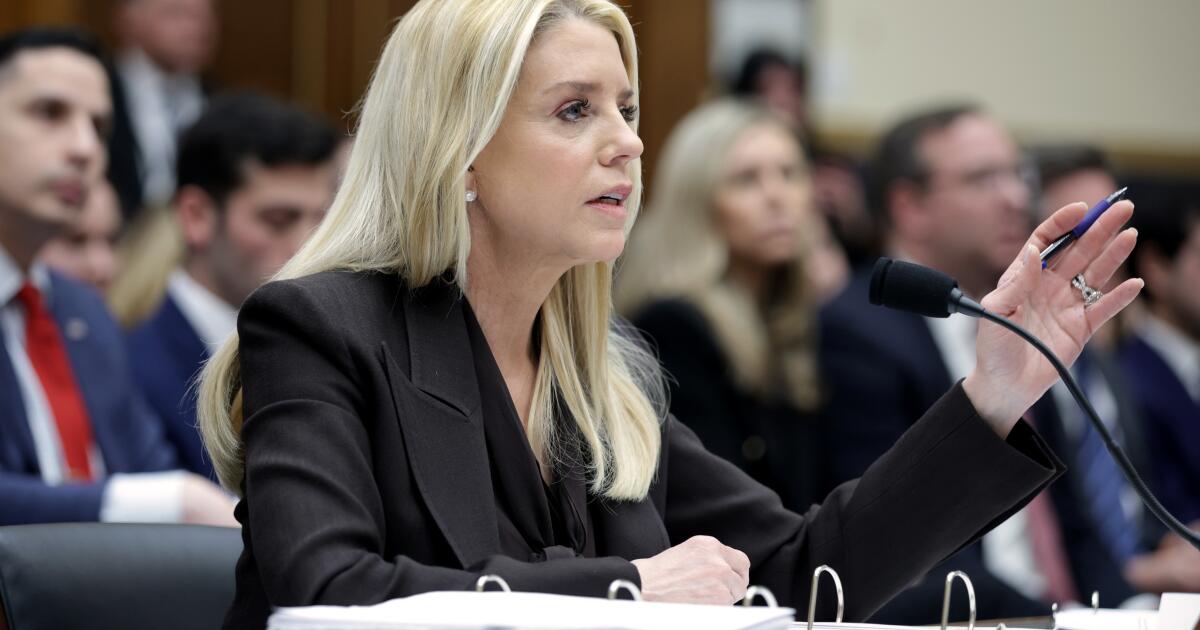
At a House Judiciary hearing on Wednesday, Atty. Gen. Pam Bondi was holding a document labeled “Jayapal Pramila Search History” that included a list of files from the unredacted Epstein archive accessible to lawmakers such as Rep. Pramila Jayapal (D-Wash.).
That means over the course of a year Bondi’s Department of Justice has made time to speak with Ghislaine Maxwell — the New York socialite who helped Jeffrey Epstein run his billion-dollar child-sex-trafficking operation — and it made time to surveil a Democratic lawmaker who conducts oversight as a member of the Judiciary Committee. But it has yet to meet with the victims of Epstein’s crimes who want to talk.
When she took office, Bondi promised us transparency. She didn’t promise we would like what we would see from her.
The general public’s awareness of Epstein’s heinous crimes came with political baggage. However at this point, the question we all should wonder is: How does redacting the names of the men who helped fund Epstein’s operation benefit either political party? It may be good for the rich and powerful men trying to avoid accountability, but it’s not exactly a campaign platform.
Yet here we are as a country, chained to the same vocabulary used during an election, so a conversation that should be about right and wrong is accompanied by poll numbers and analysis about the midterm elections. As if the Justice Department’s refusal to interview rape survivors is an inside-the-Beltway topic and not reflective of a larger moral crisis. We have seen Congress kept out of session to avoid voting on the release of the Epstein files; we have heard equivocation about whether Epstein was a pedophile. We know Epstein’s island was a place where evil resided.
The investigation, or lack of investigation, into Epstein’s fellow abusers should not be seen by anyone as a political quandary in which the object of the game is to keep your party in power. The fact that there is a Republican-vs.-Democrat divide on accountability for sex abuse reveals a national moral crisis. When the abuse of children is viewed through a partisan lens, how else can one describe this period in America?
Fifty years ago, when President Carter was tasked with healing the nation after the Watergate scandal, he told Americans in his inaugural address that he was leaning on his faith, and one prophet in particular.
“He hath shewed thee, O man, what is good; and what doth the Lord require of thee, but to do justly, and to love mercy, and to walk humbly with thy God?,” Carter said, quoting Micah 6:8. “This inauguration ceremony marks a new beginning, a new dedication within our government, and a new spirit among us all. A president may sense and proclaim that new spirit, but only a people can provide it.”
The Hebrew prophet Micah was from a rural area, not born into the wealth of the royal court. He was not being compensated by those who were. Instead, Micah reflected the voice of the people who were forced to live in poor conditions because of corruption. He described the actions of the morally bankrupt judges, political leaders and other elites in graphic, violent terms, condemning those “who hate the good, and love the evil; who pluck off their skin from off them, and their flesh from off their bones.”
This, he said, is what it is like being ruled by those who are not guided by what is good and what is evil, but rather what is most beneficial for themselves in the moment. When Micah spoke, it wasn’t about the latest poll numbers. His warnings about government corruption are not unique to any particular faith, nor are they married to any political party. They embody centuries of human history, a history that tells what happens to a society when power goes unchecked.
And be not mistaken, it was unchecked power — not any party affiliation — that provided Epstein and Maxwell with patronage. It was moral failure, not conservatives or liberals, that provided cover for their child-sex-trafficking ring.
So if for partisan reasons the abusers of children are not held accountable for their crimes, the language of politics fails us. The word for that is simply: evil.
YouTube: @LZGrandersonShow
Insights
L.A. Times Insights delivers AI-generated analysis on Voices content to offer all points of view. Insights does not appear on any news articles.
Viewpoint
Perspectives
The following AI-generated content is powered by Perplexity. The Los Angeles Times editorial staff does not create or edit the content.
Ideas expressed in the piece
-
The Department of Justice under Attorney General Pam Bondi has created a moral crisis by allowing the investigation into Jeffrey Epstein’s fellow abusers to become a partisan political issue rather than a matter of fundamental accountability and justice[3]. The DOJ has monitored a Democratic lawmaker’s access to Epstein files while reportedly meeting with Ghislaine Maxwell but declining to meet with Epstein survivors seeking to discuss their experiences[1][3].
-
Redacting the names of wealthy and powerful men implicated in Epstein’s crimes while exposing victims’ identities serves no legitimate governmental interest and only protects the rich and powerful from accountability regardless of political affiliation[3]. The failure to hold co-conspirators accountable after more than a year in office, combined with refusals to apologize to survivors, demonstrates a troubling prioritization of protecting certain interests over justice[3].
-
When child sexual abuse becomes filtered through partisan politics rather than evaluated on moral grounds, it reflects a fundamental failure of governance and represents a national crisis of conscience[3]. The politicization of this issue obscures what should be a universal principle: that accountability for crimes against children transcends party affiliation and election cycles[3].
Different views on the topic
-
The Department of Justice maintains that it records all searches conducted in its systems specifically to safeguard against the disclosure of victim information, suggesting that monitoring access to sensitive Epstein files serves a protective function rather than partisan surveillance[1]. Attorney General Bondi stated that the department has pending investigations in its office related to potential Epstein conspirators[2], indicating that prosecutorial work continues despite public criticism.
-
The release of Epstein files is an ongoing process requiring careful legal review to protect victims’ privacy and ensure proper handling of sensitive evidence[4]. The DOJ’s approach to redacting certain information may reflect legitimate institutional concerns about victim protection and the complexities of managing millions of declassified documents[1].

new video loaded: ‘I Will Not Back Down’: Don Lemon Enters Not Guilty Plea
transcript
transcript
‘I Will Not Back Down’: Don Lemon Enters Not Guilty Plea
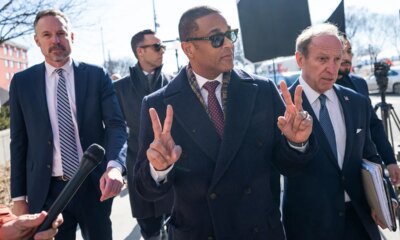
The journalist Don Lemon entered a not guilty plea on Friday to two accounts stemming from his participation in a protest at Cities Church in St. Paul, Minn., last month.
-
Far left. Going your way here. How do you feel going in? This is what community looks like. Show me what community looks like. This is what community looks like. I wanted to say this isn’t just about me. This is about all journalists, especially here in the United States. For more than 30 years, I’ve been a journalist, and the power and protection of the First Amendment has been the underpinning of my work. The First Amendment, the freedom of the press, the bedrock of our democracy. I will not be intimidated. I will not back down. I will fight these baseless charges and I will not be silenced. Thank you very much. Thank you.
By Meg Felling
February 13, 2026

Will Warsaw become the seat of a new EU agency? To be decided in March

Four people on NASA’S Crew-12 arrive at the International Space Station

Illegal alien youth coach could face death penalty after allegedly murdering, raping teen player

Don Lemon formally arraigned, pleads not guilty on charges stemming from viral Minnesota church storming

Medical examiner determines Texas A&M student’s manner of death as family attorney disputes finding: ‘Flawed’

Florida High School Football Rankings: Top 25 teams – Oct. 21

Cleary's 21 help Le Moyne down Central Connecticut State 69-64 in OT

How old is Bo Nix? What to know about Oregon quarterback ahead of 2024 NFL Draft

99th annual Pony Swim held in Virginia

Indiana Members Credit Union announced as new anchor tenant at Bottleworks District
Will Warsaw become the seat of a new EU agency? To be decided in March
Four people on NASA’S Crew-12 arrive at the International Space Station

Video: Vermont Made Child Care Affordable. Could It Lead by Example?

Here’s how the DHS shutdown could impact the lives of everyday Americans

AU calls for end to ‘extermination’ of Palestinians, decries African wars
-

 Politics1 week ago
White House says murder rate plummeted to lowest level since 1900 under Trump administration
-

 Alabama1 week ago
Geneva’s Kiera Howell, 16, auditions for ‘American Idol’ season 24
-

 Ohio1 week ago
Ohio town launching treasure hunt for $10K worth of gold, jewelry
-

 News1 week ago
The Long Goodbye: A California Couple Self-Deports to Mexico
-

 Science1 week ago
Video: Rare Giant Phantom Jelly Spotted in Deep Waters Near Argentina
-

 Culture1 week ago
Video: Farewell, Pocket Books
-

 News1 week ago
Video: Investigators Say Doorbell Camera Was Disconnected Before Nancy Guthrie’s Kidnapping
-

 Technology1 week ago
Apple might let you use ChatGPT from CarPlay