Politics
Commentary: Catholic Church puts foot down on Trump’s mass deportation policy. That’s a start

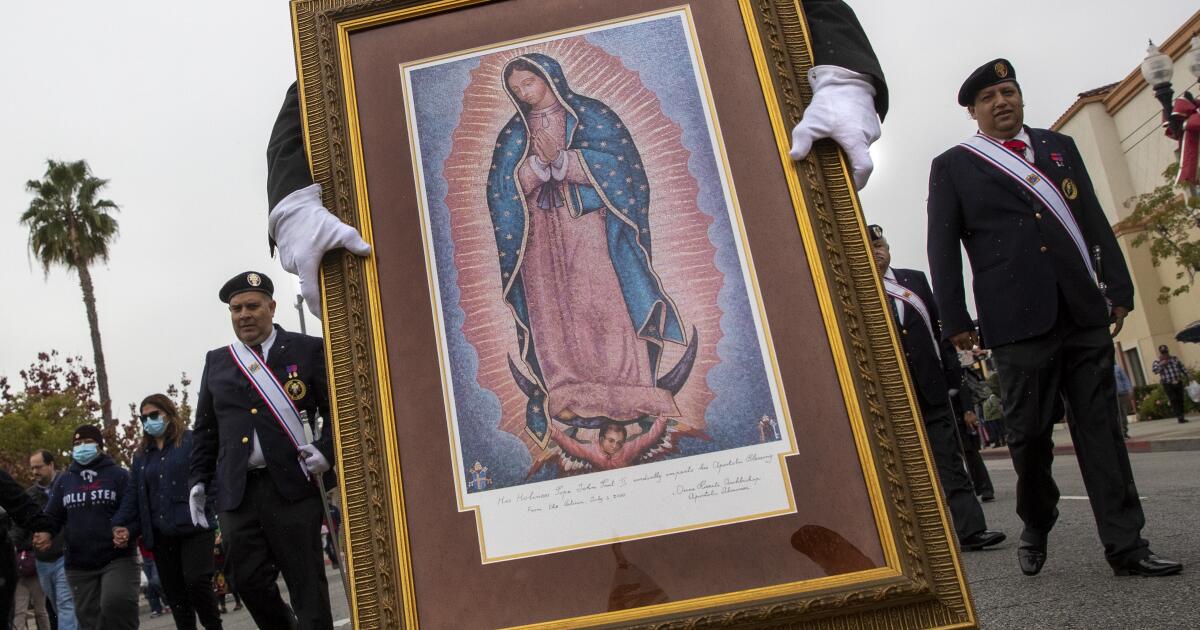
When millions of European immigrants came to the United States in the 19th century only to be scorned by mainstream society, it was the Catholic Church that embraced them, taught that keeping the customs of one’s native lands was not bad and created systems of mutual aid and education for the newcomers that didn’t rely on the government.
The 1960 election of John F. Kennedy, an Irish American Catholic, showed that the U.S. was ready to expand its definition of who could become president. Labor organizers like Cesar Chavez, Dorothy Day and Mother Jones pushed for the dignity of workers while frequently citing the woke words of Jesus — the Sermon of the Mount and the Beatitudes among the wokest — as the fuel for their spiritual fire.
Catholicism is the faith I was baptized in, the one I embraced as a teen and that’s the bedrock for my moral code of comforting the afflicted and afflicting the comfortable. My work desk covered with statues and devotional cards of Jesus, Mary and the saints is a physical testament to this.
But I’m also one of the 72% of U.S. Catholics that a Pew Research Center survey from earlier this year found don’t attend weekly Mass, which we’re obligated to do.
I stopped going early on in my adulthood because the Church became something I didn’t recognize.
The bishops and cardinals who preached we should follow Jesus’ admonition we should tend to the least among us presided over a child sex abuse scandal in the 1990s and 2000s that cost parishioners billions of dollars in legal settlements and their ethical high ground. The obsession that too many of those same church leaders had over abortion and homosexuality — which Christ never talked about — over social justice matters during the Obama administration left me disappointed. Their continual condemnation of pro-choice Catholic Democratic politicians like Nancy Pelosi and Joe Biden for taking Communion while staying silent about Donald Trump’s constant violations of the Ten Commandments was rank hypocrisy.
The Pew Research Center found 55% of my fellow faithful voted for Trump. Key Catholics have blessed Trump’s uglier tendencies: A majority of them rules over our revanchist Supreme Court while the president’s team features a vice president who’s a convert and a rogue’s gallery of influential insiders that bear surnames from previous generations of Catholic diasporas — Kennedy, Rubio, Bovino, Homan among the worst of the worst.
Yet I remain a Catholic because you shouldn’t turn your back so easily on institutions that formed you and you don’t cede your identity to heretics. The election of Pope Leo XIV, the first American to head the Holy See, to succeed Pope Francis stirred in me the sense that things might change for the better as our country worsens.
Now, without naming him, the U.S. Catholic hierarchy has rebuked Trump on his signature issue and one close to my heart in a way that shows my hope hasn’t been in vain.
Clergy attend the 2021 Fall General Assembly meeting of the United States Conference of Catholic Bishops in Baltimore, Md.
(Julio Cortez/Associated Press)
This week the United States Conference of Catholic Bishops released a so-called “special message” to blast Trump’s deportation Leviathan, decrying its “vilification of immigrants” “the, indiscriminate mass deportation of people” and how hundreds of thousands of residents have “arbitrarily lost their legal status.” Citing passages from across the Bible — the Gospel, the Old Testament, the Letters of Paul — to argue for the human worth of the undocumented and the holy mandate that we must care about them, it was the first time since 2013 that American bishops collectively authored such a statement.
Even as a majority of U.S. Catholics have gone MAGA, support for the special message was overwhelming: 216 bishops voted in favor, 5 against, and there were 3 abstentions. Their missive even concluded with a shout-out to Our Lady of Guadalupe, the brown, pregnant apparition of the Virgin Mary who’s the patroness of the Americas for Catholics.
Talk about someone who would get deported if la migra saw Her on the street.
The cruelty this administration has shown throughout its deportation campaign — families torn apart as easily as the Constitution; U.S. citizens detained; wanton federal violence that a federal judge in Chicago described as “shock[ing] the conscience” — has become one of the most pressing moral issues of our times. The call by Catholic bishops to oppose this wrong is important — so like a voice crying in the wilderness, the church must set an example for the rest of the country to follow.
This example already is being set in parishes across Southern California.
Priests and deacons have marched at rallies and prayed for those detained and deported from Orange County to downtown L.A. and beyond. Dolores Mission in Boyle Heights has let local activists stage know-your-rights workshops since Trump won last November. While L.A archbishop José H. Gomez and Diocese of Orange bishop Kevin Vann, the two most senior Catholic prelates in the region, have spoken out forcefully against immigration raids, some of their local brother bishops have pushed harder.
Diocese of San Bernardino Bishop Alberto Rojas has allowed Catholics who are afraid of la migra to skip Mass since July after immigration agents detained migrants on church property, arguing “such fear constitutes a grave inconvenience” for his flock. In San Diego, Bishop Michael Pham — who’s been in his seat for only four months — helped launch a program encouraging religious leaders to accompany migrants to immigration court to bear witness to the injustices inside and has participated himself.
Expect to hear gnashing of the teeth from the conservative side of church pews about how everyone should respect the rule of law and to render unto Caesar the things that are Caesar’s as if there ever was a Pope Donald. Already, Trump border czar Tom Homan has cried that the bishops are “wrong” for issuing their pro-immigrant letter and suggested they focus on “fixing the Catholic Church.”
But Homan’s dismissal and that of his fellow travelers doesn’t make the bishop’s admonition against Trump’s policies any more prophetic. The president’s immigration dictates are out of Herod — no less an authority than Pope Leo described them in October as “inhuman,” told a delegation of American bishops that “the church cannot remain silent” on those outrages and stated in a separate speech that such abuse was “not the legitimate exercise of national sovereignty, but rather grave crimes committed or tolerated by the state.”
The Catholic Church never will be as progressive as some want it to be. Even as the U.S. Conference of Catholic Bishops released its message, the group elected as its next president Diocese of Oklahoma City Archbishop Paul Coakley, whose public politics have so far mostly aligned with those of his deep-red state. But on the issue of dignity for immigrants during the Trump era, U.S. bishops have been on the right side of history — and God. They criticized Trump’s Muslim ban and his move to separate undocumented parents from their children during his first administration and have kept a watch on his attempt to cancel the Deferred Action for Childhood Arrivals program, which allows some people who came to this country as children to legally remain in the U.S.
We’re about to enter the Christmas season, a holiday based on the story of a poor family seeking shelter in an era when their kind was rejected by the powers that be and ultimately had to flee home. It’s the story of the United States as well, one too many Americans have forsaken and that Trump wants all of us to forget.
May Catholics remind their fellow Americans anew of how powerful and righteous standing up for the stranger is.



Politics
Iran fires missiles at US bases across Middle East after American strikes on nuclear, IRGC sites

NEWYou can now listen to Fox News articles!
Iran launched missile and drone strikes targeting U.S. military facilities in multiple Middle Eastern countries Friday, retaliating after coordinated U.S.–Israeli strikes on Iranian military and nuclear-linked sites.
Explosions were reported in or near areas hosting American forces in Bahrain, Qatar, the United Arab Emirates, Kuwait and Jordan, according to regional officials and state media accounts. Several of those governments said their air defense systems intercepted incoming projectiles.
It remains unclear whether any U.S. service members were killed or injured, and the extent of potential damage to American facilities has not yet been confirmed. U.S. officials have not publicly released casualty figures or formal damage assessments.
Iran’s Islamic Revolutionary Guard Corps (IRGC) described the operation as a direct response to what Tehran called “aggression” against Iranian territory earlier in the day. Iranian officials claimed they targeted U.S. military infrastructure and command facilities.
Explosions were reported in or near areas hosting American forces in Bahrain, pictured above. (Photo by Petty Officer 2nd Class Adelola Tinubu/U.S. Naval Forces Central Command/U.S. 5th Fleet )
The United States military earlier carried out strikes against what officials described as high-value Iranian targets, including IRGC facilities, naval assets and underground sites believed to be associated with Iran’s nuclear program. One U.S. official told Fox News that American forces had “suppressed” Iranian air defenses in the initial wave of strikes.
Tomahawk cruise missiles were used in the opening phase of the U.S. operation, according to a U.S. official. The campaign was described as a multi-geographic operation designed to overwhelm Iran’s defensive capabilities and could continue for multiple days. Officials also indicated the U.S. employed one-way attack drones in combat for the first time.
IF KHAMENEI FALLS, WHO TAKES IRAN? STRIKES WILL EXPOSE POWER VACUUM — AND THE IRGC’S GRIP
Smoke rises after reported Iranian missile attacks, following strikes by the United States and Israel against Iran, in Manama, Bahrain, Feb. 28, 2026. (Reuters)
Iran’s retaliatory barrage targeted countries that host American forces, including Bahrain — home to the U.S. Navy’s Fifth Fleet — as well as Qatar’s Al Udeid Air Base and the UAE’s Al Dhafra Air Base. Authorities in those nations reported intercepting many of the incoming missiles. At least one civilian was killed in the UAE by falling debris, according to local authorities.
Iranian officials characterized their response as proportionate and warned of additional action if strikes continue. A senior U.S. official described the Iranian retaliation as “ineffective,” though independent assessments of the overall impact are still developing.
Smoke rises over the city after the Israeli army launched a second wave of airstrikes on Iran in Tehran on Feb. 28, 2026. (Fatemeh Bahrami/Anadolu via Getty Images)
CLICK HERE TO DOWNLOAD THE FOX NEWS APP
Regional governments condemned the strikes on their territory as violations of sovereignty, raising the risk that additional countries could become directly involved if escalation continues.
The situation remains fluid, with military and diplomatic channels active across the region. Pentagon officials are expected to provide further updates as damage assessments and casualty reviews are completed.
Fox News’ Jennifer Griffin contributed to this report.
Related Article

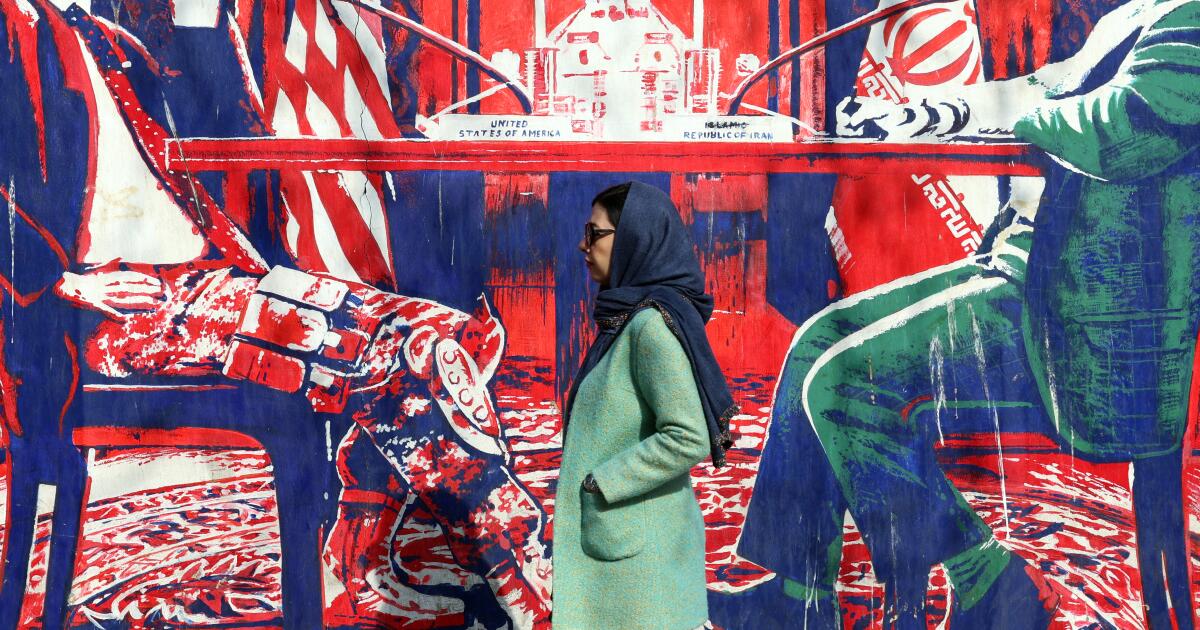
Embassy staffers and dependents evacuating, airlines suspending service, eyes in Iran warily turning skyward for signs of an attack.
The prospects of a showdown between the U.S. and Iran loom ever higher, as massive American naval and air power lies in wait off Iran’s shores and land borders.
Yet little of that urgency is felt in Iran’s government. Rather than quickly acquiescing to President Trump’s demands, Iranian diplomats persist in the kind of torturously slow diplomatic dance that marked previous discussions with the U.S., a pace that prompted Trump to declare on Friday that the Iranians were not negotiating in “good faith.”
But For Iran’s leadership, Iranian experts say, concessions of the sort Trump are asking for about nuclear power and the country’s role in the Middle East undermine the very ethos of the Islamic Republic and the decades-old project it has created.
“As an Islamic theocracy, Iran serves as a role model for the Islamic world. And as a role model, we cannot capitulate,” said Hamid Reza Taraghi, who heads international affairs for Iran’s Islamic Coalition Party, or Hezb-e Motalefeh Eslami.
Besides, he added, “militarily we are strong enough to fight back and make any enemy regret attacking us.”
Even as another round of negotiations ended with no resolution this week, the U.S. has completed a buildup involving more than 150 aircraft into the region, along with roughly a third of all active U.S. ships.
Observers say those forces remain insufficient for anything beyond a short campaign of a few weeks or a high-intensity kinetic strike.
Iran would be sure to retaliate, perhaps against an aircraft carrier or the many U.S. military bases arrayed in the region. Though such an attack is unlikely to destroy its target, it could damage or at least disrupt operations, demonstrating that “American power is not untouchable,” said Hooshang Talé, a former Iranian parliamentarian.
Tehran could also mobilize paramilitary groups it cultivated in the region, including Iraqi militias and Yemen’s Houthis, Talé added. Other U.S. rivals, such as Russia and China, may seize the opportunity to launch their own campaigns elsewhere in the world while the U.S. remains preoccupied in the Middle East, he said.
“From this perspective, Iran would not be acting entirely alone,” Tale said. “Indirect alignment among U.S. adversaries — even without a formal alliance — would create a cascading effect.”
We’re not exactly happy with the way they’re negotiating and, again, they cannot have nuclear weapons
— President Trump
The U.S. demands Iran give up all nuclear enrichment and relinquish existing stockpiles of enriched uranium so as to stop any path to developing a bomb. Iran has repeatedly stated it does not want to build a nuclear weapon and that nuclear enrichment would be for exclusively peaceful purposes.
The Trump administration has also talked about curtailing Iran’s ballistic missile program and its support to proxy groups, such as Hezbollah, in the region, though those have not been consistent demands. Tehran insists the talks should be limited to the nuclear issue.
After indirect negotiations on Thursday, Oman’s Foreign Minister Badr al-Busaidi — the mediator for the talks in Geneva — lauded what he said was “significant progress.” Iranian Foreign Ministry spokesman Esmail Baghaei said there had been “constructive proposals.”
Trump, however, struck a frustrated tone when speaking to reporters on Friday.
“We’re not exactly happy with the way they’re negotiating and, again, they cannot have nuclear weapons,” he said.
Trump also downplayed concerns that an attack could escalate into a longer conflict.
This frame grab from footage circulating on social media shows protesters dancing and cheering around a bonfire during an anti-government protest in Tehran, Iran, on Jan. 9.
(Uncredited / Associated Press)
“I guess you could say there’s always a risk. You know, when there’s war, there’s a risk in anything, both good and bad,” Trump said.
Three days earlier, in his State of the Union address Tuesday, said, “My preference is to solve this problem through diplomacy. But one thing is certain, I will never allow the world’s number one sponsor of terror, which they are by far, to have a nuclear weapon — can’t let that happen.”
There are other signs an attack could be imminent.
On Friday, the U.S. Embassy in Israel allowed staff to leave the country if they wished. That followed an earlier move this week to evacuate dependents in the embassy in Lebanon. Other countries have followed suit, including the U.K, which pulled its embassy staff in Tehran. Meanwhile, several airlines have suspended service to Israel and Iran.
A U.S. military campaign would come at a sensitive time for Iran’s leadership.
The country’s armed forces are still recovering from the June war with Israel and the U.S, which left more than 1,200 people dead and more than 6,000 injured in Iran. In Israel, 28 people were killed and dozens injured.
Unrest in January — when security forces killed anywhere from 3,000 to 30,000 protesters (estimates range wildly) — means the government has no shortage of domestic enemies. Meanwhile, long-term sanctions have hobbled Iran’s economy and left most Iranians desperately poor.
Despite those vulnerabilities, observers say the U.S. buildup is likely to make Iran dig in its heels, especially because it would not want to set the precedent of giving up positions at the barrel of a U.S. gun.
Other U.S. demands would constitute red lines. Its missile arsenal, for example, counts as its main counter to the U.S. and Israel, said Rose Kelanic, Director of the Middle East Program at the Defense Priorities think tank.
“Iran’s deterrence policy is defense by attrition. They act like a porcupine so the bear will drop them… The missiles are the quills,” she said, adding that the strategy means Iran cannot fully defend against the U.S., but could inflict pain.
At the same time, although mechanisms to monitor nuclear enrichment exist, reining in Tehran’s support for proxy groups would be a much harder matter to verify.
But the larger issue is that Iran doesn’t trust Trump to follow through on whatever the negotiations reach.
After all, it was Trump who withdrew from an Obama-era deal designed to curb Iran’s nuclear ambitions, despite widespread consensus Iran was in compliance.
Trump and numerous other critics complained Iran was not constrained in its other “malign activities,” such as support for militant groups in the Middle East and development of ballistic missiles. The Trump administration embarked on a policy of “maximum pressure” hoping to bring Iran to its knees, but it was met with what Iran watchers called maximum resistance.
In June, he joined Israel in attacking Iran’s nuclear facilities, a move that didn’t result in the Islamic Republic returning to negotiations and accepting Trump’s terms. And he has waxed wistfully about regime change.
“Trump has worked very hard to make U.S. threats credible by amassing this huge military force offshore, and they’re extremely credible at this point,” Kelanic said.
“But he also has to make his assurances credible that if Iran agrees to U.S. demands, that the U.S. won’t attack Iran anyway.”
Talé, the former parliamentarian, put it differently.
“If Iranian diplomats demonstrate flexibility, Trump will be more emboldened,” he said. “That’s why Iran, as a sovereign nation, must not capitulate to any foreign power, including America.”

new video loaded: Bill Clinton Says He ‘Did Nothing Wrong’ in House Epstein Inquiry
transcript
transcript
Bill Clinton Says He ‘Did Nothing Wrong’ in House Epstein Inquiry
Former President Bill Clinton told members of the House Oversight Committee in a closed-door deposition that he “saw nothing” and had done nothing wrong when he associated with Jeffrey Epstein decades ago.
-
“Cause we don’t know when the video will be out. I don’t know when the transcript will be out. We’ve asked that they be out as quickly as possible.” “I don’t like seeing him deposed, but they certainly went after me a lot more than that.” “Republicans have now set a new precedent, which is to bring in presidents and former presidents to testify. So we’re once again going to make that call that we did yesterday. We are now asking and demanding that President Trump officially come in and testify in front of the Oversight Committee.” “Ranking Member Garcia asked President Clinton, quote, ‘Should President Trump be called to answer questions from this committee?’ And President Clinton said, that’s for you to decide. And the president went on to say that the President Trump has never said anything to me to make me think he was involved. “The way Chairman Comer described it, I don’t think is a complete, accurate description of what actually was said. So let’s release the full transcript.”

By Jackeline Luna
February 27, 2026

Movie review: Ballet-themed erotic drama ‘Dreams’ dissipates in finale

Takeaways from AP’s report on the ICE detention center holding children and parents

2 Survivors Describe the Terror and Tragedy of the Tahoe Avalanche

‘The Fall and Rise of Reggie Dinkins’ falls before it rises — but then it soars

Xiaomi 17 is a small(ish) phone with a big(ish) battery

Florida High School Football Rankings: Top 25 teams – Oct. 21

Cleary's 21 help Le Moyne down Central Connecticut State 69-64 in OT

How old is Bo Nix? What to know about Oregon quarterback ahead of 2024 NFL Draft

99th annual Pony Swim held in Virginia

Indiana Members Credit Union announced as new anchor tenant at Bottleworks District
2 Survivors Describe the Terror and Tragedy of the Tahoe Avalanche

Iran fires missiles at US bases across Middle East after American strikes on nuclear, IRGC sites

Israel strikes two schools in Iran, killing more than 50 people

Anthropic CEO says he’s sticking to AI “red lines” despite clash with Pentagon

ICE blasts Washington mayor over directive restricting immigration enforcement
-

 World3 days ago
Exclusive: DeepSeek withholds latest AI model from US chipmakers including Nvidia, sources say
-

 Massachusetts3 days ago
Mother and daughter injured in Taunton house explosion
-

 Montana1 week ago
2026 MHSA Montana Wrestling State Championship Brackets And Results – FloWrestling
-

 Louisiana5 days ago
Wildfire near Gum Swamp Road in Livingston Parish now under control; more than 200 acres burned
-

 Denver, CO3 days ago
10 acres charred, 5 injured in Thornton grass fire, evacuation orders lifted
-

 Technology1 week ago
YouTube TV billing scam emails are hitting inboxes
-

 Technology1 week ago
Stellantis is in a crisis of its own making
-

 Politics1 week ago
OpenAI didn’t contact police despite employees flagging mass shooter’s concerning chatbot interactions: REPORT