Politics
Commentary: California’s first partner pushes to regulate AI while Trump and tech bros thunder forward

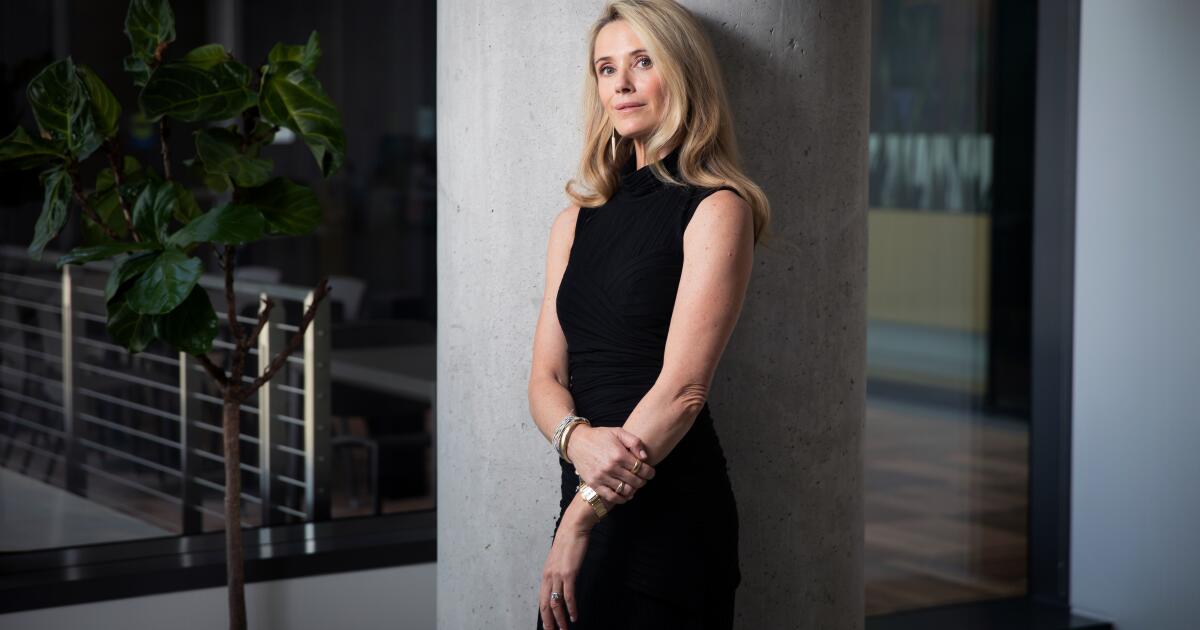
California First Partner Jennifer Siebel Newsom recently convened a meeting that might rank among the top sweat-inducing nightmare scenarios for Silicon Valley’s tech bros — a group of the Golden State’s smartest, most powerful women brainstorming ways to regulate artificial intelligence.
Regulation is the last thing this particular California-dominated industry wants, and it’s spent a lot of cash at both the state and federal capitols to avoid it — including funding President Trump’s new ballroom. Regulation by a bunch of ladies, many mothers, with profit a distant second to our kids when it comes to concerns?
I’ll let you figure out how popular that is likely be with the Elon Musks, Peter Thiels and Mark Zuckerbergs of the world.
But as Siebel Newsom said, “If a platform reaches a child, it carries a responsibility to protect that child. Period. Our children’s safety can never be second to the bottom line.”
Agreed.
Siebel Newsom’s push for California to do more to regulate AI comes at the same time that Trump is threatening to stop states from overseeing the technology — and is ramping up a national effort that will open America’s coffers to AI moguls for decades to come.
Right now, the U.S. is facing its own nightmare scenario: the most powerful and world-changing technology we have seen in our lifetimes being developed and unleashed under almost no rules or restraints other than those chosen by the men who seek personal benefit from the outcome.
To put it simply, the plan right now seems to be that these tech barons will change the world as they see fit to make money for themselves, and we as taxpayers will pay them to do it.
“When decisions are mainly driven by power and profit instead of care and responsibility, we completely lose our way, and given the current alignment between tech titans and the federal administration, I believe we have lost our way,” Siebel Newsom said.
To recap what the way has been so far, Trump recently tried to sneak a 10-year ban on the ability of states to oversee the industry into his ridiculously named “Big Beautiful Bill,” but it was pulled out by a bipartisan group in the Senate — an early indicator of how inflammatory this issue is.
Faced with that unexpected blockade, Trump has threatened to sign a mysterious executive order crippling states’ ability to regulate AI and attempting to withhold funds from those that try.
Simultaneously, the most craven and cowardly among Republican congresspeople have suggested adding a 10-year ban to the upcoming defense policy bill that will almost certainly pass. Of course, Congress has also declined to move forward on any meaningful federal regulations itself, while technology CEOs including Trump frenemy Musk, Apple’s Tim Cook, Meta’s Zuckerberg and many others chum it up at fancy events inside the White House.
Which may be why this week, Trump announced the “Genesis Mission,” an executive order that seemingly will take the unimaginable vastness of government research efforts across disciplines and dump them into some kind of AI model that will “revolutionize the way scientific research is conducted.”
While I am sure that nothing could possibly go wrong in that scenario, that’s not actually the part that is immediately alarming. This is: The project will be overseen by Trump science and technology policy advisor Michael Kratsios, who holds no science or engineering degrees but was formerly a top executive for Thiel and former head of another AI company that works on warfare-related projects with the Pentagon.
Kratsios is considered one of the main reasons Trump has embraced the tech bros with such adoration in his second term. Genesis will almost certainly mean huge government contracts for these private-sector “partners,” fueling the AI boom (or bubble) with taxpayer dollars.
Siebel Newsom’s message in the face of all this is that we are not helpless — and California, as the home of many of these companies and the world’s fourth-largest economy in its own right, should have a say in how this technology advances, and make sure it does so in a way that benefits and protects us all.
“California is uniquely positioned to lead the effort in showing innovation and responsibility and how they can go hand in hand,” she said. “I’ve always believed that stronger guardrails are actually good for business over the long term. Safer tech means better outcomes for consumers and greater consumer trust and loyalty.”
But the pressure to cave under the might of these companies is intense, as Siebel Newsom’s husband knows.
Gov. Gavin Newsom has spent the last few years trying to thread the needle on state legislation that offers some sort of oversight while allowing for the innovation that rightly keeps California and the United States competitive on the global front. The tech industry has spent millions in lobbying, legal fights and pressure campaigns to water down even the most benign of efforts, even threatening to leave the state if rules are enacted.
Last year, the industry unsuccessfully tried to stop Senate Bill 53, landmark legislation signed by Newsom. It’s a basic transparency measure on “frontier” AI models that requires companies to have safety and security protocols and report known “catastrophic” risks, such as when these models show tendencies toward behavior that could kill more than 50 people — which they have, believe it or not.
But the industry was able to stop other efforts. Newsom vetoed both Senate Bill 7, which would have required employers to notify workers when using AI in hiring and promotions; and Assembly Bill 1064, which would have barred companion chatbot operators from making these AI systems available to minors if they couldn’t prove they wouldn’t do things like encourage kids to self-harm, which again, these chatbots have done.
Still, California (along with New York and a few other states) has pushed forward, and speaking at Siebel Newsom’s event, the governor said that last session, “we took a number of at-bats at this and we made tremendous progress.”
He promised more.
“We have agency. We can shape the future,” he said. “We have a unique responsibility as it relates to these tools of technology, because, well, this is the center of that universe.”
If Newsom does keep pushing forward, it will be in no small part because of Siebel Newsom, and women like her, who keep the counter-pressure on.
In fact, it was another powerful mom, First Lady Melania Trump, who forced the federal government into a tiny bit of action this year when she championed the “Take It Down Act”, which requires tech companies to quickly remove nonconsensual explicit images. I sincerely doubt her husband would have signed that particular bill without her urging.
So, if we are lucky, the efforts of women like Siebel Newsom may turn out to be the bit of powerful sanity needed to put a check on the world-domination fantasies of the broligarchy.
Because tech bros are not yet all-powerful, despite their best efforts, and certainly not yet immune to the power of moms.



new video loaded: Bill Clinton Says He ‘Did Nothing Wrong’ in House Epstein Inquiry
transcript
transcript
Bill Clinton Says He ‘Did Nothing Wrong’ in House Epstein Inquiry
Former President Bill Clinton told members of the House Oversight Committee in a closed-door deposition that he “saw nothing” and had done nothing wrong when he associated with Jeffrey Epstein decades ago.
-
“Cause we don’t know when the video will be out. I don’t know when the transcript will be out. We’ve asked that they be out as quickly as possible.” “I don’t like seeing him deposed, but they certainly went after me a lot more than that.” “Republicans have now set a new precedent, which is to bring in presidents and former presidents to testify. So we’re once again going to make that call that we did yesterday. We are now asking and demanding that President Trump officially come in and testify in front of the Oversight Committee.” “Ranking Member Garcia asked President Clinton, quote, ‘Should President Trump be called to answer questions from this committee?’ And President Clinton said, that’s for you to decide. And the president went on to say that the President Trump has never said anything to me to make me think he was involved. “The way Chairman Comer described it, I don’t think is a complete, accurate description of what actually was said. So let’s release the full transcript.”

By Jackeline Luna
February 27, 2026

NEWYou can now listen to Fox News articles!
U.S. Immigration and Customs Enforcement (ICE) accused Everett, Washington, Mayor Cassie Franklin of escalating tensions with federal authorities after she issued a directive limiting immigration enforcement in the city.
Franklin issued a mayoral directive this week establishing citywide protocols for staff, including law enforcement, that restrict federal immigration agents from entering non-public areas of city buildings without a judicial warrant.
“We’ve heard directly from residents who are afraid to leave their houses because of the concerning immigration activity happening locally and across our country. It’s heartbreaking to see the impacts on Everett families and businesses,” Franklin said in a statement.
“With this directive, we are setting clear protocols, protecting access to services and reinforcing our commitment to serving the entire community.”
ICE blasted the directive Friday, writing on X it “escalates tension and directs city law enforcement to intervene with ICE operations at their own discretion,” thereby “putting everyone at greater risk.”
Mayor Cassie Franklin said her new citywide immigration enforcement protocols are intended to protect residents and ensure access to services, while ICE accused her of escalating tensions with federal authorities. (Google Maps)
ICE said Franklin was directing city workers to “impede ICE operations and expose the location of ICE officers and agents.”
“Working AGAINST ICE forces federal teams into the community searching for criminal illegal aliens released from local jails — INCREASING THE FEDERAL PRESENCE,” the agency said. “Working with ICE reduces the federal presence.”
“If Mayor Franklin wanted to protect the people she claims to serve, she’d empower the city police with an ICE 287g partnership — instead she serves criminal illegal aliens,” ICE added.
DHS, WHITE HOUSE MOCK CHICAGO’S LAWSUIT OVER ICE: ‘MIRACULOUSLY REDISCOVERED THE 10TH AMENDMENT’
U.S. Immigration and Customs Enforcement blasted Everett’s mayor after she issued a directive restricting federal agents from accessing non-public areas of city facilities without a warrant. (Victor J. Blue/Bloomberg via Getty Images)
During a city council meeting where she announced the policy, Franklin said “federal immigration enforcement is causing real fear for Everett residents.”
“It’s been heartbreaking to see the racial profiling that’s having an impact on Everett families and businesses,” she said. “We know there are kids staying home from school, people not going to work or people not going about their day, dining out or shopping for essentials.”
The mayor’s directive covers four main areas, including restricting federal immigration agents from accessing non-public areas of city buildings without a warrant, requiring immediate reporting of enforcement activity on city property and mandating clear signage to enforce access limits.
BLOCKING ICE COOPERATION FUELED MINNESOTA UNREST, OFFICIALS WARN AS VIRGINIA REVERSES COURSE
Everett, Wash., Mayor Cassie Franklin said her new directive is aimed at protecting residents amid heightened immigration enforcement activity. (iStock)
It also calls for an internal policy review and staff training, including the creation of an Interdepartmental Response Team and updated immigration enforcement protocols to ensure compliance with state law.
Franklin directed city staff to expand partnerships with community leaders, advocacy groups and regional governments to coordinate responses to immigration enforcement, while promoting immigrant-owned businesses and providing workplace protections and “know your rights” resources.
The mayor also reaffirmed a commitment to “constitutional policing and best practices,” stating that the police department will comply with state law barring participation in civil immigration enforcement. The directive outlines protocols for documenting interactions with federal officials, reviewing records requests and strengthening privacy safeguards and technology audits.
CLICK HERE TO DOWNLOAD THE FOX NEWS APP
Everett, Wash., Mayor Cassie Franklin issued a directive limiting federal immigration enforcement in city facilities. (iStock)
“We want everyone in the city of Everett to feel safe calling 911 when they need help and to know that Everett Police will not ask about your immigration status,” Franklin said during the council meeting. ”I also expect our officers to intervene if it’s safe to do so to protect our residents when they witness federal officers using unnecessary force.”
Fox News Digital has reached out to Mayor Franklin’s office and ICE for comment.
Related Article


The morning after Netflix clinched its deal to buy Warner Bros., Paramount Skydance Chairman David Ellison assembled a war room of trusted advisors, including his billionaire father, Larry Ellison.
Furious at Warner Bros. Discovery Chief David Zaslav for ending the auction, the Ellisons and their team began plotting their comeback on that crisp December day.
To rattle Warner Bros. Discovery and its investors, they launched a three-front campaign: a lawsuit, a hostile takeover bid and direct lobbying of the Trump administration and Republicans in Congress.
“There was a master battle plan — and it was extremely disciplined,” said one auction insider who was not authorized to comment publicly.
Netflix stunned the industry late Thursday by pulling out of the bidding, clearing the way for Paramount to claim the company that owns HBO, HBO Max, CNN, TBS, Food Network and the Warner Bros. film and television studios in Burbank. The deal was valued at more than $111 billion.
The streaming giant’s reversal came just hours after co-Chief Executive Ted Sarandos met with Atty Gen. Pam Bondi and a deputy at the White House. It was a cordial session, but the Trump officials told Sarandos that his deal was facing significant hurdles in Washington, according to a person close to the administration who was not authorized to comment publicly.
Even before that meeting, the tide had turned for Paramount in a swell of power, politics and brinkmanship.
“Netflix played their cards well; however, Paramount played their cards perfectly,” said Jonathan Miller, chief executive of Integrated Media Co. “They did exactly what they had to do and when they had to do it — which was at the very last moment.”
Key to victory was Larry Ellison, his $200-billion fortune and his connections to President Trump and congressional Republicans.
Paramount also hired Trump’s former antitrust chief, attorney Makan Delrahim, to quarterback the firm’s legal and regulatory action.
Republicans during a Senate hearing this month piled onto Sarandos with complaints about potential monopolistic practices and “woke” programming.
David Ellison skipped that hearing. This week, however, he attended Trump’s State of the Union address in the Capitol chambers, a guest of Sen. Lindsey Graham (R-S.C.). The two men posed, grinning and giving a thumbs-up, for a photo that was posted to Graham’s X account.
David Ellison, the chairman and chief executive of Paramount Skydance Corp., walks through Statuary Hall to the State of the Union address at the U.S. Capitol on Feb. 24, 2026.
(Anna Moneymaker / Getty Images)
On Friday, Netflix said it had received a $2.8-billion payment — a termination fee Paramount agreed to pay to send Netflix on its way.
Long before David Ellison and his family acquired Paramount and CBS last summer, the 43-year-old tech scion and aircraft pilot already had his sights set on Warner Bros. Discovery.
Paramount’s assets, including MTV, Nickelodeon and the Melrose Avenue movie studio, have been fading. Ellison recognized he needed the more robust company — Warner Bros. Discovery — to achieve his ambitions.
“From the very beginning, our pursuit of Warner Bros. Discovery has been guided by a clear purpose: to honor the legacy of two iconic companies while accelerating our vision of building a next-generation media and entertainment company,” David Ellison said in a Friday statement. “We couldn’t be more excited for what’s ahead.”
Warner’s chief, Zaslav, who had initially opposed the Paramount bid, added: “We look forward to working with Paramount to complete this historic transaction.”
Netflix, in a separate statement, said it was unwilling to go beyond its $82.7-billion proposal that Warner board members accepted Dec. 4.
“We believe we would have been strong stewards of Warner Bros.’ iconic brands, and that our deal would have strengthened the entertainment industry and preserved and created more production jobs,” Sarandos and co-Chief Executive Greg Peters said in a statement.
“But this transaction was always a ‘nice to have’ at the right price, not a ‘must have’ at any price,” the Netflix chiefs said.
Netflix may have miscalculated the Ellison family’s determination when it agreed Feb. 16 to allow Paramount back into the bidding.
The Los Gatos, Calif.-based company already had prevailed in the auction, and had an agreement in hand. Its next step was a shareholder vote.
“They didn’t need to let Paramount back in, but there was a lot of pressure on them to make sure the process wouldn’t be challenged,” Miller said.
In addition, Netflix’s stock had also been pummeled — the company had lost a quarter of its value — since investors learned the company was making a Warner run.
Upon news that Netflix had withdrawn, its shares soared Friday nearly 14% to $96.24.

Netflix Chief Executive Ted Sarandos arrives at the White House on Feb. 26, 2026.
(Andrew Leyden / Getty Images)
Invited back into the auction room, Paramount unveiled a much stronger proposal than the one it submitted in December.
The elder Ellison had pledged to personally guarantee the deal, including $45.7 billion in equity required to close the transaction. And if bankers became worried that Paramount was too leveraged, the tech mogul agreed to put in more money in order to secure the bank financing.
That promise assuaged Warner Bros. Discovery board members who had fretted for weeks that they weren’t sure Ellison would sign on the dotted line, according to two people close to the auction who were not authorized to comment.
Paramount’s pressure campaign had been relentless, first winning over theater owners, who expressed alarm over Netflix’s business model that encourages consumers to watch movies in their homes.
During the last two weeks, Sarandos got dragged into two ugly controversies.
First, famed filmmaker James Cameron endorsed Paramount, saying a Netflix takeover would lead to massive job losses in the entertainment industry, which is already reeling from a production slowdown in Southern California that has disrupted the lives of thousands of film industry workers.
Then, a week ago, Trump took aim at Netflix board member Susan Rice, a former high-level Obama and Biden administration official. In a social media post, Trump called Rice a “no talent … political hack,” and said that Netflix must fire her or “pay the consequences.”
The threat underscored the dicey environment for Netflix.
Additionally, Paramount had sowed doubts about Netflix among lawmakers, regulators, Warner investors and ultimately the Warner board.
Paramount assured Warner board members that it had a clear path to win regulatory approval so the deal would quickly be finalized. In a show of confidence, Delrahim filed to win the Justice Department’s blessing in December — even though Paramount didn’t have a deal.
This month, a deadline for the Justice Department to raise issues with Paramount’s proposed Warner takeover passed without comment from the Trump regulators.
“Analysts believe the deal is likely to close,” TD Cowen analysts said in a Friday report. “While Paramount-WBD does present material antitrust risks (higher pay TV prices, lower pay for TV/movie workers), analysts also see a key pro-competitive effect: improved competition in streaming, with Paramount+ and HBO Max representing a materially stronger counterweight to #1 Netflix.”
Throughout the battle, David Ellison relied on support from his father, attorney Delrahim, and three key board members: Oracle Executive Vice Chair Safra A. Catz; RedBird Capital Partners founder Gerry Cardinale; and Justin Hamill, managing director of tech investment firm Silver Lake.
In the final days, David Ellison led an effort to flip Warner board members who had firmly supported Netflix. With Paramount’s improved offer, several began leaning toward the Paramount deal.
On Tuesday, Warner announced that Paramount’s deal was promising.
On Thursday, Warner’s board determined Paramount’s deal had topped Netflix. That’s when Netflix surrendered.
“Paramount had a fulsome, 360-degree approach,” Miller said. “They approached it financially. … They understood the regulatory environment here and abroad in the EU. And they had a game plan for every aspect.”
On Friday, Paramount shares rose 21% to $13.51.
It was a reversal of fortunes for David Ellison, who appeared on CNBC just three days after that war room meeting in December.
“We put the company in play,” David Ellison told the CNBC anchor that day. “We’re really here to finish what we started.”
Times staff writer Ana Cabellos and Business Editor Richard Verrier contributed to this report.

No. 3 Rainbow Warriors continue winning ways against No. 6 BYU | Honolulu Star-Advertiser

Town Hall to address future of Medicaid expansion in Idaho – Local News 8

Takeaways: Michigan basketball ends Illinois streak, wins Big Ten

Highlights: Beech Grove at Whiteland; February 27, 2026

Iowa Boys High School Basketball Substate Finals Locked In For 4A

Florida High School Football Rankings: Top 25 teams – Oct. 21

Cleary's 21 help Le Moyne down Central Connecticut State 69-64 in OT

How old is Bo Nix? What to know about Oregon quarterback ahead of 2024 NFL Draft

99th annual Pony Swim held in Virginia

Indiana Members Credit Union announced as new anchor tenant at Bottleworks District

ICE blasts Washington mayor over directive restricting immigration enforcement

Did the EU bypass Hungary’s veto on Ukraine’s €90 billion loan?

How the federal government is painting immigrants as criminals on social media

Where Iran’s ballistic missiles can reach — and how close they are to the US

Has India’s influence in Afghanistan grown under the Taliban?
-

 World2 days ago
Exclusive: DeepSeek withholds latest AI model from US chipmakers including Nvidia, sources say
-

 Massachusetts3 days ago
Mother and daughter injured in Taunton house explosion
-

 Montana1 week ago
2026 MHSA Montana Wrestling State Championship Brackets And Results – FloWrestling
-

 Louisiana5 days ago
Wildfire near Gum Swamp Road in Livingston Parish now under control; more than 200 acres burned
-

 Denver, CO2 days ago
10 acres charred, 5 injured in Thornton grass fire, evacuation orders lifted
-

 Technology7 days ago
YouTube TV billing scam emails are hitting inboxes
-

 Technology7 days ago
Stellantis is in a crisis of its own making
-

 Politics7 days ago
OpenAI didn’t contact police despite employees flagging mass shooter’s concerning chatbot interactions: REPORT