Connect with us

Northeast

Wealthy Maryland school district PTA trains parents in how to disrupt ICE enforcement operations

Published

on

Wealthy Maryland school district PTA trains parents in how to disrupt ICE enforcement operations

NEWYou can now listen to Fox News articles!

Parent Teacher Association officials in one of the wealthiest school districts in the country hosted a training session last month instructing families on how to respond to Immigration and Customs Enforcement (ICE) activity.

The virtual PTA session in Montgomery County, Maryland, was held on Jan. 20 and was headed by Councilwoman Kristin Mink. The meeting was titled “ICE Response & Organizing Tools for PTAs, Parents & Guardians.” 

According to the National Review, Mink has previously hosted multiple sessions on ways schools can equip themselves with “tools to slow ICE down and protect each other.” The training guided parents on how to escort students with illegal immigrant parents, and encouraged volunteers to monitor ICE activity during drop‑off and pickup, and introduced ways to support families affected by ICE arrests and deportations.

During the session, Mink reportedly presented comprehensive “rapid response” guidance she had created and shared publicly three days earlier. 

Advertisement

In one slide, Mink outlined how “White allies” could assist and support the community, advising them not to use whistles to counter “ICE violence,” which has become a widespread form of community resistance. She argued that White individuals should avoid using a tool that, in her view, reinforces authority associated with Whiteness.

THE FAR-LEFT NETWORK THAT HELPED PUT ALEX PRETTI IN HARM’S WAY, THEN MADE HIM A MARTYR

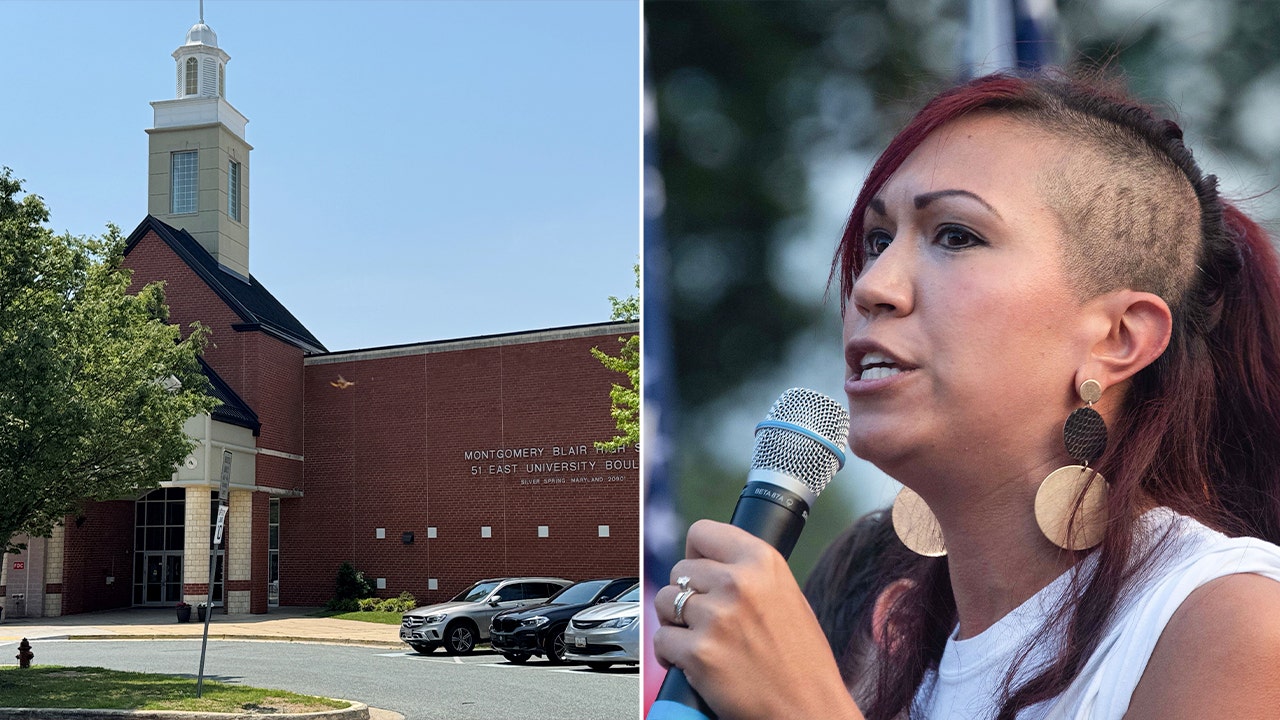
Kristin Mink addresses a protest against President Donald Trump in front of the White House in Washington, D.C., on August 6, 2018.  (Nicholas Kamm/AFP via Getty Images)

“Especially for White allies, whistles can represent a subconscious desire for authority, protection, or control in moments of crisis,” the slide said. 

“But rapid response is not about assuming authority. . . . When we question decisions made by those impacted, we risk centering our own comfort instead of impacted people.”

Advertisement

She added that “What feels ‘activating’ or empowering to some can cause stress to others,” noting that “Black and Brown communities are already overexposed to chronic noise pollution due to racist zoning, redlining, and disinvestment.”

She further addressed, in the slide, how certain characteristics — such as gender, sexuality, and education — align with positions of power or marginalization.

‘WHITE SAVIORS’ USE OF WHISTLES CAUSES BITTER INTERNAL RIFT INSIDE ANTI-ICE MOVEMENT

Cars park outside Montgomery Blair High School in Silver Spring, Maryland, on June 12, 2025.  (Robb Hill/The Washington Post via Getty Images)

Last September, the Department of Homeland Security clarified that, contrary to what it described as “fearmongering” by sanctuary politicians, “ICE is not conducting enforcement operations at, or ‘raiding,’ schools.”

Advertisement

Mink’s presentation aligns with a recent wave within the anti-ICE movement, where immigrant-led organizations clashed with predominantly White “rapid response” activists over the use of whistles during immigration raids. Groups like the Washington Immigrant Solidarity Network (WAISN) and Maryland-based coalitions argue that blowing whistles is a “White Savior” tactic that creates unnecessary panic and escalates tension.

The Jan. 20 meeting sparked further controversy, with critics arguing that parent-teacher organizations should prioritize academic success rather than engaging in political activism.

“It goes without saying, PTAs should focus on their original intent: students — not injecting inflammatory and divisive political rhetoric into the community,” Kendall Tietz, investigative reporter at Defending Education, told the National Review.

Kristin Mink at the Montgomery County Council Office Building in Rockville, Maryland on January 14, 2025. (Michael S. Williamson/The Washington Post via Getty Images)

CLICK HERE TO DOWNLOAD THE FOX NEWS APP

Advertisement

The online presentation was promoted by, and advertised on, the Montgomery County Council of PTAs’ social media. According to the online sign-up sheet, several agencies supported the information session, including education associations, labor unions and immigration advocacy organizations. 

Many local PTAs also promoted the session on their official platforms, including those at Gaithersburg Middle School, Laytonsville Elementary School and Stedwick Elementary School. 

Read the full article from Here

Advertisement

Massachusetts

Rent control question tossed from ballot, SJC cites religious exemptions

Published

on

Rent control question tossed from ballot, SJC cites religious exemptions


Massachusetts voters will not have the opportunity to decide whether to end a decades-long ban on rent control after the Supreme Judicial Court (SJC) ruled Tuesday that it must not appear on the November ballot, citing the exemptions for religious organizations included in the question.

The SJC ruled that the initiative petition “impermissibly” relates to religion and religious institutions – something the Massachusetts Constitution states cannot be involved in the initiative petition process.

It’s the second ballot initiative struck down by the SJC in less than a week where the high court cited errors made by Attorney General Andrea Campbell’s office, with justices issuing an opinion in May on a third ballot initiative regarding legislative stipends they said should not have been certified the AG’s office.

Last week, the SJC struck from the ballot a measure that would have gradually lowered the state income tax, citing a “misleading summary” authored by Campbell’s office. The SJC sided with Campbell on three other challenges to ballot initiatives certified by her office.

Advertisement

But even with the Attorney General’s office committing errors on three of six ballot initiative certifications, Campbell is defending her staff, and even calls it a “great record.”

“We have 47 (ballot initiatives) that we approved, we have 44 we certified. We had six challenges, and we got three wrong. I think that’s a great record,” Campbell said when asked by the Herald if the her qualifications, as well as those of her staff, should be called into question.

“That just tells me we have more to do to be better. Any institution, whether it’s media outlets or any industry, if they can get it 100% right every time…that doesn’t happen. We own these mistakes, I own these mistake, and now we’ll move forward to improve our process to get it right the next time,” she said.

When it comes to the rent control decision, Campbell had certified the question for the ballot. She reacted to the court’s ruling to block it shortly after it was posted by the SJC .

“We got the rent control initiative, we certified it. But we, of course, have to respect the court’s decision which was against us, and we got that wrong,” Campbell admitted during her monthly appearance on GBH radio Tuesday morning.

Advertisement

Campbell went on to say that her office attempted to explain in its summary, which appeared on the petition used to gather required signatures to qualify for the ballot, that religious institutions would be exempt from the law, if it were to pass.

The exemption for religious organizations controlling rental units was part of the language of the original petition.

“The court disagreed and said that even a minor reference to religion was not appropriate for a valid initiative, and we were just reviewing this. Obviously the decision just came out, and I think it was only the second time that the court has broken this standard, so it’s not like it happens frequently,” she said.

The plaintiffs, whom the SJC sided with in its ruling, claimed the petition should be disqualified because “religion is a factor in the application of the law,” citing a legal precedent that is key to the court’s ruling.

“The petition … concerns a generally secular subject matter — rent control. But, by including an express exemption for facilities operated solely for religious purposes, the petition impermissibly makes religion “a factor in [the petition’s] application.” And in order to enforce the proposed law, the exemption would require the government to determine if a facility is “operated solely for . . . religious . . . purposes,” and then make an enforcement decision based on the facility’s religious purpose (or lack thereof),” Justice Frank Gaziano in the SJC decision. “Further, the petition would confer preferential treatment on religious institutions by allowing them to increase rent prices, while limiting rent increases for secular facilities.”

Advertisement

The AG’s summary of the proposal stated that the rent control measure “would not apply to … units operated for educational, religious, or non-profit purposes.” Campbell had certified the question for the ballot, using a process that she has called “stupid” and said needs to be “revamped.”

Several other organizations involved in the fight for and against rent control are weighed in on the ruling, with rent control proponents calling it  “disappointing,” and opponents celebrate.

“This decision is a massive disappointment after all the work that thousands of volunteers and advocates in every corner of the state put into qualifying our rent control initiative for the ballot, but it’s far from the end of our campaign to protect Massachusetts renters from excessive rent hikes,” said New England Community Project Executive Director, who also chairs the Keep Massachusetts Home campaign, adding that the plaintiffs were financed by  “equity-backed real estate investment corporations.”

Housing for Massachusetts – a nonprofit organization against the rent control initiative, called it “the nation’s most extreme” rent control proposal in a statement celebrating the ruling.

“Today the Supreme Judicial Court confirmed that the nation’s most extreme rent control proposal was unconstitutional. While we firmly believe that Massachusetts voters were prepared to vote ‘no’ in November, today’s decision puts the issue to rest and protects our housing pipeline and our communities from the proven damage that rent control inflicts,” the organization said. “We are incredibly grateful to the countless small property owners, real estate professionals, elected officials, and community leaders who supported our coalition, and we look forward to working together to create more homes and tackle affordability through real policy solutions.”

Advertisement

The rent control question was the last of this year’s ballot questions still pending with the SJC.

Meanwhile, the SJC also ruled this week to allow a question to move forward that would switch the state’s primary election system to an all-party primary, proving to be a significant influence on what voters will decide on in the November election.


Source link

Advertisement
Continue Reading

New Hampshire

Three seriously injured in head-on crash on I-293 in Hooksett, N.H. – The Boston Globe

Published

on

Three seriously injured in head-on crash on I-293 in Hooksett, N.H. – The Boston Globe


Three people suffered injuries in a two-vehicle collision early Tuesday morning in Hooksett, New Hampshire.Courtesy of New Hampshore State

Three people suffered serious injuries Tuesday in a two-vehicle crash in Hooksett, N.H., police said.

The head-on collision happened around 5:40 a.m. on Interstate 293 northbound, State Police said.

Police said that Timothy Hubbard, 43, of Rome, Maine, was traveling south when he lost control of his car and crossed the median into oncoming traffic, police said.

Hubbard, his passenger, and the other driver were taken to hospitals to be treated for serious injuries, police said. The injures were not believed to be life-threatening.

Advertisement

Police said speed was believed to be a factor in the crash, which is under investigation.


Hannah Goeke can be reached at hannah.goeke@globe.com.


Source link

Continue Reading

New Jersey

Cothren Helping Build a More Inclusive Hockey Community | FEATURE | New Jersey Devils

Published

on

Cothren Helping Build a More Inclusive Hockey Community | FEATURE | New Jersey Devils


For Nora Corthren, the work goes far beyond organizing events or telling stories. It’s about helping people see themselves in hockey.

As the NHL’s Manager of Content, Audience Development, and Social Impact, Corthren works at the crossroads of storytelling and community engagement, helping shine a spotlight on initiatives that make our game of hockey more welcoming and inclusive. From Pride programming to the Willie O’Ree Community Hero Award and Hockey Fights Cancer, her role focuses on highlighting the people and organizations making a difference throughout the hockey world.

Over the past four years, Corthren has witnessed meaningful growth across the sport.

“It really has been wonderful to just see the hockey world continue to grow and develop and become more welcoming and more diverse and more inclusive,” she said.

Advertisement

Much of that progress comes from grassroots organizations working to create safe and welcoming spaces for players and fans from all backgrounds. Corthren’s job often involves identifying those stories and using the NHL’s platform to amplify them.

“I think it’s something that a lot of people who do the grassroots work of trying to make the game a more inclusive and welcoming space, they don’t do it for the attention,” she said. “They very much do it for the impact.”

That ability to elevate organizations and individuals making a difference has become one of the most rewarding parts of her work.

Among the initiatives closest to Corthren’s heart is the NHL’s continued involvement in Pride celebrations, including the annual New York City Pride March. For years, the league has marched alongside local hockey organizations and teams from across the New York metropolitan area, including the New Jersey Devils, New York Islanders, New York Sirens, and New York Rangers.

For Corthren, the importance of that presence cannot be overstated. Seeing the NHL shield, the NHL teams’ logos, and even, yes, NJ Devil, are important parts of representation to a marginalized community.

Advertisement


Source link

Continue Reading
Advertisement

Trending
