Northeast
Wealthy Florida real estate brothers' 'trophies' uncovered as judge denies bail: feds

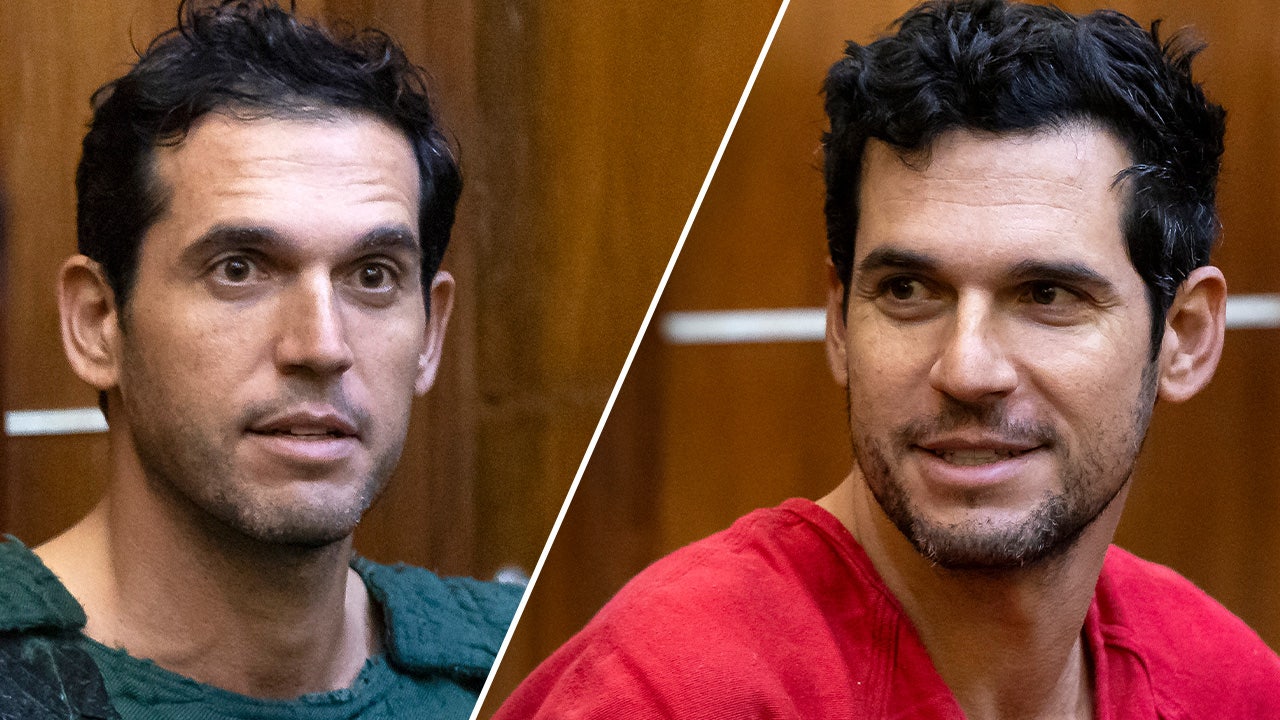
Three wealthy brothers were accused last month of drugging and then sexually assaulting and raping dozens of women in multiple states, and authorities say new video evidence in the case shows the “depraved” nature of their alleged crimes.
Tal, 38, and Oren Alexander, 37, two prominent jet-setting brokers in New York and Miami, and their brother Alon Alexander, Oren’s identical twin, were arrested in Miami Beach on Dec. 11 and have since been taken into federal custody.
Law enforcement officers have interviewed over 40 women, who reported “being forcibly raped or sexually assaulted by at least one of the Alexander Brothers,” according to a recent letter by the prosecution, obtained by Fox News Digital.
HIGH-PROFILE REAL ESTATE BROTHER MISSES HEARING AFTER MIX-UP IN IDENTICAL TWINS’ SEX TRAFFICKING CASE
Oren and Alon Alexander attend Jeff Gordon’s Last Lap on November 22, 2015, at The Villa, Casa Casuarina in Miami Beach, Florida. (Aaron Davidson/Getty Images for J Group)
Oren Alexander and his twin brother, Alon, attend a bond hearing after being charged with multiple state and federal crimes, including sex trafficking and rape, at the Richard E. Gerstein Justice Building on Friday, Dec. 13, 2024, in Miami. (Matias J. Ocner/Miami Herald via AP, Pool)
In many of these alleged instances, “one or more of the Alexander Brothers drugged their victim prior to the rape,” prosecutors wrote in the letter filed last week and addressed to U.S. District Judge Valerie Caproni, the New York judge who presided over a hearing in the case on Wednesday.
Prosecutors on Wednesday argued against setting bail for the brothers, whose “incentives to flee are through the roof,” they said, arguing that the Alexanders have significant foreign connections.
After hearing arguments for three hours, Judge Caproni denied bail, finding the Alexander brothers pose a flight risk and a risk to the community. She said the evidence is strong, adding that the men pose a danger to unsuspecting women.
Each of the brothers has separately been accused by at least 10 women of forcible rape between 2002 or 2003 and 2021, the letter continues.
Authorities executed a warrant on Dec. 11 to search Tal Alexander’s apartment inside a skyscraper on Manhattan’s “Billionaire’s Row.” During the search, multiple hard drives were discovered and seized, including one with a large quantity of sexually explicit videos and pictures, according to the letter and prosecutor’s statement during Wednesday’s hearing.
The apartment was previously shared by Oren and Tal Alexander, the letter continues, adding that the photos and videos were found on a hard drive in a closet that appeared to include items belonging to Oren.
LUXURY REAL ESTATE BROTHERS LURED DOZENS OF WOMEN OVER TWO DECADES WITH PROMISE OF LAVISH LIFESTYLE: FEDS
Tal Alexander attends the Charity Gala for Ukraine people and culture at Scuola Grande Di San Rocco on April 21, 2022, in Venice, Italy. (Daniele Venturelli/Getty Images)
Damian Williams, U.S. attorney for the Southern District of New York, during a news conference in New York, on Wednesday, Dec. 11, 2024. Luxury real estate brokers Oren and Tal Alexander and their brother Alon were arrested and charged with sex-trafficking by federal prosecutors in New York. (Yuki Iwamura/Bloomberg via Getty Images)
The seized photos and videos depict “at least Oren, Alon, and several third parties recording or photographing themselves with women in states of intoxication and undress,” and in multiple videos, “the women appear initially unaware that they were being recorded and became upset and attempted to hide or flee from the camera after realizing they were being filmed,” prosecutors wrote.
Other videos found in Tal Alexander’s apartment show Alon and Oren Alexander and other men engaged in sexual contact with women “who are visibly under the influence of alcohol or other substances,” the letter continues, adding that in some cases, at least one of the brothers and another man “physically manipulated the women’s bodies in order to have sex with them while the women did not actively participate in the sexual activity or turned away.”
Prosecutors explained that the new evidence reveals the “depraved nature” of the brothers’ actions, as well as the “immense danger” they present.
“The fact that video versions of trophies of the defendants’ criminal conduct were found in Tal Alexander’s residence as recently as last month also suggests that the defendants have not closed the door on their criminal conduct,” the letter continues.
‘DIDDY’ MAKES 3RD BAIL ATTEMPT AFTER PROSECUTORS ALLEGE HE BLACKMAILED VICTIMS FROM BEHIND BARS
Real estate brokers Tal Alexander and Oren Alexander at their home on Miami Beach on Feb. 1, 2019. (Patrick Farrell/Miami Herald/Tribune News Service via Getty Images)
Prosecutors allege that the Alexander brothers “worked together, and with others known and unknown to repeatedly and violently drug, sexually assault, and rape” victims in New York, Miami and elsewhere, according to a federal indictment filed in December.
All three brothers were charged with one count of conspiracy to commit sex trafficking and a separate count of sex trafficking of one woman by force, fraud or coercion. In addition, Tal Alexander was charged with the sex trafficking of a second victim.
As part of their sex trafficking conspiracy, the Alexander brothers “engaged in a persistent pattern of rape and sexual assault, which included both pre-planned trips and events for which the defendants recruited women to attend and then raped and sexually assaulted them, as well as opportunistic rapes and sexual assaults of numerous victims who they encountered by chance,” prosecutors say.
According to the charges in the indictment, the three brothers had conspired in the sex-trafficking scheme since at least 2010, but prosecutors have alleged that their sexual violence against women actually spans more than 20 years, dating as far back as when the men were in high school in Miami.
GET REAL-TIME UPDATES DIRECTLY ON THE TRUE CRIME HUB
Oren Alexander, 37, center, and his twin brother, Alon, center-right, speak to their attorney Joel Denaro during their bond hearing after being charged with multiple state and federal crimes, including sex trafficking and rape, at the Richard E. Gerstein Justice Building on Friday, Dec. 13, 2024, in Miami. (Matias J. Ocner/Miami Herald via AP, Pool)
Defense attorneys for the three brothers have argued that they committed no sexual assaults, and that their relationships with the alleged victims were consensual, according to court records.
Attorneys for Tal Alexander wrote a responding letter to Judge Caproni this week, arguing that the prosecution “fails to detail when the videos were taken, how many videos, if any, the defendants are in, whether the purported participants have been identified, or whether the videos even depict non-consensual sexual activity.”
At Wednesday’s hearing, Judge Caproni said the women in the videos appear visibly incapacitated, adding, “In my view, that is rape.”
FOLLOW THE FOX TRUE CRIME TEAM ON X
A display showing images of Alon, Oren, and Tal Alexander prior to a news conference in New York, on Wednesday, Dec. 11, 2024. Luxury real estate brokers Oren and Tal Alexander and their brother Alon were arrested and charged with sex trafficking by federal prosecutors in New York. (Yuki Iwamura/Bloomberg via Getty Images)
Oren and Tal Alexander co-founded the real estate firm Official, which offers luxury listings in places like New York City, the Hamptons, Miami and Los Angeles, in 2022 after rising through the ranks at Douglas Elliman, one of the largest real estate brokerages in the country, according to prosecutors.
Their past clients include Kim Kardashian and Kanye West, Liam Gallagher and Lindsay Lohan, according to CBS News.
Alon Alexander, 37, did not work in real estate, but he socialized with them.
SIGN UP TO GET TRUE CRIME NEWSLETTER
Alon Alexander, 37, right, and his twin brother, Oren, left, attend their bond hearing at the Richard E. Gerstein Justice Building after being charged with multiple state and federal crimes, including sex trafficking and rape, on Friday, Dec. 13, 2024, in Miami. (Matias J. Ocner/Miami Herald via AP, Pool)
The Alexander brothers are still in custody in Florida and will be moved to New York next week, the judge added. They will likely be housed at the Metropolitan Detention Center (MDC), the same prison where Sean “Diddy” Combs and Sam Bankman-Fried are being held.
The next status conference in the case is scheduled for Jan. 29.
Read the full article from Here


Come February a former New York Yankees first-round draft pick, will get a chance to prove himself to their longtime rivals.
Left-hander T.J. Sikkema, 27, is one of seven non-roster invitees to Red Sox spring training, the club announced Tuesday.
Catcher Jason Delay, infielder Vinny Capra, lefty Alec Gamboa, and right-handers Osvaldo Berrios, Hobie Harris and Devin Sweet round out the group.
The Yankees drafted Sikkema 38th overall in the ‘19 draft. He was one of three minor league pitchers they dealt to the Kansas City Royals for former Red Sox star Andrew Benintendi at the ‘22 MLB trade deadline.
Sikkema spent the last two years in the Cincinnati Reds organization. Last year he reached Triple-A for the first time, and pitched to a 3.47 ERA over five games (four starts) with nine earned runs allowed over 23.1 innings, following the late-August promotion.
While the Red Sox had a top-ranked farm system last year, their catching depth is notoriously thin. Delay, 30, has 134 games of big-league experience with the 2022-24 Pittsburgh Pirates, including 131 behind the dish, a career .231/.333/.400 line in the majors. He spent last season with the Double-A and Triple-A levels of the Atlanta Braves organization.
Capra, 29, appeared in 47 major league games last season, 24 with the Milwaukee Brewers and 23 with the Chicago White Sox. Since his debut with the ‘22 Toronto Blue Jays, he has played 67 big-league games over the last four years.
Though a lifetime .133/.181/.188 hitter in the majors, Capra brings defensive versatility to the table. In just 58 fielding games, he has already covered third base, second, shortstop, left and right field, and made three pitching appearances.
Gamboa, 28, comes to the Red Sox after a season split between the Los Angeles Dodgers’ Triple-A Oklahoma City Comets and the Lotte Giants of the Korean Baseball League. He was the Dodgers’ ninth-round pick in ‘19, and owns a 4.23 ERA over 131 career minor league games, including 41 starts.
Berrios is one of several former St. Louis Cardinals who will be in Red Sox camp next month. The Puerto Rico native split last season between Cardinals’ Double-A Springfield and Triple-A Memphis. Working primarily in relief, he logged a 5.12 ERA and struck out 62 over 58 innings (40 games, four starts).
Harris’ name will likely be familiar to Red Sox fans, as he spent all of last season in Triple-A Worcester. The 32-year-old righty posted a 4.05 ERA with 45 strikeouts over 31 relief appearances and one start. He also has 16 games of major league experience, from his time with the ‘23 Washington Nationals.
Like Sikkema, Harris is a former Yankees draft pick; they selected him in the 31st round in 2015.
The Red Sox signed Sweet to a minor league deal last month. He has seven games of big-league experience between the ‘23 Seattle Mariners and then-Oakland Athletics. He spent last season with the Philadelphia Phillies’ Triple-A Lehigh Valley IronPigs, with whom he posted a 5.08 ERA over 46 games, including two starts, and struck out 49 batters in 51.1 innings.
Tumbling from top spot
Entering last spring training, the Red Sox earned the top spot in Baseball America’s farm system rankings for the first time since the publication began their assessments in 1984.
“The Red Sox have returned to the top of the farm system rankings, even after dealing four prospects to the White Sox to bring Garrett Crochet to Boston,” Baseball America’s explanation stated. “No other organization can match the trio of Roman Anthony, Kristian Campbell and Marcelo Mayer, and Boston’s pitching depth has improved as well.”
The publication’s annual Prospect Handbook ranks the Red Sox 14th.
Chalk some of that up to the aforementioned trio making their respective big-league debuts and progressing out of prospect eligibility. Players like Anthony don’t exactly grow on trees.
Other top prospects, like slugging outfielder Jhostynxon Garcia, have since been traded away. (Chief Baseball Officer Craig Breslow has made a staggering 49 trades since taking the reins in November ’23.)
At present, most of Boston’s current top prospects are in the lower levels of the farm system. Three of the organization’s top five on MLB Pipeline are expected to debut in 2027 or later; the exceptions are lefties Payton Tolle (No. 2) and Connelly Early (No.4), who both debuted late last season but remain prospect-eligible.

A puppy is being cared for by the Humane Animal Rescue of Pittsburgh in Homewood after police said his owner zipped him inside a suitcase on Christmas Day.
When you see him, you would never know how his little life got started. The little white dog loves to play and has quickly become a favorite at HARP.
However, nearly two weeks ago, Pittsburgh police said his owner, 56-year-old Jayme White, zipped him inside a suitcase she was carrying on Christmas Day. They said a witness told them she was yelling at the dog and hit it several times before putting it in the bag.
Now White is facing several charges, including animal neglect and public drunkenness.
HARP executive director Dan Cody said animal control brought them the puppy the next morning.
“When the dog arrived, he was in relatively good condition, given the circumstances,” Cody said.
They couldn’t find any signs of physical abuse.
“He was a little bit shy, but he very quickly warmed up,” Cody said.
They believe he’s about two and a half months old now, and expect he’ll be a large breed. Most importantly, they said he’s completely healthy.
“He’s just so energetic and loving,” Cody said.
The Allegheny County District Attorney’s Office told KDKA that White has surrendered custody of the animal to the rescue, so once he’s neutered, microchipped and vaccinated, he should be up for adoption in the coming days.
“We’ll find a great home for him,” Cody said.
While the circumstances remain unclear, Cody hopes this case serves as a reminder that owning a pet comes with a great responsibility.
“If you do know someone who is struggling or needs help, we are a place where you can come for resources,” Cody said.
White is now out of jail after a judge ruled she get a mental health evaluation. Her preliminary hearing is set for April.
Connecticut
State opens investigation into former New Haven police chief amid stolen money allegations

Connecticut State Police and the Chief State’s Attorney have opened an investigation into former New Haven Police Chief Karl Jacobsen and allegations that he misused public funds.
The City of New Haven reported the allegations to State’s Attorney John Doyle on Monday.
New Haven Mayor Justin Elicker said Monday Jacobson admitted to stealing money from a fund used by the New Haven Police Department to pay for an support its confidential informant program.
Several officers flagged irregularities in the account and notified the three assistant chiefs in the department, according to Elicker. It was then that the assistant chiefs confronted Jacobson on Monday morning.
Elicker said after being confronted, Jacobson admitted to taking the funds. The assistant chiefs then notified Chief Administrative Officer Justin McCarthy, who then notified Elicker.
Jacobson was called in for a meeting with Elicker, where he was to be placed on administrative leave. Elicker said that before the meeting, Jacobson handed in his paperwork to retire, effective immediately.
The mayor was unable to share additional details on how much money was reportedly taken or for how long due to the ongoing investigation.
Assistant Chief David Zannelli has been appointed as the acting police chief.
State police will conduct the investigation and Chief State’s Attorney Patrick Griffin has appointed New Britain Judicial District State’s Attorney Christian Watson to oversee the investigation to avoid any potential conflicts of interest.

The first Detroit Lions OC candidate has emerged

San Francisco has a tax plan to save Muni

Dallas County eyes new multibillion-dollar jail to replace aging Lew Sterrett facility

Miami Heat-Minnesota Timberwolves Final Injury Update: Anthony Edwards’ status divulged

Ex-Yankees 1st-rounder among non-roster invitees to Red Sox spring training

Florida High School Football Rankings: Top 25 teams – Oct. 21

Cleary's 21 help Le Moyne down Central Connecticut State 69-64 in OT

How old is Bo Nix? What to know about Oregon quarterback ahead of 2024 NFL Draft

99th annual Pony Swim held in Virginia

Video: ‘It Didn’t Have to Happen This Way:’ U.Va. Faculty Call for Review of Police Response to Protests

Video: Nvidia Shows Off New A.I. Chip at CES

Pelosi heir-apparent calls Trump’s Venezuela move a ‘lawless coup,’ urges impeachment, slams Netanyahu

EU Commission examines childlike sexual images created by Musk’s AI

Lawmakers split over Maduro’s seizure. And, CDC cuts childhood vaccine schedule

Federal officials to halt more than $10B in funding to 5 states over non-citizen benefit concerns: report
-

 World1 week ago
Hamas builds new terror regime in Gaza, recruiting teens amid problematic election
-
 News1 week ago
For those who help the poor, 2025 goes down as a year of chaos
-
 Business1 week ago
Instacart ends AI pricing test that charged shoppers different prices for the same items
-

 World1 week ago
Podcast: The 2025 EU-US relationship explained simply
-
 Business1 week ago
Apple, Google and others tell some foreign employees to avoid traveling out of the country
-

 Technology1 week ago
ChatGPT’s GPT-5.2 is here, and it feels rushed
-

 Health1 week ago
Did holiday stress wreak havoc on your gut? Doctors say 6 simple tips can help
-

 Politics1 week ago
‘Unlucky’ Honduran woman arrested after allegedly running red light and crashing into ICE vehicle