Northeast
Video captures chaos at Howard U nursing graduation ceremony after venue reaches max capacity

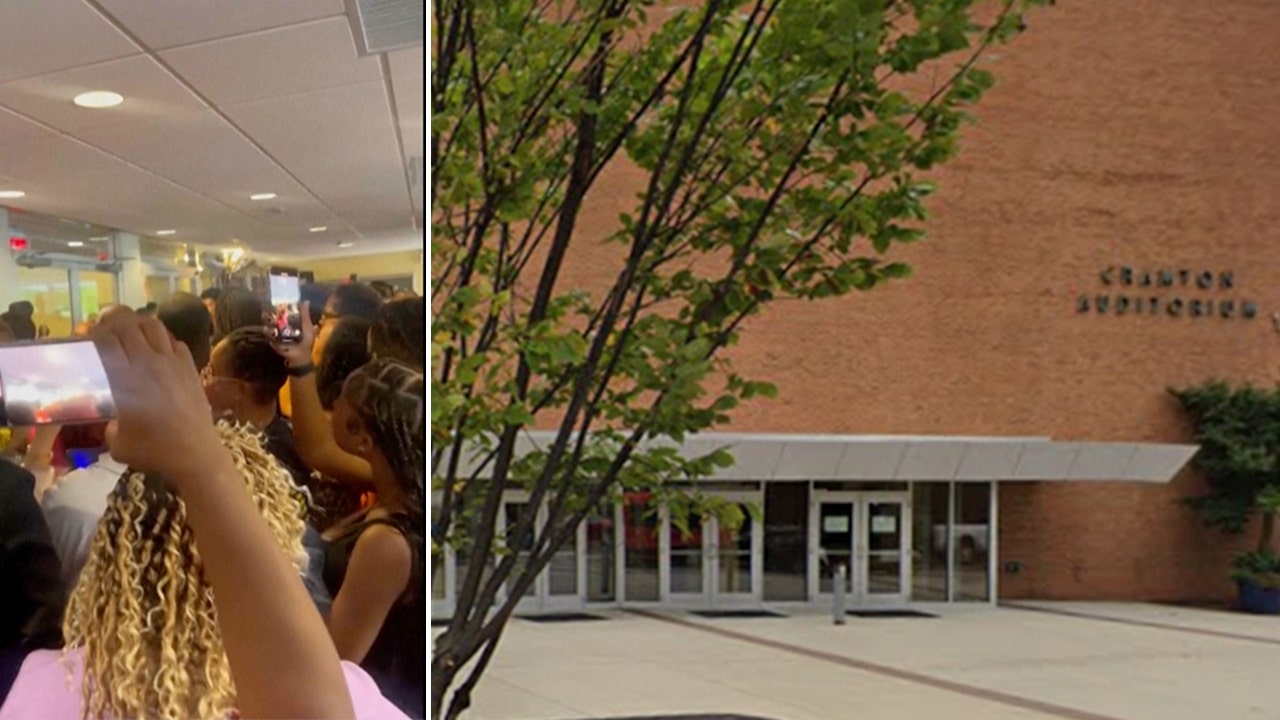
An auditorium was too small for the number of supporters who showed up for graduates of a D.C. historically black college, and video captured the chaos that left one person hurt.
Howard University’s College of Nursing and Allied Health Sciences honors and awards ceremony took place Thursday in the campus’ Cramton Auditorium. The school’s website said tickets were not required for the event, and the space could “accommodate an estimated 3-4 attendees per graduate,” with guests seated on a “first-come basis.”
Video posted on social media showed family and friends of graduates in the building’s foyer shouting “let us in” before the ceremony ended abruptly.
“During the ceremony, a visitor who was not able to enter the facility, which had reached capacity, leaned on the front door, unintentionally applying pressure to a pane causing it to break,” a statement obtained by FOX 5 DC reads. “This incident led to a disturbance among guests and a disruption of the program taking place inside. Guests in attendance were immediately dispersed following this incident.”
JUDGE FACING HEAT FOR RELEASING ALLEGED DC TEEN SHOOTER DONATED TO SOROS TIED FUND, POSTED ABOUT BEING ‘WOKE’
Video shared to social media shows loved ones of graduates crowded in a foyer, recording and shouting “let us in.” (Destiny Myers)
Officials told FOX 5 emergency medical services personnel assisted someone who sustained a minor cut.
At least one graduate from Thursday told NBC4 Washington that she did not get to walk during her high school graduation in 2020 due to the COVID-19 pandemic, and also did not get to after graduating from Howard University magna cum laude.
CLARENCE THOMAS SAYS HE RECEIVES ‘NASTINESS’ FROM CRITICS, DESCRIBES D.C. AS A ‘HIDEOUS PLACE’
People can be seen attempting to support loved ones during their graduation from Howard University’s nursing graduation ceremony. (@Accelorwaverider)
A DC fire spokesperson told WJLA-TV on Friday that the department did not shut the event down. A university statement cited by the station said “every venue has a capacity limit” and guests were invited to join Saturday’s commencement convocation via livestream.
“The overcrowding at Cramton Auditorium significantly impacted the guest experience,” the statement to WJLA reads. “To rectify this, we will formally recognize our College of Nursing and Allied Health Sciences graduates at the Capital One Arena tomorrow, May 11, following our Commencement Convocation.”
A door’s broken glass can be seen in the foyer of Howard University’s Cramton Auditorium on May 9, 2024. (@Accelorwaverider)
Graduates of the College of Engineering and Architecture had a similar experience during their scheduled Cramton Auditorium ceremony on Friday. Rather than the graduation being canceled, people were left out in the rain, WJLA reports.
A Howard University spokesperson told WJLA capacity issues during individual college’s graduation ceremonies have not been an issue in the past, but that this year was unique due to the school having the largest graduating class ever and students drawing larger crowds after not having high school graduations in 2020.
The Associated Press contributed to this report.
Read the full article from Here


Applause and music echoed through the Hall of Flags at the Massachusetts State House Friday as lawmakers and community leaders gathered for the Black Excellence on the Hill and the Latino Excellence Awards.
The ceremony celebrates Black and brown residents committed to advancing economic equity.
“We’re honoring Black excellence,” said state Rep. Chris Worrell. “When we look at today, this is what it should look like. This is our house. Black people built this house, literally and figuratively.”
Honorees ranged from attorneys to former professional athletes. Nicole M. Bluefort of the Law Offices of Nicole Bluefort said she plans to use her platform to uplift others.
“I will use my advocacy skills as an attorney to move people forward,” she said.
Former NBA player Wayne Seldan Jr. talked about his journey from McDonald’s All American to a full scholarship at Kansas and a professional career.
“You always want to keep striving for continued betterment and for stuff to grow,” he said. “I don’t think there should be mountaintops. I think we should always be striving to keep building.”
The keynote address was delivered by Michelle Brown, mother of Jaylen Brown, who spoke about raising two children as a single mother and the importance of faith, discipline and education.
“There are no shortcuts. There are no guarantees,” she said. “There was faith, there was discipline, and there was a deep belief that education created mobility.”
Speakers emphasized that mobility is strengthened when communities work together for a common good. Bluefort highlighted the importance of mentorship and shared opportunity, while state Rep. Sally Kerans encouraged attendees to stand together across racial lines.
“In this moment, stand with others. Speak up. Don’t be afraid to say ‘That’s not normal.’ Be allies. Be supportive,” Kerans said.
Organizers said the ceremony was not only about recognition, but also about sustaining progress — encouraging leaders and residents alike to continue building toward a more equitable future.
Pittsburg, PA
As the NFL combine winds down, all eyes shift to Pittsburgh for the league’s next showcase event

Connecticut
Man shot, critically injured by police in Hartford; mayor says there will be a ‘full review’

Skip to content

Contact Us

Preview: February 28 vs. Detroit | Carolina Hurricanes

Sunset Night Market makes official return to San Francisco

Letters to the Editor – Three Cheers for a Plano fire station, Dallas Parks & Rec, voting

Miami heat: Phones are ringing off the hook as California billionaires look to drop 9 figures on homes in the 305

‘We’re honoring Black excellence’: Mass. celebrates leaders of color

Florida High School Football Rankings: Top 25 teams – Oct. 21

Cleary's 21 help Le Moyne down Central Connecticut State 69-64 in OT

How old is Bo Nix? What to know about Oregon quarterback ahead of 2024 NFL Draft

99th annual Pony Swim held in Virginia

Indiana Members Credit Union announced as new anchor tenant at Bottleworks District

ICE blasts Washington mayor over directive restricting immigration enforcement

Did the EU bypass Hungary’s veto on Ukraine’s €90 billion loan?

How the federal government is painting immigrants as criminals on social media

Where Iran’s ballistic missiles can reach — and how close they are to the US

Has India’s influence in Afghanistan grown under the Taliban?
-

 World2 days ago
Exclusive: DeepSeek withholds latest AI model from US chipmakers including Nvidia, sources say
-

 Massachusetts3 days ago
Mother and daughter injured in Taunton house explosion
-

 Montana1 week ago
2026 MHSA Montana Wrestling State Championship Brackets And Results – FloWrestling
-

 Louisiana5 days ago
Wildfire near Gum Swamp Road in Livingston Parish now under control; more than 200 acres burned
-

 Denver, CO3 days ago
10 acres charred, 5 injured in Thornton grass fire, evacuation orders lifted
-

 Technology7 days ago
YouTube TV billing scam emails are hitting inboxes
-

 Technology7 days ago
Stellantis is in a crisis of its own making
-

 Politics7 days ago
OpenAI didn’t contact police despite employees flagging mass shooter’s concerning chatbot interactions: REPORT