Vermont
Vermont Lawmakers Send Revised Psychedelic-Assisted Therapy Task Force Bill To Governor


Lawmakers in Vermont have passed legislation to create a psychedelic-assisted therapy working group that would make recommendations on whether and how the state should regulate legal access to substances like psilocybin and MDMA. The measure next heads to the desk of Gov. Phil Scott (R).
The Senate approved revised language of the bill, S.114, on a voice vote Friday, signing off on changes made in the House of Representatives.
“We believe that what we have before us will continue the intent of what we passed as a Senate,” said Sen. Ginny Lyons (D), chair of the Senate Health and Welfare Committee, which considered the House changes at a hearing earlier in the day. “We ask the rest of the Senate to concur with the proposal from the House.”
In its current form, the proposal would not itself change the legal status of any substances. Rather, the eight-person task force would “review the latest research and evidence of the public health benefits and risks of clinical psychedelic assisted treatments” and “examine the laws and programs of other states that have authorized the use of psychedelics by health care providers in a therapeutic setting,” according to the latest version of the measure.
Both MDMA and psilocybin have been granted breakthrough therapy status by the Food and Drug Administration (FDA), and recent clinical trials have MDMA on pace for possible FDA approval later this year.
Senators had passed an earlier version of the legislation in March, and the latest revisions came as the measure advanced out of a House committee with a striking amendment from Rep. Anne Donahue (R).
Those changes removed an earlier provision directing the task force to provide an opportunity “for individuals with lived experience to provide testimony.”
The amendment also removed task force members representing the Psychedelic Society of Vermont and the Brattleboro Retreat, a psychiatric and addiction hospital. It replaced them with representatives from the state Department of Mental Health and the nonprofit Vermont Medical Society.
The amendment also deleted a provision that would have directed the working group to evaluate the criminalization of psychedelics in Vermont as well as a line that said the task force would “provide potential timelines for universal and equitable access to psychedelic-assisted treatments.”
During brief discussion Friday morning in the Senate Health and Welfare Committee, some members said they were disappointed with some of the House amendments but nevertheless supported the bill moving forward.
“Personally, I’m very disappointed that they took out the conversation about decriminalization,” said Sen. Martine Larocque Gulick (D), a committee member and the sponsor of the bill. “I mean, this is literally a group that’s just going to be talking and looking at data and researching.”
“I can’t believe that they won’t look at that, senator,” Lyons replied. “The research will probably get into that.”
“It’s too bad that we can’t have it explicitly in the bill,” Gulick responded, “but I am willing to acquiesce at this point. It’s the eleventh hour.”
“That’s what happens,” Lyons said.
Lyons also explained that some had criticized the provision about hearing testimony from someone with lived experience because, as she put it, “The comment was that one person with lived experience wouldn’t be informative enough.”
Lyons lightly ribbed House lawmakers ahead of the panel’s adoption of the latest changes.
“All those in favor of concurring with the proposal from the House the day it was supposed to adjourn?” she asked before closing the hearing, prompting laughter among the other panel members.
As originally introduced, the measure would have also legalized use and possession of psilocybin. Lawmakers on the Senate Health and Welfare Committee, however, deleted that section to focus instead on the therapeutic working group.
The passage of the psychedelics working group bill comes on the heels of the House’s approval earlier this month of H.72, a measure that would legalize and fund a Burlington facility where people could use currently prohibited substances in a medically supervised environment. But Gov. Scott, who vetoed an 2022 measure that would have created a task force to study overdose prevention centers, has indicated he’s not on board with the plan.
If enacted, the legislation would create an overdose prevention center (OPC) Burlington, with $1.1 million in funding plus another $300,000 to study the study the impact of the pilot project. The OPC would need to have on-site professionals with training in CPR, overdose interventions, first aid and wound care, as well as medical assessments to determine the need for further emergency care.
Vermont would join Rhode Island and Minnesota in authorizing the facilities. New York is considering a similar pilot program that would roll out statewide.
Lawmakers in a growing number of states have considered psychedelics legislation this session, with many focusing on psilocybin reform and increased research.
This week in Alaska, for example, a Senate panel advanced a House-passed measure that would create a state task force to study how to license and regulate psychedelic-assisted therapy in the event of federal approval of substances such as MDMA and psilocybin.
In Maryland, the Senate and House of Delegates have both passed legislation to create a psychedelics task force responsible for studying possible regulatory frameworks for therapeutic access to substances such as psilocybin, mescaline and DMT, sending the proposal to Gov Wes Moore (D). It would be charged specifically with ensuring “broad, equitable and affordable access to psychedelic substances” in the state.
Indiana’s governor recently signed a bill that includes provisions to fund clinical research trials into psilocybin.
Utah’s governor, meanwhile, allowed a bill to authorize a pilot program for hospitals to administer psilocybin and MDMA as an alternative treatment option to become law without his signature.
Maine lawmakers sent the governor legislation to establish a commission tasked with studying and making recommendations on regulating access to psychedelic services.
An Arizona House panel also approved a Senate-passed bill to legalize psilocybin service centers where people could receive the psychedelic in a medically supervised setting.
A Connecticut joint legislative panel approved a bill to decriminalize possession of psilocybin.
A bipartisan bill to legalize psychedelic service centers in California has cleared two Senate committees.
The governor of New Mexico has endorsed a newly enacted resolution requesting that state officials research the therapeutic potential of psilocybin and explore the creation of a regulatory framework to provide access to the psychedelic.
An Illinois committee also recently held a hearing to discuss a bill to legalize psilocybin and allow regulated access at service centers in the state where adults could use the psychedelic in a supervised setting—with plans to expand the program to include mescaline, ibogaine and DMT.
Lawmakers in Hawaii also considered a bill that would provide some legal protections to patients engaging in psilocybin-assisted therapy with a medical professional’s approval.
New York lawmakers said that a bill to legalize psilocybin-assisted therapy in that state has a “real chance” of passing this year.
A Nevada joint legislative committee held a hearing with expert and public testimony on the therapeutic potential of substances like psilocybin in January. Law enforcement representatives also shared their concerns around legalization—but there was notable acknowledgement that some reforms should be enacted, including possible rescheduling.
The governor of Massachusetts also recently promoted the testimony of activists who spoke in favor of her veterans-focused bill that would, in part, create a psychedelics work group to study the therapeutic potential of substances such as psilocybin. Separately, an initiative that would legalize psychedelics may appear on the November ballot if lawmakers decline to independently enact it first.
Currently, there are no psychedelic drugs that are federally approved to prescribe as medicine. But that could soon change, as FDA recently agreed to review a new drug application for MDMA-assisted therapy on an expedited basis.
At the start of this year, the U.S. Department of Veterans Affairs (VA) separately issued a request for applications to conduct in-depth research on the use of psychedelics to treat PTSD and depression.
In October, the agency also launched a new podcast about the future of veteran health care, and the first episode of the series focuses on the healing potential of psychedelics.
FDA also recently joined scientists at a public meeting on next steps for conducting research to develop psychedelic medicines. That came months after the agency issued historic draft guidance on psychedelics studies, providing scientists with a framework to carry out research that could lead to the development of novel medicines.
Meanwhile in Congress last week, a House panel approved GOP-led bill that would instruct VA to notify Congress if any psychedelics are added to its formulary of covered prescription drugs.
New York Senators Approve Safe Drug Consumption Site Pilot Program Bill
Photo courtesy of Wikimedia/Workman.

Vermont
Hundreds of housing units in the works at closely-watched project in Burlington’s South End – VTDigger

This story, by Report for America corps member Carly Berlin, was produced through a partnership between VTDigger and Vermont Public.
A long-awaited housing development that could bring hundreds of new apartments to a series of empty lots in Burlington’s South End neighborhood is beginning to come together.
The first phase of the major public-private deal, called the South End Coordinated Redevelopment Project, got official sign-off from the Burlington City Council last month. The project’s backers have also scored key funding commitments from Treasurer Mike Pieciak’s office and state housing funding agencies.
The project on Lakeside Avenue is the beginning of “a neighborhood being born out of a big parking lot,” Burlington Mayor Emma Mulvaney-Stanak told city councilors in May.
City officials and developers hope the project could eventually include over a thousand homes, making it one of the largest developments in Vermont – and putting a considerable dent in the Queen City’s housing shortage. Regional planners estimate that Burlington needs to add between 3,500 and 10,500 homes by 2050 to get the housing market to a healthy state.
The development is possible, in part, because of a 2023 zoning change in the formerly industrial area that allows for some of the densest housing development in the state, according to local planners.
 100vw, 1200px”/><figcaption class=) A rendering of the South End Coordinated Redevelopment Project, courtesy of Andrew Foley, development director at Jonathan Rose Companies. Credit: GOA Architecture.
A rendering of the South End Coordinated Redevelopment Project, courtesy of Andrew Foley, development director at Jonathan Rose Companies. Credit: GOA Architecture.
The South End project’s backers include Champlain College, Champlain Housing Trust and Ride Your Bike LLC, the investors behind the nearby Hula coworking campus. They have brought on Jonathan Rose Companies, an affordable housing developer with projects from New York to California, as the lead developer. The South End project is the company’s first in Vermont.
The development agreement signed by city councilors in May greenlights the South End project’s first 204 units, estimated to cost roughly $100 million.
Per Burlington’s inclusionary zoning policy and state rules, at least 20% of the first round of apartments will be set aside as affordable. But the developers hope to secure enough funding to allow them to earmark a third of the 204 apartments with income restrictions, said Andrew Foley, director of development at Jonathan Rose Companies, in an interview. The development agreement offers the developers reduced city fees if the affordable units are priced even more modestly than required.
The lion’s share of the new apartments will be studios and one-bedrooms, Foley said. The building would include common social spaces for neighbors to gather, he added.
Like any large-scale housing project, the developers of the South End apartments are piecing together financing from a wide array of sources. They recently scored an $8 million low-interest loan from Pieciak’s 10% for Vermont program, along with a $6.7 million award from the Vermont Housing and Conservation Board to support 67 affordable apartments – including 10 reserved for people experiencing homelessness.
To build out new roads – along with wastewater connections and stormwater infrastructure meant to cut down on sewer overflows into nearby Lake Champlain – city officials are going after funding from a new state program. The Community and Housing Infrastructure Program, a tax-increment financing tool created by the Legislature last year, would allow the city and the developers to borrow the funds needed to build out the infrastructure against the development’s future property tax revenue.
READ MORE

City officials and the developers are working together to submit an application for this CHIP financing. The South End development could be the first project in the state to utilize the program after its launch in January.
“I think a lot of other potential applicants are kind of saying, ‘I wonder how that South End project works out’ – for us to maybe go first,” Foley said.
With an eye toward lowering the project’s carbon footprint, the development will be all-electric, Foley said. The developers are looking to use mass-timber construction techniques, he added – essentially using large, prefabricated wood panels in place of steel or concrete. They also want to construct a rooftop solar array, employ a geothermal heating and cooling system and promote a “car-light” neighborhood in close proximity to bike paths and transit routes.
The developers hope to close on their construction financing by the end of the year.
“Everyone’s eager to see the construction start and housing built, so we’re trying to move as fast as we can,” Foley said.
Powerball, Mega Millions jackpots: What to know in case you win
Here’s what to know in case you win the Powerball or Mega Millions jackpot.
Just the FAQs, USA TODAY
The Vermont Lottery offers several draw games for those willing to make a bet to win big.
Those who want to play can enter the MegaBucks and Lucky for Life games as well as the national Powerball and Mega Millions games. Vermont also partners with New Hampshire and Maine for the Tri-State Lottery, which includes the Mega Bucks, Gimme 5 as well as the Pick 3 and Pick 4.
Drawings are held at regular days and times, check the end of this story to see the schedule.
Here’s a look at June 2, 2026, results for each game:
Winning Vermont Mega Millions numbers from June 2 drawing
15-26-43-48-60, Mega Ball: 12
Check Vermont Mega Millions payouts and previous drawings here.
Winning Gimme 5 numbers from June 2 drawing
03-05-16-32-37
Check Gimme 5 payouts and previous drawings here.
Winning Pick 3 numbers from June 2 drawing
Day: 2-5-2
Evening: 5-8-6
Check Pick 3 payouts and previous drawings here.
Winning Pick 4 numbers from June 2 drawing
Day: 6-9-7-0
Evening: 3-4-1-3
Check Pick 4 payouts and previous drawings here.
Winning Millionaire for Life numbers from June 2 drawing
16-33-41-50-52, Bonus: 01
Check Millionaire for Life payouts and previous drawings here.
Feeling lucky? Explore the latest lottery news & results
Are you a winner? Here’s how to claim your lottery prize
For Vermont Lottery prizes up to $499, winners can claim their prize at any authorized Vermont Lottery retailer or at the Vermont Lottery Headquarters by presenting the signed winning ticket for validation. Prizes between $500 and $5,000 can be claimed at any M&T Bank location in Vermont during the Vermont Lottery Office’s business hours, which are 8a.m.-4p.m. Monday through Friday, except state holidays.
For prizes over $5,000, claims must be made in person at the Vermont Lottery headquarters. In addition to signing your ticket, you will need to bring a government-issued photo ID, and a completed claim form.
All prize claims must be submitted within one year of the drawing date. For more information on prize claims or to download a Vermont Lottery Claim Form, visit the Vermont Lottery’s FAQ page or contact their customer service line at (802) 479-5686.
Vermont Lottery Headquarters
1311 US Route 302, Suite 100
Barre, VT
05641
When are the Vermont Lottery drawings held?
- Powerball: 10:59 p.m. Monday, Wednesday, and Saturday.
- Mega Millions: 11 p.m. Tuesday and Friday.
- Gimme 5: 6:55 p.m. Monday through Friday.
- Lucky for Life: 10:38 p.m. daily.
- Pick 3 Day: 1:10 p.m. daily.
- Pick 4 Day: 1:10 p.m. daily.
- Pick 3 Evening: 6:55 p.m. daily.
- Pick 4 Evening: 6:55 p.m. daily.
- Megabucks: 7:59 p.m. Monday, Wednesday and Saturday.
- Millionaire for Life: 11:15 p.m. daily
What is Vermont Lottery Second Chance?
Vermont’s 2nd Chance lottery lets players enter eligible non-winning instant scratch tickets into a drawing to win cash and/or other prizes. Players must register through the state’s official Lottery website or app. The drawings are held quarterly or are part of an additional promotion, and are done at Pollard Banknote Limited in Winnipeg, MB, Canada.
This results page was generated automatically using information from TinBu and a template written and reviewed by a Vermont editor. You can send feedback using this form.

BRIDGEWATER CORNERS, Vt. (WCAX) – A Vermont brewery is living up to its name to help celebrate the outdoors.
Long Trail Brewing Company is unveiling its “Reallllly Long Trail Ale Pack” in honor of National Trails Day this weekend. They believe it will be the largest single-unit commercially available beer package in the country.
The design for the packaging is 273 centimeters long, reflecting the 273-mile Long Trail that cuts through the length of Vermont. It also holds 168 beers and needs three people just to carry it. The brewery’s Jordan Kellem hopes it can encourage people to, as they say, “Take a Hike!”
“We’ve been brewing beer for a long time, and it’s increasingly more difficult to stand out. And at the end of the day, we have to remind ourselves we’re in the beer industry and it’s a fun industry to be a part of, so we want to have some fun and do what we do,” Kellem said.
They’re also giving back with $15,000 in donations to local trail systems across the state.
National Trails Day is Saturday, June 7.
Copyright 2026 WCAX. All rights reserved.
-
 Lifestyle11 minutes ago
Firings at CBS’ ’60 Minutes’ reflect the fight for media control in the age of Trump
-

 Technology19 minutes ago
Microsoft Is Pulling the Plug on Publisher This Fall. These 8 Alternatives Prove You Don't Need It
-

 World26 minutes ago
Trump expands Cuba sanctions beyond US companies in major crackdown on foreign enablers
-

 Politics29 minutes ago
Bessent flips script on Dem senator with reminder about his son’s past ties to Epstein
-

 Health41 minutes ago
New ways to prevent flu revealed in ‘accidental’ lab breakthrough, study finds
-

 Sports44 minutes ago
Russell Wilson announces retirement from NFL after 14 seasons
-

 Technology49 minutes ago
Dark web monitoring: does it put your data at risk?
-
 Business56 minutes ago
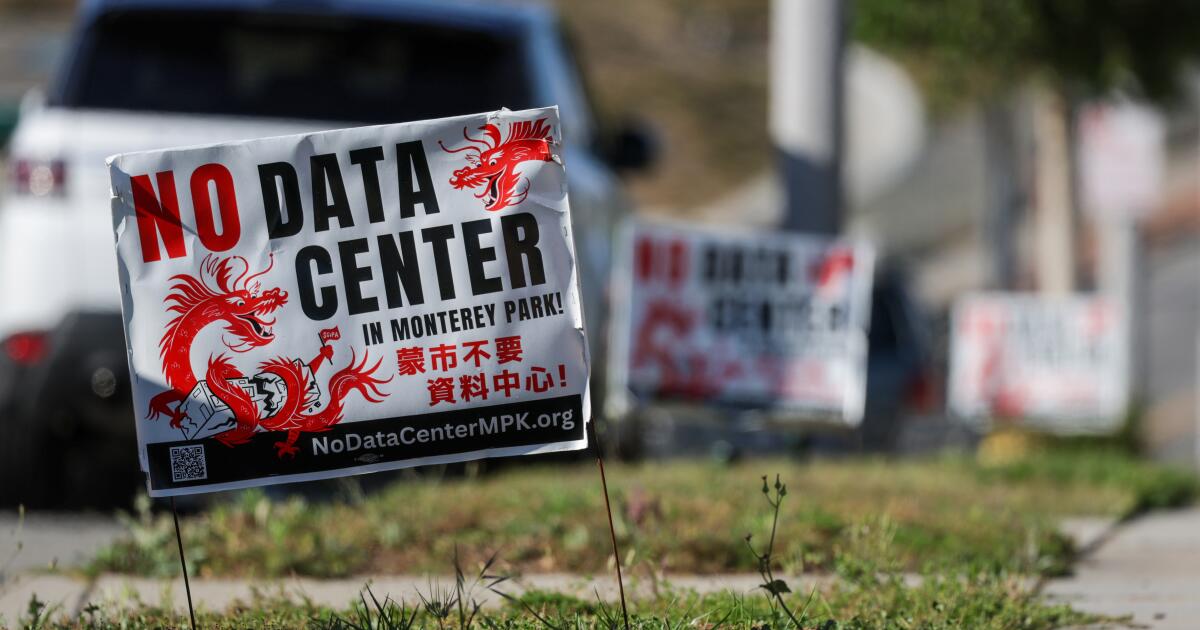
In a first for the country, voters in Monterey Park ban data centers

