Vermont
Increasing pharmacy closures mean long drives for Vermont residents, mirroring a national trend – VTDigger


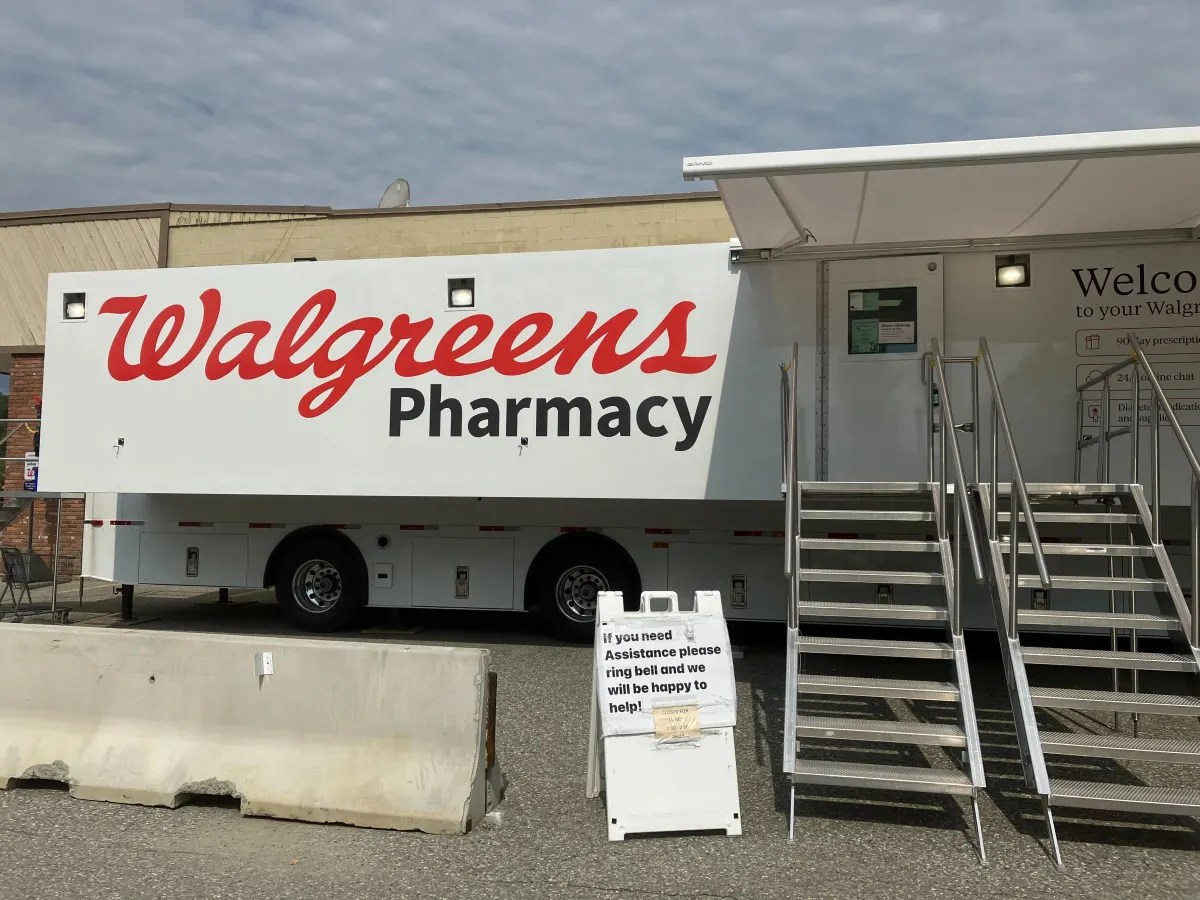
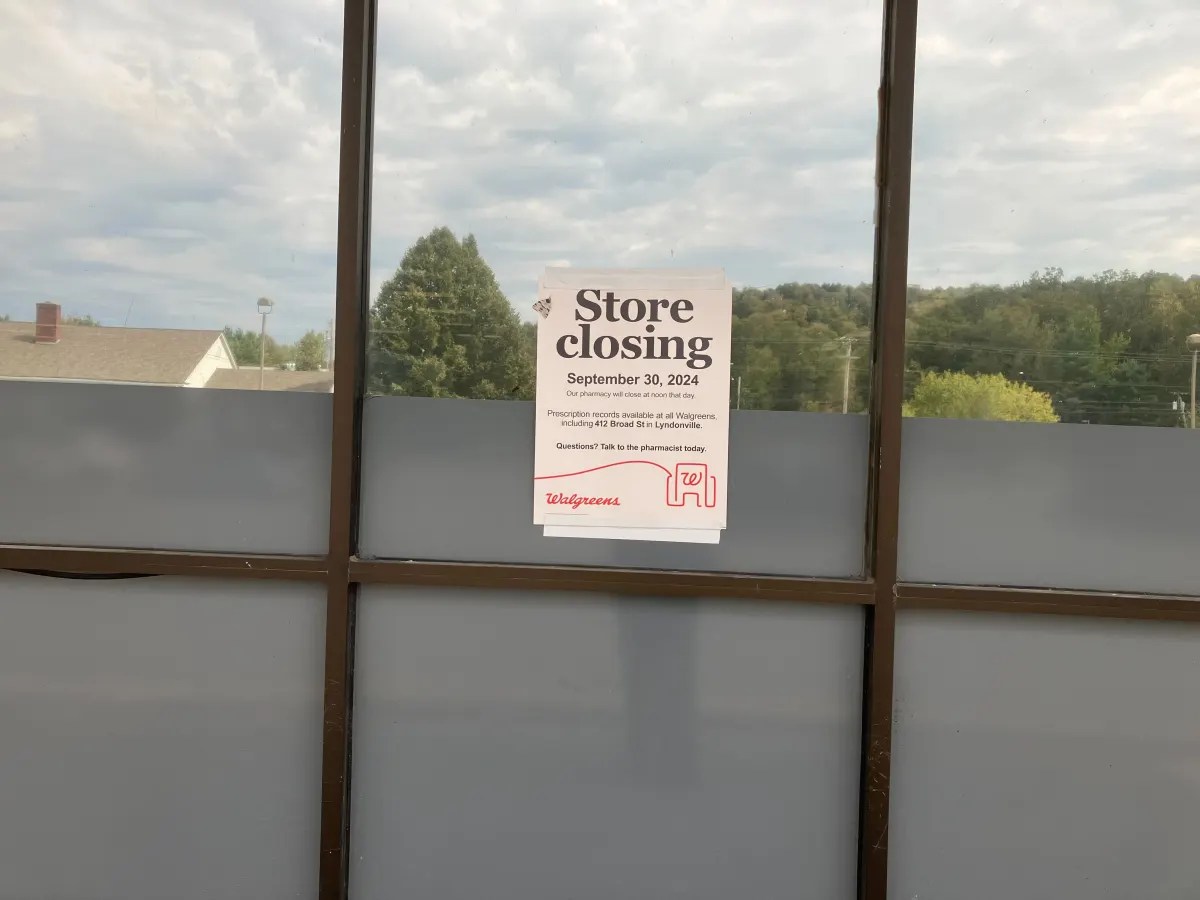
Hardwick’s sole pharmacy — a Walgreens that had twice been hit by Vermont’s recent summer floods — closed for good at the end of September. Since then, residents have had to drive 25 minutes to access a pharmacy in Morrisville or 40 minutes to the closest Walgreens in Lyndon, leaving Hardwick squarely in a “pharmacy desert.”
Pharmacy deserts are generally defined as places where there is no or limited access to a pharmacy. In rural areas, this means the closest is over 10 miles away, while in urban areas, the closest is over one mile away.
Hardwick is hardly the only pharmacy desert in the state. According to a recent analysis of pharmacy locations across the country, 41 of Vermont’s 193 census tracts (21%) had low access to a pharmacy in 2022. The analysis, published by the academic journal Health Affairs Scholar, defined low access as at least one-third of the tract’s population living within a pharmacy desert. Between closures of independent pharmacies and national chains continuing to scale back back “less profitable” operations, the number of pharmacy deserts is only increasing.
Mike Fisher, Vermont’s chief health care advocate, said that pharmacy closures across the state are an ongoing and “very serious” trend.
“I live in Addison County,” he said. “When the local Marble Works Pharmacy closed, I remember just how upsetting and difficult that was for so many people.”
According to the state’s Board of Pharmacy, 28 Vermont pharmacies have closed permanently over the past five years, leaving 126 currently operating in the state. A nationwide study has linked such closures to a decline in older Americans taking their prescription cardiovascular medications.
Often, Fisher said, there’s another pharmacy in town, as in Middlebury. But in a growing number of towns, there isn’t.

According to a study published this month in the journal Health Affairs, more pharmacies closed than opened between 2018 and 2021 both nationally and in Vermont, with independent pharmacies and those located in Black and Latinx communities a higher risk for closure.
Options for those living in a pharmacy desert do exist. In Hardwick, area residents can utilize mail-order pharmacies for their prescriptions and Kinney Drugs offers weekly deliveries. However, Fisher notes, pharmacies don’t solely dispense medications, but also vaccines and advice.
“The pharmacist at the local pharmacy counter is an accessible, front-line healthcare professional that many people depend on,” he said. “You lose something really important when you lose your community pharmacist.”
Marty Irons, a full-time Vermont pharmacist for almost two decades and a member of the Vermont Pharmacists Association’s board, said in an email that the organization is very aware of pharmacy closures and expects them to continue to impact Vermont.
Pharmacists largely attribute closures to pharmacy benefit managers: companies that act as intermediaries between drug manufacturers and insurance companies. In Vermont, two pharmacy benefit managers — CVS Caremark and Express Scripts — account for 95% of Vermont’s drug market for commercial health insurance plans, according to the state Attorney General’s Office.
Pharmacy benefit managers, often abbreviated as PBMs, are known to under-reimburse pharmacies for the costs of filling prescriptions. According to Irons, this loss of income often requires pharmacies to pull back on services — such as the number of hours they’re open — and, in some cases, close.
“Negative, or below cost, reimbursement is no longer the exception,” Mike Duteau, president of the Vermont Association of Chain Drug Stores, said in an email. “The growing impact is so substantial that pharmacies are closing in larger numbers and more quickly.”
READ MORE

In addition, Irons and Duteau point to staffing challenges only exacerbated by the closure of Vermont’s only pharmacy school three years ago.
The Legislature passed a bill this year to regulate PBMs, the system for which is currently being set up at the Department of Financial Regulation, Fisher said. The bill requires PBMs to obtain a license from the department, strengthens its oversight and bans some of the companies’ practices.
In addition, Vermont Attorney General Charity Clark announced a lawsuit against PBMs earlier this year, alleging that the state’s two major PBMs skim money from drug transactions. However, it is unclear how — and how soon — these two state efforts might improve the situation for pharmacies and their customers.
“Our Vermont pharmacy infrastructure is so fragile,” said Irons. “Most people assume it will always be there; I hope so!”



WARREN, Vt. (WCAX) – Vermont State Police are investigating the death of a skier at Sugarbush Resort.
Police were notified at about 3:26 p.m. Saturday that a skier had died following a fall on Stein’s Run at Sugarbush Lincoln Peak.
The male victim fell and slid into a wooded area off the trail, according to police.
Ski patrol members found the man unresponsive and brought him to the base of the mountain, where they were met by the Mad River Valley Ambulance. The victim was pronounced dead due to his injuries.
Police say the death does not appear suspicious. An autopsy will be performed at the Office of the Chief Medical Examiner in Burlington to determine the cause and manner of death.
The victim’s name is being withheld pending notification of next of kin.
Copyright 2026 WCAX. All rights reserved.

Thousands of Vermonters took to the streets Saturday, condemning the actions and policies of President Donald Trump in peaceful protests at dozens of locations.
They lined up on Main Street in Newport and on Creamery Row in Hardwick, on the village green in Fair Haven and in towns from Burlington to Brattleboro. In all, around 50 “No Kings” demonstrations were held.
Nina Keck
/
Vermont Public
Saturday to show his anger at the Trump Administration. “We have a war that we’re not supposed to be in, we have a president who does nothing but lie… I am just fed up,” said Revell.
Castleton resident Robert Revell stood along Route 7 in Rutland with hundreds of others.
“I’m just so angry,” said Revell, who held a three dimensional sign that incorporated a blow-up planet Earth with words below that read “Mother DEMANDS NO kings, no pedos and no liars.”
“We have a war that we’re not supposed to be in, we have a president who does nothing but lie,” he said. “I am just fed up. I’m 73 in a couple weeks and I lived through the Nixon thing and I’m just here to protest and share my heart.”
Around him, throngs of people, many in costume, lined several blocks along Route 7 waving flags and handmade signs. Some rang cow bells or thumped tambourines. Many passing motorists responded with staccato horn blasts.
Nationwide, more than 3,000 protests were planned for Saturday in large cities and small towns. They have been organized by national and local groups, including well-known progressive coalitions such as Indivisible, 50501 and MoveOn.

Nina Keck
/
Vermont Public
“For me, it boils down to the cruelty I’m seeing in the world right now,” said Hannah Abrams, of Mendon. “I think that our president instills a lot of cruelty among the people he doesn’t like. And actually for the people who do vote for him too, because they’re not any better off with him in office.”
“There are a lot of people who say this is not America,” Abrams added. “And I would like to say, it’s exactly America, it’s just targeting different people now … Sadly, this is not new.”

Nina Keck
/
Vermont Public
Mary Jane Demko, 89, of Rutland, showed up to her local protest in a wheelchair driven by her daughter, Stephanie Brush. Demko carried a sign on her lap that read “IMPEACH THE SOB!”
“I couldn’t stay in and not be part of this,” Demko said. “He’s too evil.”
Karen Lorentz of Shrewsbury said she too couldn’t stay away. At 80, she said Saturday’s event in Rutland was her first protest. She held a handmade sign she said a friend had helped her make.
“I’m really old and when the Vietnam War was on I was a new teacher and I didn’t have time,” she said. “But I felt strongly that I needed to be here today.”
Powerball, Mega Millions jackpots: What to know in case you win
Here’s what to know in case you win the Powerball or Mega Millions jackpot.
Just the FAQs, USA TODAY
The Vermont Lottery offers several draw games for those willing to make a bet to win big.
Those who want to play can enter the MegaBucks and Lucky for Life games as well as the national Powerball and Mega Millions games. Vermont also partners with New Hampshire and Maine for the Tri-State Lottery, which includes the Mega Bucks, Gimme 5 as well as the Pick 3 and Pick 4.
Drawings are held at regular days and times, check the end of this story to see the schedule.
Here’s a look at March 27, 2026, results for each game:
Winning Vermont Mega Millions numbers from March 27 drawing
13-27-28-41-62, Mega Ball: 16
Check Vermont Mega Millions payouts and previous drawings here.
Winning Gimme 5 numbers from March 27 drawing
05-10-18-38-39
Check Gimme 5 payouts and previous drawings here.
Winning Pick 3 numbers from March 27 drawing
Day: 0-0-8
Evening: 7-6-3
Check Pick 3 payouts and previous drawings here.
Winning Pick 4 numbers from March 27 drawing
Day: 3-5-4-1
Evening: 9-5-7-6
Check Pick 4 payouts and previous drawings here.
Winning Millionaire for Life numbers from March 27 drawing
06-09-28-33-46, Bonus: 04
Check Millionaire for Life payouts and previous drawings here.
Feeling lucky? Explore the latest lottery news & results
Are you a winner? Here’s how to claim your lottery prize
For Vermont Lottery prizes up to $499, winners can claim their prize at any authorized Vermont Lottery retailer or at the Vermont Lottery Headquarters by presenting the signed winning ticket for validation. Prizes between $500 and $5,000 can be claimed at any M&T Bank location in Vermont during the Vermont Lottery Office’s business hours, which are 8a.m.-4p.m. Monday through Friday, except state holidays.
For prizes over $5,000, claims must be made in person at the Vermont Lottery headquarters. In addition to signing your ticket, you will need to bring a government-issued photo ID, and a completed claim form.
All prize claims must be submitted within one year of the drawing date. For more information on prize claims or to download a Vermont Lottery Claim Form, visit the Vermont Lottery’s FAQ page or contact their customer service line at (802) 479-5686.
Vermont Lottery Headquarters
1311 US Route 302, Suite 100
Barre, VT
05641
When are the Vermont Lottery drawings held?
- Powerball: 10:59 p.m. Monday, Wednesday, and Saturday.
- Mega Millions: 11 p.m. Tuesday and Friday.
- Gimme 5: 6:55 p.m. Monday through Friday.
- Lucky for Life: 10:38 p.m. daily.
- Pick 3 Day: 1:10 p.m. daily.
- Pick 4 Day: 1:10 p.m. daily.
- Pick 3 Evening: 6:55 p.m. daily.
- Pick 4 Evening: 6:55 p.m. daily.
- Megabucks: 7:59 p.m. Monday, Wednesday and Saturday.
- Millionaire for Life: 11:15 p.m. daily
What is Vermont Lottery Second Chance?
Vermont’s 2nd Chance lottery lets players enter eligible non-winning instant scratch tickets into a drawing to win cash and/or other prizes. Players must register through the state’s official Lottery website or app. The drawings are held quarterly or are part of an additional promotion, and are done at Pollard Banknote Limited in Winnipeg, MB, Canada.
This results page was generated automatically using information from TinBu and a template written and reviewed by a Vermont editor. You can send feedback using this form.

Decorated Illinois guard Josh Gesky met with Saints ahead of draft

Hundreds gather at Indiana State Capitol for ‘No Kings’ protest

Body recovered from retention pond after reported drowning in Iowa Colony
![~!@[WATCHLIVE!TV]>> NOW Portland Thorns FC vs Kansas City Current Match 𝐋𝐈𝐕𝐄 Free Streams ON Tv Channel](https://i2.wp.com/unicornriot.ninja/wp-content/uploads/2018/09/LiveChannel334x212v2.png?w=80&resize=80,80&ssl=1 "~!@[WATCHLIVE!TV]>> NOW Portland Thorns FC vs Kansas City Current Match 𝐋𝐈𝐕𝐄 Free Streams ON Tv Channel")
~!@[WATCHLIVE!TV]>> NOW Portland Thorns FC vs Kansas City Current Match 𝐋𝐈𝐕𝐄 Free Streams ON Tv Channel

2026 top-50 recruit Chris Washington Jr. drawing interest from Kentucky Basketball

Florida High School Football Rankings: Top 25 teams – Oct. 21

How old is Bo Nix? What to know about Oregon quarterback ahead of 2024 NFL Draft

Cleary's 21 help Le Moyne down Central Connecticut State 69-64 in OT

99th annual Pony Swim held in Virginia

Indiana Members Credit Union announced as new anchor tenant at Bottleworks District

JD Vance says he was ‘obsessed’ with UFOs, believes aliens are actually ‘demons’
The EU's recipe for trade deals : easy on beef, tough on wine

Photos: ‘No Kings’ protests across the country

Jeffries declines to break with indicted Democrat after ethics panel’s guilty verdict

Hundreds of thousands march through London in stand against the far right
-

 Sports1 week ago
IOC addresses execution of 19-year-old Iranian wrestler Saleh Mohammadi
-

 New Mexico7 days ago
Clovis shooting leaves one dead, four injured
-

 Tennessee6 days ago
Tennessee Police Investigating Alleged Assault Involving ‘Reacher’ Star Alan Ritchson
-

 Technology7 days ago
YouTube job scam text: How to spot it fast
-

 Minneapolis, MN3 days ago
Boy who shielded classmate during school shooting receives Medal of Honor
-

 Science1 week ago
Record Heat Meets a Major Snow Drought Across the West
-

 Politics1 week ago
Schumer gambit fails as DHS shutdown hits 36 days and airport lines grow
-

 Texas1 week ago
How to buy Houston vs. Texas A&M 2026 March Madness tickets