Vermont
Get Ready for Greg Freeman to Be Your Favorite New Indie Rocker


If you’ve kept an ear out for new indie rock in the past few years, there’s a good chance you’ve heard of Burlington, Vermont-based songwriter Greg Freeman. Maybe someone told you to check out his 2022 debut, I Looked Out, with its ragged-edged anthems bearing welcome echoes of Neil Young and Jason Molina. Or maybe you ended up at one of his unforgettable live shows — all-in, passionate performances that have made him a genuine word-of-mouth sensation among indie, classic rock, and Americana fans of all ages.
If you haven’t listened yet, go ahead and get familiar, because Freeman’s new album, Burnover, out Aug. 22, is even better than the last one. Recorded in between tour dates last year, it’s the first album he’s made in a proper studio, something that enhances his electric sound without losing any immediacy. “I taught the players the songs the day we recorded most of them,” Freeman, 26, says. “Which we did out of necessity, but we ended up getting recordings that had energy.”
Freeman is calling from Amsterdam, where he and his band are just wrapping a run of shows in Europe. “Curtain,” the new single he’s releasing today, is a great example of the energy he’s talking about — a free-flowing, brightly-hued rocker that makes his impressionistic lyrics feel like they’re written in the sky.
He’s come a long way from where he was when he first released I Looked Out on a small Oregon-based label called Bud Tapes three years ago. “I mean, I really had no expectations for that record,” Freeman says. He was working at a bakery just outside Burlington at the time, making “sourdough, some yeasted breads, too,” and about six months went by before he realized it might be worth taking the album on the road. “I only decided to tour because people were messaging me about booking shows in other cities and stuff, and I was like, ‘Yeah, maybe we should,’” he says.
A February 2023 show at a Chicago bar called Sleeping Village, where he performed with a seven-piece band he’d brought along from Vermont, drew enthusiastic reviews. “Damn, this is a pretty good crowd for a city 14 hours away,” Freeman recalls thinking.
A few days later, he played “this tiny show in Philly in a record store” where it felt like his band and their gear took up half of the 75-capacity space: “There were people there singing the lyrics, and that was a first for me.”
When he got back to Burlington after that first tour, Freeman took some time off from work to mull his next move. He tore through pulp crime novels by Jim Thompson, poetry by Emily Dickinson and Louise Glück, and literary fiction by W.G. Sebald, and watched old movies like the acclaimed 2001 melodrama In the Bedroom. “I was just looking for inspiration in as many places as I could,” he says.
One thing he was wrestling with was a sense of place. “I guess I was trying to figure out how to write about New England,” says Freeman, who grew up in Maryland and moved to Burlington at age 18. “What does it mean to have that experience of not having a grounded home that’s tied to where you were born?” Ultimately, he adds, “I feel good about the record conveying that kind of complicated relationship with a complicated place.”
“Curtain” was one of the first songs he wrote, pouring out of him as a guitar riff that “was just really fun to play.” He’d been listening to “a lot of ’70s Dylan,” especially 1978’s Street-Legal, and thinking about writing a love song. He added more color and detail in the studio, building out an arrangement that blossoms with horns, keys, woodwinds, and a jaunty tack-piano part by his friend Sam Atallah.
The song runs on for more than six minutes on the album, including a perfectly gnarly guitar solo from Freeman himself. “If we had practiced the song more, it wouldn’t have been so long,” he says. “And I think in our minds, we were like, ‘Oh, we’ll just fade it out or something.’ But listening back, we didn’t want it to end.”
He contrasts that song’s easygoing, spontaneous writing process with the one for “Gulch,” a raw, up-tempo album highlight that took much longer to come into focus. “I mean, I wrote ‘Curtain’ in maybe one day, and ‘Gulch’ took me over a month to write,” he says. “I remember not being able to sleep for many days that month, just trying to write that song and tormented by it…. I was super pissed at a certain point, after three-plus weeks of working on this song. And then I finally got it one day. I drank a half-bottle of wine and wrote it all at once.”
Freeman has a busy calendar coming up, including a one-off date in New York opening for This Is Lorelei in July, followed by more U.K./Europe shows in the late summer and fall and a U.S. run opening for Grandaddy in October. It’s shaping up to be a big year for him — don’t be surprised if he ends up on a trajectory that’s similar to MJ Lenderman’s as more and more people hear Burnover and see him in concert. Adds Freeman, “I’m just excited for more music to be out.”



Via Community News Service, a University of Vermont journalism internship, in partnership with Vermont Public
🎧 This story was produced for the ear. We highly recommend listening to the audio. We’ve also provided a print version of the story below.
On solar farms, the ground beneath the solar panels is often planted with turf grass and left alone. But some Vermonters are experimenting with productive ways to use that land: grazing livestock, growing crops, and creating habitat for threatened pollinators and birds.
Solar makes up about 16% of the energy Vermont generates, and that number has been growing for over a decade. As solar grows, so does Vermont’s capacity for agrivoltaics — the dual use of land on solar farms for agriculture.
Lewis Fox is a sheep farmer in Leicester, Vermont. With his wife, Niko Kochendoerfer, he runs a business called Agrivoltaic Solutions. They are hired by solar companies to manage the vegetation on solar farms. “We’re in charge of keeping the vegetation within certain limits, and the sheep are the tools that we use to do it,” Fox said.
Maeve Fairfax
/
Community News Service
Fox said that sheep are ready-made for solar farms. “They’re pretty short stature, so they can really fit into nooks and crannies,” he said. “They’re also not really interested in chewing on wires or jumping on panels.” The panels also provide sheep with protection from the elements and shade, which means that the sheep don’t need to drink as much water on hot days.
Fox and Kochendoerfer work with farmers from Buffalo, New York to Bangor, Maine, helping them learn the ropes of solar grazing. Fox is also a founding member of the American Solar Grazing Association, an organization that promotes solar grazing and provides educational materials for farmers who want to get into it.
In the winter, when there is no grazing to be done, Fox and Kochendoerfer breed the sheep and sell grass-fed lamb. Fox said that the additional revenue they earn from agrivoltaics is a huge help financially. “For us as livestock producers, being able to use the animals in another way is very significant in terms of farm viability,” he said.
Solar grazing has exploded in recent years. There are currently about 130,000 acres of solar arrays in the United States grazed by sheep. “We think it’s got a bright future,” Fox said.

Maeve Fairfax
/
Community News Service
Sheep aren’t the only animals that can find food on a solar farm.
The Weybridge-based nonprofit Bee the Change is turning solar fields into habitat for bees and other pollinators. Since 2015, they’ve created habitat on 30 solar sites.
Mike Kiernan is a co-founder of Bee the Change. He said one of the organization’s main goals is to support Vermont’s native bees, many of which are threatened by loss of habitat, disease or pesticides.
Kiernan said that although some invasive plant species can be helpful to pollinators, the team at Bee the Change tries to plant native species at these sites. “Our goal is to get the highest percentage possible of native plants, because they have the longest relationship with these species,” Kiernan said.
And their efforts are working.

Maeve Fairfax
/
Community News Service
Through careful monitoring, the leaders at Bee the Change have seen pollinator populations on their sites increase dramatically in both number and diversity.
Supporting pollinators also helps support the plants they pollinate, which helps people, too. “We’re all actually connected, and our survival is connected,” said Kiernan. “And when people see a habitat that is enriched with pollinators, they are appreciative.”
Encore Renewable Energy, a Vermont-based B Corp, has hired both Kiernan and Fox to manage the vegetation on its solar sites. The company specializes in community-scale solar projects.
Chad Farrell is the co-CEO of Encore Renewable Energy. He said the company prioritizes using agrivoltaics because it’s good for local economies and good for the environment.
Solar grazing is often cheaper than mowing, and it cuts down on emissions because mowers, which run on fossil fuels, are not needed as often.
Planting native plants to build pollinator habitat can increase the soil’s potential to store carbon by 65%. It’s also good for the soil’s overall health — potentially paving the way for future agriculture on the land. “At the end of the useful life of the project, we’re actually able to return that land in a better condition than what we found,” Farrell said.

Maeve Fairfax
/
Community News Service
Some Vermonters don’t like to see agricultural land repurposed for energy production, but agrivoltaics can help alleviate this tension. “Everybody loves driving by one of our projects and seeing a bunch of sheep out there doing their thing,” Farrell said.
Lewis Fox, the sheep farmer, agrees.
“It’s often difficult for people to see solar being built on ag land, for various reasons, and I think you could argue the merits either way,” he said. “But we can help bridge the gap in that. What we’re able to do is have solar production coexist with agriculture. And it’s not just window dressing. It’s real agriculture.”


This week, a bill that would make changes to Vermont’s Act 181 is receiving testimony in the House Committee on Environment. Certain provisions in Act 181 could trigger a permitting process through Vermont’s land use protection law, Act 250. A rule related to road building and some lands identified as “critical natural resource areas” by the state’s land use review board are expected to take effect this year. Last month, legislation passed the Senate and is currently in the House to push those deadlines back by a few years. For Corinth resident Neil Ryan, that not enough. “The group of people that was largely left out of the process: Rural Vermonters are having this imposed upon them with no say,” he said. Ryan and his family have built their own farms for generations. He believes if the provisions take effect, it would be very difficult for future generations to accomplish what he has. “The difficulty of the Act 250 process, the costs associated with the Act 250 process, we wouldn’t have started those farms likely,” he said. However, Ryan said he does support the portion of Act 181 that allows towns to opt into being exempt from the permitting process altogether. This is meant to assist housing development. On Tuesday, regional planning commissions told lawmakers that many towns have opted in. Still, Vermont is not on track for its goal of 40,000 + homes by 2030. “We’re not saying rural housing growth should stop or slow,” Executive Director of the Northwest RPC Catherine Dimitruk said. “Were saying those additional units that we need, we should be doing all we can to encourage and incentivize.”The bill will remain in House environment for the foreseeable future.
This week, a bill that would make changes to Vermont’s Act 181 is receiving testimony in the House Committee on Environment.
Certain provisions in Act 181 could trigger a permitting process through Vermont’s land use protection law, Act 250.
A rule related to road building and some lands identified as “critical natural resource areas” by the state’s land use review board are expected to take effect this year.
Last month, legislation passed the Senate and is currently in the House to push those deadlines back by a few years. For Corinth resident Neil Ryan, that not enough.
“The group of people that was largely left out of the process: Rural Vermonters are having this imposed upon them with no say,” he said.
Ryan and his family have built their own farms for generations. He believes if the provisions take effect, it would be very difficult for future generations to accomplish what he has.
“The difficulty of the Act 250 process, the costs associated with the Act 250 process, we wouldn’t have started those farms likely,” he said.
However, Ryan said he does support the portion of Act 181 that allows towns to opt into being exempt from the permitting process altogether. This is meant to assist housing development.
On Tuesday, regional planning commissions told lawmakers that many towns have opted in. Still, Vermont is not on track for its goal of 40,000 + homes by 2030.
“We’re not saying rural housing growth should stop or slow,” Executive Director of the Northwest RPC Catherine Dimitruk said. “Were saying those additional units that we need, we should be doing all we can to encourage and incentivize.”
The bill will remain in House environment for the foreseeable future.

Tell us: What’s the best book you’ve ever read in a book club?

How Selfridges Plans to Lock in the 1%
Commentary: In Texas and beyond, a political impulse: If you don’t like it, leave
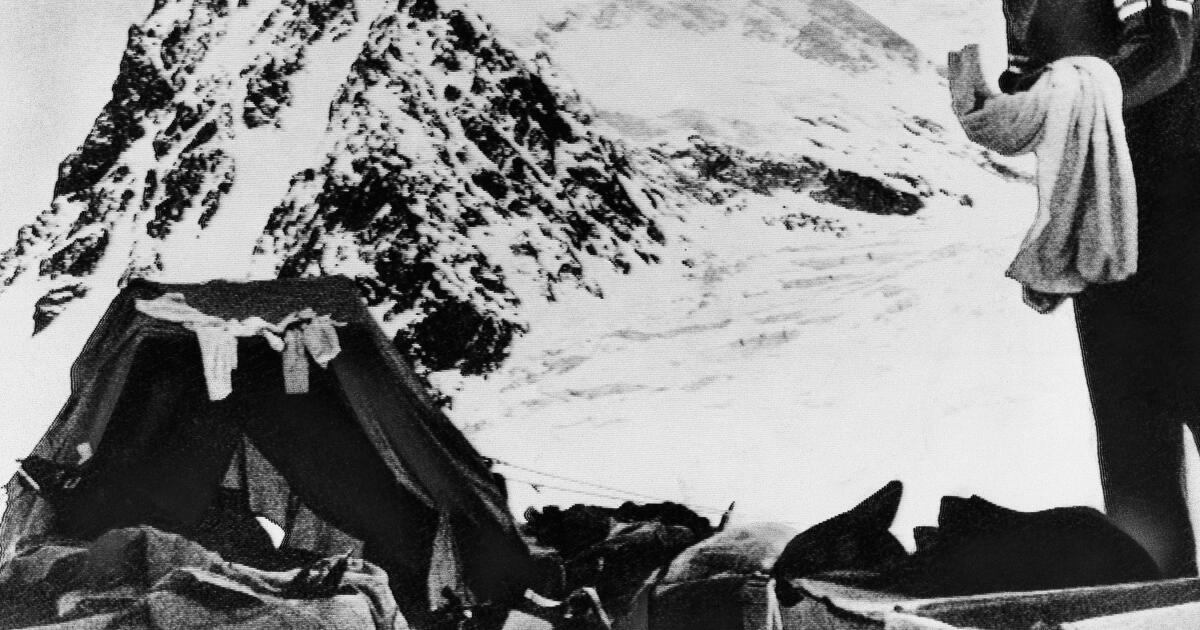
Jim Whittaker, first American climber to scale Mount Everest, has died

Newsletter: NATO holds amid fragile Iran ceasefire

Florida High School Football Rankings: Top 25 teams – Oct. 21

How old is Bo Nix? What to know about Oregon quarterback ahead of 2024 NFL Draft

Cleary's 21 help Le Moyne down Central Connecticut State 69-64 in OT

99th annual Pony Swim held in Virginia

Indiana Members Credit Union announced as new anchor tenant at Bottleworks District
Newsletter: NATO holds amid fragile Iran ceasefire

Jim Whittaker, the first American to summit Mount Everest, dies at 97

Video: Military Families Bear the Burden of War, Again

Fox News Poll: Record number say taxes are too high; government spending seen as wasteful

‘Even the street cats ran’: Inside Israel’s deadliest attack on Beirut
-

 Atlanta, GA4 days ago
1 teenage girl killed, another injured in shooting at Piedmont Park, police say
-

 Culture1 week ago
Do You Know Where These Famous Authors Are Buried?
-

 Movie Reviews7 days ago
Vaazha 2 first half review: Hashir anchors a lively, chaos-filled teen tale
-

 Georgia2 days ago
Georgia House Special Runoff Election 2026 Live Results
-

 Pennsylvania2 days ago
Parents charged after toddler injured by wolf at Pennsylvania zoo
-

 Education1 week ago
Video: We Put Dyson’s $600 Vacuum to the Test
-
 Milwaukee, WI3 days ago
Potawatomi Casino Hotel evacuated after fire breaks out in rooftop HVAC system
-
 Entertainment1 week ago
Inside Ye’s first comeback show at SoFi Stadium