Northeast
Trump greets supporters, union workers at NYC construction site: 'Amazing show of affection'


Former President Donald Trump stopped by a construction site in New York City to thank them for their support amid his ongoing trial.
The former president’s caravan pulled up to meet the hundreds of fans and union workers seeking autographs and selfies on Thursday morning.
Trump told reporters on the scene that he appreciated the “amazing show of affection” ahead of his appearance in Manhattan court and a key U.S. Supreme Court hearing on presidential immunity in Washington.
“We have a big case today – this judge wouldn’t allow me to go, but we have a big case today at the Supreme Court on presidential immunity,” Trump said to the press.
TRUMP SAYS NY JUDGE MERCHAN ‘THINKS HE IS ABOVE THE SUPREME COURT’ AFTER BARRING HIM FROM IMMUNITY ARGUMENTS
Former President Donald Trump pumps his first at cheering union workers at the construction site of the new J.P. Morgan Chase building on April 25, 2024, in New York City. (Michael M. Santiago/Getty Images)
“A president has to have immunity,” he added. “If you don’t have immunity, you just have a ceremonial president.”
Trump also took the opportunity to jab at President Biden, accusing the president of purposefully allowing the nation’s border to be overrun.
NIKKI HALEY WINS 150K VOTES IN PA REPUBLICAN PRIMARY DESPITE DROPPING OUT
Former President Donald Trump steps out of the SUV caravan transporting him to the court house to greet supporters in New York City. (Fox News )
“You could close the borders with one phone call,” the presumptive GOP presidential nominee said. “Close up the borders, Joe. Our country is going to hell.”
Manhattan District Attorney Alvin Bragg has charged Trump with 34 counts of falsifying business records in the first degree. Trump pleaded not guilty to all 34 counts.
For prosecutors to secure a criminal conviction, they must convince the jury that Trump committed the crime of falsifying business records in “furtherance of another crime.”
Former President Donald Trump greets union workers at the construction site of the new J.P. Morgan Chase building on April 25, 2024, in New York City. (Michael M. Santiago/Getty Images)
New York prosecutor Joshua Steinglass on Tuesday said the other crime was a violation of a New York law called “conspiracy to promote or prevent election.”
Prosecutors will try to prove that the alleged conspiracy was to conceal a conspiracy to unlawfully promote his candidacy.
Read the full article from Here

NEWYou can now listen to Fox News articles!
A married high school physical education teacher has been indicted on two counts of third-degree sexual assault after being accused of having an inappropriate relationship with a male student.
Alisha Crins is accused of exchanging sexually suggestive messages and engaging in sexual contact with the student while he was enrolled at Ponaganset High School in Rhode Island as a 17-year-old, according to an affidavit cited by WPRI.
The investigation began after the former student filed a formal complaint with Rhode Island State Police in October, the documents obtained by WPRI show.
According to the affidavit, the student told investigators Crins began texting him while he was a sophomore after allegedly finding his cellphone number online.
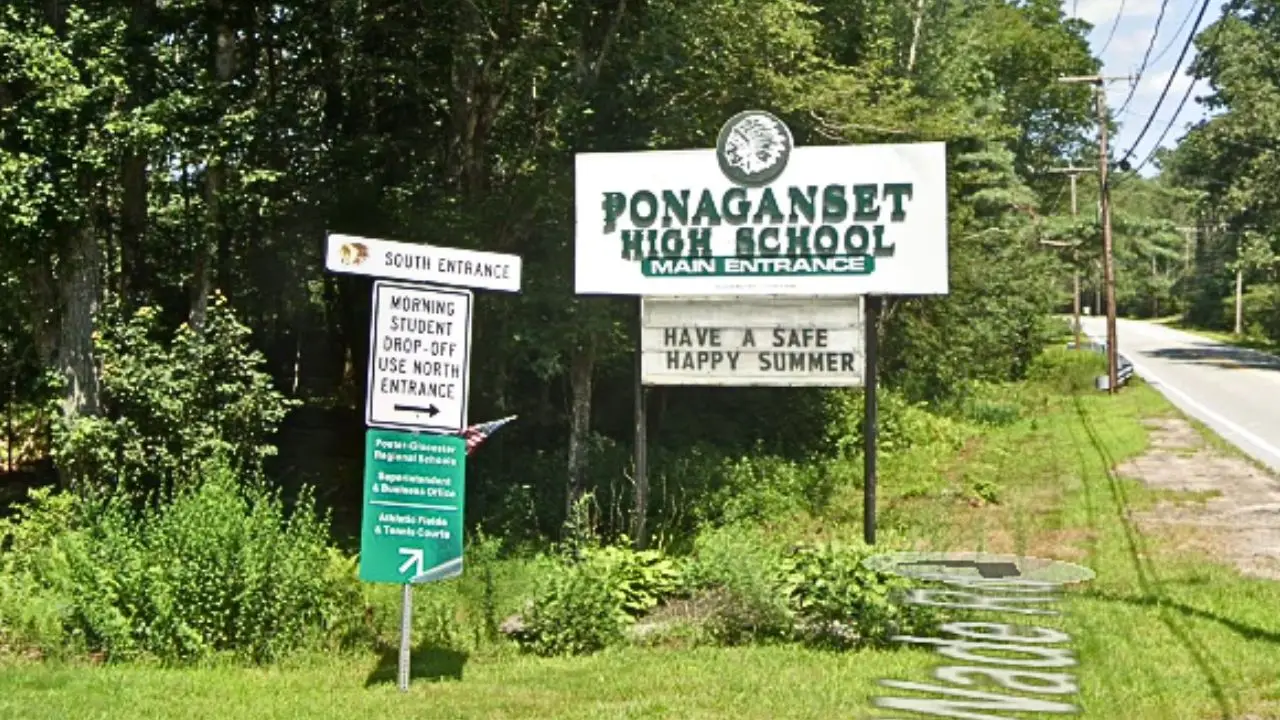
A sign marks the main entrance to Ponaganset High School in Rhode Island. (Google Maps)
He said she initially asked him to do work for her while she was on vacation, but the two continued communicating through text messages and social media after that plan fell through.
The student alleged the relationship escalated during his junior year. He told investigators Crins frequently complimented his appearance and once asked to wear his jersey during a school pep rally.
He further alleged Crins invited him to meet near her Cranston home, where they kissed inside his vehicle. During a later encounter, she allegedly climbed into the back seat and engaged in sexual contact, according to the affidavit. The student denied having sexual intercourse with her.
The alleged assaults took place between April 1, 2024, and June 30, 2024, according to WJAR.
HIGH SCHOOL BASKETBALL COACH CHARGED WITH RAPING FOSTER DAUGHTER, SERVING VICTIM TEQUILA SHOTS: REPORT
A Rhode Island State Police cruiser parked near a waterfront with boats visible in the background. (Rhode Island State Police Facebook)
When questioned by investigators, Crins denied “getting physical” beyond a single kiss but admitted to flirting and exchanging text messages that contained “sexual innuendos,” the affidavit states.
She also acknowledged sending photos and videos and told investigators the two discussed plans to have sex once he turned 18, though she said they never acted on those plans.
The Foster-Glocester Regional School District said Crins resigned from her role at the school Oct. 1, 2025, according to WJAR.
CLICK HERE TO DOWNLOAD THE FOX NEWS APP
File image of a woman texting. According to an affidavit, the student told investigators Crins began texting him while he was a sophomore after allegedly finding his cellphone number online. (iStock)
In a statement obtained by the outlet, the district said it is cooperating with authorities and referred further inquiries to state police.
Fox News Digital has reached out to state police for comment.
Related Article

Read the full article from Here

Write to us at startingpoint@globe.com. To subscribe, sign up here.
Born and raised in Southie, Heather Foley has seen her neighborhood morph over the past three decades of scrubbing, renovation, and new construction for higher-income new arrivals.
But even Foley was surprised to discover that her South Boston, where kids once went to the corner to buy milk and cigarettes for parents, has emerged with the city’s second-highest average income, even ahead of Charlestown and Beacon Hill.
Her first thought?: “I gotta start being nicer to my neighbors if that’s the kind of money they’re making.”
What’s a household?
Decades ago, when “Good Will Hunting” was filmed in the neighborhood and Southie was known as a working-class area, there were more kids around and maybe just a single breadwinner in some homes.
Since then, Southie saw more two-earner households, fewer kids, and spiffier rental units where three or four roommates could contribute to a “household.” The changes, along with spillover from the adjacent, pricier Seaport, or South Boston waterfront, are factors in Census data showing more than 40 percent of Southie households earn more than $200,000 a year.
Staying put
Foley, 46, a photo shoot producer, considers herself lucky. She didn’t move out to the South Shore like many neighborhood longtimers. She’s living in a family home on a block with residents — oldtimers and newer arrivals — who aren’t flipping properties for big bucks.
Another blessing, particularly valuable this winter? She has a driveway.
As a kid, she went to church and school at Gate of Heaven, St. Brigid, and St. Peter, and jokes that she’s “so sad I didn’t buy a three-decker with my First Communion money, because I probably could have.”
Waves of gentrification
She remembers the earlier waves of newcomers, when glassy sports bars like Stats Bar & Grille muscled in among longtime restaurants like Amrheins.
But now, even the popular Stats is moving out at the end of the month. The property owner is developing a five-story, mixed-use residential building at the site.
A small silver lining
Foley notes that some of the onetime “newcomers” have been here for three decades — and in some ways, have stabilized the place. Many have raised kids, who, like her son, may return to the neighborhood as young adults (albeit splitting a rented apartment with friends). Stats, the sports bar, says it will also return to the neighborhood’s thriving food scene.
“We have a lot of great restaurants now,” Foley says, “and everyone cleans up after their dog.”
Read: These maps show Boston’s wealthiest and most populous neighborhoods — plus other key trends.
🧩 6 Across: More scarce | 🌧️ 42° Another storm
Grand New Party: How do you build a statewide slate of Republicans in a Democratic state? Nearly half of the Mass. GOP candidates didn’t use to be Republicans.
Farewell advice: After nearly 15 years of health system leadership, the departing CEO of Beth Israel Lahey Health offers this advice to others.
Hitting the brakes? After an ambitious state law, Lexington welcomed a wave of new housing. Now, people there are having second thoughts.
Hyde Park fatal bus crash: The driver has been indicted.
Patriots, strippers, and hookahs: A downtown restaurant’s liquor license is in jeopardy after it allegedly hosted Patriots players and guests after their AFC Championship in January. A decision is expected today.
‘Culture of secrecy’: In a scathing report, R.I. authorities accused the Roman Catholic Diocese of Providence of decades of “inaction, concealment, and revictimization” in complaints of clergy sexual abuse of hundreds of children.
Centers of suffering, campaigning: Federal immigration facilities have become backdrops for Democratic politicians seeking to fight President Trump’s immigration policies.
‘The best time to remember God’: Amid crackdowns, the Somali community leans into faith during Ramadan.
When is a reno worth it? Here’s how to judge the return on a home investment.
🧸 ‘Ted’ talk: Seth MacFarlane and the “Ted” cast talk Massholes, potty-mouthed teddy bears, and why Boston may have “the worst accent”
🩰 A ‘Black Swan’ premiere: That’s among 30 sparkling arts events happening this spring around New England. Plus, why are more artists being banned from America?
🎥 Quiz: Test yourself with the Globe’s Academy Awards quiz.
⚽ Will $7.8 million stop the World Cup from coming here? Can Foxborough’s insistence on up-front security payments force the world’s soccer governing body to send matches somewhere else this summer?
♯ Teenage dreams: The future rock stars were teenagers when they wrote songs, influenced by David Bowie and Stevie Wonder, about a fictional nightclub. A half-century later, Squeeze has reworked and is releasing those songs.
💻 Death by chatbot? A new lawsuit alleges Google’s chatbot sent a man on missions to find an android body it could inhabit. When that failed, it set a suicide countdown clock for him. (WSJ)
🍕 And a red cup, please: Fans are tracking down the few Pizza Hut Classic red-roofed restaurants that remain in the 6,200-store chain. (NYT)
Thanks for reading Starting Point.
This newsletter was edited by Heather Ciras and produced by Ryan Orlecki.
❓ Have a question for the team? Email us at startingpoint@globe.com.
✍🏼 If someone sent you this newsletter, you can sign up for your own copy.
📬 Delivered Monday through Friday.
Dave Beard can be reached at dave.beard@gmail.com. Follow him on X @dabeard.
Pittsburg, PA
As his polarizing Pitt career winds down, a banged-up Cam Corhen has saved his best for last


Explore small streams of Wyo. with WGFD XStream Angler challenge

Paramount ally RedBird says using Middle East money to help buy Warner Bros. could be a good idea

Fitness Class Volume Tied to Exercise Intensity Perception

Peaky Blinders: The Immortal Man review – Tommy Shelby returns for muddy, bloody big-screen showdown

Exclusive: Article Five not on the table despite Iran missile incident, NATO's Rutte says

Florida High School Football Rankings: Top 25 teams – Oct. 21

Cleary's 21 help Le Moyne down Central Connecticut State 69-64 in OT

How old is Bo Nix? What to know about Oregon quarterback ahead of 2024 NFL Draft

99th annual Pony Swim held in Virginia

Indiana Members Credit Union announced as new anchor tenant at Bottleworks District

Map: 4.9-Magnitude Earthquake Shakes Louisiana

Paxton vows he’s ‘staying in this race’ even if Trump backs Cornyn in Texas GOP clash

Which Kurdish groups is the US rallying to fight Iran?

Man accused of plot to assassinate Trump testifies Iran pressured him, says Biden and Haley were other possible targets

DHS defends McLaughlin against allegations husband’s company profited millions from ad contracts: ‘Baseless’
-

 World1 week ago
Exclusive: DeepSeek withholds latest AI model from US chipmakers including Nvidia, sources say
-

 Massachusetts1 week ago
Mother and daughter injured in Taunton house explosion
-

 Wisconsin4 days ago
Setting sail on iceboats across a frozen lake in Wisconsin
-

 Maryland4 days ago
AM showers Sunday in Maryland
-

 Florida4 days ago
Florida man rescued after being stuck in shoulder-deep mud for days
-

 Denver, CO1 week ago
10 acres charred, 5 injured in Thornton grass fire, evacuation orders lifted
-

 Massachusetts2 days ago
Massachusetts man awaits word from family in Iran after attacks
-

 Oregon6 days ago
2026 OSAA Oregon Wrestling State Championship Results And Brackets – FloWrestling