Northeast
The kidnapping case of 1-month-old Peter Weinberger from July 4, 1956

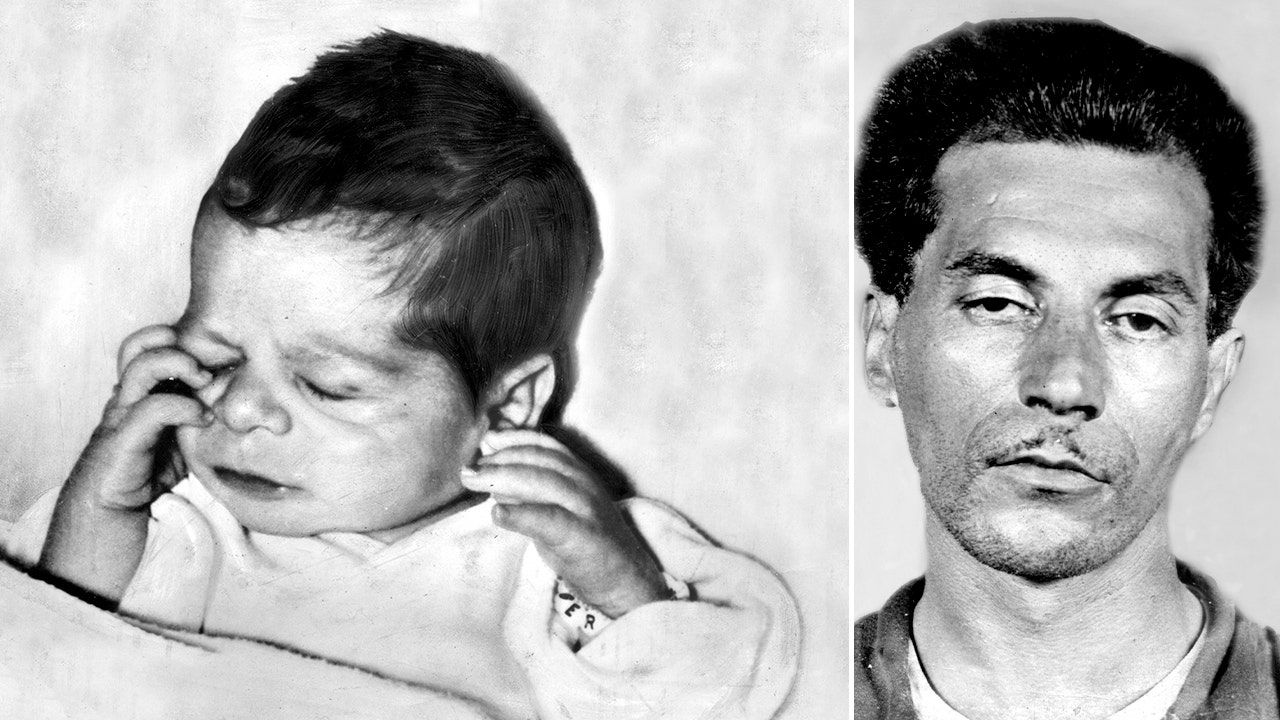
The kidnapping of 1-month-old Peter Weinberger on July 4, 1956, in Long Island, New York, resulted in new legislation passed by former President Dwight D. Eisenhower during his presidency which allowed federal investigators to become involved in a kidnapping case after 24 hours missing versus the original 7-day waiting period.
In the late afternoon on Independence Day in 1956, Beatrice “Betty” Weinberger wrapped her baby in a blanket and placed him in a carriage on the family’s front porch before going into the home for a few minutes as the child slept.
When she returned to the porch, the carriage was empty and a ransom note was left by a kidnapper.
AMBER ALERTS: WHAT THEY ARE AND WHAT TO DO IF ONE POPS UP ON YOUR PHONE
Angelo LaMarca admitted to kidnapping and killing 1-month-old Peter Weinberger in 1956. (NY Daily News Archive via Getty Images)
The note written in pencil read, “I hate to do this to you, but I am in great trouble,” according to the New York Daily News. It added that the kidnapper was “not asking for a lot of money” but only what he needed and that he was “very serious about this.”
He also threatened to kill the baby at the “first wrong move” and also read that he was sorry for his actions but was desperate for money. The criminal demanded $2,000 in small bills for the return of the baby, according to the FBI’s website. If the ransom was paid, he promised to return the baby “safe and happy” the next day.
He signed the letter “Your baby sitter.”
Weinberger called the Nassau County Police Department, about 35 miles outside of New York City, and her husband, Morris Weinberger, a drug salesman, requested newspapers opt out of reporting on the abduction at the time. However, the New York Daily News included Peter’s story as a front page headline, and reporters immediately surrounded the Weinberger residence.
THE DISAPPEARANCE OF CHARLEY ROSS, THE FIRST KNOWN VICTIM OF KIDNAPPING FOR RANSOM IN US
Peter Weinberger was kidnapped from the front porch of his home as he slept in a carriage outside. (John Drennan/NY Daily News Archive via Getty Images)
Police left a decoy ransom package at the spot, but the kidnapper never showed up to collect it. It was later confirmed, after an arrest was made, that the kidnapper did show up with the infant but was quickly diverted by the commotion outside the home.
The FBI set up a temporary investigation headquarters for the case in Mineola, Long Island, beginning on July 11, 1956, just one day after a second attempt at the ransom money was made by the kidnapper. On July 10, he called the Weinberger home twice demanding $5,000 and provided new instructions as to where to leave the money, but he did not show up to either location.
Police located a bag with a note written in the same handwriting as the first ransom note. It provided a location where the baby could be found “if everything goes smooth [sic].” FBI agents and handwriting experts from the FBI analyzed almost 2 million writing samples, which included many provided by the BMV and probation offices and schools, as well as other federal and state municipalities, according to the FBI website.
On Aug. 23, 1956, Angelo John LaMarca, a truck and taxi driver and Plainview, New York, resident, was arrested for the kidnapping of Peter when police matched his handwriting to the ransom notes.
FOLLOW THE FOX TRUE CRIME TEAM ON X
Peter Weinberger’s decomposing remains were located by police following Angelo John LaMarca’s arrest. (Sam Platnick/NY Daily News Archive via Getty Images)
Though LaMarca initially denied any connection to the kidnapping, it was later discovered that he was living in a $15,000 home with his wife and two children that he could not afford and admitted to the abduction.
LaMarca also told police he had killed the baby for the sake of his own children as he was in financial debt with loan sharks from Brooklyn. He said that he had been driving around neighborhoods looking for a way to make quick cash and saw Weinberger leave Peter on the porch.
He told police that the day he went to drop off the infant and receive the ransom money, he was scared off by the crowd of reporters and officers and dumped the baby off of a highway, according to the FBI’s website.
The FBI fled to the scene described by LaMarca and found the decomposing remains of Peter. During the trial, where lawyers attempted to plead temporary insanity, it was determined Peter died of asphyxia, starvation and exposure at around 6 weeks old.
LaMarca was tried on kidnapping and murder charges and on Dec. 14, 1956, and found guilty by a jury. He was sentenced to death. Though he appealed a number of times, LaMarca was executed on Aug. 7, 1958, at Sing Sing Prison in Ossining, New York.
Read the full article from Here


Park Ranger Ben Croll says outdoor plans for kids attending New Haven’s parks and rec summer camp at West Rock Ridge state park are changing with the wind, after thick smoke from Canada’s wildfires continues to make its way through the Connecticut skies.

“Do we accept the idea that innocent, loving partners and loving and devoted fathers of 3-year-olds can be collateral damage to this government’s policies? Do we agree that this is just an acceptable cost of doing business?” Gideon said. “We truly believe that people need to understand what the real costs are.”
“I want to be clear about something. Johan Sebastián, before he was shot to death, had been accused of committing no crime. He was in this country lawfully, and he was following a lawful process that’s prescribed by our federal government,” the attorney said, adding that Durán had been issued a work permit and a Social Security number under the Trump administration.
ICE has said it was conducting “targeted surveillance on the last known address of an illegal alien with a final order of removal” around 7 a.m. Monday, an agency spokesperson said.
“The vehicle attempted to flee the scene and fearing for public safety an officer discharged his weapon,” the ICE spokesperson said.
Durán, who was born and raised in Bucaramanga, Colombia, had come to the U.S. in 2023 to seek better opportunities for him and his family, relatives said.
A spokesperson with the Department of Homeland Security told NBC News in an email that Durán “illegally entered the United States” through the southern border nearly three years ago “and was released into the country under the Biden Administration.”
Entering the U.S. without proper authorization is a misdemeanor, but living in the country without legal permission is a civil violation and not a criminal offense.
At work, and everywhere he went, Durán carried an infectious joy, Rojas said.
As a father, he was devoted. Aside from working cleaning and delivery jobs to provide for his family, he took their daughter, Dulce — or “gordita” (chubby) as he lovingly called her — to the park every afternoon, Rojas said.
Durán always indulged his little girl whenever she had a craving for nuggets and fries, Rojas said, adding he would often marvel in tears every time he realized his daughter “was getting bigger.”
Rojas recalled a conversation she had with Durán a few months ago, wondering who their little girl would grow up to be. Durán said he would have a hard time sending off his daughter to school for the first time, she said.
Dulce now asks for her father every night, Rojas said, breaking down in tears. “And I don’t have the strength to tell her that dad isn’t coming, that she can’t give him a hug and tell him ‘I love you.’”
Gideon said that “there will come a time when those responsible for Johan Sebastián’s needless death will have to answer for what they did. But today is not that day. … Today is about Johan Sebastián and who he was as a person.”

SPRINGFIELD, Mass. (WWLP) – Springfield bankruptcy attorney Andrea M. O’Connor has been named to the 2026 Massachusetts Super Lawyers list.
According to the firm, Andrea M. O’Connor of Shatz, Schwartz and Fentin, P.C., has been named to the 2026 Massachusetts Super Lawyers list in the Bankruptcy: Consumer practice area, marking the fourth consecutive year she has received the recognition.
O’Connor’s practice draws on experience representing both debtors and creditors, serving as a Chapter 7 trustee and clerking for the U.S. Bankruptcy Court for the District of Massachusetts. The firm said she develops legal strategies tailored to her clients’ individual needs and goals.
O’Connor graduated magna cum laude from Western New England University School of Law, where she served as editor-in-chief of the Western New England Law Review. She is admitted to practice law in Massachusetts and Connecticut, as well as before the U.S. District Courts for Massachusetts and Connecticut, the U.S. Court of Appeals for the First Circuit, and the U.S. Court of Appeals for the Second Circuit.
Beyond her legal practice, O’Connor serves as chair of the Bankruptcy Section of the Hampden County Bar Association and is co-chair of both the Western Massachusetts Bankruptcy Conference and the MCLE Bankruptcy Conference. She also serves on committees for the U.S. Bankruptcy Court for the District of Massachusetts.
Before earning placement on the Massachusetts Super Lawyers list from 2023 through 2026, O’Connor was recognized as a Super Lawyers Rising Star each year from 2019 through 2022.
Super Lawyers is a peer-reviewed attorney rating service that recognizes lawyers in more than 70 practice areas. The organization says its selection process includes attorney nominations, independent research and peer evaluations.
Local News Headlines
WWLP-22News, an NBC affiliate, began broadcasting in March 1953 to provide local news, network, syndicated, and local programming to western Massachusetts. Download the 22News Plus app on your TV to watch live-streaming newscasts and video on demand.
-

 Arkansas3 minutes ago
Brother of North Little Rock mayor winner of record $1.8 billion Powerball Jackpot
-

 Colorado15 minutes ago
Winter Park to host free rooftop celebration honoring Colorado 150
-

 Connecticut21 minutes ago
Connecticut insurance now required to cover these athletic prosthetics
-

 Delaware27 minutes ago
Body cam video released of deadly police shooting in Wilmington, Delaware
-

 Florida33 minutes ago
‘Experimental explosion’ reported off Central Florida coast, experts say
-

 Georgia39 minutes ago
Everything From Georgia Tech LB Kyle Efford At ACC Media Days
-

 Hawaii45 minutes ago
New Honolulu police chief plans to launch drone program to help catch crime
-

 Idaho51 minutes ago
Boating, beaches, and mountain scenery: Escape to this bright blue Idaho reservoir

