Northeast
Sanctuary state's 'green light' law is red flag for Americans' safety, national security: experts

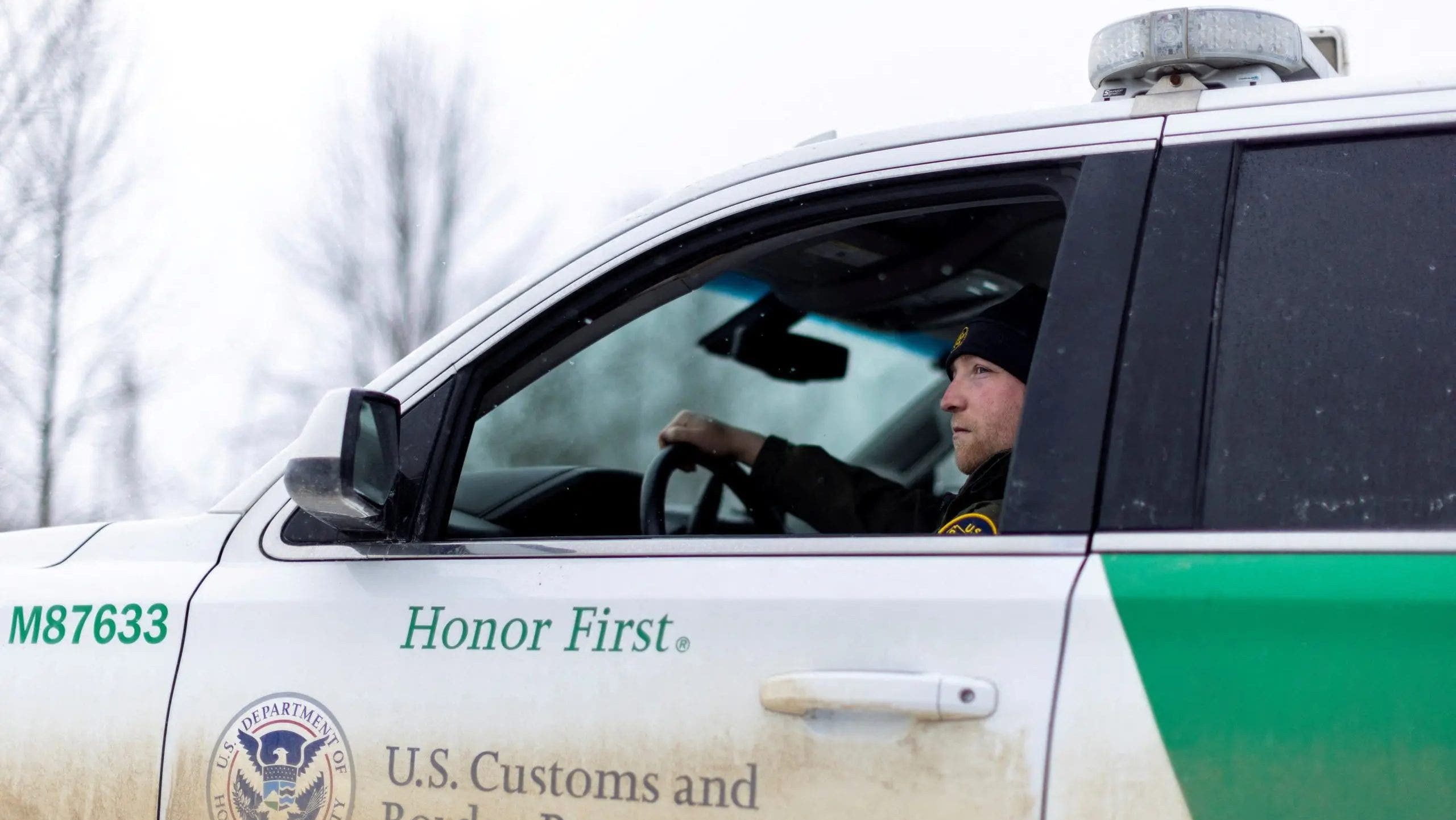
A controversial New York law that blocks federal agents trying to enforce immigration laws from seeing illegal immigrants’ criminal driving records during stops is putting law enforcement and American citizens in danger, experts say, and the Trump administration is suing to have the legislation undone.
The so-called green light law, officially known as the Driver’s License Access and Privacy Act, took effect in 2019 but has come under renewed scrutiny following a fatal shootout in neighboring Vermont that left a U.S. Customs and Border Protection agent dead near the border with Canada, and as President Donald Trump has ordered a nationwide crackdown on known criminal aliens at the start of his second term in the White House.
“Any information that can help law enforcement stay safe as they conduct their duties has pretty much been taken away with this green light law,” said Hector Garza, vice president of the National Border Patrol Council.
The “green light law” has two key features. One is granting driver’s licenses to illegal immigrants. The other is that it blocks Homeland Security, Immigration and Customs Enforcement and Border Patrol agents from access to New York driver records, including those for felonies and misdemeanors.
BONDI ANNOUNCES NEW LAWSUITS AGAINST STATES ALLEGEDLY FAILING TO COMPLY WITH IMMIGRATION ACTIONS
A Border Patrol agent keeps an eye on a road near the Canada-U.S. border in Mooers Fork, N.Y., on Jan. 23, 2025. (REUTERS/Carlos Osorio)
“What this does is that it prevents law enforcement agents from getting any type of information in regards to any registrations that the state has,” Garza said. “For example, before we engage in traffic stops, typically law enforcement will always conduct a vehicle registration check to see if there’s any warrants to see if that person is considered armed and dangerous.”
That information can help agents make informed decisions before initiating a stop and while approaching a vehicle.
“You might actually call in for additional backup,” he said. “You might not want to pull somebody over close to schools or close to communities where there might be a lot of traffic, for example. You might want to conduct that traffic stop further on in the town, right where it might be safer.”
ILLEGAL-SMUGGLING COYOTES NOW ADVERTISING AT CANADA BORDER AMID TRUMP MIGRANT CRACKDOWN: REPORT
Attorney General Pam Bondi (AP Photo/Ben Curtis)
“They have green light laws, meaning they’re giving a green light to any illegal alien in New York where law enforcement officers cannot check their identity if they pull them over,” Attorney General Pam Bondi said last week. “And law enforcement officers do not have access to their background. And if these great men and women pull over someone and don’t have access to their background, they have no idea who they’re dealing with, and it puts their lives on the line every single day.”
While New York is one of a dozen states that allows illegals to drive, it is the provision blocking access to Department of Motor Vehicle records that has prompted concerns.
DAILY AVERAGE OF KNOWN GOTAWAYS AT SOUTHERN BORDER PLUMMETS, DOWN 93% FROM BIDEN ADMINISTRATION HIGHS
Democrat New York Attorney General Letitia James, left, and Gov. Kathy Hochul (Lev Radin/Pacific Press/LightRocket via Getty Images)
The Justice Department sued a group of Empire State leaders, including Gov. Kathy Hochul, New York Attorney General Letitia James and the state’s Department of Motor Vehicles commissioner over the green light law, which court filings say hinders the work of federal immigration enforcement by hiding information from agents.
“This is a new DOJ,” Bondi said at a news conference last week. “New York has chosen to prioritize illegal aliens over American citizens. It stops. It stops today.”
James, in a statement, vowed to fight the lawsuit.
People line up outside the New York State Department of Motor Vehicles office in Medford on Jan. 31, 2020. Long lines resulted from the “green light law” that allows illegal aliens to obtain driver’s licenses. (Yeong-Ung Yang/Newsday via Getty Images)
BORDER PATROL AGENT KILLED IN VERMONT IDENTIFIED
“Our state laws, including the green light law, protect the rights of all New Yorkers and keep our communities safe,” she said. “I am prepared to defend our laws, just as I always have.”
Proponents of the law argue it makes the roads safer because illegal immigrant drivers will pass a driving test if they obtain a state license. But members of law enforcement see it differently.
“We’re targeting people that have very serious and dangerous criminal records, people who have been convicted of serious crimes. These are the people that we’re after,” Garza said. “So whenever we’re doing a record check on a vehicle, that is information that we’re looking for to be able to target those people that are a menace to society.”
National Border Patrol Council Vice President Hector Garza speaks at the White House on Jan. 3, 2018. (Alex Wong/Getty Images)
Hochul called the DOJ lawsuit “worthless” and said federal agents could still gain access to state DMV records with a warrant.
But that process can be too slow to help agents conducting traffic stops in the field, like 44-year-old Border Patrol agent David Maland, who was killed in Vermont on Jan. 20. The surviving suspect in Maland’s death is a computer science student alleged to be part of a gender-bending anarchist cult linked to six murders in three states. Also killed in the shootout was a transgender German national.
A Border Patrol agent positions a robotic device on southbound Route 91 near Newport, Vt., after another Border Patrol agent was shot dead on Jan. 20, 2025. (David McGlynn for Fox News Digital)
While the vast majority of illegal crossings happen at the southern border, officials have been warning for years that the northern line has seen an increase. Since President Donald Trump’s second term began last month, highlighted by a nationwide crackdown on criminal aliens, illegal crossings at the southern border have plummeted. As of last week, the daily average of known getaways was down by 93%.
FRUSTRATED CHICAGOANS BACK ICE DEPORTATIONS, APPLAUD DOJ LAWSUIT TARGETING SANCTUARY POLICIES
The New York lawsuit came after the DOJ sued Illinois and Chicago over sanctuary policies.
“Whenever the states refuse to work with federal law enforcement, it hinders public safety,” Garza said. “At the end of the day, the ones that are being impacted here are the communities that we’re trying to protect.”
Former Acting Secretary of Homeland Security Chad Wolf said it was such a security concern that New York residents would temporarily be unable to apply for or renew their status as trusted traveler programs (TTPs), which includes Global Entry membership.
“This is about the state cutting off information sharing with [Customs and Border Protection] and law enforcement not being able to do their job to properly vet individuals applying for the TTP,” DHS said at the time.
Border Patrol stops have frequently led to arrests of smugglers and known criminals, according to former federal assistant U.S. attorney Neama Rahmani, a Los Angeles trial lawyer who early in his career prosecuted cross-border drug traffickers.
“I saw many, many arrests that resulted from a CBP traffic stop at the border or a Border Patrol stop in the United States,” he told Fox News Digital. “At the border, we were looking for people who were trying to enter the United States unlawfully with false documents or criminals who were trying to smuggle aliens in the compartments of their vehicle. In the country, we were looking for smugglers who were transporting aliens to stash houses or their final destination in the United States.”
Fox News’ Louis Casiano contributed to this report.
Read the full article from Here

Northeast
Family claims casino staff mistook veteran’s illness for intoxication, delaying care before his death

NEWYou can now listen to Fox News articles!
A “proud veteran of the U.S. Army” died after suffering a medical emergency while visiting Caesars Palace on the Las Vegas Strip, where, according to a lawsuit, employees and security guards allegedly “presumed, incorrectly” that he was drunk and called him an Uber instead of seeking medical help.
According to a wrongful-death complaint obtained by the Las Vegas Review Journal, 64-year-old Gary Perrin was gambling at Caesars Palace in November 2024 when he began exhibiting “visible signs” of an undisclosed illness. The symptoms allegedly included “sudden onset of sweating, double vision, dizziness and vomiting.”
“Due to, but not limited to, a lack of training, a lack of supervision, laziness, being overworked and tired, profiling, and or a lack of policies and procedures, it was presumed, incorrectly, that Perrin was intoxicated,” the complaint read.
U.S. Army veteran Gary Perrin’s family filed a wrongful death lawsuit against Caesars Palace, claiming casino workers allegedly failed to provide medical attention in November 2024. (Care Cremation & Burial )
Workers decided to “call an Uber/Lyft instead of onsite paramedics or EMR transport” for Perrin, leading to a “critical delay of medical care that ultimately led to, caused, or contributed substantially to his death” weeks later, the lawsuit claimed.
Perrin’s family said that the casino had knowledge of the victim’s serious illness, and yet “did not render immediate and/or reasonable medical attention nor did they take steps to call for medical attention.”
Caesars Palace hotel and casino in Las Vegas. (Bridget Bennett/Bloomberg via Getty Images)
In the lawsuit, Perrin’s family did not disclose how he died but said the employees’ decision to call a rideshare over an ambulance allegedly led to “severe injuries, including but not limited [to] surgical scars and disfigurement, pain and suffering, and loss of life.”
His family is seeking $15,000 from the iconic Las Vegas strip resort, according to the lawsuit.
Aerial view of Las Vegas Strip. A 64-year-old U.S. Army veteran died after suffering a medical emergency at Caesars Palace in Las Vegas, where a lawsuit alleges staff mistakenly presumed he was drunk and called a rideshare instead of paramedics. (iStock)
SEND US A TIP HERE
An obituary for Perrin describes him as a proud veteran who served for four years and then worked for UPS.
CLICK HERE TO DOWNLOAD THE FOX NEWS APP
He retired from the shipping company after 29 years of “dedicated service,” then worked as an assistant to the dean of students and football coach at Goffstown High School in New Hampshire. In his later years, he also worked as a driver at the Maher Center in Middletown, Rhode Island, until his death.
Fox News Digital has reached out to Caesars for comment.
Related Article

Read the full article from Here

How can people possibly afford to live in one of the most expensive cities on the planet? It’s a question New Yorkers hear a lot, often delivered with a mix of awe, pity and confusion.
We surveyed hundreds of New Yorkers about how they spend, splurge and save. We found that many people — rich, poor or somewhere in between — live life as a series of small calculations that add up to one big question: What makes living in New York worth it?
Sara Robinson boarded a Greyhound bus from Oregon to New York City to attend Hunter College in the early 2000s, bright-eyed and eager to pick up odd jobs to fuel her dream of living there.
For a long time, she made it work. But recently, that has been more challenging than ever.
Right around her 40th birthday, Ms. Robinson began to feel financially squeezed in Brooklyn, where she had lived for years. Ms. Robinson (no relation to this reporter) was also feeling too grown to live with roommates.
“As a child,” she said, “you don’t think you’re going to have a roommate at 40.” She decided to move into a place of her own: a one-bedroom apartment in the Tompkinsville neighborhood of Staten Island.
After she moved, the preschool where she’d worked for over a decade closed. Now, she works two jobs. She is a seasonal employee for the state Office of Parks, Recreation and Historic Preservation, working from Tuesday to Saturday. And on Monday nights, she sells concessions at the West Village movie theater Film Forum, which pays $25 an hour plus tips.
Ms. Robinson, now 45, loves her job as an environmental educator at a state park on Staten Island. Her team runs the park’s social media accounts and comes up with event programming, like a recent project tapping maple trees to make syrup.
But the role is temporary. Her last stint was from June 2024 to January 2025. Then she was unemployed until August 2025. Ms. Robinson’s current contract will be up in April, unless she gets an extension or a different parks job opens up.
Ms. Robinson’s biweekly pay stubs from the parks department amount to about $1,300 before taxes. She barely felt a difference, she said, while she was out of work and pocketing around $880 every two weeks from her unemployment checks. (Her previous parks gig paid $1,100 a check.)
Living in New York’s Greenest Borough
“It used to be, ‘There’s no way I’m moving to Staten Island,’” Ms. Robinson said. “But the place is close to the water. I’m three minutes from the ferry. The rest is history.” She lives on the third floor of a multifamily house, above an art studio and another tenant. Her rent is $1,600 a month, plus $125 in utilities, including her phone bill.
“If my situation changes, I don’t know if I could find something similar,” she said. “So much of my New York life has been feeling trapped to an apartment. You get a place for a good price, and you’re like, ‘I can’t leave now.’”
Staten Island is convenient for Ms. Robinson’s parks job, but it’s become harder to justify living in a borough where she knows few people. It takes more than an hour to get to friends in Brooklyn, an especially hard trek during the winter. After four years of living on Staten Island, Ms. Robinson feels somewhat isolated.
“All my friends on Staten Island are senior citizens,” she said. “It’s great. I love it. But I do want friends closer to my age.”
One of Ms. Robinson’s friends, Ray, took her on nature walks and taught her about tree identification, sparking an interest in mycology, the study of mushrooms. This led to a productive — and free — fungi foraging hobby during unemployment. She has found all sorts of mushrooms, including, after a month of searching, the elusive morel.
The Budgeting Game
Ms. Robinson doesn’t update her furniture often, but when she does, she shops stoop sales in Park Slope or other parts of Brooklyn.
“It’s like a treasure hunt,” she said. “You could make a whole apartment off the street, off the stuff that people throw away.”
She also makes a game out of grocery shopping, biking to Sunset Park in Brooklyn or Manhattan’s Chinatown to go to stores where there are better deals. She budgets about $300 for groceries each month.
Ms. Robinson bikes almost everywhere, sometimes traveling a little farther to enter the Staten Island Railway at one of the stations that don’t charge a fare. She spends $80 a month on subway and ferry fares, and $5 a month for a discounted Citi Bike membership she gets through a credit union, though she usually uses her own bike. She is handy and does repairs herself.
There are certain splurges — Ms. Robinson drops $400 once or twice a year on round-trip airfare to Seattle, where her family lives. She also spent $100 last year to see a concert at Forest Hills Stadium in Queens.
She said she has many financial saving graces. She has no student loans and no car to make payments on. She doesn’t get health insurance from her jobs, but she qualifies for Medicaid.
She mostly eats at home, though sometimes friends will treat her to dinner. She repays them with tickets to Film Forum movies.
Nothing Beats the Twinkling Lights
Ms. Robinson’s friends often talk about leaving the city — and the country.
Two friends have their eyes set on Sweden, where they hope to get the affordable child care and social safety net they are struggling to access in New York.
Ms. Robinson can’t see herself moving elsewhere in the United States, but she is entertaining the idea of an international move if she can’t hack it on Staten Island.
Yet the pull of the city is hard for her to resist.
“I just get a rush when I’m riding the Staten Island Ferry across the bay,” she said. “You see all the little twinkling lights. It’s this feeling of, ‘everything is possible here.’”
That feeling, plus the many friendly faces Ms. Robinson sees every day — the ferry operators, the conductors on the Staten Island Railway, her co-workers at Film Forum — are what tie her to New York.
“My savings are not increasing, so there’s that,” she said. “But I’ve been OK so far. I think I’m going to figure it out.”

Applause and music echoed through the Hall of Flags at the Massachusetts State House Friday as lawmakers and community leaders gathered for the Black Excellence on the Hill and the Latino Excellence Awards.
The ceremony celebrates Black and brown residents committed to advancing economic equity.
“We’re honoring Black excellence,” said state Rep. Chris Worrell. “When we look at today, this is what it should look like. This is our house. Black people built this house, literally and figuratively.”
Honorees ranged from attorneys to former professional athletes. Nicole M. Bluefort of the Law Offices of Nicole Bluefort said she plans to use her platform to uplift others.
“I will use my advocacy skills as an attorney to move people forward,” she said.
Former NBA player Wayne Seldan Jr. talked about his journey from McDonald’s All American to a full scholarship at Kansas and a professional career.
“You always want to keep striving for continued betterment and for stuff to grow,” he said. “I don’t think there should be mountaintops. I think we should always be striving to keep building.”
The keynote address was delivered by Michelle Brown, mother of Jaylen Brown, who spoke about raising two children as a single mother and the importance of faith, discipline and education.
“There are no shortcuts. There are no guarantees,” she said. “There was faith, there was discipline, and there was a deep belief that education created mobility.”
Speakers emphasized that mobility is strengthened when communities work together for a common good. Bluefort highlighted the importance of mentorship and shared opportunity, while state Rep. Sally Kerans encouraged attendees to stand together across racial lines.
“In this moment, stand with others. Speak up. Don’t be afraid to say ‘That’s not normal.’ Be allies. Be supportive,” Kerans said.
Organizers said the ceremony was not only about recognition, but also about sustaining progress — encouraging leaders and residents alike to continue building toward a more equitable future.

Xiaomi 17 is a small(ish) phone with a big(ish) battery

World leaders split over military action as US-Israel strike Iran in coordinated operation

Iran fires missiles at US bases across Middle East after American strikes on nuclear, IRGC sites

Common nighttime noise exposure may trigger heart problems, study suggests

MLB pitcher Merrill Kelly says California tax rate swayed decision to reject Padres’ free agency offer

Florida High School Football Rankings: Top 25 teams – Oct. 21

Cleary's 21 help Le Moyne down Central Connecticut State 69-64 in OT

How old is Bo Nix? What to know about Oregon quarterback ahead of 2024 NFL Draft

99th annual Pony Swim held in Virginia

Indiana Members Credit Union announced as new anchor tenant at Bottleworks District
Iran fires missiles at US bases across Middle East after American strikes on nuclear, IRGC sites

Israel strikes two schools in Iran, killing more than 50 people

Anthropic CEO says he’s sticking to AI “red lines” despite clash with Pentagon

ICE blasts Washington mayor over directive restricting immigration enforcement

Did the EU bypass Hungary’s veto on Ukraine’s €90 billion loan?
-

 World2 days ago
Exclusive: DeepSeek withholds latest AI model from US chipmakers including Nvidia, sources say
-

 Massachusetts3 days ago
Mother and daughter injured in Taunton house explosion
-

 Montana1 week ago
2026 MHSA Montana Wrestling State Championship Brackets And Results – FloWrestling
-

 Louisiana5 days ago
Wildfire near Gum Swamp Road in Livingston Parish now under control; more than 200 acres burned
-

 Denver, CO3 days ago
10 acres charred, 5 injured in Thornton grass fire, evacuation orders lifted
-

 Technology1 week ago
YouTube TV billing scam emails are hitting inboxes
-

 Technology1 week ago
Stellantis is in a crisis of its own making
-

 Politics1 week ago
OpenAI didn’t contact police despite employees flagging mass shooter’s concerning chatbot interactions: REPORT