Taylor Swift’s Wedding Guests Don’t Know Ceremony Location — Yet
Rhode Island
Trump actions could force a recession for colleges, R.I. higher ed leader says – The Boston Globe


Brown University is facing the most pressure, with dozens of research grants cancelled and Trump threatening to halt $510 million in funding to the Ivy League college. Egan said all of Rhode Island’s private colleges have faced some level of cuts, and accused Republican leaders of trying to “force a recession on higher education.”
“They’re well on the way to achieving that,” Egan said.
The Trump administration has cut scores of research, particularly involving race and LGBTQ+ people, arguing it amounts to diversity, equity and inclusion and does not serve public health. The cuts include studies seeking to stop the spread of HIV.
The crackdown on DEI, plans to block international student visas, and proposed changes to student aid could all imperil universities, Egan said.
“Clearly there’s a desire to change the way higher education operates,” Egan said. “There will be an opportunity or a chance that great harm will be inflicted on the sector going forward.”
Brown president Christina Paxson has declined interviews about the Trump cuts, citing the uncertainty around future funding. Egan, who lobbies for Brown and the other colleges, said House Republicans’ proposed increase to the endowment tax could cost tens of millions for Brown, on top of the other funding cuts.
Layoffs would be likely if all of the proposed cuts come to fruition, Egan said. A Brown spokesperson said Friday the university has still not received “any demands or formal notification” about the $510 million proposed cut.
“That will harm small businesses, local businesses, local communities, when folks are no longer working and part of the community and part of the economic engine that is higher ed,” Egan said.
Rhode Island’s other colleges do not yet meet the threshold for their endowments to be taxed under the proposal.
Asked about Brown’s high price tag of $92 million a year and a perception that Brown is not contributing enough to Providence, Egan said most students don’t pay the full price tag because of scholarships and aid. He called the $177 million in voluntary payments from the four private colleges in Providence a “phenomenal gift” to the city, considering the universities are tax-exempt as nonprofits.
He said higher education has a major impact on the economy as one of the top employment sectors in the state.
“For those that question the economic impact, you need to go look at some of those local businesses, the pizza shops, the dry cleaners,” Egan said.
Financial woes for New England colleges predate Trump, Egan noted. A lower birthrate in the Northeast compared to other regions of the country means fewer students are turning college-aged each year. Johnson & Wales University recently announced layoffs, citing decreasing enrollment.
In Trump’s spending package, dubbed the “Big, Beautiful Bill,” Egan said he is most concerned about proposed cuts to Pell Grant eligibility — which would make it harder for part-time students to receive the college aid — and the cap on the amount of money graduate students can borrow.
The Trump administration has said the loan limits are “reasonable,” and called the Pell changes “critical reforms” to “prioritize students who truly need financial assistance while promoting completion.”
The Pell Grant, started by a US senator from Rhode Island, provides grants to low-income students that don’t need to be paid back.
Egan also noted that international students tend to pay the full price tag for college, unlike American students who can access federal aid, so blocking student visas would further hurt the universities’ bottom line.
“I find it ironic that around the globe we’re the envy of the world in higher education, but yet in our own country, from not only our leaders but the general public, we’re not seen in even a similar or equal light,” Egan said.
Watch the RI PBS Weekly interview in the player above, or listen to an extended version on the RI Report podcast.
Steph Machado can be reached at steph.machado@globe.com. Follow her @StephMachado.


SEE IT: A great white shark feeds on a dead whale off the coast of Rhode Island, as the large creature comes across a whale carcass floating in the ocean.
RHODE ISLAND – It’s not often you can get so close to such a dangerous beast like a great white shark, but that is exactly what one boater was able to do in Rhode Island.
A large 15-foot great white shark was spotted feasting on a dead whale in the ocean off the coast of Rhode Island.
STAY SHARK SMART: WHAT TO KNOW WHEN YOU HEAD INTO THE WATER
Despite a reputation for inhabiting waters in Australia and South Africa, great white sharks can be found in temperate waters around the world, as their habitat preferences can change as they age, according to National Geographic.
Mexico, Great White Shark (Carcharodon Carcharias); Guadalupe Island.
(Dave Fleetham/Design Pics Editorial/Universal Images Group / Getty Images)
Video footage shared by Ian Shilosky shows many birds hovering around the whale carcass, trying to get a nibble without getting too close to the 15-foot beast.
SEE IT: SPERM WHALE CAUGHT ON CAMERA IN RARE ENCOUNTER OFF SOUTHERN CALIFORNIA COAST
The shark shows off its brutal strength, ripping large chunks from the whale with its 2 to 3-inch razor-sharp teeth, before diving underwater to consume its meal.
“White shark sightings are few and far between until a whale dies and then they seem to appear out of nowhere as this one did,” the Atlantic Shark Institute said on social media.
Great white shark (Carcharodon carcharias), attacking tuna bait. Neptune islands, South Australia. (Photo by Auscape/Universal Images Group via Getty Images)
(Auscape/Universal Images Group / Getty Images)
The great white shark grows slowly, with males maturing at around 26 years and females at around 33, according to NOAA.
These creatures range in age from 30 to over 70 years old, and they can weigh up to 4,500 pounds.
DEEP-SEA DISCOVERY UNCOVERS ONE OF THE LARGEST KNOWN WHALE GRAVEYARDS ON THE FLOOR OF THE INDIAN OCEAN
Great White Shark breaching at Seal Island, False Bay, South Africa
( Chris Brunskill Ltd/Corbis / Getty Images)
Adult great whites usually swim along shorelines where there is a known food source, such as seals or sea lions.
12-YEAR-OLD AMERICAN BOY ATTACKED BY SHARK WHILE VACATIONING IN THE BAHAMAS
As the largest predatory fish in the world, great white sharks tend to eat a variety of fish, rays, squid, seabirds, sea turtles, dolphins and more.

WARWICK, R.I. (WJAR) — Rhode Island’s Lego Fan Convention Returned to the West Warwick Civic Center.
Professional Lego artists from around the country displayed their creations and connect with fans.
There are meet and greet opportunities with Lego celebrities too.
JOIN THE CONVERSATION (2)
Fans can also show off their own skills in the event’s Brick Pits.
Rhode Island
Taylor Swift and Travis Kelce’s 1st Choice for Wedding Was Rhode Island: Why They Pivoted to NYC

Taylor Swift and Travis Kelce initially had their sights set on a marvelous coastal wedding, multiple sources exclusively tell Us Weekly.
“Taylor and Travis really wanted their wedding in Rhode Island, and June 13 was the date, but security wouldn’t have worked because it could get out of hand with that kind of scale of an event,” an insider says.
Though everything was initially being planned in Rhode Island — where Swift, 36, has a mansion in the lavish Watch Hill neighborhood of Westerly — the insider notes the pop star had booked multiple venues from coast to coast on different dates.
According to the source, “Ocean House [in Westerly] was planned at one point, and then plans changed to New York.”
The insider, meanwhile, tells Us that Swift’s security “had to assess all the venues to see what made sense.”
“Rhode Island wasn’t great because the nature of the access and the perimeters were too difficult to secure,” the source explains. “So the main issue with Rhode Island ended up being security.”

Taylor Swift and Travis Kelce Getty Images
“Everything was being planned in Rhode Island,” added a source. “And so many people wanted to come that plans had to change because it became bigger.”
Swift and Kelce, 36, are now rumored to be tying the knot at Madison Square Garden in New York City over the July 4 holiday weekend. While the exact location and date of the nuptials have not yet been confirmed, NYC Mayor Zohran Mamdani appeared to hint at the wedding taking place in the city during a June 15 press conference earlier this month.
“I am fully confident in the work of the NYPD, as well as our state partners, in delivering that safe experience,” he told reporters. “We are the biggest city in the country. We are used to big events, and we are incredibly excited for the [World Cup]. We know it coincides with the Knicks’ [NBA] Finals run. We know it coincides with July 4, America 250, Taylor Swift’s wedding — all happening at the same time — and we are so excited to welcome the world here.”
Additionally, a permit was filed with NYC in June, the mayor’s spokesperson Dora Pekec confirmed to Us after The New York Times reported on a permit to close the streets surrounding MSG from July 2 to midday July 4 for an event on July 3.
City sources also confirmed to Us that the Street Activity Permit Office (SAPO), which issues the permits, is in touch with the NYPD regarding a possible influx of street and pedestrian traffic.
Though Swift and Kelce’s Rhode Island wedding plans fell through, the “I Knew It, I Knew You” singer’s Watch Hill mansion had an uptick in action last week when security was spotted swarming the area. A group of unidentified women were reportedly seen on the balcony wearing matching robes — three in black and one in white — sparking speculation about a bachelorette party.

A woman who appeared to be Swift’s childhood friend Abigail Anderson Berard was also seen on the property with her 2-year-old son.
Meanwhile, Travis celebrated what was perceived as his bachelor party in Los Angeles and San Diego. The Kansas City Chiefs tight end and his brother, Jason Kelce, as well as Travis’ teammate Patrick Mahomes and others, were spotted at a Chris Lake concert, a Dave Chappelle comedy show, a night out at the members-only Bird Street Club and more.
Swift and Kelce began dating in the summer of 2023 and got engaged in August 2025.
-
 Indianapolis, IN2 minutes ago
Heat Advisory and Warning for central Indiana
-

 Pittsburg, PA7 minutes ago
Cincinnati Reds vs. Pittsburgh Pirates Game Delayed on Sunday
-

 Augusta, GA14 minutes ago
CSRA Death Cafe holds gathering at Augusta church
-
 Washington, D.C17 minutes ago
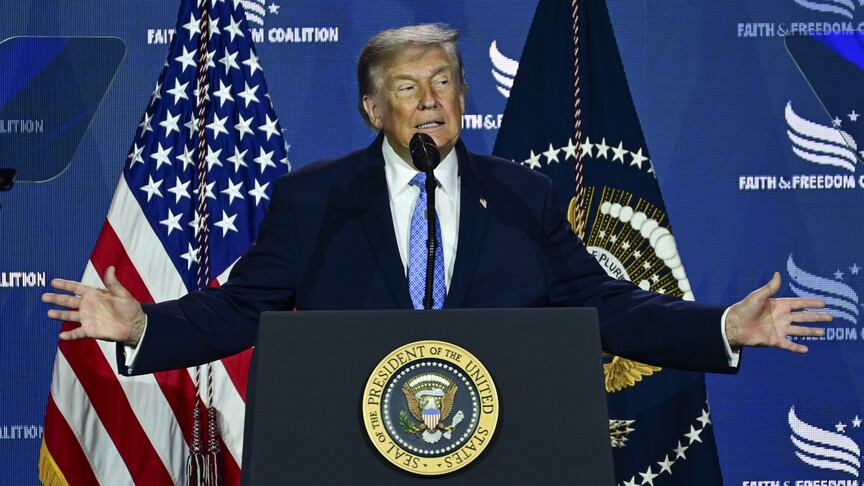
Trump lashes out at Washington, DC, mayoral nominee
-

 Cleveland, OH22 minutes ago
1 dead, 1 hospitalized after early morning crash: Cleveland EMS
-

 Austin, TX29 minutes ago
Big changes to the drought in recent weeks
-

 Alabama32 minutes ago
Alabama football 2027 commit shuts down recruitment
-
 Alaska37 minutes ago
Mat-Su Initial Attack Responding to Fire in Flat Lake

