Rhode Island
The Story Behind Rhode Island’s Thirst Traps – Rhode Island Monthly


Audrey Finocchiaro, right, co-owner of The Nitro Bar, in the shop’s Providence location. Photography by Angel Tucker
It’s a late December Saturday, the morning sun promising a Rockwellian winter day as an impressive line of influenced coffee connoisseurs snakes nearly a block down Newport’s lower Thames Street.
The caffeine-craved and matcha-obsessed mob, queued behind The Nitro Bar’s roped barrier, represents a surprisingly universal archetype: selfie-snapping millennials, après-Pilates athleisure-clad women, young families, eager Alphas and the casually curious; a collective buzz in the air. Across the city, Nitro’s off-Broadway location boasts a similar scene, as does the cafe inside Dash Bicycle Shop on Providence’s West End. Locals stand shoulder to shoulder with others who have pilgrimaged from far beyond state lines, almost certainly among the ranks of the coffee micro-chain’s three-quarters of a million social media followers. To put that reach in perspective, the brand’s TikTok views exceeded more than 130 million in 2025 alone.
Countless posts, likes and shares across social media platforms underline Rhode Island’s thriving coffee culture, percolating from the more than 200 coffee shops and cafes statewide. Our collective consumption ranks eighth in the nation for both most daily cups per capita (1.9) and total cups consumed in a lifetime (40,223) in addition to having the fifth-highest lifetime expenditure on the drink ($166,523). Save for bottled water, more Americans drink coffee each day than any other beverage, according to the National Coffee Association, and specialty coffee continues to surge in popularity, hitting a fourteen-year high in 2025. But long before oat milk lattes and flat whites were all the rage, the Ocean State touted more than two and a half centuries of coffee consumption.
As early as the 1700s, Atlantic trade routes brought coffee into Rhode Island via Newport and Providence’s busy ports. While tea and ale were the more dominant beverages in Colonial times, the Boston Tea Party inspired Colonists to boycott tea and choose coffee in an act of rebellion against the crown. Taverns and inns pouring the new velvety elixir acted as popular social gathering places — including the Crown Coffee House on Newport’s Church Street — from the late 18th century onward.
In 1895, wholesale grocers Brownell & Field Co. of Providence created Autocrat Coffee, which continues to operate in Lincoln. Since the 1930s, the company has been widely associated with its coffee syrup, synonymous with Rhode Island culture itself. So are coffee cabinets — milkshakes blending coffee syrup, milk and ice cream — perhaps best known from the soda fountain at Delekta Pharmacy, now Delekta’s, anchoring Warren’s Main Street since 1858.
Feining for Caffeine
Coffee’s enduring popularity has evolved far beyond the eight-ounce Styrofoam cups of basic black or decaf of yesteryear. Cardboard-sleeved coffee cups clenched in the hands of young and old on the go are de rigueur from Woonsocket to Westerly.
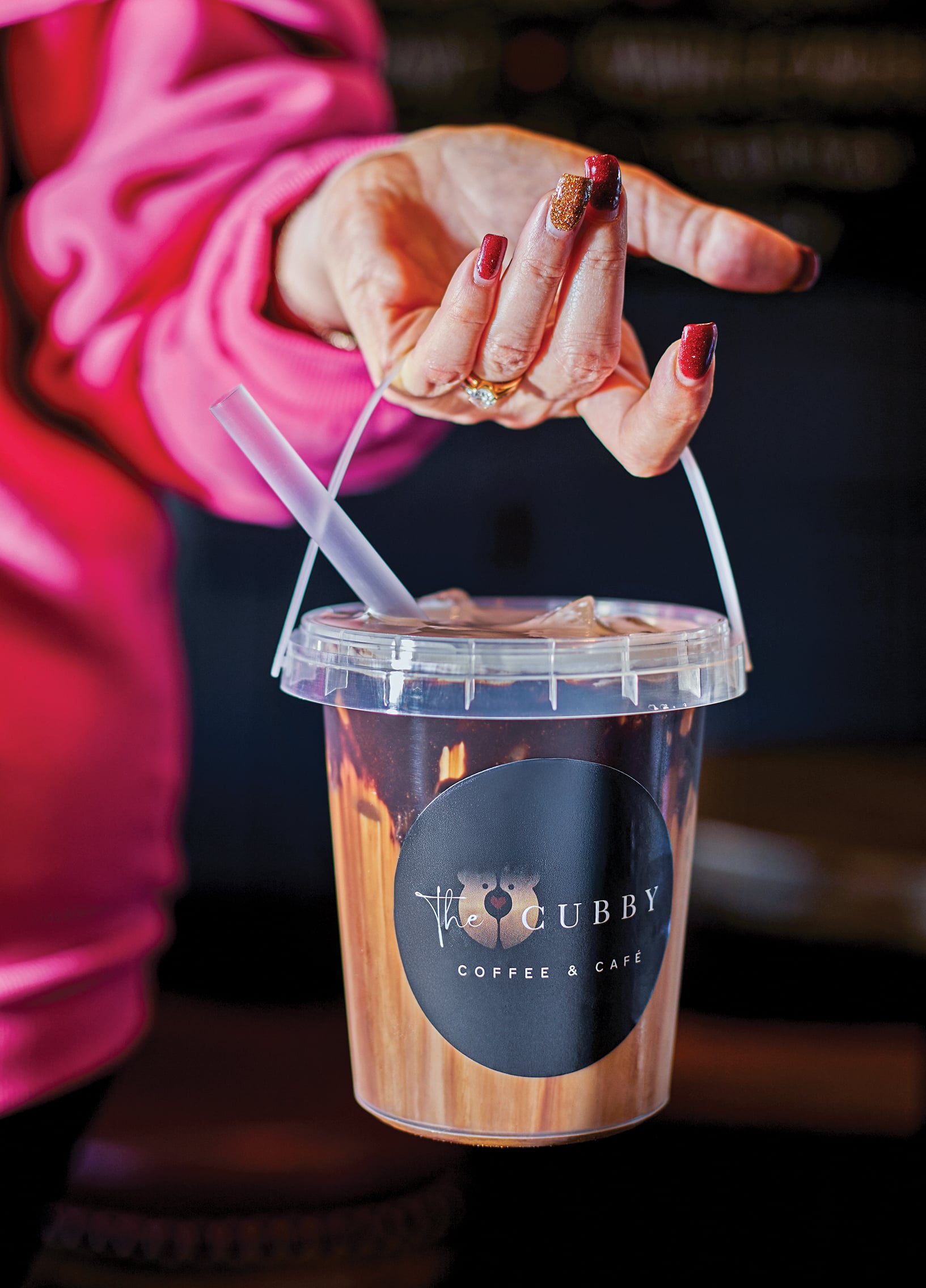
One of the cafe’s viral “coffee buckets.”
In July, The Cubby (formerly The Coffee Cubby) in Lincoln’s Manville village became internet-famous when its “coffee buckets” — thirty-four-ounce coffee drinks served in plastic buckets with handles — went viral. The eye-poppingly large, kitschy containers were the brainchild of operations manager Abbey Gardner, who was inspired by cocktail buckets found at beach bars and nightclubs. “Within three days, they just took off,” says Gardner of the social media-savvy sippers. “On one post … we had upwards of 650,000 views.”
The buzz lured even more creators to little Manville, eager to experience, review and amplify the newly crowned must-have brews. “We had content creators coming in as soon as they caught wind, and that helped spread it. Then there were just so many shares. We know one content creator has gotten [views] over the one million mark,” she says.
While quantifying the precise reach is murky, the stratospheric attention of the buckets proves the power of social influence is undeniable. “We had a person actually fly in from Tennessee,” to try the coffee buckets, says Gardner. “She was like, ‘I knew I wanted to come to this area, and I saw them, so, I flew to Boston, and I came here.’”
The “it drink” phenomenon was a boon for owners Jeremiah Carey and business partner Matthew Moylan, who bought and rebranded The Cubby in 2023. A second burst of momentum soon followed via the Fluffanutter Latte, a sweet and creamy concoction of peanut butter and marshmallow Fluff (the marshmallow creme has been made in nearby Lynn, Massachusetts, since 1920). A similar drink created by a Cape Cod cafe (using Newport-based Springline Coffee) went viral, which helped boost The Cubby’s rendition, even though the Fluffanutter had long been on their menu.
Rhode Island-based creator Katie Corcoran, who posts under @RhodeIslandNative across platforms, spotted the Cape Cod version of the drink blanketing her feed and saw an opportunity to pounce on the trend through a local lens.

Jeremiah Carey and Matthew Moylan purchased and rebranded The Cubby in Manville in 2023.
“I took the take, and I’ve done this before, of you don’t need to leave Rhode Island to get these trendy, delicious things. Save yourself the drive to Cape Cod and just go up to Lincoln,” she says. Her Instagram reel featuring the Fluffanutter has garnered nearly half a million views, while her TikToks on the drink have amassed more than 59,000. She attributes the virality of hers and other curated coffee content to a few things: East Coast lifestyle content being particularly trendy, a movement by coffee drinkers to eschew multinational coffee conglomerates in favor of local cafes, and a rebellion against the zeitgeisty argument that if millennials and Gen Zers simply sacrificed small luxuries, like lattes, they’d be on the path to home ownership.
“There was a lot of counterculture around that; of like, ‘Screw it. Go get your $6 latte,’” she says. “Coffee is definitely having its moment, and I think it goes along the lines of enjoying your life, romanticizing your life, getting the little treat.”
The Cubby’s viral sensations, though bringing an enviable spike in sales at $7–$10 per drink, also brought lines more than 100 people deep. Customers poured out the door and haphazardly weaved through the cramped parking lot, where on weekends, and sometimes weekdays, cars jockeyed for a space. Gardner worked with ownership to mitigate wait times by increasing staff and reworking the logistics of making the coffee buckets, adopting an assembly line format. Outside, they added more patio seating to accommodate the new wave of customers and erected a pop-up tent in the parking lot for shade.
But for some regulars, it wasn’t enough. “I love The Cubby and was a regular. But since the line is insane, I don’t go anymore. I’m sad about it,” wrote one follower on Facebook. To restore those relationships, Gardner says she reached out to as many regulars as she could to invite them back and streamlined a way The Cubby could expedite local orders by giving access to one of the cafe’s alternative entrances. “It was kind of word of mouth,” she says. “Like, ‘Hey, we want to make sure you’re taken care of, because obviously you’re one of the regulars. You stick with us year-round. You’re not just here for the hype of the moment.’”
From Cart to Cartel
The Nitro Bar has also adjusted to increased demand. What started as a simple coffee cart peddling across Providence by founders Audrey Finocchiaro and husband Sam Lancaster in 2016 has evolved into the trio of brick and mortars. Most recently, the couple has been scouting for a location in the Big Apple while bringing their social media followers along as they document their day-in-the-life journey.
“It’s just different logistical things that we’re figuring out, of how to open in New York City. The spaces are so small, and how we’ll run through that is definitely an interesting challenge,” Finocchiaro says. Both North Kingstown natives, the duo’s ties to the city stretch back a decade, when she attended college in Manhattan. “And it’s where we really, Sam and I, both fell in love with coffee,” she explains. Finocchiaro, thirty-two, has amassed more than 210,000 personal social media followers and has grown The Nitro Bar’s following to nearly 700,000.

A Nitro Bar barista prepares coffee drinks during a weekday lunchtime rush.
Such numbers mean that while location hunting in New York, she and Lancaster are recognized on the street, an experience she calls “surreal.” Finocchiaro speculates that part of the reason both she and her business have accrued such a considerable following is her transparency online. Her content includes everything from talking about maxing out her credit card to start the business and stripped-down entrepreneurial advice to having her own “Dunkin’ dad” candidly sample and rate new Nitro drinks and get-ready-with-me videos. She also discusses profoundly heavier topics, including the harsh realities of business ownership: long nights, early mornings, eighty-hour workweeks, money management, setting boundaries, tuning out “haters,” the stuff “no one wants to talk about,” and even mental health struggles.
“Authenticity online plays a huge role. I think people aren’t used to small business owners talking about how they run their business, or things they’ve learned, or challenges they face,” she says. “That connection with the audience is really strong because we’re being so ourselves and real online. It’s so crazy going to the shop and having people be like, ‘Thank you so much for talking about mental health’ or like, ‘You made me feel less weird about feeling this way or feeling like that,’ which is obviously the best part.”
Having that kind influence is clearly meaningful to Finocchiaro, who is forthcoming on social media that she, too, is still figuring it all out. “It feels really cool to have young girls come up to us and just be like, ‘You’re inspiring me that I could do this too, that I could open my own coffee shop,’ or ‘I can do my own thing,’ or ‘It’s OK if I’m not doing well in school — that doesn’t mean I’m going to be a failure.’”
The couple’s success story has become a blueprint business model, covered by multiple media outlets including Fortune and CNBC.com, which reported in April 2024 that The Nitro Bar raked in $4.5 million in sales that year according to documents reviewed by the outlet.
More than just fancy coffee, Nitro is also known for an ever-evolving food menu and trendsetting merch. New collections with hoodies ($87), ballcaps ($37), a fleece ($118) and more continually sell out, and not just on-site. “Hawaii, Alaska — we’ve shipped to every single state, and when we’re printing out the slips, we’re shipping and packing everything ourselves,” Finocchiaro says. “It’s so cool to be like, ‘This is going to New Mexico!’ ‘This is going to Idaho!’ ‘This is going to Oklahoma!’”

Customers sample the fare at The Nitro Bar.
While amusing to think of Oklahomans clad in quahog-emblazoned hoodies, it’s serious business: Swag accounts for about 10 percent of Nitro’s revenue.
That meteoric growth, however, has required the company to adapt. Its Thames Street location saw 300,000 customers walk through the door in 2025. Melissa Holder, manager of a neighboring business near the Newport store, says the cafe has brought a beneficial “rising tide floats all boats” effect to the neighborhood, along with a few learning curves. “We did struggle with [customers] this summer with the line blocking the doors, people sitting on the stoop,” she says. A conversation with ownership led to the addition of stanchions to better organize the lines while keeping sidewalks flowing and business doorways accessible.
Finocchiaro and Lancaster also wanted to accommodate the customers who were patiently waiting and improve their experience. As long lines become commonplace, the owners hired a “host” to engage with customers, pass out menus, offer water, and see if they could assist in any way. “How we can really up our hospitality game has been so fun and cool to figure out,” says Finocchiaro. “Because I think coffee shops are meant to be this watering hole where you feel this connection with community.”
Such lines have also meant greater visibility for some neighbors. “I wouldn’t say it’s impacted our bottom line, per se, but it’s brought a lot of happy, excited people to the block, so that’s obviously a good thing. Everybody’s in a good mood when they’re at Nitro,” says Phil Ayoub, owner of Beau Tyler, a retail shop on the block.
“We’ve been amazed at how busy they’ve been, even on off days. It’s been incredible to see. It’s been a Newport phenomenon, really; people coming to town just for them.”
“I’ve literally waited down the street in a line before. It’s so worth it,” says Rhode Islander Samantha Bousquet while waiting to get into Nitro on Thames Street this past December. She ordered her regular “go-to” drink but had recently seen a new one posted on social media. “So I got both,” she says with a laugh. “The coffee is just so good. I’ve seen girls on TikTok literally from New Jersey wake up at 5 a.m., drive here, and then drive home.” An Instagram post from September follows a creator from Pittsburgh who flew to Rhode Island specifically to go to Nitro.
Boston-based couple Carolyn Chambers and Mike Cronin rented a nearby home last summer and became Nitro regulars throughout the season. In town for a New Year’s Eve wedding, the two said a Nitro fix was top priority. “This is our first stop. We haven’t even gotten to the house yet,” Cronin says with a smirk.
Other Boston-area customers expressed hope that a Nitro Bar will one day open in the city. Finocchiaro is open to the idea, but says New York is their focus right now. However, Nitro fans everywhere will be able to make the cafe’s most viral drinks and more soon: Finocchiaro is working on a cookbook with Ten Speed Press to be released later this year.
‘Bachelor’ Brouhaha
An enviable buzz was instantaneous for Audrey’s Coffee House and Lounge in South Kingstown since the day it opened in 2021. Owners Jared Haibon and wife Ashley Iaconetti appeared on different seasons of “The Bachelorette” and “The Bachelor” ABC reality television series and eventually met on its offshoot, “Bachelor in Paradise.” With millions counted among the show’s global fanbase, dubbed “Bachelor Nation,” Audrey’s drew national press, which added an automatic level of pressure, but Haibon says the heat is on for any new small business owner.

Jared Haibon of “Bachelorette” TV fame owns Audrey’s Coffee House and Lounge with his wife, Ashley Iaconetti.
“There’s really no warm up with any business, for everybody when they open, whether you’re known or unknown, because a lot of people are going to give you a first chance, maybe a second, but after that, they’re going to have their mind made up,” he says. “Because of Ashley and I and our small notoriety, we knew we’d probably be pretty busy right off the bat. So we knew we’d have to be able to handle high volume as soon as we opened the doors for those first few weeks, because people just want to check it out and see what it was all about.”
Audrey’s has thrived during the past five years, with customers from far and wide continuing to post from the South County Commons coffeehouse, which doubles as a lounge with coffee cocktails by night. Haibon is used to coming around the counter to take photos with fans, but one couple’s epic trek truly shocked the reality star.
“They were on a road trip from Colorado, and I was like, ‘Oh, that’s awesome. What’s your end destination?’” he says. Audrey’s was the destination. Haibon calls these experiences both incredible and humbling, adding he’s grateful for the support. It also reinforces his commitment to consistently deliver a product that resonates, and the work’s paid off. A 2025 study based on user reviews shows Audrey’s was the number-two-rated celebrity-owned restaurant in the U.S., second only to Jon Bon Jovi’s JBJ Soul Kitchen.
The cafe will likely be thrust in the limelight again when Iaconetti appears as a cast member on the highly anticipated release of “The Real Housewives of Rhode Island” on Bravo. An official release date hasn’t been announced as of press time, but the series is expected to drop this spring. Haibon says he can’t confirm if the show filmed any scenes at Audrey’s, “but you know, it follows Ashley’s life, and Audrey’s is certainly a part of that.”
No stranger to leaning into trendy coffee drinks and capitalizing on cultural resonance, Haibon says, “We’ll have something up our sleeves for that as well.”
While tourism boards and public relations agencies work tirelessly to promote the spoils of the Ocean State from our seafood to our shoreline, social media has catapulted our coffee culture far and wide. Our percolating prowess isn’t news to locals though, where ordering shorthand is its own language (regular: cream and sugar, or “extra extra”) and our New England hardiness is flaunted with an iced coffee in the dead of winter (bonus points for sporting shorts and a parka).
No matter the time of day or season, the coffee is always on.
Dunkin’ Devotion
How influencers are helping draw social media attention to the locally founded national chain.

Ian Brownhill, third from left, with New England sports mascots. Photograph courtesy of Ian Brownhill.
No Rhode Island coffee culture conversation seems complete without mentioning the grande latte-sized elephant in the room: Dunkin.’ While the brand spans the globe, its stranglehold on the New England customer base is without comparison, especially as the Ocean State ranks high in most Dunkin’ locations per capita.
The brand has a long history of working with influencers and content creators (yes, there’s a difference) to amplify new products, build brand awareness, boost social media engagement and hop on viral trends. For nearly four years, Dunkin’ has collaborated with creator Ian Brownhill of Westerly, whose content mostly consists of comedic New England- and Rhode Island-centric skits.
“There’s definitely something to be said about how the power of social media can boost brands overnight,” he says. His audience of 2.3 million social media followers isn’t necessarily looking for the latest craze in coffee, so his content leans more relatable than aspirational. “My demographics are typically above the age of twenty-five or thirty into the mid- to late-sixties. So, demographically speaking, I’m in a world where people who are consuming coffee at that age are probably just looking to get a coffee fix on their way to work.”
Much of his Dunkin’ content is product placement: weaving in a “medium iced regulah” mention or having a Dunkin’ drink in hand, often with a doughnut topper. But he acknowledges that coffee content is having a moment.
“There is this new craze about curating something that is aesthetically rewarding to the naked eye on social media,” he says. But that’s not his lane. “I’m just speaking the language that my audience and my quote-unquote followers understand, versus me trying to be the popular ‘it’ girl, so to speak, where I’m like, ‘Hey guys, check out this new matcha!’”


COVENTRY, RI — Coventry area Kent County arrests in the RI Trooper Log May 18- 30 involved charges for possession of a stolen vehicle and fentanyl possession.
Here are the basics on those RI State Police Kent County arrests and Kent County arrests:
Kent County Arrests May 18 – 30
Stolen vehicle On Wednesday, May 27, at 2:04 p.m., troopers arrested Miriam Ndemba, 26, of 147 Devonshire Street, Providence Rhode Island, on an Affidavit and Arrest Warrant for Vehicle Theft, originating out of the Providence Police Department. The arrest was the result of a motor vehicle stop on Route 95 in the Town of West Greenwich. The subject was transported to the State Police Hope Valley Barracks where she was processed and later turned over to the Providence Police Department.
Missed Court, Weapons Charge On Thursday May 28, 2026, at 10:52 p.m., troopers arrested Joshua Harrington, 19, of 9 Bunny Trail, Hope, Rhode Island, for a Third Division District Court Bench Warrant for Failure to Appear for Pretrial Conference on the original charge of Weapons Other Than Firearms, originating out of the Coventry Police Department.
This arrest was the result of a motor vehicle stop on Cowesett Avenue in the Town of West Warwick. Harrington was processed at the Hope Valley Barracks and turned over to the Adult Correctional Institutions Men’s Intake Center.
Fentanyl Possession On Friday May 29, at 10:32 p.m., troopers arrested Victoria Barrett, 33 of 981 Main St., West Warwick, Rhode Island, for 1.) Possession of Schedule I to V Controlled Substance – Less than 10 Grams (Fentanyl) and 2.) Affidavit and Arrest Warrant for Possession of Schedule I to V Controlled Substance, originating out of the Rhode Island State Police – Lincoln Woods Barracks. This arrest was the result of a Barracks investigation by Seargent O’Donnell and Troopers subsequently taking Barrett into custody at her residence. Barrett was processed at State Police Headquarters, arraigned by the Justice of the Peace, and transported to the Adult Correctional Institutions – Women’s Intake Center.
Rhode Island
Liz McGraw Cries Revealing Unaired Details From Her and Jo-Ellen’s RHORI Clash (EXCLUSIVE) | Bravo

For anyone wondering if Liz McGraw is still reeling from her clash with Jo-Ellen Tiberi on The Real Housewives of Rhode Island, she is, ma. In fact, Liz even broke down into tears while revealing unaired details from their Episode 10 fight on The Real Housewives of Rhode Island After Show.
Although the core drama that ignited during a car ride to South Boston was actually between Liz and Alicia Carmody, Jo-Ellen inadvertently entered the fray by trying to mediate their conflict. Even after they arrived for Rosie DiMare’s husband Rich DiMare’s Frank Sinatra-themed dinner show, Jo-Ellen’s peacekeeping efforts continued to rub Liz the wrong way, culminating with them sparring before, during, and after the performance.
“She’s yelling at me and simultaneously trying to fix my face,” Liz recalled. “Get your f–kin’ hand off me … It’s actually burning a hole through me. I don’t feel the love from your hand right now, or good intentions.”
A Complete Guide to the RHORI Cast’s Families, Friendships, Feuds & More (EXCLUSIVE)
Appearing to become emotional, Liz added, “I think, at the time, with all the s–t I was going through, my heart really just couldn’t handle it. That’s the truth. I just wanted away from it. I was steaming.”
After returning to her home in Rhode Island, Liz admitted that she’d “rage texted” Jo-Ellen, however. “I was just so mad,” she explained.
Why Liz McGraw felt misunderstood amid her arguments with Jo-Ellen Tiberi and Alicia Carmody on RHORI
Ultimately, Liz chalked up her explosive reaction to the fact that nobody seemed to understand where she was coming from as they debated whether or not Alicia was ever actually “homeless” during her childhood.
From Liz’s point of view, the term “homeless” implied that she was living “on the street,” which she felt was insulting to Alicia’s “big, beautiful family” that opened their doors when her father sold their home and “abandoned” her and her mother. Either way, Liz previously insisted during Episode 9 that she wasn’t trying to be “insensitive,” but rather, she simply wanted to protect Alicia’s family members, whom she’d known her whole life.
RHORI Midseason Trailer Teases an Arrest, Video Proof of Cheating, and More Drama
“I don’t know. I just really wanted to be, like, understood,” Liz tearfully added on the RHORI After Show.
When a producer asked why she was getting so upset, Liz elaborated, “Um… I know the way it looks. I know that this looks like I demand this absolute loyalty s–t. I don’t. I don’t need anyone’s loyalty. Just stop f–king with me. That’s it.”
She continued, “My harsh nature makes it easy to say … I’m like the attacker or something. But, like, I really don’t mean to be. I’m not trying to be the heavy-hitter, I’m not trying to, like, get karma on people. I’m not trying to do any of those things. I’m literally just trying to, like, survive and feel OK.”
Where Liz McGraw and Jo-Ellen Tiberi’s friendship stands after their RHORI fight
Jo-Ellen, for her part, doubled down on the After Show that she was simply “trying to deescalate the situation” between Liz and Alicia. She couldn’t help but remember how Liz had referred to her as “the devil” and “a demon,” however.
When Alicia, meanwhile, questioned why she’d let Liz speak to her that way, especially when she’s usually “so strong with everybody else,” Jo-Ellen explained, “Because I care about her and because I want her friendship … We have fun when we have fun. And then when she turns that switch, it’s turned.”
During their meetup at the end of Episode 10, however, Jo-Ellen and Liz were unable to work through their issues. In a separate RHORI After Show clip, Jo-Ellen echoed her earlier comments about caring about the friendship, while Liz opened up more about their dynamic and why their initial reconciliation attempt had failed.
“Every time we have these fights, this is what ends up happening,” Liz said. “She’ll do something really f–ked up to me … And when I react or retaliate or say ugly things back, she will become the victim and be like, ‘You really hurt my feelings with that.’”
She added, “If you didn’t do it, there would be no feelings to be hurt, like, you know what I mean? And she rapid-fired these insults at me that I was not prepared for at all. I thought we were, like, trying to, like, work it out. But what did you expect from what you were just saying to me? I’m ‘so mean and nasty.’ I don’t hear that often. But do I feel the need to defend myself when it comes my way? Yeah.”
As Liz concluded, “I think I show how much I care by being hurt. I want you to understand me. I want you to understand where I’m coming from. But I think I am learning that people don’t have to understand me all the time. You know, I’m like, whatever. I am who I am.”
As you wait to see if Liz and Jo-Ellen can repair their friendship, don’t miss a sneak peek at more drama ahead in the RHORI midseason trailer.

In Charlestown, a garden village called the Fantastic Umbrella Factory sells no umbrellas. What it has instead is bamboo paths, a flock of emus, and a greenhouse of carnivorous plants, all down a back road as though it needs no explanation. That matter-of-fact oddness runs through the nine towns here. Some keep working relics going rather than roping them off as exhibits, like a windmill in Jamestown still open to the climb and a portrait painter’s birthplace in North Kingstown with its waterwheel still turning. Others trade in the genuinely strange: troll sculptures hidden in the woods, and a stretch of open sand that locals call Rhode Island’s desert. None of them sit far apart, which is the quiet advantage of a small state.
Little Compton
Little Compton’s village of Adamsville holds Gray’s General Store, founded in 1788 and run by the same family for seven generations until it closed in 2012. Rhode Island officials once proclaimed it the oldest continuously operating general store in the country, and its marble soda fountain and penny candy still live in local memory. The store sold johnnycakes made from cornmeal ground at Gray’s Grist Mill, which sits about 100 yards down the road and just across the state line in Westport, Massachusetts. Elsewhere in town, the Whitehead Preserve at Dundery Brook runs a boardwalk trail through ponds and wetland forest. Sakonnet Gardens opens its tightly planted garden “rooms,” hidden pathways, and water features by limited reservation, so anyone hoping to see it should book well ahead.
New Shoreham

New Shoreham is the town that covers Block Island, reached by ferry from the mainland. The Southeast Lighthouse, built in 1875, stands above the Mohegan Bluffs on the island’s south side, where a long stairway drops to a beach beneath the clay cliffs. People scoop the natural wet clay, let it dry in the sun, and rinse it off in the surf, a ritual that has become part of a Block Island summer. Inland, the 1661 Farm keeps a small menagerie of exotic animals, including alpacas, emus, and kangaroos, and rents rooms on the property along with a wellness center. Cars come over on the ferry, though the island is small enough to cover by rented moped or bicycle.
Charlestown
Charlestown is a quiet coastal town whose strangest stop is the Fantastic Umbrella Factory, the garden village named at the top of this list. Bamboo paths wind past small teepees and rock mazes to pens of emus, goats, and ducks, with bohemian shops and a greenhouse selling carnivorous plants such as the Venus flytrap. A few minutes away, Ninigret Park holds two of the giant recycled-wood trolls that the Danish artist Thomas Dambo has installed around the world, and tracking them down feels like a treasure hunt. The same park is home to Frosty Drew Observatory, which opens on Friday nights under some of the darkest skies in the state for views of the Milky Way, the planets, and distant nebulae. East Beach adds clear water and white sand for a quieter afternoon.
Jamestown
On Conanicut Island, the Jamestown Windmill is the town’s signature landmark, a three-story octagonal mill built in 1787 to replace an earlier 1730 windmill on the same hill. Its sails turned until 1896, and the structure still stands in the Windmill Hill Historic District, open for a climb up the winding stairs into the bonnet where the gears sit. The town marks it with Windmill Day each July. The shoreline carries a different kind of history: Beavertail, Fort Getty, and Fort Wetherill state parks hold concrete passageways and gun emplacements left from the island’s coastal defenses, with coves below for swimming and offshore wrecks for certified divers. Watson Historic Farm, a 265-acre colonial-era farm, runs hiking trails toward the water.
Lincoln
Lincoln Woods State Park is studded with glacial boulders that climbers know by name, among them Ship Rock, Buddy Boulder, and Bear Hug. Deeper in, an overgrown section locals call the “post-apocalyptic” woods hides old stone walls, abandoned structures, and roadbeds swallowed by trees. Olney Pond anchors the park with hiking, horseback riding, and mountain biking, and the whole place stays quiet because it takes some effort to reach. Along the Blackstone River, the Blackstone River Bikeway follows the old canal past preserved 19th-century mill villages such as Ashton, including an elevated boardwalk over the Lonsdale marshlands.
Johnston
Johnston keeps its oddities in the woods. Snake Den State Park is scattered with ruins and relics that turn an ordinary walk into a low-key treasure hunt, while Johnston Memorial Park adds more open ground for a morning outside. Dame Farm and Orchards works year-round, with apple picking and a corn maze in fall, blueberries and peaches in summer, and wagon rides through the orchard’s wooded hills. The farm’s apple cider donuts have a following of their own.
Bristol
Bristol runs the oldest continuous Fourth of July celebration in the country, first held in 1785 and still drawing crowds that dwarf the town. Its Main Street is painted red, white, and blue year-round, and on the holiday the bands and floats parade for hours before the fireworks close the night. The rest of the year, Bristol looks the part of a waterfront New England town, with historic architecture, the 18th-century Coggeshall Farm Museum at Colt State Park, and the open-air Chapel-by-the-Sea. The East Bay Bike Path runs 14.5 paved miles through coastal and wooded stretches, and the Beehive Café serves pastries and lunch by the water. On the strength of that July tradition, Bristol has been called America’s most patriotic town.
West Greenwich
West Greenwich holds something a small New England state has no business having: a patch of open sand dunes that locals nickname The Dunes, or “Rhode Island’s desert.” It sits inside the Big River Management Area, roughly 8,300 acres where dunes meet woods and green swimming holes. Stepstone Falls is a multi-tiered cascade with an accessible swimming hole, and Breakheart Ponds opens onto horseback and mountain-biking trails. Just outside town, another of Thomas Dambo’s trolls hides near Browning Mill Pond in the Arcadia Management Area.
North Kingstown
North Kingstown was the birthplace of Gilbert Stuart, the painter behind the portrait of George Washington that appears on the dollar bill. His restored 1750s home and mill still run a wooden waterwheel and gristmill, set among gardens, a millpond, and a stream where river herring migrate in from the Atlantic Ocean each spring on their way to Carr Pond. Nearby, Smith’s Castle preserves nearly four centuries of history on a site that traces back to a 1630s trading post, which makes the present house one of the oldest standing in Rhode Island. Casey Farm, an 18th-century working farm, overlooks Narragansett Bay, and the seaside village of Wickford, laid out around 1709, fills its blocks with eclectic shops and local eateries.
The Quieter Side of Rhode Island
What ties these nine places together is not a postcard version of New England but the opposite: working mills, a year-round painted Main Street, troll sculptures in the trees, and a desert that has no business existing. The state’s size means a person can string several of them together in a single day without much planning, and each one repays the detour with something genuinely its own.
-

 Technology5 minutes ago
AI helped researchers bypass Apple M5 defenses
-
 Business8 minutes ago
AI company Anthropic files to list shares, heating up race with OpenAI
-
 Entertainment13 minutes ago
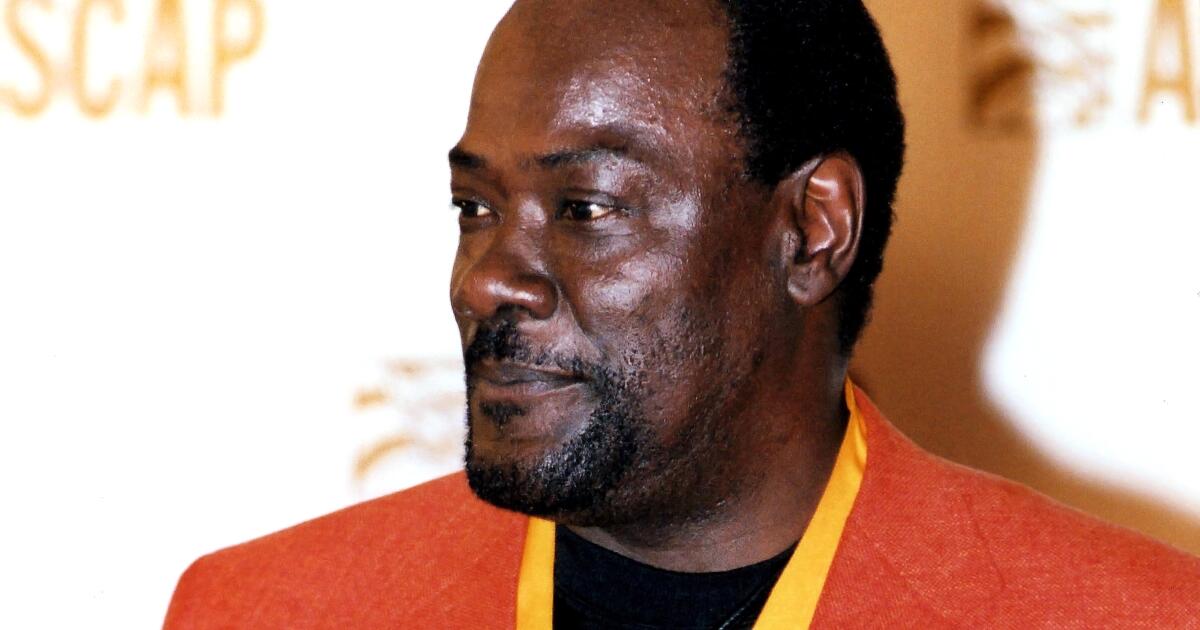
Ronald LaPread, Commodores’ co-founder and bassist, dies at 75
-
 Lifestyle20 minutes ago
Hoover Dam, challenged by drought, now wears a U.S. flag the size of a football field
-
 Politics23 minutes ago
’60 Minutes’ veteran Scott Pelley rips CBS News bosses, saying they are ‘murdering’ the program
-
 Sports35 minutes ago
Rams acquire Myles Garrett for Jared Verse and draft picks in blockbuster trade
-

 World43 minutes ago
EU approves strictest-ever migration law, including return hubs
-

 News1 hour ago
Remains of Los Alamos National Laboratory employee missing for nearly a year found in New Mexico forest | CNN

