Rhode Island
Rent control won’t solve Providence’s steep rental prices – The Boston Globe


Part of the story is the pandemic-era shift toward smaller cities. But the larger truth is Providence has not built enough housing to keep up with demand. In 2024, Rhode Island ranked 50th in the nation for new housing permits – dead last. That isn’t ideology; it is economics.
As housing experts have said, including HousingWorksRI Executive Director Brenda Clement, we have a basic supply-and-demand problem. Expanding housing supply for everyone should be the focus.
To its credit, Providence has begun to move. Recent efforts by Mayor Brett Smiley, the City Council, nonprofit partners, and private developers have created hundreds of new units. More are in the pipeline. That progress must continue.
As rents rise, pressure for immediate relief has grown. The City Council’s proposed solution is rent control: a cap on annual rent increases at 4 percent. In practice, it fails to solve the underlying problem, and creates new ones.
First, rent control does not make today’s rent affordable, it only limits future increases by creating a cap. Many landlords will raise rents to the cap each year. A $2,000 apartment under a 4 percent cap becomes $2,433 after five years – an increase that renters still feel acutely. That is basic compounding, not a worst-case scenario.
Second, rent control would create a hole in Providence’s budget, as it reduces the taxable value of properties. The Smiley administration examined rent-controlled cities and applied the outcomes to Providence’s tax base. The projected annual revenue loss ranges from $10.3 million to $17.5 million.
When rental property values decline, cities are left with two choices: raise taxes or cut services. Education funding, park improvements, library funding, and basic infrastructure all come under pressure. Experience elsewhere shows this burden does not fall on landlords; it shifts to single-family homeowners. Portland, Maine, saw a 5.4 percent reduction in its tax base after rent control, forcing these tradeoffs. The implementation of rent control will affect all Providence residents, whether they rent or own.
Third, rent control discourages new housing production, the opposite of what Providence needs. Developers are less likely to build in cities where future revenue is capped, financing is harder, and long-term costs are unpredictable. St. Paul, Minnesota, offers a cautionary tale. After voters approved a strict rent cap in 2021, new unit creation dropped by more than 84 percent in the first quarter, forcing city leaders to exempt new construction, which is exempt in the Providence City Council rent control proposal.
When we build more housing at all price points, market pressure eases, as supply catches up with demand.
That does not mean ignoring the pain people feel today. I grew up here, attended our public schools, and bought a modest single-family home in the neighborhood where I was raised. I feel today’s housing pressures firsthand and hear them daily from family and neighbors. After 12 years on the council, including a leadership role in 2011 when Providence was on the brink of bankruptcy, I know our elected officials genuinely want workable solutions.
That is why, as executive director of The Providence Foundation, an organization of 140 private business and nonprofit members from myriad industries, I recommended we commission a study by the Rhode Island Public Expenditure Council to educate the public on this issue and identify solutions. The report revealed the most effective approach to housing shortages and high costs pairs aggressive housing production with targeted rental assistance for households most at risk of displacement.
Cities across the country have shown what works: modernized zoning, faster permitting, conversion of underused commercial space, and temporary rental assistance to help families stay housed while new supply comes online. These strategies outperform rent control. Overcoming the housing challenge will require all levels of government to play a role.
Reasoned policy will meet Providence’s housing needs and strengthen our economy for a brighter tomorrow.
David Salvatore is the executive director of The Providence Foundation, a nonprofit organization committed to supporting visionary projects downtown, and a former Providence City Council president and member.


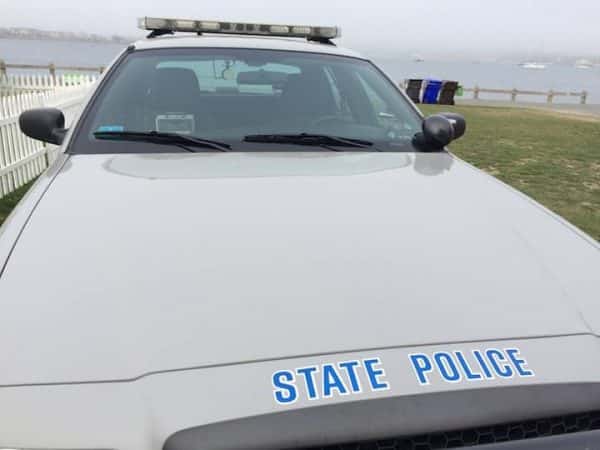
COVENTRY, RI — Coventry area Kent County arrests in the RI Trooper Log May 18- 30 involved charges for possession of a stolen vehicle and fentanyl possession.
Here are the basics on those RI State Police Kent County arrests and Kent County arrests:
Kent County Arrests May 18 – 30
Stolen vehicle On Wednesday, May 27, at 2:04 p.m., troopers arrested Miriam Ndemba, 26, of 147 Devonshire Street, Providence Rhode Island, on an Affidavit and Arrest Warrant for Vehicle Theft, originating out of the Providence Police Department. The arrest was the result of a motor vehicle stop on Route 95 in the Town of West Greenwich. The subject was transported to the State Police Hope Valley Barracks where she was processed and later turned over to the Providence Police Department.
Missed Court, Weapons Charge On Thursday May 28, 2026, at 10:52 p.m., troopers arrested Joshua Harrington, 19, of 9 Bunny Trail, Hope, Rhode Island, for a Third Division District Court Bench Warrant for Failure to Appear for Pretrial Conference on the original charge of Weapons Other Than Firearms, originating out of the Coventry Police Department.
This arrest was the result of a motor vehicle stop on Cowesett Avenue in the Town of West Warwick. Harrington was processed at the Hope Valley Barracks and turned over to the Adult Correctional Institutions Men’s Intake Center.
Fentanyl Possession On Friday May 29, at 10:32 p.m., troopers arrested Victoria Barrett, 33 of 981 Main St., West Warwick, Rhode Island, for 1.) Possession of Schedule I to V Controlled Substance – Less than 10 Grams (Fentanyl) and 2.) Affidavit and Arrest Warrant for Possession of Schedule I to V Controlled Substance, originating out of the Rhode Island State Police – Lincoln Woods Barracks. This arrest was the result of a Barracks investigation by Seargent O’Donnell and Troopers subsequently taking Barrett into custody at her residence. Barrett was processed at State Police Headquarters, arraigned by the Justice of the Peace, and transported to the Adult Correctional Institutions – Women’s Intake Center.
Rhode Island
Liz McGraw Cries Revealing Unaired Details From Her and Jo-Ellen’s RHORI Clash (EXCLUSIVE) | Bravo

For anyone wondering if Liz McGraw is still reeling from her clash with Jo-Ellen Tiberi on The Real Housewives of Rhode Island, she is, ma. In fact, Liz even broke down into tears while revealing unaired details from their Episode 10 fight on The Real Housewives of Rhode Island After Show.
Although the core drama that ignited during a car ride to South Boston was actually between Liz and Alicia Carmody, Jo-Ellen inadvertently entered the fray by trying to mediate their conflict. Even after they arrived for Rosie DiMare’s husband Rich DiMare’s Frank Sinatra-themed dinner show, Jo-Ellen’s peacekeeping efforts continued to rub Liz the wrong way, culminating with them sparring before, during, and after the performance.
“She’s yelling at me and simultaneously trying to fix my face,” Liz recalled. “Get your f–kin’ hand off me … It’s actually burning a hole through me. I don’t feel the love from your hand right now, or good intentions.”
A Complete Guide to the RHORI Cast’s Families, Friendships, Feuds & More (EXCLUSIVE)
Appearing to become emotional, Liz added, “I think, at the time, with all the s–t I was going through, my heart really just couldn’t handle it. That’s the truth. I just wanted away from it. I was steaming.”
After returning to her home in Rhode Island, Liz admitted that she’d “rage texted” Jo-Ellen, however. “I was just so mad,” she explained.
Why Liz McGraw felt misunderstood amid her arguments with Jo-Ellen Tiberi and Alicia Carmody on RHORI
Ultimately, Liz chalked up her explosive reaction to the fact that nobody seemed to understand where she was coming from as they debated whether or not Alicia was ever actually “homeless” during her childhood.
From Liz’s point of view, the term “homeless” implied that she was living “on the street,” which she felt was insulting to Alicia’s “big, beautiful family” that opened their doors when her father sold their home and “abandoned” her and her mother. Either way, Liz previously insisted during Episode 9 that she wasn’t trying to be “insensitive,” but rather, she simply wanted to protect Alicia’s family members, whom she’d known her whole life.
RHORI Midseason Trailer Teases an Arrest, Video Proof of Cheating, and More Drama
“I don’t know. I just really wanted to be, like, understood,” Liz tearfully added on the RHORI After Show.
When a producer asked why she was getting so upset, Liz elaborated, “Um… I know the way it looks. I know that this looks like I demand this absolute loyalty s–t. I don’t. I don’t need anyone’s loyalty. Just stop f–king with me. That’s it.”
She continued, “My harsh nature makes it easy to say … I’m like the attacker or something. But, like, I really don’t mean to be. I’m not trying to be the heavy-hitter, I’m not trying to, like, get karma on people. I’m not trying to do any of those things. I’m literally just trying to, like, survive and feel OK.”
Where Liz McGraw and Jo-Ellen Tiberi’s friendship stands after their RHORI fight
Jo-Ellen, for her part, doubled down on the After Show that she was simply “trying to deescalate the situation” between Liz and Alicia. She couldn’t help but remember how Liz had referred to her as “the devil” and “a demon,” however.
When Alicia, meanwhile, questioned why she’d let Liz speak to her that way, especially when she’s usually “so strong with everybody else,” Jo-Ellen explained, “Because I care about her and because I want her friendship … We have fun when we have fun. And then when she turns that switch, it’s turned.”
During their meetup at the end of Episode 10, however, Jo-Ellen and Liz were unable to work through their issues. In a separate RHORI After Show clip, Jo-Ellen echoed her earlier comments about caring about the friendship, while Liz opened up more about their dynamic and why their initial reconciliation attempt had failed.
“Every time we have these fights, this is what ends up happening,” Liz said. “She’ll do something really f–ked up to me … And when I react or retaliate or say ugly things back, she will become the victim and be like, ‘You really hurt my feelings with that.’”
She added, “If you didn’t do it, there would be no feelings to be hurt, like, you know what I mean? And she rapid-fired these insults at me that I was not prepared for at all. I thought we were, like, trying to, like, work it out. But what did you expect from what you were just saying to me? I’m ‘so mean and nasty.’ I don’t hear that often. But do I feel the need to defend myself when it comes my way? Yeah.”
As Liz concluded, “I think I show how much I care by being hurt. I want you to understand me. I want you to understand where I’m coming from. But I think I am learning that people don’t have to understand me all the time. You know, I’m like, whatever. I am who I am.”
As you wait to see if Liz and Jo-Ellen can repair their friendship, don’t miss a sneak peek at more drama ahead in the RHORI midseason trailer.

In Charlestown, a garden village called the Fantastic Umbrella Factory sells no umbrellas. What it has instead is bamboo paths, a flock of emus, and a greenhouse of carnivorous plants, all down a back road as though it needs no explanation. That matter-of-fact oddness runs through the nine towns here. Some keep working relics going rather than roping them off as exhibits, like a windmill in Jamestown still open to the climb and a portrait painter’s birthplace in North Kingstown with its waterwheel still turning. Others trade in the genuinely strange: troll sculptures hidden in the woods, and a stretch of open sand that locals call Rhode Island’s desert. None of them sit far apart, which is the quiet advantage of a small state.
Little Compton
Little Compton’s village of Adamsville holds Gray’s General Store, founded in 1788 and run by the same family for seven generations until it closed in 2012. Rhode Island officials once proclaimed it the oldest continuously operating general store in the country, and its marble soda fountain and penny candy still live in local memory. The store sold johnnycakes made from cornmeal ground at Gray’s Grist Mill, which sits about 100 yards down the road and just across the state line in Westport, Massachusetts. Elsewhere in town, the Whitehead Preserve at Dundery Brook runs a boardwalk trail through ponds and wetland forest. Sakonnet Gardens opens its tightly planted garden “rooms,” hidden pathways, and water features by limited reservation, so anyone hoping to see it should book well ahead.
New Shoreham

New Shoreham is the town that covers Block Island, reached by ferry from the mainland. The Southeast Lighthouse, built in 1875, stands above the Mohegan Bluffs on the island’s south side, where a long stairway drops to a beach beneath the clay cliffs. People scoop the natural wet clay, let it dry in the sun, and rinse it off in the surf, a ritual that has become part of a Block Island summer. Inland, the 1661 Farm keeps a small menagerie of exotic animals, including alpacas, emus, and kangaroos, and rents rooms on the property along with a wellness center. Cars come over on the ferry, though the island is small enough to cover by rented moped or bicycle.
Charlestown
Charlestown is a quiet coastal town whose strangest stop is the Fantastic Umbrella Factory, the garden village named at the top of this list. Bamboo paths wind past small teepees and rock mazes to pens of emus, goats, and ducks, with bohemian shops and a greenhouse selling carnivorous plants such as the Venus flytrap. A few minutes away, Ninigret Park holds two of the giant recycled-wood trolls that the Danish artist Thomas Dambo has installed around the world, and tracking them down feels like a treasure hunt. The same park is home to Frosty Drew Observatory, which opens on Friday nights under some of the darkest skies in the state for views of the Milky Way, the planets, and distant nebulae. East Beach adds clear water and white sand for a quieter afternoon.
Jamestown
On Conanicut Island, the Jamestown Windmill is the town’s signature landmark, a three-story octagonal mill built in 1787 to replace an earlier 1730 windmill on the same hill. Its sails turned until 1896, and the structure still stands in the Windmill Hill Historic District, open for a climb up the winding stairs into the bonnet where the gears sit. The town marks it with Windmill Day each July. The shoreline carries a different kind of history: Beavertail, Fort Getty, and Fort Wetherill state parks hold concrete passageways and gun emplacements left from the island’s coastal defenses, with coves below for swimming and offshore wrecks for certified divers. Watson Historic Farm, a 265-acre colonial-era farm, runs hiking trails toward the water.
Lincoln
Lincoln Woods State Park is studded with glacial boulders that climbers know by name, among them Ship Rock, Buddy Boulder, and Bear Hug. Deeper in, an overgrown section locals call the “post-apocalyptic” woods hides old stone walls, abandoned structures, and roadbeds swallowed by trees. Olney Pond anchors the park with hiking, horseback riding, and mountain biking, and the whole place stays quiet because it takes some effort to reach. Along the Blackstone River, the Blackstone River Bikeway follows the old canal past preserved 19th-century mill villages such as Ashton, including an elevated boardwalk over the Lonsdale marshlands.
Johnston
Johnston keeps its oddities in the woods. Snake Den State Park is scattered with ruins and relics that turn an ordinary walk into a low-key treasure hunt, while Johnston Memorial Park adds more open ground for a morning outside. Dame Farm and Orchards works year-round, with apple picking and a corn maze in fall, blueberries and peaches in summer, and wagon rides through the orchard’s wooded hills. The farm’s apple cider donuts have a following of their own.
Bristol
Bristol runs the oldest continuous Fourth of July celebration in the country, first held in 1785 and still drawing crowds that dwarf the town. Its Main Street is painted red, white, and blue year-round, and on the holiday the bands and floats parade for hours before the fireworks close the night. The rest of the year, Bristol looks the part of a waterfront New England town, with historic architecture, the 18th-century Coggeshall Farm Museum at Colt State Park, and the open-air Chapel-by-the-Sea. The East Bay Bike Path runs 14.5 paved miles through coastal and wooded stretches, and the Beehive Café serves pastries and lunch by the water. On the strength of that July tradition, Bristol has been called America’s most patriotic town.
West Greenwich
West Greenwich holds something a small New England state has no business having: a patch of open sand dunes that locals nickname The Dunes, or “Rhode Island’s desert.” It sits inside the Big River Management Area, roughly 8,300 acres where dunes meet woods and green swimming holes. Stepstone Falls is a multi-tiered cascade with an accessible swimming hole, and Breakheart Ponds opens onto horseback and mountain-biking trails. Just outside town, another of Thomas Dambo’s trolls hides near Browning Mill Pond in the Arcadia Management Area.
North Kingstown
North Kingstown was the birthplace of Gilbert Stuart, the painter behind the portrait of George Washington that appears on the dollar bill. His restored 1750s home and mill still run a wooden waterwheel and gristmill, set among gardens, a millpond, and a stream where river herring migrate in from the Atlantic Ocean each spring on their way to Carr Pond. Nearby, Smith’s Castle preserves nearly four centuries of history on a site that traces back to a 1630s trading post, which makes the present house one of the oldest standing in Rhode Island. Casey Farm, an 18th-century working farm, overlooks Narragansett Bay, and the seaside village of Wickford, laid out around 1709, fills its blocks with eclectic shops and local eateries.
The Quieter Side of Rhode Island
What ties these nine places together is not a postcard version of New England but the opposite: working mills, a year-round painted Main Street, troll sculptures in the trees, and a desert that has no business existing. The state’s size means a person can string several of them together in a single day without much planning, and each one repays the detour with something genuinely its own.
-

 Technology5 minutes ago
AI helped researchers bypass Apple M5 defenses
-
 Business8 minutes ago
AI company Anthropic files to list shares, heating up race with OpenAI
-
 Entertainment13 minutes ago
Ronald LaPread, Commodores’ co-founder and bassist, dies at 75
-
 Lifestyle20 minutes ago
Hoover Dam, challenged by drought, now wears a U.S. flag the size of a football field
-
 Politics23 minutes ago
’60 Minutes’ veteran Scott Pelley rips CBS News bosses, saying they are ‘murdering’ the program
-
 Sports35 minutes ago
Rams acquire Myles Garrett for Jared Verse and draft picks in blockbuster trade
-

 World43 minutes ago
EU approves strictest-ever migration law, including return hubs
-

 News1 hour ago
Remains of Los Alamos National Laboratory employee missing for nearly a year found in New Mexico forest | CNN

