

Connect with us

Pennsylvania

The 10 Friendliest Little Towns In Pennsylvania

Published

on

The 10 Friendliest Little Towns In Pennsylvania


Some Pennsylvania towns make it easy to feel included within a day of arriving. In Lititz, summer concerts at Lititz Springs Park turn into informal reunions, with families setting up lawn chairs side by side and local shop owners joining once they lock their doors for the evening. In Boiling Springs, the path around Children’s Lake doubles as a daily check-in point where walkers greet each other by name before drifting into the cafés along Front Street. And in Ligonier, the Diamond and its bandstand pull residents downtown for markets and community events that rely on volunteers rather than outside organizers. The same pattern carries through the rest of the towns on our list.

Lititz

Lititz, Pennsylvania: Exterior view of the Julius Sturgis Pretzel Bakery, via George Sheldon / Shutterstock.com

Lititz is in Lancaster County, about 6 miles north of the city of Lancaster. Founded in 1756, the town was named after a castle in Bohemia and initially served as a Moravian congregation settlement. Lititz is home to the Julius Sturgis Pretzel Bakery, established in 1861 as the first commercial pretzel bakery in the United States.

4th of July Parade in Lititz, Pennsylvania
4th of July Parade in Lititz, Pennsylvania. Editorial credit: George Sheldon / Shutterstock.com.

Lititz Springs Park, a historic community hub since 1756, hosts various yearly events, notably the well-known Lititz Fourth of July Celebration. For dining, the Appalachian Brewing Company provides locally brewed beers and a distinctive menu showcasing regional dishes. The Wilbur Chocolate Factory, a landmark since the late 1800s, includes a museum and shop where visitors can explore chocolate-making processes and buy unique confections.

Boiling Springs

A historical building in Boiling Springs, Pennsylvania.

Boiling Springs, in Cumberland County, owes its name to the natural artesian springs that maintain a constant temperature and were crucial to early ironworks in the area. Established in the 18th century, it is also part of the Appalachian Trail community, underscoring its long-standing connection to nature and history. The town’s historic district includes the Iron Furnace, dating to 1760 and a testament to Boiling Springs’ early industrial role.

The town features a variety of attractions for visitors and residents. Allenberry Resort and Playhouse, a historic venue since the mid-20th century, provides entertainment, dining, and lodging options. The Boiling Springs Tavern, founded in 1832, offers classic American cuisine in a historic environment. For outdoor enjoyment, Children’s Lake is perfect for fishing and relaxing walks, and the Appalachian Trail runs through the center of the community, offering great hiking opportunities.

Jim Thorpe

Landmark buildings in the historic town of Jim Thorpe, Pennsylvania.
Landmark buildings in the historic town of Jim Thorpe, Pennsylvania. Image credit Dan Hanscom via Shutterstock

Jim Thorpe sits in the Lehigh Gorge in eastern Pennsylvania, and was originally known as Mauch Chunk and played a pivotal role in the coal and railroad industries. Renamed in 1954 to honor the legendary athlete Jim Thorpe, the town retains a Victorian era charm, with much of its architecture preserved and celebrated. This heritage is evident in attractions such as the Asa Packer Mansion, built in 1861 by a philanthropist and railroad magnate, which now serves as a museum.

The historic downtown Jim Thorpe, Pennsylvania.
The historic downtown Jim Thorpe, Pennsylvania. Editorial credit: Alizada Studios / Shutterstock.com.

Visitors to Jim Thorpe can choose from various recreation and dining options. The Lehigh Gorge Scenic Railway provides a scenic ride through the mountains, perfect for enjoying the area’s natural beauty. Dining choices include Moya, famous for its upscale American dishes, and Stone Row Pub & Eatery, offering a relaxed atmosphere with local ingredients. Outdoor lovers can enjoy boating and hiking at Mauch Chunk Lake Park, making the town an attractive destination.

Ligonier

The Heritage United Methodist Church in Ligonier, Pennsylvania.
The Heritage United Methodist Church in Ligonier, Pennsylvania. Image credit woodsnorthphoto via Shuterstock.

Ligonier was established in the 1760s and features a rich colonial history highlighted by Fort Ligonier, a British fortification from the French and Indian War. The town square, known as the Diamond, is circled by original structures and a bandstand from the 19th century, reinforcing its historical ambiance.

The rural countryside town of Ligonier, Pennsylvania
The rural countryside town of Ligonier, Pennsylvania. Image credit Gage Goulding via Shutterstock

Fort Ligonier functions as both a museum showcasing 18th-century artifacts and a venue for reenactments and educational activities. The Southern Alleghenies Museum of Art enriches visitors with American art exhibitions. Dining options in Ligonier include the historic Ligonier Tavern, known for its local cuisine, and The Wicked Googly, famous for its vibrant atmosphere and live music. For outdoor leisure, Ligonier Beach offers a distinctive swimming experience with a historic pool from 1925.

Wellsboro

The downtown streets of Wellsboro are still illuminated with authentic gas street lamps
The downtown streets of Wellsboro are still illuminated with authentic gas street lamps. Image credit George Sheldon via Shutterstock

Wellsboro, located in Tioga County, was established in 1806 and acts as the gateway to the Pennsylvania Grand Canyon, also known as Pine Creek Gorge. The town exudes nostalgic charm with its gas-lit streets and historic Victorian buildings, offering a window into its storied history. A prime example of this history is the Penn Wells Hotel, which has been serving visitors since the early 1900s.

For those wanting to explore Wellsboro, the restored 1920s movie theater, The Arcadia Theatre, regularly features films and performances, serving as a cultural center for locals and visitors. The Native Bagel offers a relaxed dining atmosphere with dishes made from locally sourced ingredients. Outdoor lovers can enjoy Leonard Harrison State Park, which offers stunning views of the Pennsylvania Grand Canyon, along with trails and picnic spots. Furthermore, the annual Pennsylvania State Laurel Festival attracts crowds with its parade, arts and crafts, and local food stalls, honoring the area’s cultural traditions.

Advertisement

Foxburg

Foxburg, Pennsylvania as seen from the old Foxburg Bridge

Foxburg, situated along the Allegheny River in Clarion County, was founded in 1870. It is famous for being home to the oldest golf course still in operation in the United States, the Foxburg Country Club, established in 1887. This historical feature adds to its charming and distinctive character, blending small-town American charm with a deep golf tradition.

The Foxburg Wine Cellars offers tastings of locally produced wines, complemented by a scenic setting. For dining, the Allegheny Grille provides riverfront views alongside a menu featuring regional cuisine, emphasizing the town’s picturesque location. Culture enthusiasts can explore the American Golf Hall of Fame, located within the Foxburg Country Club, which houses a collection of golf memorabilia and artifacts. For outdoor activities, the nearby Allegheny River Trail offers miles of biking and walking paths, making Foxburg a destination with diverse appeal.

Honesdale

Colorful buildings on Main Street in Honesdale, Pennsylvania
Colorful buildings on Main Street in Honesdale, Pennsylvania. Editorial credit: Nina Alizada / Shutterstock.com.

Honesdale serves as the county seat for Wayne County and was founded in 1826. It has historical significance as the terminus of the Delaware and Hudson Canal, pivotal in the transport of coal to major markets in the northeast. Notably, Honesdale is credited with being the site of the first commercial steam locomotive run on rails in the United States, the Stourbridge Lion, adding a rich layer to its industrial heritage.

The Wayne County Historical Society presents exhibits on canal and railroad history, shedding light on the town’s growth. For dining, visitors can choose the upscale Hotel Wayne, known for its fine dining and bistro bar, or the more relaxed Trackside Grill, offering views of the historic railroad. Outdoor lovers can visit Honesdale Park, which has walking paths and recreational facilities, serving as a popular venue for community events and gatherings.

Milford

Downtown Milford, Pennsylvania.
Downtown Milford, Pennsylvania. Image credit: DenSmith via Flickr.com.

Milford is situated at the crossroads of the Delaware River and the Pocono Mountains’ foothills. Established in 1796, it rapidly gained popularity as a resort in the 19th century, thanks to its scenic landscape and fresh mountain air. The town is also renowned for the Milford Historic District, which features a range of well-preserved buildings that reflect its prosperous history.

The Columns Museum houses the famous Lincoln Flag, believed to be stained with Abraham Lincoln’s blood from the night of his assassination, providing a profound historical experience. For dining, Bar Louis at the Hotel Fauchère offers a contemporary menu in a stylish setting, while the Waterwheel Café provides a rustic atmosphere with live music and local cuisine. Additionally, Grey Towers National Historic Site, the former home of Gifford Pinchot, founder of the U.S. Forest Service, offers guided tours and scenic grounds.

Mount Joy

Twisted Bine Beer Co. is a small-scale microbrewery of craft beer with an onsite tasting room and farm to table restaurant that is located in Mount Joy, Pennsylvania
Twisted Bine Beer Co. is a small-scale microbrewery of craft beer with an onsite tasting room and farm to table restaurant that is located in Mount Joy, Pennsylvania, via Raymond C. Eichelberger / Shutterstock.com

Mount Joy was founded in 1759 and has a name derived from an old Irish ship, the “Mountjoy,” which played a pivotal role in breaking a siege during the Irish Confederate Wars. This town, nestled among the rich, rolling farmlands of the county, has historically been a hub for agriculture and today melds historic charm with modern vibrancy, evident in its revitalized downtown area.

Bube’s Brewery, an intact historic 19th-century brewery and museum, offers unique dining experiences in its catacombs and regularly hosts murder mystery dinners. The Country Table Restaurant is known for its comfort food and welcoming atmosphere, reflecting the town’s friendly spirit. For outdoor activities, Little Chiques Park provides scenic walking paths and picnic areas, perfect for family outings. Additionally, the annual “Mount Joy Winterfest” brings the community together with craft vendors, food, and entertainment, showcasing the town’s lively community spirit.

Lewisburg

The Campus in Lewisburg, Pennsylvania.
The Campus in Lewisburg, Pennsylvania. Editorial credit: George Sheldon / Shutterstock.com

Lewisburg is a vibrant town established in 1785. It is home to Bucknell University, established in 1846, which adds a youthful energy and cultural richness to the town. Lewisburg’s downtown is listed on the National Register of Historic Places, featuring well-preserved 19th-century architecture and a tree-lined main street that enhances its historic charm.

A kiosk along Main Street in downtown Lewisburg, Pennsylvania.
A kiosk along Main Street in downtown Lewisburg, Pennsylvania. Editorial credit: George Sheldon / Shutterstock.com

In terms of activities and dining, Lewisburg offers a variety of choices that cater to both residents and visitors. The Campus Theatre, one of the few remaining single-screen art deco movie theaters in the country, offers a unique cinematic experience. For dining, Elizabeth’s American Bistro provides a fine dining experience using local ingredients, while the Bull Run Tap House offers a more casual atmosphere with a comprehensive selection of craft beers. For outdoor enthusiasts, Hufnagle Park offers a green retreat in the heart of the town, complete with walking paths and garden areas, making it a popular gathering place for community events and casual recreation.

As we journey through Pennsylvania’s coziest corners, we discover that these small towns do more than just charm visitors with their picturesque settings and historical backdrops. They invite us into a world where community spirit thrives and every street and alley tells a story. These towns, from Lititz’s pretzel-perfumed air to Lewisburg’s university vibes, showcase the true heart of Pennsylvania through their unyielding warmth and hospitality. Whether you’re seeking a serene retreat or a peek into America’s storied past, these towns offer a refuge where friendliness is the native language.

Advertisement


Source link

Pennsylvania

Here’s what’s in — and not in — Pennsylvania’s $50.8 billion state budget

Published

on

Here’s what’s in — and not in — Pennsylvania’s .8 billion state budget


HARRISBURG — Pennsylvania’s new $50.8 billion state budget was sprawled across more than 600 pages of legislation and signed into law on Sunday. New data center regulations, new education funding, and more were approved in the wide-ranging spending package.

But some of the most pressing issues facing the General Assembly were noticeably absent from the final deal, as Gov. Josh Shapiro and lawmakers in the split legislature were unable to reach a compromise — or didn’t want to touch the contentious issues until after they are up for election in November, sidelining some of Shapiro’s top budget priorities.

Here’s a look at what’s in — and what was left out — of the 2026-27 Pennsylvania state budget.

» READ MORE: Pa. lawmakers and Gov. Josh Shapiro have approved a $50.8 billion state budget, delaying action on key issues

Advertisement

Pennsylvania took another jump toward filling a multibillion-dollar funding gap between wealthy and poor school districts, after a court found that the state’s old system of funding education was unconstitutional. Since 2024, when the state first implemented new adequacy and tax equity formulas in efforts to fill the state’s $4.5 billion “adequacy gap,” lawmakers have put nearly $1.9 billion toward funding lower-income districts, with plans to fill it by 2032.

“It keeps our promise to our school districts,” said State Rep. Jordan Harris (D., Philadelphia), who serves on the powerful appropriations committee responsible for allocating state dollars, in remarks on the House floor Sunday.

The latest installment of adequacy and tax equity payments — $565 million — will largely go to low-income districts that already have high property taxes. The School District of Philadelphia, Pennsylvania’s largest school district and the only one in the state that is unable to raise its own revenue, will get $136 million of that funding increase.

Shapiro proposed generating new revenue streams to help the state fix its multibillion-dollar structural deficit in his last four budget addresses. But the ways he wants to raise that cash have been met with resistance by Senate Republicans, who argue they aren’t policies that will improve the state’s economic standing — or can’t reach agreement within their caucus on how to address the issues.

Shapiro this year didn’t get the hefty minimum wage increase he asked for, raising the hourly minimum from $7.25 to $15 — and counting on the higher wage for $80 million in higher income tax revenues. Nor was he able to get the split General Assembly, where Democrats control the House and Republicans lead the Senate, to approve adult-use cannabis, which his office estimated would bring in $729.4 million in its first year, largely through licensing. (House Democrats have approved plans for a minimum wage increase and recreational marijuana legalization, but the Senate has not voted on the bills.)

Advertisement

» READ MORE: Could recreational marijuana really bring $1.3 billion in revenue to Pa. over five years? Here’s how other states are faring.

Screen shows skill games and cannabis regulation and reform as Gov. Josh Shapiro makes his annual budget proposal in the state House chamber in Harrisburg Tuesday, Feb. 3, 2026.Read moreTom Gralish / Staff Photographer

Shapiro, in his February budget proposal, also called on the General Assembly to regulate and tax skill games at the same rate as casinos, a move which he has estimated could generate nearly $800 million in revenue in its first year. But any regulation of skill games — slot-machine lookalikes that the state Supreme Court ruled last month are a form of gambling — was left out of the budget.

Lawmakers still have until October to decide whether skill games will be taxed and regulated, part of a grace period in the high court’s ruling. Otherwise, they will become illegal gambling machines found in many corner stores, gas stations, and bars. The issue has been the target of more than $8 million in lobbying and $9 million in campaign spending in Harrisburg, mostly funded by one company.

» READ MORE: How ‘skill games’ exploded across Pennsylvania — and sparked a multimillion-dollar political fight
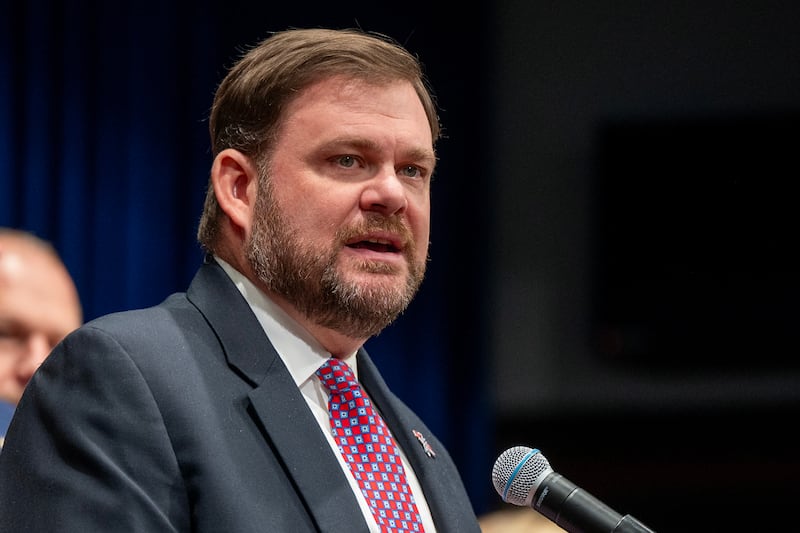
State Senate Majority Leader Joe Pittman (R., Indiana) during a press conference at the Capitol in Harrisburg Feb. 3, 2026.
State Senate Majority Leader Joe Pittman (R., Indiana) during a press conference at the Capitol in Harrisburg Feb. 3, 2026.Read moreTom Gralish / Staff Photographer

“We can act within the 120 days, we can act after the 120 days,” Senate Majority Leader Joe Pittman (R., Indiana) said on Sunday. “But the choice is now quite simple. These machines are illegal, and in less than 120 days, they will be leaving the marketplace.”

Data centers — which are seeing a boom in Pennsylvania as artificial intelligence usage increases and communities are pushing back on where they are being built — will be required to submit information about their energy and water usage.

Advertisement

Beginning next summer, data centers in the state with a peak energy demand greater than 10 megawatts will be required to submit information annually to the Department of Environmental Protection.

Outlined as part of this year’s fiscal code, those reports will be publicly-accessible. Data centers that do not submit information about their resource usage will be fined $10,000 a day.
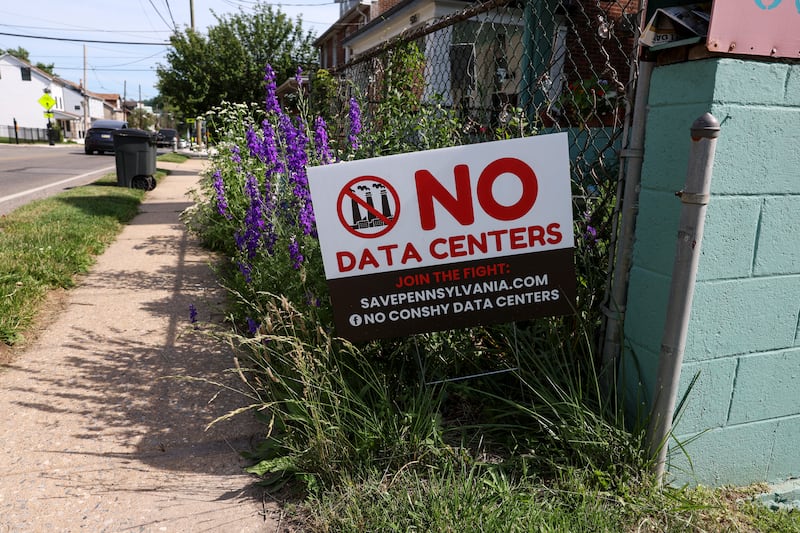
A yard sign protests the proposed data center on New Elm Street near the Closed Cleveland-Cliffs steel mill photographed on Thursday, June 4, 2026 in Conshohocken, Pa.
A yard sign protests the proposed data center on New Elm Street near the Closed Cleveland-Cliffs steel mill photographed on Thursday, June 4, 2026 in Conshohocken, Pa.Read moreMonica Herndon / Staff Photographer

A data center regulation bill, which would have limited state benefits for data center developers and was championed by Shapiro, was not included in the final budget deal. The governor called for limiting a sales and use tax exemption and expediting permitting to projects that comply with a set of transparency and environmental standards.

And several other data center regulation efforts that have received bipartisan support in recent weeks were also absent from the final spending package.

That included efforts to repeal the existing sales tax exemption afforded to data center developers and attempts to enact a local or statewide moratorium on new data center development.

Both chambers passed language repealing the tax exemption and advanced differing bills to freeze development. One Democratic-sponsored bill would have given municipalities the option to implement a 180-day moratorium on new centers. The other, a Republican-sponsored measure, would allow for local moratoriums up to 18 months.

Advertisement

“Compromise” was the word of the day around the Pennsylvania Capitol on Sunday, when the legislature swiftly passed the more than 600-page budget deal hashed out behind closed doors between Shapiro, Pittman, and House Majority Leader Matt Bradford (D., Montgomery) and passed with bipartisan support in both chambers.

The legislative leaders and Shapiro emphasized that they didn’t get exactly what they wanted in the budget, as a symptom of dealing with divided government. And leaders were proud to have reached the deal less than two weeks after their July 1 deadline, rather than the nearly five months that it took to hash out an agreement last year.
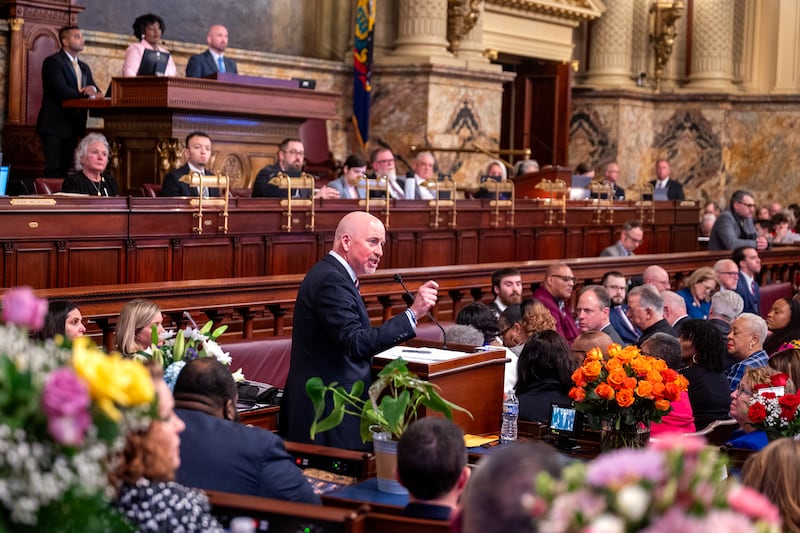
House Majority Leader Matt Bradford (D., Montgomery) speaks on Tuesday, Jan. 7, 2025.
House Majority Leader Matt Bradford (D., Montgomery) speaks on Tuesday, Jan. 7, 2025.Read moreTom Gralish / Staff Photographer

Lawmakers also agreed to work over the weekend to hurriedly approve the budget deal, with members of the Senate coming in on Saturday night to begin advancing parts of the budget deal and the House joining them Sunday afternoon. By 6:15 p.m. on Sunday, Shapiro had signed it.

Among the inspirations for the weekend of productivity: Making it to the MLB All-Star Game in Philadelphia, Bradford said, for which he has tickets.

Leaders returned to some old accounting maneuvers to address the state’s multibillion-dollar structural deficit and avoid pulling from the state’s emergency savings account.

They spent down unused and underused dedicated funds, and rolled some of the state’s Medicaid payments totaling $1.3 billion to the next fiscal year, a move lawmakers typically resorted to before the state saw an influx of federal dollars during the COVID pandemic.

Advertisement

Without those delayed payments, the state budget would total closer to $52.1 billion, and several GOP members criticized the total as being disingenuous.

More than 80,000 retired public-sector employees will receive a cost-of-living adjustment to their pensions, something advocates have sought for years.

» READ MORE: More than 80,000 Pa. retired teachers, police officers, and firefighters will get a pension bump — some for the first time in decades

Public school teachers and other state employees who retired before July 1, 2002 will receive a tiered monthly payment based on the date of their retirement. Similarly, police officers and firefighters who retired more than five years ago will receive monthly payments ranging from $50 to $300 dollars, depending on how long they have been retired.

Lawmakers from both parties had called for the cost-of-living increase.

Advertisement

Legislators also agreed to close a loophole that allowed online sellers to avoid paying Philadelphia’s local 2% sales tax on purchases made in the city.

Mayor Cherelle L. Parker had asked the General Assembly to close it as part of her own city budget pitch in a move estimated to bring an additional $1.5 million to Philadelphia.

Philadelphia Mayor Cherelle L. Parker is cheered by members of Philadelphia City Council at conclusion of her budget address, Thursday, March 12, 2026.
Philadelphia Mayor Cherelle L. Parker is cheered by members of Philadelphia City Council at conclusion of her budget address, Thursday, March 12, 2026.Read moreAlejandro A. Alvarez / Staff Photographer

Twenty-nine states have bell-to-bell cell phone bans. This year, Pennsylvania will not join them, despite the passage of two separate phone ban bills — one in each chamber of the legislature.

In: Mandatory recess for students K-5

Recess is now law in Pennsylvania.

Another education policy change championed by Shapiro, a mandatory, 30-minute recess for students in grades kindergarten through fifth was established in this year’s budget as a way to improve learning outcomes.

Advertisement

Several Pennsylvania funding issues that have gone years without being addressed were left out of the latest budget, some with more pressing deadlines than others.

Lawmakers did not address a need for mass transit funding — which led to last year’s bitter budget stalemate among legislators — but are expected to identify a long-term funding stream for the transit agencies next year when a two-year fail-safe runs out.

» READ MORE: Public transit is in trouble all across Pennsylvania, including in GOP districts
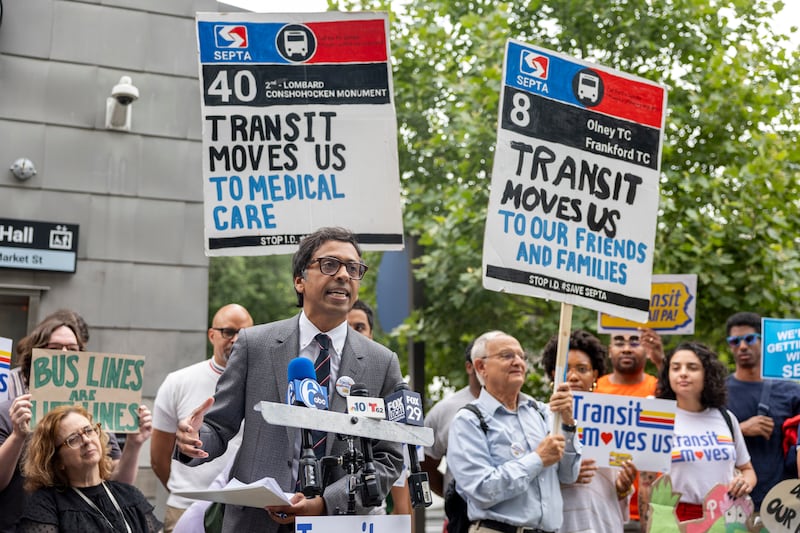
Senator Nikil Saval, speaks at a press conference calling for more SEPTA funding from the state at Independence Hall in Philadelphia, Pa., on Friday, June 26, 2026.
Senator Nikil Saval, speaks at a press conference calling for more SEPTA funding from the state at Independence Hall in Philadelphia, Pa., on Friday, June 26, 2026.Read moreTyger Williams / Staff Photographer

Other local governments and service providers said their needs are more urgent.

The County Commissioners Association of Pennsylvania released an urgent plea after the state budget was signed that counties still have not received the critical mental health funding they need, or a surcharge increase used to fund 911 call systems. Home-health service providers also continued their calls for increased state funding they say is needed, as the industry faces serious staffing issues due to low state reimbursement rates.

» READ MORE: Pennsylvania’s home care industry is in crisis, with low pay and unfilled shifts driving it toward collapse

Advertisement

Rape crisis centers got a much-needed funding increase, doubling how much the centers receive from $12 million to just over $24 million.

Philadelphia’s only rape crisis center had to lay off its employees and rely on volunteer work during last year’s monthslong state budget impasse.

Republican and Democratic lawmakers championed the organizations in this budget, making the largest single-year increase for the critical services in state history, according to the Pennsylvania Coalition to Advance Respect.

“Today marks a turning point for survivors and rape crisis centers across Pennsylvania,” said Joyce Lukima, the organization’s coalition director, in a news release.

Ethan Young is an intern with the Pennsylvania Legislative Correspondents’ Association.

Advertisement


Source link

Continue Reading

Pennsylvania

Governor Josh Shapiro signs overdue Pennsylvania state budget with bipartisan support

Published

on

Governor Josh Shapiro signs overdue Pennsylvania state budget with bipartisan support


HARRISBURG, Pa. (WPVI) — Pennsylvania Governor Josh Shapiro signed the state’s overdue 2026-2027 budget on Sunday.

The $50.8 billion spending plan was passed by state lawmakers with bipartisan support.

It is smaller than Shapiro’s initial $53 billion plan proposed back in February.

“We managed, as the math indicates, to find compromise without compromising our core values,” said Shapiro. “If you go back and look at the goals we all set together way back in 2023 – funding our schools, making our communities safer, growing our economy….four years later, this budget reflects those continued priorities.”

Advertisement

Lawmakers say this spending plan expands workforce development initiatives, devotes significant new funding for basic education, and increases funding for special education and early intervention services.

Copyright © 2026 WPVI-TV. All Rights Reserved.


Source link

Continue Reading

Pennsylvania

Gov. Shapiro signs $50.8B Pa. budget with focus on education, public safety

Published

on

Gov. Shapiro signs .8B Pa. budget with focus on education, public safety


PENNSYLVANIA (WFMZ-TV) — Governor Josh Shapiro signed Pennsylvania’s $50.8 billion budget into law Sunday.

The largest part– $11.8 billion funding education. It also funds four more State Police classes. The budget comes with an additional $10 million for career and technical education.

“If you go back and look at the goals we all set together way back in 2023– funding our schools, making our communities safer, growing our economy, and four years later this budget reflects those continued priorities,” said Governor Shapiro.

Advertisement

Republican State Senator Jarrett Coleman said he voted against the budget.

“The issue with the budget is that this wasn’t a really honest budget. This was pretty deceptive,” said Senator Coleman.

One thing in particular he said he is against– delays in $2.6 billion in Medicaid payments to managed care providers to the next fiscal year.

“So, that’s disappointing and I don’t really care to play that game. I think Pennsylvanians deserve to have an honest conversation and make no mistake; tax payers will ultimately pay the price for this charade,” said Senator Coleman.

Democratic State Rep. Mike Schlossberg said he is happy with this budget.

Advertisement

“I think by and large it was an extremely solid product,” said Representative Schlossberg.

This marks the fifth year in a row the budget was not passed by the June 30th deadline. The signing of this one comes months ahead of when last year’s budget was approved.

“I think some lessons were learned. I think everybody realized we cannot do last year, we cannot do again what we did last year and also candidly election coming up in a few months, nobody wants to leave it hanging out there,” said Representative Schlossberg.


Source link

Advertisement
Continue Reading
Advertisement

Trending