
Connect with us

Pennsylvania

Luzerne County Sports Hall of Fame induction June 7 at Mohegan Pennsylvania

Published

on

Luzerne County Sports Hall of Fame induction June 7 at Mohegan Pennsylvania


The Luzerne County Sports Hall of Fame’s 42nd annual induction banquet will be held Sunday, June 7, at Mohegan Pennsylvania, where 10 new inductees will take their place among the region’s greatest athletes across all sports.

The inductees are: Bree Bednarski, Brianna Pizzano and Frank Redmond, graduates of Wyoming Area; Allie Barber, Pittston Area; Ed Keil, West Side Vocational-Technical School; Joseph Kemmerer, Crestwood; Karen Krysiewski Day, Wyoming Valley West; Addy Malatesta, Berwick Area; Bobby Sura, Wilkes-Barre GAR; and Eddie White, III, Bishop Hoban.

The hall will also present the following honors: Neil Corbett, founding member of The Citizens’ Voice and its longtime sports editor, will receive the Media Award; Mary Kelly, Hazleton Area’s winningest field hockey coach, will receive the Tracey Tribendis “Profile of Courage” Award; and Jeffrey Swire, co-founder and president of Patriots Cove, will receive the Sam Falcone Community Service Award.

Advertisement

Additionally, the hall will recognize this year’s scholar-athletes — Tucker Blasi of Sullivan County, Addisyn Bly of Wyalusing Valley, Joseph Mayernik of MMI Prep — and Evelyn Sheer of Hazleton Area, winner of the HERizon Award, presented to the most outstanding female wrestler in the Wyoming Valley Conference.

“The Luzerne County Sports Hall of Fame has been busy in recent weeks presenting scholarships to graduating high school seniors, donating supplies and funds to community organizations and making all preparations that need to be in place for this year’s banquet,” said James T. Martin, Jr., president. “It promises to be a fun night of camaraderie and appreciation for some of the men and women who have greatly impacted local and national sports over the past few decades.”

Inductees

Allie Barber

A Pittston native, Barber played a key role in major team successes in multiple sports in high school and college. She developed her athletic foundation at an early age through constant exposure to sports alongside her family.

Advertisement

Barber scored a Pittston Area record 159 career goals in soccer and was a 2013 Pennsylvania Soccer Coaches Association all-state selection. She also led the Patriots to the District 2 Class 3A championship. In basketball, she scored over 1,000 career points and won a district title. She also competed in track and field for three seasons at Pittston Area, which won a district title in that sport, as well.

Barber continued her soccer career at Bloomsburg University, where she appeared in every game, recorded 19 goals and 20 assists and started the final 59 consecutive contests of her career. She was part of teams that won a regular-season title, a conference championship, an Atlantic Regional title and made the Elite Eight. She also played one season of basketball.

While at Bloomsburg, Barber was named a United Soccer Coaches second-team All-American and a first-team Scholar All-American. She also earned the school’s Eleanor Wray Senior Female Athlete of the Year award.

Bree Bednarski

One of the Wyoming Valley’s most accomplished multi-sport athletes, Bednarski established herself as one of the nation’s premier field hockey players while also excelling in softball and track and field.

Advertisement

Bednarski concluded her remarkable field hockey career at Wyoming Area with 127 goals and 37 assists, setting program records for goals in a game, season and career. Her 67-goal senior season in 2015 set a state record and earned her Wyoming Valley Conference Player of the Year honors from The Citizens’ Voice. She was also a three-time all-state selection and member of the U.S. U17 national team. Bednarski continued her collegiate career at the University of Michigan and Penn State.

In addition to her field hockey success, Bednarski was an all-state softball player and was named the Times Leader’s 2016 WVC Girls Track and Field Athlete of the Year. In that postseason, she won four medals at the District 2 championships — gold in the 100-meter dash, 200-meter dash and 4×100 relay and silver in the javelin.

As Bednarski’s playing career ended, her coaching career began. She was named Wyoming Area’s head field hockey coach in 2022 and has led her Alma mater to new heights, including multiple district and WVC championships.

Ed Keil

Keil’s life in golf is a story of service and lasting impact, beginning at West Side Vocational-Technical School. Keil was a golf captain and team MVP at West Side Tech before serving in the U.S. Air Force, where he competed on the golf team at Eglin Air Force Base in Florida.

Advertisement

Returning home in 1978, Keil began working as the golf course superintendent at Lehman Golf Club and enrolled at Penn State Wilkes-Barre, where he obtained a degree in engineering while continuing to work.

Keil was named Penn State Wilkes-Barre’s head golf coach in 1988, beginning a historic career that has included 38 years at the helm with 51 tournament victories and eight conference championships. In 2025, he was named head golf coach at Penn State Hazleton while continuing his duties at Penn State Wilkes-Barre. Between the two programs, he has coached 137 all-conference or all-state golfers and 195 academic all-conference selections. He has also coached bowling at Penn State Wilkes-Barre.

Beyond coaching, Keil built a parallel legacy in golf operations and instruction as a superintendent and instructor. He has also won more than 100 individual and team tournaments as a golfer, including two club championships at Lehman Golf Club.

Joseph Kemmerer

Kemmerer was introduced to wrestling at age 6 at the Wilkes-Barre YMCA. In addition to making lifelong friends at an early age, Kemmerer learned skills and techniques that set the foundation for a long and successful career in a sport that influenced virtually every aspect of his life in some way.

Advertisement

Kemmerer wrestled at Crestwood High School. As a senior, he went undefeated (38-0) and won the 2004 PIAA Class 3A state championship at 119 pounds. He also won three District 2 championships and graduated with a 102-7 record.

Following high school, Kemmerer first attended the University of North Carolina at Greensboro. He was the Southern Conference champion at 125 pounds as a freshman. He transferred to Kutztown University, where he won two NCAA Division II national championships and compiled a 60-4 record. Kemmerer furthered his education at Liberty University, where he served as a graduate assistant coach while training and ultimately competing on an international stage.

Kemmerer remains involved in the sport. He runs a successful wrestling club — Nova Wrestling Club — that has won championships in folkstyle, freestyle and Greco-Roman.

Karen Krysiewski Day

A standout swimmer at the high school and collegiate levels, Krysiewski Day’s competitive swimming career began at the Wilkes-Barre YMCA. Soon, she entered the USA swimming circuit with the newly formed FAST Swim Club and emerged as an elite distance swimmer.

Advertisement

After helping Wyoming Valley West win four consecutive District 2 girls swimming team championships — and graduating as the program record-holder in six events with four individual district gold medals as a senior — Krysiewski Day matriculated to the University of North Carolina at Chapel Hill.

At UNC, Krysiewski Day competed under legendary coach Frank Comfort and she transitioned into the grueling world of collegiate long-distance swimming. She remembers this as one of the most challenging and transformative periods of her life. She was a member of two ACC championship teams. She graduated in 1999, carrying into her professional life the discipline and integrated approach to wellness that she developed as a Tar Heel.

Adelene Addy Malatesta

Malatesta has dedicated nearly five decades to education, coaching and athletic leadership, leaving a lasting impact on student-athletes at Wilkes University and across Northeastern Pennsylvania and beyond.

Malatesta was a standout student-athlete at Berwick Area High School, where her coaches served as significant influences. Malatesta’s basketball coach, Joan Voveris, was an accomplished musician and teacher. Her field hockey coach, Dr. Betty Henry, rose to the title of superintendent of Berwick Area schools. Her softball coach, Paul Stenko, was a former Chicago Bear who returned home to teach and coach.

Advertisement

Malatesta pursued a degree from Slippery Rock University before returning to Berwick as a teacher and coach. She guided Berwick’s field hockey program in 1981 to a PIAA District 4 championship while also earning a master’s degree from East Stroudsburg University.

After coaching and teaching at SUNY Potsdam, Malatesta returned home in 1989 as head field hockey coach at Wilkes. Over 14 seasons, her teams won 140 games and multiple conference titles. She also served 23 years as Wilkes’ director of athletics, overseeing major facility enhancements and the growth of the athletic department to 23 varsity sports.

Malatesta is a member of both the Wilkes and Berwick Area Athletic Halls of Fame.

Brianna Pizzano

Pizzano began playing tennis at age 3, taking her first lesson at Kingston Indoor Tennis Club. She quickly demonstrated the ability to compete beyond her age and was playing in — and winning — local and regional tournaments by age 8.

Advertisement

At Wyoming Area, Pizzano competed in both tennis and softball. She won two District 2 championships as a freshman and sophomore in singles play as a Warrior. In softball, she was an all-state shortstop who posted a .457 batting average as a junior; her senior season was canceled due to COVID-19.

Pizzano continued her tennis career at Misericordia University, where she was named MAC Freedom Player of the Year in all four seasons. She was also recognized as the conference’s Senior Scholar-Athlete and ranked No. 36 among the university’s top athletes of the century. She won conference championships in singles and doubles play and lost only once in regular-season play throughout her career.

She remains actively involved in the sport she loves, providing private tennis instruction to children and adults of all ages.

Frank Redmond

Having been introduced to track and field as a seventh-grade student at Wyoming Area, Redmond soon captured a junior high championship that set the tone for an impressive high school and collegiate career.

Advertisement

Redmond recorded three top-10 finishes for the Warriors at the District 2 Cross Country Championships. On the track, he steadily improved each season and his achievements included qualifying for the PIAA state championships in the 800-meter race as a junior.

Redmond continued his running career at Misericordia University, where he took a significant step forward. He was named Misericordia’s Most Valuable Player four times in cross country and three times in track. He earned All-America honors in 2010 with a fifth-place finish in the 800-meter race at the NCAA Division III national championships. He earned 20 All-MAC honors across indoor and outdoor track and was a six-time All-ECAC selection. Following graduation, Redmond served as a graduate assistant coach at Misericordia while completing his master’s degree and competing in regional road races.

Bobby Sura

A native of Wilkes-Barre, Sura is among the most decorated high school, collegiate and professional basketball players to ever come out of Northeastern Pennsylvania.

Sura’s GAR Grenadiers won three District 2 championships in four years and advanced to the PIAA state championship game his junior and senior seasons. As a senior, he averaged 34 points per game and was named the Associated Press Small School Player of the Year in Pennsylvania. He scored a GAR record 2,468 points.

Advertisement

From GAR, Sura enrolled at Florida State and was named the ACC Rookie of the Year as a freshman. As a sophomore, he scored 19.9 points per game and helped the Seminoles make the Elite Eight. He remains Florida State’s all-time leader in career points and minutes played.

The Cleveland Cavaliers selected Sura in the first round of the 1995 NBA Draft. He competed in the 1996 All-Rookie Game, the 1997 Slam Dunk Contest and the 2000 Three-Point Contest. He retired after 10 seasons in the NBA, recording 5,654 points, 2,474 assists and 2,240 rebounds.

In 1999, Times Leader readers participated in a poll that ranked Sura the No. 6 local athlete of the century. In 2002, The Citizens’ Voice ranked Sura as the No. 2 athlete of all-time from the Wyoming Valley. He was inducted in 2003 into the Florida State Athletics Hall of Fame.

Eddie White III

White’s prolific and distinguished career has been defined by a deep-rooted passion for sports, shaped in the Wyoming Valley as a graduate of Bishop Hoban High School and Wilkes University.

Advertisement

After graduating from Wilkes, where he worked as an undergraduate with the school’s athletic office, newspaper and radio station, White served his Alma mater as a full-time director of sports information. White quickly rose through the ranks of sports communications and marketing, working for major brands and organizations in college and professional athletics, including Notre Dame and the Miami Dolphins.

White moved to Indiana, working for the sportswear company Logo 7/Logo Athletic. He was eventually hired by the first all-sports radio station in Indianapolis — ESPN The Fan — and hosted its afternoon drive show while also working numerous Super Bowls and then landing at Pacers Sports and Entertainment. He has worked the last 15 years for the NBA’s Pacers and WNBA’s Fever in various media and public relations capacities and he currently hosts Pacers Overtime, the team’s postgame radio show.

White’s grandfather, Eddie White, Sr., the legendary Wilkes-Barre Barons basketball coach, was inducted into the Luzerne County Sports Hall of Fame in 1986.


Source link

Advertisement

Pennsylvania

Pennsylvania man who brought gun to

Published

on

Pennsylvania man who brought gun to


Advertisement

A Pennsylvania man who brought a gun and other weapons to a rally in West Chester last year has been sentenced to more than three years behind bars. 

A federal judge sentenced Kevin Krebs, 32, of Malvern, Pennsylvania, to 37 months in prison and three years of supervised release for possessing unregistered explosive devices, officials announced Tuesday. 

Krebs was arrested on June 14, 2025, in the area of North High Street in West Chester, near a “No Kings” protest against President Trump’s deportation policies and other actions by his administration.

Police arrested Krebs with a fully loaded concealed Sig Sauer P320 handgun under a yellow raincoat, an M9 bayonet, a pocket knife, pepper spray, a ski mask and gloves. Court documents showed police also found an AR-15-style rifle on the floor of Kreb’s SUV. Investigators said Krebs did not have a concealed carry permit.

Investigators found over a dozen improvised explosive devices, including pipe bombs, at his home on Conestoga Road days after his arrest. 

Advertisement

Krebs pleaded guilty to the federal charges in December. 

A state case against Krebs is still pending. 


Source link

Continue Reading

Pennsylvania

Here’s what’s in — and not in — Pennsylvania’s $50.8 billion state budget

Published

on

Here’s what’s in — and not in — Pennsylvania’s .8 billion state budget


HARRISBURG — Pennsylvania’s new $50.8 billion state budget was sprawled across more than 600 pages of legislation and signed into law on Sunday. New data center regulations, new education funding, and more were approved in the wide-ranging spending package.

But some of the most pressing issues facing the General Assembly were noticeably absent from the final deal, as Gov. Josh Shapiro and lawmakers in the split legislature were unable to reach a compromise — or didn’t want to touch the contentious issues until after they are up for election in November, sidelining some of Shapiro’s top budget priorities.

Here’s a look at what’s in — and what was left out — of the 2026-27 Pennsylvania state budget.

» READ MORE: Pa. lawmakers and Gov. Josh Shapiro have approved a $50.8 billion state budget, delaying action on key issues

Advertisement

Pennsylvania took another jump toward filling a multibillion-dollar funding gap between wealthy and poor school districts, after a court found that the state’s old system of funding education was unconstitutional. Since 2024, when the state first implemented new adequacy and tax equity formulas in efforts to fill the state’s $4.5 billion “adequacy gap,” lawmakers have put nearly $1.9 billion toward funding lower-income districts, with plans to fill it by 2032.

“It keeps our promise to our school districts,” said State Rep. Jordan Harris (D., Philadelphia), who serves on the powerful appropriations committee responsible for allocating state dollars, in remarks on the House floor Sunday.

The latest installment of adequacy and tax equity payments — $565 million — will largely go to low-income districts that already have high property taxes. The School District of Philadelphia, Pennsylvania’s largest school district and the only one in the state that is unable to raise its own revenue, will get $136 million of that funding increase.

Shapiro proposed generating new revenue streams to help the state fix its multibillion-dollar structural deficit in his last four budget addresses. But the ways he wants to raise that cash have been met with resistance by Senate Republicans, who argue they aren’t policies that will improve the state’s economic standing — or can’t reach agreement within their caucus on how to address the issues.

Shapiro this year didn’t get the hefty minimum wage increase he asked for, raising the hourly minimum from $7.25 to $15 — and counting on the higher wage for $80 million in higher income tax revenues. Nor was he able to get the split General Assembly, where Democrats control the House and Republicans lead the Senate, to approve adult-use cannabis, which his office estimated would bring in $729.4 million in its first year, largely through licensing. (House Democrats have approved plans for a minimum wage increase and recreational marijuana legalization, but the Senate has not voted on the bills.)

Advertisement

» READ MORE: Could recreational marijuana really bring $1.3 billion in revenue to Pa. over five years? Here’s how other states are faring.

Screen shows skill games and cannabis regulation and reform as Gov. Josh Shapiro makes his annual budget proposal in the state House chamber in Harrisburg Tuesday, Feb. 3, 2026.Read moreTom Gralish / Staff Photographer

Shapiro, in his February budget proposal, also called on the General Assembly to regulate and tax skill games at the same rate as casinos, a move which he has estimated could generate nearly $800 million in revenue in its first year. But any regulation of skill games — slot-machine lookalikes that the state Supreme Court ruled last month are a form of gambling — was left out of the budget.

Lawmakers still have until October to decide whether skill games will be taxed and regulated, part of a grace period in the high court’s ruling. Otherwise, they will become illegal gambling machines found in many corner stores, gas stations, and bars. The issue has been the target of more than $8 million in lobbying and $9 million in campaign spending in Harrisburg, mostly funded by one company.

» READ MORE: How ‘skill games’ exploded across Pennsylvania — and sparked a multimillion-dollar political fight
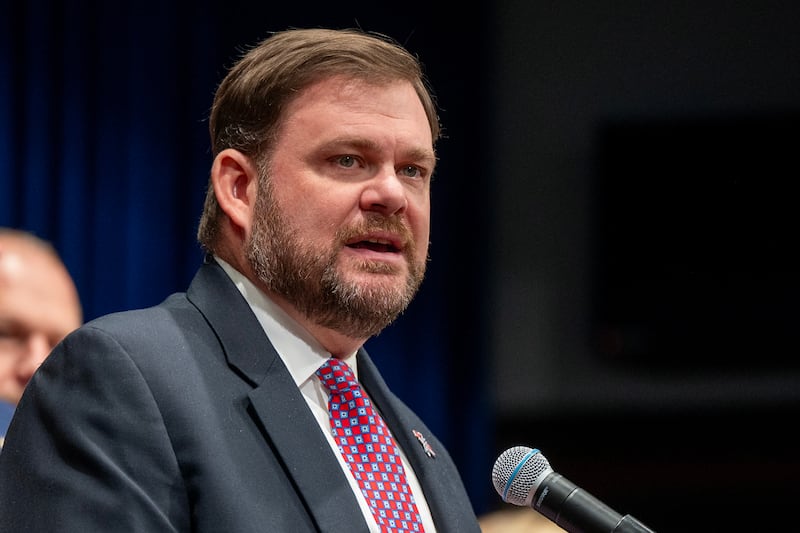
State Senate Majority Leader Joe Pittman (R., Indiana) during a press conference at the Capitol in Harrisburg Feb. 3, 2026.
State Senate Majority Leader Joe Pittman (R., Indiana) during a press conference at the Capitol in Harrisburg Feb. 3, 2026.Read moreTom Gralish / Staff Photographer

“We can act within the 120 days, we can act after the 120 days,” Senate Majority Leader Joe Pittman (R., Indiana) said on Sunday. “But the choice is now quite simple. These machines are illegal, and in less than 120 days, they will be leaving the marketplace.”

Data centers — which are seeing a boom in Pennsylvania as artificial intelligence usage increases and communities are pushing back on where they are being built — will be required to submit information about their energy and water usage.

Advertisement

Beginning next summer, data centers in the state with a peak energy demand greater than 10 megawatts will be required to submit information annually to the Department of Environmental Protection.

Outlined as part of this year’s fiscal code, those reports will be publicly-accessible. Data centers that do not submit information about their resource usage will be fined $10,000 a day.
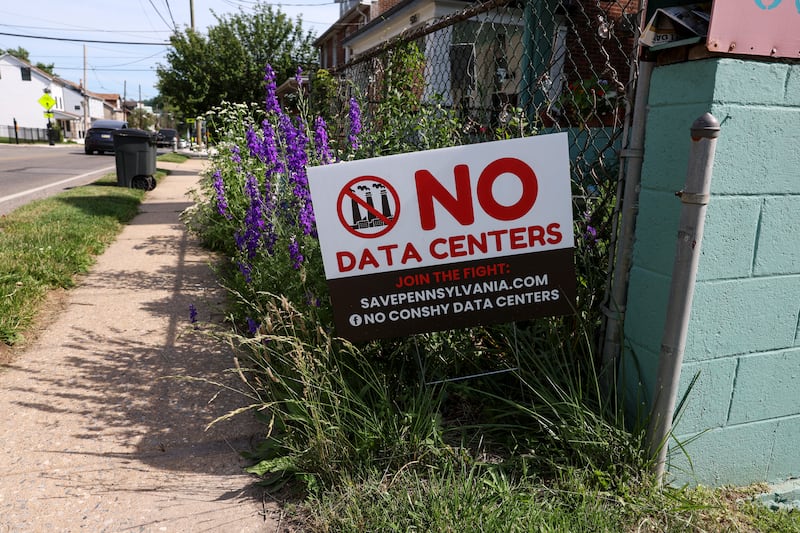
A yard sign protests the proposed data center on New Elm Street near the Closed Cleveland-Cliffs steel mill photographed on Thursday, June 4, 2026 in Conshohocken, Pa.
A yard sign protests the proposed data center on New Elm Street near the Closed Cleveland-Cliffs steel mill photographed on Thursday, June 4, 2026 in Conshohocken, Pa.Read moreMonica Herndon / Staff Photographer

A data center regulation bill, which would have limited state benefits for data center developers and was championed by Shapiro, was not included in the final budget deal. The governor called for limiting a sales and use tax exemption and expediting permitting to projects that comply with a set of transparency and environmental standards.

And several other data center regulation efforts that have received bipartisan support in recent weeks were also absent from the final spending package.

That included efforts to repeal the existing sales tax exemption afforded to data center developers and attempts to enact a local or statewide moratorium on new data center development.

Both chambers passed language repealing the tax exemption and advanced differing bills to freeze development. One Democratic-sponsored bill would have given municipalities the option to implement a 180-day moratorium on new centers. The other, a Republican-sponsored measure, would allow for local moratoriums up to 18 months.

Advertisement

“Compromise” was the word of the day around the Pennsylvania Capitol on Sunday, when the legislature swiftly passed the more than 600-page budget deal hashed out behind closed doors between Shapiro, Pittman, and House Majority Leader Matt Bradford (D., Montgomery) and passed with bipartisan support in both chambers.

The legislative leaders and Shapiro emphasized that they didn’t get exactly what they wanted in the budget, as a symptom of dealing with divided government. And leaders were proud to have reached the deal less than two weeks after their July 1 deadline, rather than the nearly five months that it took to hash out an agreement last year.
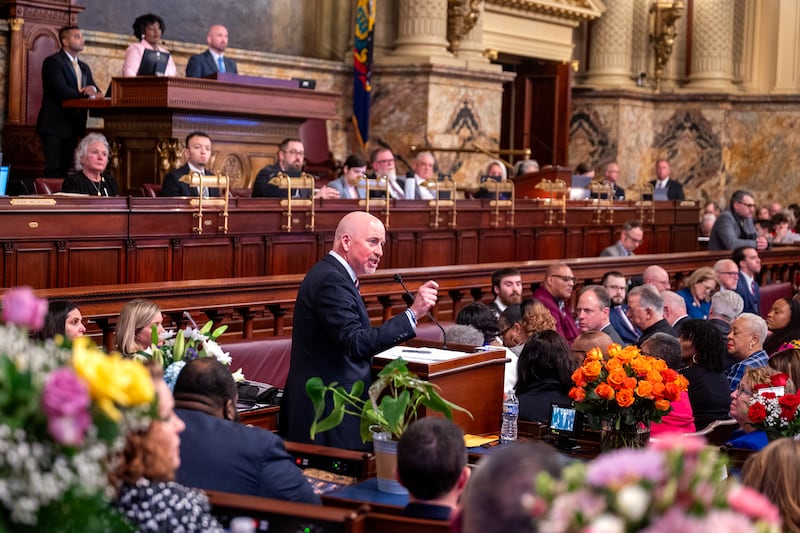
House Majority Leader Matt Bradford (D., Montgomery) speaks on Tuesday, Jan. 7, 2025.
House Majority Leader Matt Bradford (D., Montgomery) speaks on Tuesday, Jan. 7, 2025.Read moreTom Gralish / Staff Photographer

Lawmakers also agreed to work over the weekend to hurriedly approve the budget deal, with members of the Senate coming in on Saturday night to begin advancing parts of the budget deal and the House joining them Sunday afternoon. By 6:15 p.m. on Sunday, Shapiro had signed it.

Among the inspirations for the weekend of productivity: Making it to the MLB All-Star Game in Philadelphia, Bradford said, for which he has tickets.

Leaders returned to some old accounting maneuvers to address the state’s multibillion-dollar structural deficit and avoid pulling from the state’s emergency savings account.

They spent down unused and underused dedicated funds, and rolled some of the state’s Medicaid payments totaling $1.3 billion to the next fiscal year, a move lawmakers typically resorted to before the state saw an influx of federal dollars during the COVID pandemic.

Advertisement

Without those delayed payments, the state budget would total closer to $52.1 billion, and several GOP members criticized the total as being disingenuous.

More than 80,000 retired public-sector employees will receive a cost-of-living adjustment to their pensions, something advocates have sought for years.

» READ MORE: More than 80,000 Pa. retired teachers, police officers, and firefighters will get a pension bump — some for the first time in decades

Public school teachers and other state employees who retired before July 1, 2002 will receive a tiered monthly payment based on the date of their retirement. Similarly, police officers and firefighters who retired more than five years ago will receive monthly payments ranging from $50 to $300 dollars, depending on how long they have been retired.

Lawmakers from both parties had called for the cost-of-living increase.

Advertisement

Legislators also agreed to close a loophole that allowed online sellers to avoid paying Philadelphia’s local 2% sales tax on purchases made in the city.

Mayor Cherelle L. Parker had asked the General Assembly to close it as part of her own city budget pitch in a move estimated to bring an additional $1.5 million to Philadelphia.
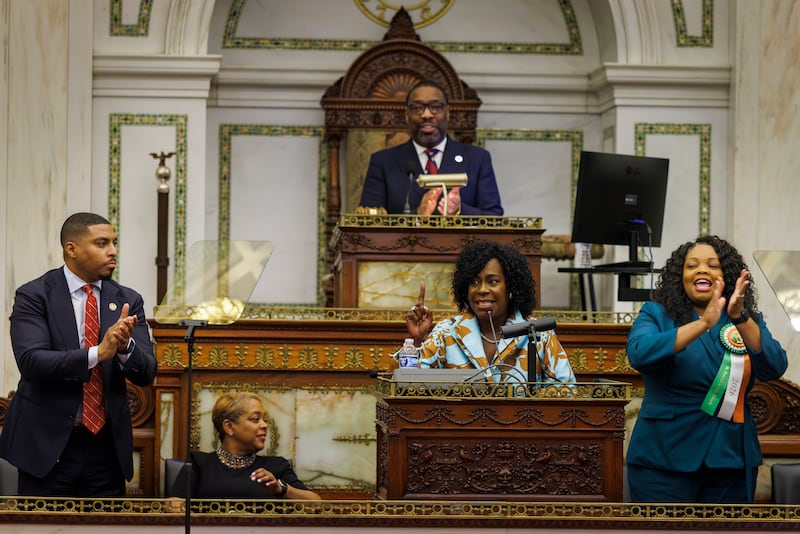
Philadelphia Mayor Cherelle L. Parker is cheered by members of Philadelphia City Council at conclusion of her budget address, Thursday, March 12, 2026.
Philadelphia Mayor Cherelle L. Parker is cheered by members of Philadelphia City Council at conclusion of her budget address, Thursday, March 12, 2026.Read moreAlejandro A. Alvarez / Staff Photographer

Twenty-nine states have bell-to-bell cell phone bans. This year, Pennsylvania will not join them, despite the passage of two separate phone ban bills — one in each chamber of the legislature.

In: Mandatory recess for students K-5

Recess is now law in Pennsylvania.

Another education policy change championed by Shapiro, a mandatory, 30-minute recess for students in grades kindergarten through fifth was established in this year’s budget as a way to improve learning outcomes.

Advertisement

Several Pennsylvania funding issues that have gone years without being addressed were left out of the latest budget, some with more pressing deadlines than others.

Lawmakers did not address a need for mass transit funding — which led to last year’s bitter budget stalemate among legislators — but are expected to identify a long-term funding stream for the transit agencies next year when a two-year fail-safe runs out.

» READ MORE: Public transit is in trouble all across Pennsylvania, including in GOP districts
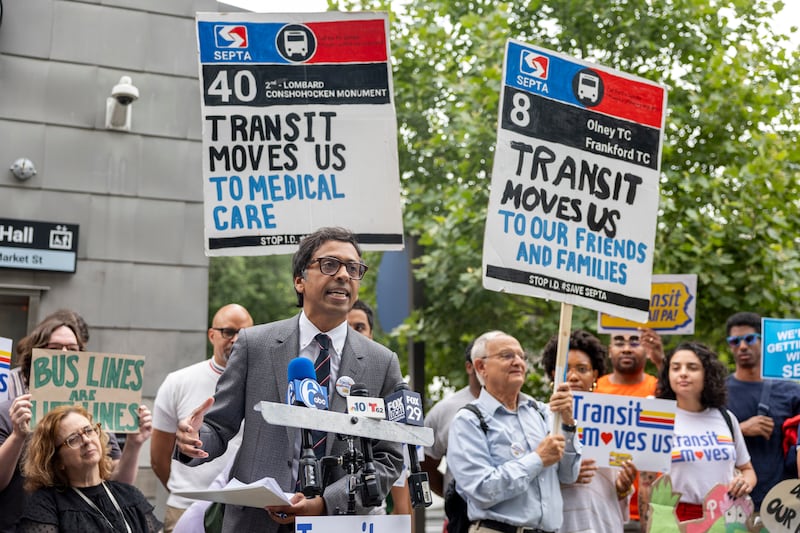
Senator Nikil Saval, speaks at a press conference calling for more SEPTA funding from the state at Independence Hall in Philadelphia, Pa., on Friday, June 26, 2026.
Senator Nikil Saval, speaks at a press conference calling for more SEPTA funding from the state at Independence Hall in Philadelphia, Pa., on Friday, June 26, 2026.Read moreTyger Williams / Staff Photographer

Other local governments and service providers said their needs are more urgent.

The County Commissioners Association of Pennsylvania released an urgent plea after the state budget was signed that counties still have not received the critical mental health funding they need, or a surcharge increase used to fund 911 call systems. Home-health service providers also continued their calls for increased state funding they say is needed, as the industry faces serious staffing issues due to low state reimbursement rates.

» READ MORE: Pennsylvania’s home care industry is in crisis, with low pay and unfilled shifts driving it toward collapse

Advertisement

Rape crisis centers got a much-needed funding increase, doubling how much the centers receive from $12 million to just over $24 million.

Philadelphia’s only rape crisis center had to lay off its employees and rely on volunteer work during last year’s monthslong state budget impasse.

Republican and Democratic lawmakers championed the organizations in this budget, making the largest single-year increase for the critical services in state history, according to the Pennsylvania Coalition to Advance Respect.

“Today marks a turning point for survivors and rape crisis centers across Pennsylvania,” said Joyce Lukima, the organization’s coalition director, in a news release.

Ethan Young is an intern with the Pennsylvania Legislative Correspondents’ Association.

Advertisement


Source link

Continue Reading

Pennsylvania

Governor Josh Shapiro signs overdue Pennsylvania state budget with bipartisan support

Published

on

Governor Josh Shapiro signs overdue Pennsylvania state budget with bipartisan support


HARRISBURG, Pa. (WPVI) — Pennsylvania Governor Josh Shapiro signed the state’s overdue 2026-2027 budget on Sunday.

The $50.8 billion spending plan was passed by state lawmakers with bipartisan support.

It is smaller than Shapiro’s initial $53 billion plan proposed back in February.

“We managed, as the math indicates, to find compromise without compromising our core values,” said Shapiro. “If you go back and look at the goals we all set together way back in 2023 – funding our schools, making our communities safer, growing our economy….four years later, this budget reflects those continued priorities.”

Advertisement

Lawmakers say this spending plan expands workforce development initiatives, devotes significant new funding for basic education, and increases funding for special education and early intervention services.

Copyright © 2026 WPVI-TV. All Rights Reserved.


Source link

Continue Reading
Advertisement

Trending
