Pennsylvania
Criminal charges for climate pollution? Some argue a Pa. law would apply


While Braman agrees it would be difficult to take on as a prosecutor, he said that could change as more young people move into positions of influence.
“As the catastrophes escalate and as young people who face their entire future in an environment dominated by increasing climate harms, [and] start to join the jury pool, start to become prosecutors, start to become judges and start to become shareholders, I think that the writing’s on the wall,” Braman said, “and I hope that everybody, including everyone inside fossil fuel companies, starts to pay attention to that.”
But Weber said prosecutors would still have to convince a judge or jury to convict beyond a reasonable doubt.
Fossil fuel companies have permits to conduct their business, essentially government permission to do what they are doing, another way for the company to defend itself in court.
If the companies are charged and convicted of risking or causing a catastrophe, the fines are in the range of $15,000 to $25,000 per count, Weber said.
“Is that going to deter a multimillion dollar company? Is that going to interfere with the operation of their business and the money that they’re making? I don’t think so,” Weber said. “I mean, did Energy Transfer go out of business by that criminal prosecution?”
“Maybe you put the CEO in jail,” Weber said. “And do you think that the other fossil fuel companies are going to say, ‘That guy went to jail, so we shouldn’t do what we’re doing anymore’? No, they’re going to do what drug dealers do. Drug dealers say, ‘Well, that guy got caught for drug dealing because he’s stupid. We’re not stupid.’”
‘Win by losing’
Environmental attorney Rich Raiders said there are a lot of questions with the strategy, but says the article does serve an important purpose.
“The idea behind these articles isn’t necessarily to come to an answer, but to get people to start thinking about how to address a question. And in that respect, it does that and it does it well,” Raiders said.
Raiders represented homeowners who sued Energy Transfer over the Mariner East pipeline construction. He said a case like this would be a battle of the experts, but there are fundamental questions the article does not address about whether the charges would stick.
“What do you have to show responsible for climate change to meet the definition of a catastrophe?” Raiders said. “What is that level of threshold that you have to show before you can write a complaint that actually can survive objections? And how do you prove that it was the fossil fuel emissions caused by the marketing aspects of these companies to get you far enough that you can meet this definition? We don’t know.”
Raiders said the goal of this type of prosecution could be to get a large settlement, similar to what happened with the tobacco companies settlement or a previously proposed Sackler family settlement over opioids.
In that case, it makes sense to bring a case where you “win by losing.”
“And maybe that’s what a case like this does. It’s not necessarily to win the case, but it’s to move the needle,” Raiders said.
For example, he said it could get the legislature to take action. But it also requires someone willing to lose.
“I think this is an interesting discussion in the long term for how to get people to think about the problem,” Raiders said. “And as a thought piece it does have some merit. But will you see something like that filed in the next 12 months? No, not anytime soon.”
Braman, one of the co-authors of the piece, is more optimistic.
“We desperately need some kind of solution that will allow the public to hold these massive corporate criminal actors accountable and have them really address the harms that they’re generating,” he said.



Pennsylvania
Continued Legacy: Central Pennsylvania Auto Auction gears up for 25th anniversary of Classic Car Auction

MILL HALL — This weekend, Central Pennsylvania Auto Auction, 41 Airstrip Dr., Mill Hall, will celebrate the 25th anniversary of its annual Classic Car Auction, welcoming thousands of collectors, buyers and enthusiasts from across the country for two days of bidding, entertainment and celebration. For President Doug Miller, however, the milestone represents far more than classic automobiles.
“It’s kind of like a milestone for us,” Miller said, as he reflected on the anniversary. “Because it’s my dad that started this. We lost him three years ago, and obviously we’re continuing on his legacy and things that he wanted to do. It’s not about the vehicles, it’s not about the auction. It’s just more of continuing on what he would want.”
The collector car event is an extension of the business founded by Miller’s father, Grant, and mother in 1987. While the company is preparing to celebrate 39 years of its weekly dealer-only auto auction in August, the annual collector auction has become a destination event in its own right.
“My father started the company 39 years ago in 1987,” he said. “Over the years, as our sales sort of grew, my father took an interest in antique and collector cars. He would go to other auctions and buy cars and thought, ‘Geez, we have our facility here. We should maybe try and do one of our own.’ So 25 years ago, we set up our collector car auction that we hold, and it’s always been the third weekend in July ever since.”
This year’s event will feature more than 400 collector vehicles crossing the auction block over two days, along with vintage memorabilia, gas pumps, signs, mini bikes and other automotive collectibles.
While many of the consignments come from Pennsylvania and neighboring states, Miller said the auction’s reputation now stretches far beyond the region.
“We have customers that come from all across the United States,” he said. “The consignments come out of Pennsylvania and the bordering states — New York, New Jersey, Ohio, Maryland, Delaware. We have customers that have sent cars from as far as North Carolina.”
The auction has also become much more than a place to buy and sell classic vehicles.
Thursday evening opens with a complimentary cocktail reception featuring live entertainment at Grant’s Place. The auction begins Friday morning with memorabilia before moving to the collector cars. Friday evening includes a VIP gala with dinner, live music and fireworks.
“It’s like a celebration, not just an auction,” Miller said. “We like to try to provide some entertainment because we’re obviously in a rural area and it gives the people something to do after the sale’s over.”
The event also brings a significant economic boost to the surrounding community. Hotels fill with visitors, restaurants welcome out-of-town guests and dozens of RV owners make a weekend of the festivities.
“We’ll have upwards to probably a couple thousand people come through our doors over the next three days,” Miller said. “We’ll probably have 30 or 40 RVs across the street that people will set up and spend the weekend camping in our parking lot.”
The celebration comes after months of planning by a team of employees who transform the auction grounds in just a matter of hours. Following Thursday’s regular dealer auction of roughly 750 vehicles, staff immediately begin clearing the lot and staging the hundreds of collector cars.
“We go home to shower and come back basically,” Shanan Miller said with a laugh. “We’re here around the clock.”
Behind the scenes, nearly 100 employees — full-time and part-time — work together on auction days to keep the operation running smoothly.
“It wouldn’t be possible without our employees,” he said. “It’s a lot of work.”
He added that once the first gavel falls Friday morning, everything falls into place.
“Once Friday morning at 9 o’clock hits, it just sort of takes off,” he said. “It’s on autopilot for the weekend.”
For Doug, the family business has always been about more than selling vehicles.
After graduating from high school in 1989, he briefly attended college before realizing his passion remained at the auction his father had built. His father insisted he learn every aspect of the business from the ground up.
“He said, ‘If you think for one minute that you’re going to leave school and come here and sit behind a desk and direct orders, that’s not happening,’” Doug recalled. “He said, ‘You’re going to learn every function in this business.’”
So he did.
He started detailing cars, transporting vehicles, picking up litter and plowing snow before eventually moving into management.
“And I still do,” he said with a smile. “If I need to go pick up a load of cars, I can do it.”
Today, he is passing those same lessons on to his son, Jack Miller, who joined the business full time after the passing of his grandfather.
“I’m doing the same thing with my son, Jack,” Doug said. “He started where I did too.”
In following in their footsteps, Jack hopes to preserve what generations before him have built.
“I just want to continue what my dad has done and my grandfather before him,” Jack said. “Do as good of a job as they’ve done and provide the same level of service that they’ve shown me to provide.”
He believes the relationships built over decades are what keep customers returning.
“I see how it makes our customers feel,” he said. “I believe that’s a huge part of what brings them back here, week after week if it’s for the regular sale, or every year for the classic auction. Just providing good service and working hard — it feels good to work hard and see a positive end result.”
Doug agreed that philosophy remains the cornerstone of the business his father founded nearly four decades ago.
“One thing my dad taught me is that you need to surround yourself with good people,” he said. “Whether it’s customers or employees, that’s what makes you successful.”
That commitment to service extends to everyone who visits the auction.
“We’re very customer-service driven,” Miller said. “You could sell popsicles, you could sell cars or whatever. It’s all about taking care of your customer. That’s what’s going to get them to come back.”
As Central Pennsylvania Auction celebrates 25 years of its Classic Car Auction, the event stands as both a showcase of automotive history and a tribute to the family legacy that continues to drive it forward.
For the Miller family, every collector car that rolls across the auction block is another chapter in a story that began with one man’s dream in 1987– and one they hope will continue for generations to come.


Pittsburgh sees unhealthy air quality from Canada, MN wildfire smoke
Wildfire smoke caused Pittsburgh’s air quality to deteriorate, prompting a code red air quality alert.
Pittsburgh was under a code red air quality alert on Thursday, July 16 as wildfire smoke from Canada and Minnesota settled across the city.
The city’s air quality was expected to deteriorate as smoke concentration at ground level increased throughout the day, with the day’s overall air quality forecast as unhealthy due to fine particles carried in smoke, according to Pennsylvania Department of Environmental Protection.
Here’s what to know about Pittsburgh’s air quality.
What’s the air quality in Pittsburgh today?
The morning of July 16, the air quality was moderate, with an Air Quality Index reading of 55, according to AirNow. But it was expected to hit unhealthy levels later in the day, with the overall daily air quality anticipated to reach dangerous levels with an AQI of 175, prompting Pennsylvania Department of Environmental Protection to issue a Code Red air quality alert. The alert is based on the day’s expected overall air quality and not individual hour-to-hour readings.
Smoke was likely to continue to impact Pittsburgh into the weekend, with a forecast overall daily AQI of 140 on July 17, with the state department of environmental protection issuing a Code Orange air quality alert. This indicates that the air quality may be unhealthy for sensitive groups.
July 18 was likely to see improved conditions, with moderate air quality.
What does a Code Red air quality alert mean?
A Code Red air quality alert indicates that the overall air quality within a day is likely to be unhealthy, with an AQI reading of 151 to 200.
Because the alert is based on the overall air quality for the day, there may be periods of time with better air quality. It’s a good idea to check the current air quality before going outside.
If you have to go outside while the AQI is at unhealthy levels, AirNow recommends avoiding strenuous activities or limiting your time outdoors. It may be a good idea to move outdoor activities indoors.
Pennsylvania Department of Environmental Protection also encouraged residents to avoid using gas-powered lawn and garden equipment, reducing the use of fireplaces or wood stoves and avoiding the open burning of leaves, trash or other materials in an effort to reduce fine particulate matter air polution.
What does a Code Orange air quality alert mean?
A Code Orange air quality alert means that the overall air quality within a day is likely to be unhealthy for sensitive groups, with an AQI reading between 101 to 150.
Those with lung disease, older adults, children and teens should reduce their exposure by engaging in less strenuous activities or limiting their time outdoors when the current air quality is at its worst, according to AirNow.
Wildfire smoke impacting Pittsburgh’s air quality
There were more than 830 wildfires burning in Canada as of July 15, with over 100 considered out of control. Many of the fires impacting the Northeast’s air quality were in Ontario and Minnesota.
Smoke from the wildfires hit Pennsylvania on the evening of July 15, causing hazy skies in Pittsburgh. Conditions were expected to worsen on July 16 as more smoke entered the area, with smoke likely to linger through July 17.
Is Pittsburgh under a heat advisory?
While Pittsburgh was under a heat advisory on July 15, the advisory was no longer in effect on July 16. The high on July 16 was forecast at 93, though temperatures could possibly fall several degrees because of smoke cover, according to the National Weather Service.
Brandi D. Addison and Karina Zaiets contributed to this report.
Finch Walker is the Pittsburgh Connect Reporter for the USA TODAY Network. Contact Walker at FWalker@usatodayco.com. Instagram: @finchwalker_. X: @_finchwalker.
Pennsylvania
Fifth Time’s The Harm: Pennsylvania Gov. Shapiro Again Signed A Budget With No Money For Transit — Streetsblog USA

Another year, another blow to Pennsylvania transit riders.
Keystone State Gov. Josh Shapiro signed the annual budget into law last Sunday, and for the fifth year in a row, public transportation has been left to financially starve. The approved budget contains no funding for transit operations, continuing a streak that forces every agency to scrounge for its own money, to varying degrees of success.
“We’ve been left out for far too long,” remarked Connor Descheemaker, Statewide Campaign Manager for Transit for All, PA! The organization rallied transit riders to send more than 50,000 letters to state representatives and the White House-eying governor calling for transit funding, reaching every legislative district in Pennsylvania.
Those calls went largely unanswered. Riders in Lehigh Valley are now bracing for route eliminations and trip cancellations, despite already paying increased fares. Lancaster County paratransit riders will pay more as well, beginning next month.
Low-income, disabled, and rural Pennsylvanians will lose access to jobs, healthcare, and loved ones. That reality hasn’t stopped their governor from declaring victory.
In a speech at last week’s budget signing ceremony, Shapiro uttered a total of three words about the state-sponsored mobility crisis: “There’s more I want to do – like raising the minimum wage, funding mass transit, and expanding access to affordable housing,” he said.
Shapiro seems to understand the need for well-funded transit. Last year, he sent $220 million to Philadelphia to boost SEPTA’s barren maintenance fund following a series of onboard fires.
One-time relief won’t keep buses running, though.

Shapiro has failed, and failed, and failed again to pass his landmark transit policy. His initial proposal would increase the share of sales tax revenue going to public transit by 2 percent. The blame isn’t all his: Even after he watered down his proposal to a 1.75-percent increase, statehouse Republicans failed to support it.
Even if it had succeeded, it’s too little, too late: The sales tax change would still be $92 million short of the $384 million that Transit for All, PA! estimates is needed to prevent further service cuts in public transportation across the state.
Transit for All, PA! has previously lobbied for its legislative package, which would have increased taxes on car rentals and leases, and raised a new tax on ride shares.
Like Shapiro’s plan, that failed, too.
“The General Assembly has deferred action to invest fully in public transit,” state Sen. Nikil Saval (D-Philadelphia), who had authored the ride share component of the legislative package. “Despite the continued activation and involvement of tens of thousands of Pennsylvanians … we will once again face this issue in 2027.”
Pennsylvania’s last semblance of adequate transit funding ended in 2021 with the expiration of Act 89. The 10-year allocation covered statewide transportation expenses, including roadway maintenance and transit operations.
As soon as Act 89 money dried up, agencies turned to Covid relief grants to stay afloat. Those grants, provided through the American Rescue Plan, ended in 2024. Several agencies have gone so far as to pillage their own fixed-route budgets to continue federally mandated paratransit services.
Call it luck, a Band-Aid, or a bad omen; riders on Philadelphia’s SEPTA and Pittsburgh’s PRT are momentarily safe from service cuts and fare hikes. Following last year’s budget disaster, Shapiro permitted the two agencies to raid their own maintenance funds to temporarily pay for operations.
Now, both are pausing upgrades, deferring basic maintenance, and reckoning with the realities of operating – but not fixing – a large-scale transit system.
State highways, on the other hand, received $775 million in new funding from Shapiro’s budget deal.
Transit advocates in Pennsylvania are shifting strategies to preserve essential transit services. A June decision by the Pennsylvania Supreme Court, allowed slot machines to be taxed at a higher rate.
Both Democrat and Republican lawmakers have shown interest in using revenue from the so-called “skill games tax” to fund transit. The legislature must agree on a tax rate and structure, but declined to do so before finalizing the budget.
“Anytime that there is a discussion of new revenue in Pennsylvania, it needs to include public transportation,” Descheemaker said. “We are losing public transportation actively, right now in Pennsylvania. Public transportation needs to be at the center of those conversations.”
-

 Los Angeles, Ca1 hour ago
LADWP begins long-term repairs after West Hollywood water main rupture
-

 Detroit, MI2 hours ago
Livestream: Mayor Sheffield, Detroit health chief to address wildfire smoke threat
-
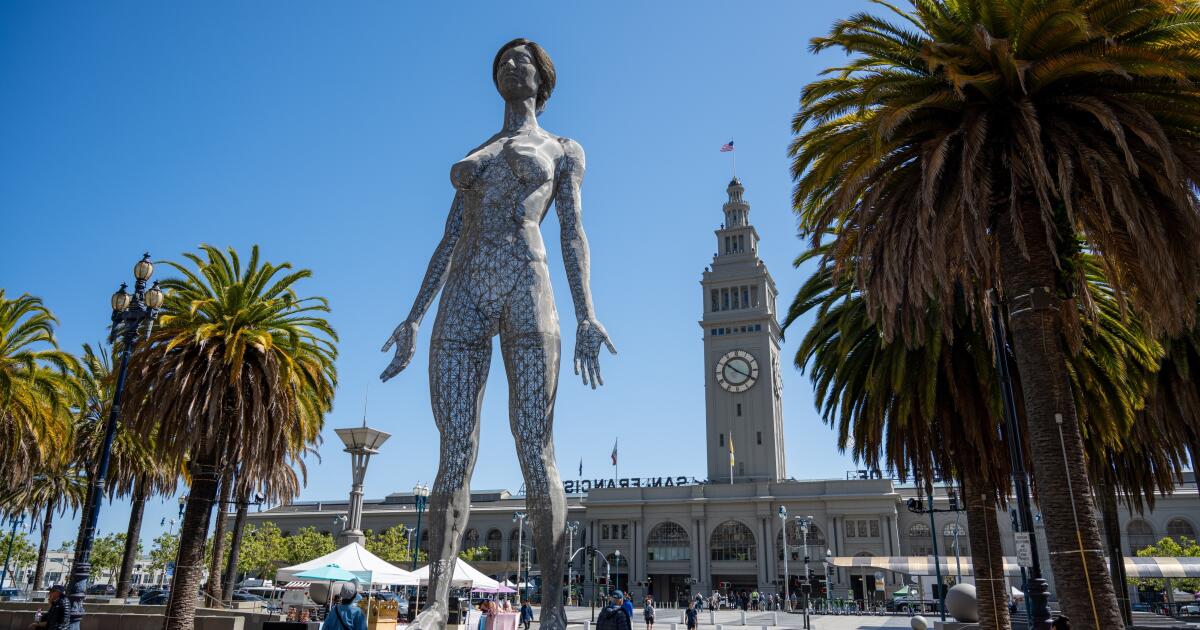 San Francisco, CA2 hours ago
A sculpture of a giant naked woman goes on sale in San Francisco. Bring a crane
-

 Dallas, TX2 hours ago
No ‘straight answer’: Why Pioneer Cemetery is the latest battleground at City Hall
-

 Miami, FL2 hours ago
TSA hosts news conference ahead of World Cup third place match at Miami Stadium
-

 Boston, MA2 hours ago
ICE Boston arrests Barbados national during targeted operations in Attleboro
-

 Denver, CO2 hours ago
Denver Broncos training camp is 2 weeks away
-

 San Diego, CA3 hours ago
Daily Business Report: July 17, 2026, San Diego Metro Magazine

