New Hampshire
Proposed change to land use law could empower immigration enforcement along NH-Canada border

For half a century, New Hampshire’s “current use” law has been a widely used and rarely controversial policy that lets landowners pay less in taxes in exchange for preserving open space, and in some cases, allowing the public to use their land for recreational uses.
But a little noticed proposed change to the statute pushed by the top Senate Republican this year would turn the current use statute into a new, untested immigration enforcement tool.
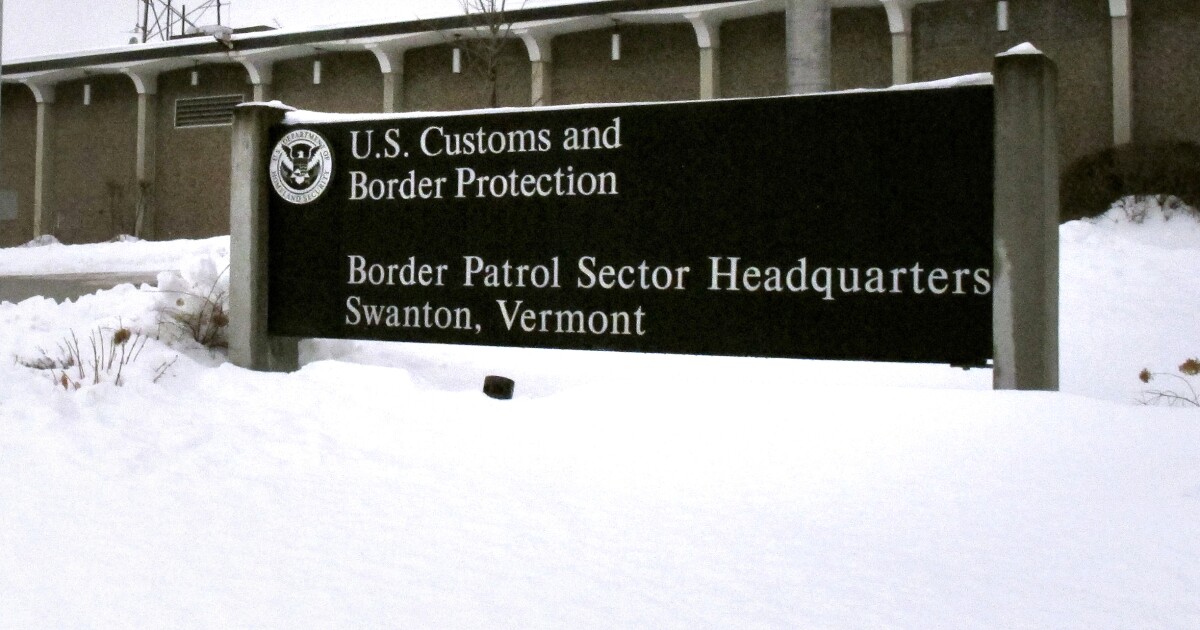
The bill, sponsored by Senate President Jeb Bradley, would permit landowners — including those who live along the state’s northern border with Canada — to post “no trespassing” signs with exceptions for recreational use. That would clear the way for suspected undocumented migrants to be potentially arrested by local law enforcement — rather than federal border patrol agents — for criminal trespassing.
The legislation was requested by Gov. Chris Sununu and Attorney General John Formella, according to Bradley. And while the proposed change would apply to more than a million acres of land in the state, it was prompted by the concerns of a small handful of residents in the town of Pittsburg who say they have seen migrants illegally entering New Hampshire by crossing a stream that serves as the border between the U.S. and Canada.
This effort to reshape immigration enforcement using a relatively obscure section of land taxation law comes at a time when questions are being raised about the extent of immigration pressures along New Hampshire’s international border. Civil liberties groups have obtained data showing scant interactionsbetween border agents and suspected migrants in New Hampshire in recent months. But State House Republicans have argued the problem is far larger than the numbers suggest, and that it is time for the state to step up its own enforcement efforts.
“In New Hampshire and in 49 other states, we have seen the results of open border policies, not only human trafficking, but the import of illegal substances, in particular fentanyl, flowing across our southern and our northern border,” said Bradley during a recent public hearing on the bill.
The measure would make a technical change to the state’s 50-year old current use law, which allows residents to put 10 or more acres of undeveloped land — including open fields, forest, and agricultural properties — into a special category for assessing property taxes. The program saves landowners money, but also encourages the preservation of open space.
Under the existing program, landowners can receive an additional tax deduction if they allow recreational use on the property by the public.
The bill now in the State House would apply to those landowners who grant the public access to their land: It would permit them to post a sign that reads “No Trespassing except for skiing, snowshoeing, fishing, hunting, hiking or nature observation” without jeopardizing their tax break.
Under that change, suspected migrants who cross the international border onto residential land marked with the new signs could be arrested for criminal trespassing, although it isn’t clear what would distinguish a migrant carrying a backpack and wearing boots from any other hiker who is permitted to walk on the land.
“I believe — and I hope that you, as members of the committee, believe — that protecting our northern border to prevent drug smuggling, human trafficking, and illegal entry into our state is important,” Bradley told members of the Senate Judiciary committee.
Some activists, however, are concerned the measure could lead to racial profiling.
“I look brown,” said Bruno D’Britto, an immigration attorney who leads the New Hampshire Brazilian Council and opposes the bill. “Someone sees me on their property with a backpack, they are going to think I’m crossing the border.”
D’Britto also noted that courts have generally ruled that immigration enforcement is the jurisdiction of the federal government and not the states.
“The states do have their sovereignty under the 10th Amendment, but this goes way beyond what the states can do,” he said. “Immigration has been allocated to the federal government.”

That hasn’t stopped some states, including Texas, from implementing its own immigration policies. There is currently a legal fight between officials in that state and the Biden Administration over the use of razor wire to ward off migrants.
Bradley, in an interview with NHPR, acknowledged the measure could face legal challenges if it becomes law.
“I think it’s the best public policy, and if it’s legally challenged, it’s legally challenged,” he said, adding “the Attorney General’s office will be able to defend it.”
Bradley noted that a lack of perceived action by the federal government gives states like New Hampshire “a legitimate issue in terms of protecting their own sovereignty and the public safety.”
Earlier this month, the head of the regional Border Patrol office in Vermont, Chief Patrol Agent Robert Garcia, said his agents had apprehended 3,310 migrants from 55 different countries since October, more than the previous four fiscal years combined. Those figures, however, were not broken down by state.
While Republicans in New Hampshire frequently describe a migrant “crisis” along the state’s approximately 58-mile border with Canada — a heavily forested and remote stretch of land with relatively few crossing points — data obtained by the ACLU of New Hampshire last month through a lawsuit against U.S. Customs and Border Protection showed just 21 suspected migrants were detained by federal agents in the state in the 15-month period between October 2022 and December 2023.
Residents of a remote road that runs alongside the international boundary in the town of Pittsburg have raised concerns to NHPR about migrants crossing their property. Top officials in the state, including Sununu and U.S. Senator Jeanne Shaheen, visited the area last year to meet with Border Patrol officials and local law enforcement, pledging more resources.
There were two high-profile arrests of suspected migrants in New Hampshire last summer, though it wasn’t clear in court paperwork precisely where the individuals crossed the international boundary. In both cases, the drivers of vehicles transporting the migrants were arrested and charged with human smuggling. No narcotics or guns were seized, according to court paperwork.
Those cases, along with earlier data released by a regional Border Patrol outpost showing a surge in encounters with migrants across parts of upstate New York and Vermont, prompted the state to divert $1.4 million to increased patrols in the region. That money was allocated in the state budget despite concerns from immigration activists that the stepped up law enforcement would inevitably lead to racial profiling. The new effort, called the Northern Border Alliance Task Force, was launched last October. It has yet to release initial data on the program, despite a Dec. 31 deadline to do so.
This isn’t the first time the question of using New Hampshire’s criminal trespassing laws to arrest and detain undocumented people has arisen. In 2005, the Monadnock-region town of New Ipswich found itself in national headlines after local police pursued criminal trespassingcharges against an undocumented construction worker. The man was initially arrested and charged with operating a motor vehicle without a license. But when ICE agents contacted by the town declined to take him into custody, New Ipswich Police Chief Garrett Chamberlain charged Jorge Mora Ramirez with a misdemeanor under New Hampshire’s trespassing law, even though Ramirez was not accused of wrongfully entering private property.
A district court judge ultimately dismissed the case, ruling local law enforcement had overstepped its authority by attempting to enforce federal immigration laws through other means.
Today, more than 3 million acres of land are currently enrolled in current use status, or 52% of the entire land area of the state. Of those protected lands, approximately half of that acreage is also open to the public for recreational use, according to data on the Department of Revenue Administration’s website.
Most of New Hampshire’s border with Canada is controlled by a single entity, Aurora Sustainable Lands, which has a conservation easement in place that prohibits placing ‘No Trespassing’ signs, according to Charles Levesque, president of the Statewide Program of Action to Conserve Our Environment, or SPACE, a group dedicated to protecting open lands through the current use law.
Another large stretch of borderland is controlled and managed by New Hampshire Fish and Game. Along an approximately 70-mile stretch of road in the western corner of the international boundary, where New Hampshire, Vermont and Canada meet, there are numerous parcels owned by private individuals, with some of those lands in current use with the recreational tax enhancement.
Levesque’s group is in favor of the proposed legislation, though not for its potential impact on those specific landowners or on illegal immigration. Rather, he said all landowners statewide who utilize the recreational bonus under current use need clarity on what type of signs they may be able to post, “because now the statute’s rather silent on that.”
But given the wildness of the terrain along the vast majority of the New Hampshire-Canada border, and the challenge in determining who is a legally permitted hiker or birdwatcher on private lands — versus who may be hiking but without proper paperwork to be in the country — it isn’t clear what impact the proposed legislation may ultimately have.
Levesque said he is doubtful the legislation will accomplish what lawmakers are hoping.
“They’re looking for ways to give local law enforcement the authority here,” he said. “And this is what they came up with. I don’t think it will be effective.”



New Hampshire
Abandoned Camper Fire On South Main Street Knocked Down By Concord Fire And Rescue Teams

CONCORD, NH — The Concord Fire Department is investigating the cause of a camper fire on South Main Street late Friday night.
Around 11:30 p.m., fire and rescue teams were sent to South Main Street, not far from Langdon Avenue, for a report of a camper on fire. Dispatch said it was unknown if anyone was inside or if the camper was abandoned.
“We have a couple of calls on it,” a dispatcher said. “It’s fully involved.”
A few minutes later, the fire was confirmed, and firefighters worked to extinguish it. The battalion commander confirmed no one was inside, and it appeared to be abandoned. Dispatch said, if they recalled correctly, the camper had been there for “quite a while.”
News 603 posted videos from the scene on Facebook here:
And here:
The bulk of the fire was knocked down after about 20 minutes, with firefighters overhauling and dealing with “the hot spots.”
Not long after the overhaul update, firefighters were sent to a business on South Main Street, near the camper fire, in response to a report of an alarm activation.
After investigating, there did not appear to be an activation at the business, a commander said. Later, dispatch said the alarm appeared to restore itself automatically. Firefighters cleared the scene of the business alarm just after midnight on Saturday.

A 20-story tall, 1.3 million-pound Atlas V rocket will blast off from Florida this weekend, and Granite Staters waking up very early might able to see it if the clouds in the sky don’t cover it.
Teams with United Launch Alliance are prepping for the Atlas V rocket launch, the fifth Amazon Leo constellation mission. Liftoff is planned at 3:53 a.m. ET Sunday, March 29, 2026, from Cape Canaveral, Florida.
Pending weather conditions and cloud cover, the Atlas V-Amazon Leo predawn launch could be visible from Florida to New England, according to ULA. That is, if their city falls on the ULA Atlas V rocket launch visibility map (see below), and if they’re awake at the time of liftoff.
The Atlas V rocket will be equipped with five solid rocket boosters to launch the next batch of Amazon Leo broadband satellites (previously referred to as Project Kuiper) into low-Earth orbit, giving a great show to those watching.
However, weather could disrupt viewing, as the New Hampshire area on the visibility map is set for isolated snow showers before 10 p.m. on Saturday night as well as partly cloudy skies, the National Weather Service said.
Here’s what to know about ULA Atlas V rocket launch visibility from New Hampshire.
When will ULA Atlas V launch?
The United Launch Alliance Atlas V rocket will launch from Launch Complex 41 at Cape Canaveral Space Force Station in Florida in the early morning hours on Sunday, March 29. The 29-minute launch window will begin at 3:53 a.m.
The visibility map provided by ULA shows about when and where your best chances are to see the rocket as it streaks northeasterly into space.
Will New Hampshire be able to see the ULA Atlas V launch
New Hampshire, specifically just outside Concord, New Hampshire, falls in the semi-outer periphery of the visibility area for the ULA Atlas V rocket launch, according to ULA’s visibility map.
Estimated visibility will occur at launch +330 seconds, or about five minutes and 30 seconds, following the launch in Florida. However, viewing chances depend on weather conditions, and Concord, New Hampshire is currently set for isolated snow showers before 10 p.m. and then partly cloudy skies on Saturday night into Sunday morning, according to the National Weather Service. This might block visibility, as clear skies are essential for best views.
What is ULA Atlas V?
United Launch Alliance’s Atlas V rocket is a spacecraft with five solid rocket boosters that will send a batch of Amazon Leo broadband satellites into outer space, to low-Earth orbit.
How can you follow along live?
FLORIDA TODAY will offer live coverage via a live webcast with live tweets and updates for the rocket launch.

JUPITER ISLAND — Tiger Woods showed signs of impairment Friday at the scene of a car crash in which he struck another vehicle and rolled his Land Rover, authorities said.
Woods was arrested on suspicion of DUI. The Martin County Sheriff’s Office said Woods was not injured.
The crash occurred just after 2 p.m. not far from where Woods lives on Jupiter Island.
Woods’ manager at Excel Sports did not immediately respond to a text message seeking information.
This was at least the third time Woods has been involved in a car crash, most recently in February 2021 when his SUV ran off a coastal road in Los Angeles at a high rate of speed, leading to multiple leg and ankle injuries. Woods said later doctors considered amputation.
Woods has played 11 tournaments since that 2021 crash, not finishing closer than within 16 shots of the winner the four times he finished 72 holes.
He also was arrested on a DUI charge in 2017 when south Florida police found him asleep behind the wheel of his car that was parked awkwardly with damage to the driver’s side. Woods said he had taken a bad mix of painkillers. He later pleaded guilty to reckless driving.
Woods won his fifth Masters, and 15th major, in 2019. He has 82 wins on the PGA Tour, tied for the all-time record with Sam Snead.
Woods, 50, had been working his way back to golf from a seventh back surgery in September. He had not decided whether he could play in the Masters on April 9-12.
His last official tournament was the British Open in 2024. Woods ruptured his Achilles tendon in March 2025 and that kept him off the course all season even before the back surgery. He managed to play in his indoor TGL golf league on Tuesday night.
He has kept deeply involved in PGA Tour affairs as chairman of the Future Competition Committee that is restructuring the model of the tour.
Woods also faced a soft deadline at the end of the month to decide whether to become U.S. Ryder Cup captain for the 2027 matches in Ireland. Woods was offered the job for the last Ryder Cup and did not turn it down until June. The PGA of America wants a decision much sooner this time.
Copyright 2026 NPR

Goodwill Central Texas launches “Swap Your Shop” Challenge

Auburn vs Alabama live score updates, highlights from Saturday’s game

6 Alaska high school track and field athletes to watch, plus top Big C Relays performances

Jenae Berry’s strongest outing as a Wildcat secures Arizona softball’s series win over Baylor

Renegade wins 2026 Arkansas Derby

Florida High School Football Rankings: Top 25 teams – Oct. 21

How old is Bo Nix? What to know about Oregon quarterback ahead of 2024 NFL Draft

Cleary's 21 help Le Moyne down Central Connecticut State 69-64 in OT

99th annual Pony Swim held in Virginia

Indiana Members Credit Union announced as new anchor tenant at Bottleworks District

Jeffries declines to break with indicted Democrat after ethics panel’s guilty verdict

Hundreds of thousands march through London in stand against the far right

2 students killed, 7 other people injured in Tennessee bus crash during school field trip

Dem senators dodge crucial question on illegal alien accused of killing Chicago college student

EU Parliament unblocks key political hurdle in digital euro talks
-

 Movie Reviews1 week ago
‘Youth’ Twitter review: Ken Karunaas impresses audiences; Suraj Venjaramoodu adds charm; music wins praise | – The Times of India
-

 Sports1 week ago
IOC addresses execution of 19-year-old Iranian wrestler Saleh Mohammadi
-

 New Mexico6 days ago
Clovis shooting leaves one dead, four injured
-
 Business1 week ago
Disney’s new CEO says his focus is on storytelling and creativity
-

 Tennessee5 days ago
Tennessee Police Investigating Alleged Assault Involving ‘Reacher’ Star Alan Ritchson
-

 Technology6 days ago
YouTube job scam text: How to spot it fast
-

 Texas1 week ago
How to buy Houston vs. Texas A&M 2026 March Madness tickets
-

 Minneapolis, MN2 days ago
Boy who shielded classmate during school shooting receives Medal of Honor