New Hampshire
(Opinion) Biden administration proposal would harm New Hampshire researchers and patients – NH Business Review


New plan could prevent university medical discoveries from making it out of the lab
The National Institutes of Health awarded over $157 million in research grants to Dartmouth, the University of New Hampshire, and other institutions across the state last year. This funding, and similar grants from other federal agencies, help researchers make groundbreaking discoveries across a host of sectors, from life sciences and agriculture to computing and energy.
Yet a new proposal from the Biden administration could prevent the most exciting university discoveries from making it out of the lab.
The plan would give federal officials unprecedented power to interfere in the contracts signed between academic research institutions and private companies. That’d discourage companies from licensing the discoveries made by these institutions, and thereby prevent firms from turning universities’ good ideas into tangible products.
The proposal dramatically reinterprets the government’s “march-in” rights under the Bayh-Dole Act of 1980.
Most Americans have likely never heard of that bipartisan law, which has fueled our country’s medical and technological innovation for four decades. The Bayh-Dole Act allowed universities, other research institutions and small businesses to retain the patent rights on discoveries they made with the help of federal grants.
These institutions could then license those patents to private companies willing to take on the risk of developing real-life products.
Before Congress passed that law, the government took the patent rights on discoveries stemming from federally funded research. And because the government rarely licensed those patents, few companies worked to commercialize theoretical breakthroughs into products. Without secure patent rights, they had no incentive to, as they had no way to stop competitors from piggybacking on their work and undercutting them in the marketplace.
Put another way, taxpayers’ research dollars were advancing our collective understanding of science, but we had few tangible advances to show for it.
Bayh-Dole changed that by incentivizing universities to partner with companies to bring those discoveries to market. Since 1980, the patent licensing — and subsequent research, development and manufacturing — enabled by the Bayh-Dole Act has directly contributed $1 trillion to the U.S. gross domestic product and supported 6.5 million jobs. The law has been especially impactful in life sciences, leading to the development of more than 200 vaccines and life-saving drugs.
One notable example of these drugs is infliximab, which originated from research at New York University School of Medicine and was later licensed and commercialized by Janssen Biotech, now part of Johnson & Johnson, in 1998. The medicine is commonly used to treat certain forms of arthritis, which affects roughly 280,000 New Hampshire residents and one in four U.S. adults nationwide.
If the Biden administration’s proposal were in place in the 1990s, this medicine might not have made it to patients, as companies would have had very little reason to risk capital on federally funded research. Why spend billions of dollars, and more than a decade, bringing a new technology to market if the government can simply snatch the patent rights as soon as it reaches the shelves?
That is, effectively, what the new plan envisions. Drugs and other technologies would once again never make it out of university laboratories, and American patients would be at the brunt of the medical drought.
New treatments for arthritis and other diseases are just around the corner. But no matter how promising the science, those prospective treatments will never reach patients if the administration gets its way.
Julia Moore is executive director of Rhode Island and Northern New England for the Arthritis Foundation.



New Hampshire
Missing Berlin Motorcyclist Found Dead After Route 2 Crash: New Hampshire State Police Roundup

06/19/2026 02:16, EAST KINGSTON, BOLDUC, NATHAN RICHARD (22); ASHFORD, CONNECTICUT, 635:1,I (BURGLARY-NIGHT / HOME / WEAPON), 635:1,V (BURGLARY TOOLS-POSSESSION), 637:7 (RECV STOLEN PROP; $1501+), 637:7 (RECV STOLEN PROP; $1501+), 634:2,II (CRIMINAL MISCHIEF).
06/15/2026 19:49, RAYMOND, KETCHEN, DANA CANNEY (63); BROOKLINE, 265-A:2,I(A) (DUI-IMPAIRMENT), 264:25 (CONDUCT AFTER ACCIDENT), 265-A:2,I(B) (DUI; ADULT>.08; MINOR>.02), 172-B:3 (PROTECTIVE CUSTODY-ALCOHOL), 265-A:44 (TRANSPORTING ALCOHOLIC BEVERAGES OR MARIJUANA).
06/15/2026 21:05, GILFORD, SEXTON, JALEN R. (26); ALTON, 263:64,VI (DRIVE AFTER REV/SUS-SUBSQT), 263:64,IV (DRIVE AFTER REVOCATION/SUSPENSION; RECKLESS DRIVING), 263:1,II (LICENSE REQD; OP W/EXPIRED LICENSE W/IN 12 MONTHS OF EXPIRATION), 265:60 (SPEEDING 25 MPH OVER LIMIT OF 55 OR LESS).
06/16/2026 02:40, PORTSMOUTH, LANE, MICHAEL CORY (29); HUBBARDSTON, MA, 631:3 (RECKLESS CONDUCT), 265-A:2,I(A) (DUI-IMPAIRMENT), 265:79,I (RECKLESS OPERATION).
06/16/2026 17:16, GILFORD, COSTARELLI, ROBERT L. (55); EAST BRIDGEWATER, MA, 631:2-B,I(A) (DV; SIMPLE ASSAULT; BODILY INJURY OR PHYSICAL CONTACT), 634:2,III (CRIMINAL MISCHIEF).
New Hampshire
Concord City Manager Receives ‘Satisfactory’ Review, 2.5% Raise, But Sabbatical Request Gets Trimmed

Schultz said she “highly respects” Aspell, too, but there was a “dissonance between reality” when eyeing what the public and city employees were earning.
Ward 6 City Council Aislinn Kalob, too, would not be voting for the increase, saying it had been “heavily on my mind since we’ve had our nonpublic sessions,” which lasted about six hours of work. She appreciated Kretovic clearly outlining the job of city manager. But people were frustrated with the city manager, and she saw that in the comments in online forums.
“I do feel, after really digging into this, and learning about his job,” she said, “and thinking toward the future when, eventually, at some point, somebody new will be sitting in that seat, we are the ones who direct policy and he is the one that implements it… there is anger out there that should be directed more toward us.”
Kalob said, too, a room full of firefighters, upset about their contract, also made voting for the wage increase something she could not consider.
Michele Horne of Ward 2 echoed similar concerns to Schultz, saying there was significant “wage disparity” between the public and staff and the city manager. She also agreed with Kalob’s point that previous councils created this contract.

Sunflowers are my absolute FAVORITE flowers. I truly feel like they have magical uplifting abilities. Hence, why I’ve always kept fresh sunflowers in my house, brightening up my kitchen table or even my TV stand.
Obviously, it was a dream of mine to have my maternity photos taken in a sunflower field. They reflect sunshine and exude happiness.
Not to mention, one of my favorite quotes is about sunflowers! “Keep your face to the sunshine and you cannot see the shadow. It’s what sunflowers do.” Helen Keller
A beautiful reminder to keep an optimistic outlook on life and not dwell on the negative.
So, you can imagine the joy I felt when I learned that New Hampshire had its very own Sunflower Festival at Coppal House Farm in Lee!
About the Sunflower Festival:
During the summer, the farm transforms into a sea of golden blooms, giving visitors the chance to wander through thousands of sunflowers, snap photos, enjoy local food vendors, artisan crafts, listen to live music, and experience one of New Hampshire’s most beautiful summer traditions.
Other unique activities on the itinerary? Sip-n-snip! Guests can enjoy a cocktail or mocktail of their choice and cut their own fresh bouquet of flowers.

Or maybe you’re a yoga fan? You can join a 60-minute sweat session from Lee, New Hampshire yoga instructors right in the heart of the flower field.
And because the farm grows oilseed sunflowers for culinary oil (which they harvest in the fall months), the flowers only stay at their peak for a brief window, making the festival a limited-time experience, according to the festival organizers…
What makes this event even more special is the reason behind it. The festival started as a way to share the beauty of the sunflower fields, but it has grown into something much bigger. Organizers say the event has raised more than $90,000 for Make-A-Wish New Hampshire over the years and now shares a portion of its proceeds with several local nonprofit organizations serving the Seacoast community.
Anyone who knows me knows that paying it forward is something that’s incredibly important to me. It’s right up there with my love of sunflowers because both fill my cup in the best way. So, when I found out this festival celebrates my favorite flower and gives back to the community, I knew I had to share it.
Sunflower Festival Details:
This festival only runs from Saturday, July 25th until Sunday, August 2nd. You can get the full list of activities and more on the Coppal Farm website.
Daily Field Hours
10:00 AM – 6:30 PM
(last admission at 6PM because fields close at 6:30)
Weekend Tickets (prepurchased online – day before)
$12 per person ages 13 & older
$10 per person ages 5-12
$10 per person Seniors (65+) & Military
4 yrs & under are always free
Weekend Tickets (purchased day of – online or at farm):
$16 per person ages 13 & older
$14 per person ages 5-12
$14 per person Seniors (65+) & Military
4 yrs & under are always free
includes: access to sunflower fields, craft fair, food vending area, tented shade area, picnic area, farm animals, & live music
Weekday Tickets (prepurchased online – day before)
$8 per person ages 13 & older
$6 per person ages 5-12
$6 per person Seniors (65+) & Military
4 yrs & under are always free
Weekday Tickets (purchased day of – online or at farm)
$12 per person ages 13 & older
$10 per person ages 5-12
$10 per person Seniors (65+) & Military
4 yrs & under are always free
What tickets include:
Access to sunflower fields, food vending area, tented shade area, picnic area, and farm animals
READ MORE: A Classic Fairy Tale Comes To Life At Portsmouth’s Prescott Park This Summer
This festival might just leave you smiling long after you leave the fields!
What Flowers Thrive in New England
See what flowers thrive in New England weather: Maine, Massachusetts, and New Hampshire.
Gallery Credit: Logan
14 of the Best New Hampshire Farms Offering Locally Grown Strawberries
14 of the Best New Hampshire Farms Offering PYO Strawberries
Gallery Credit: Sarah Sullivan
-
 Finance2 minutes ago
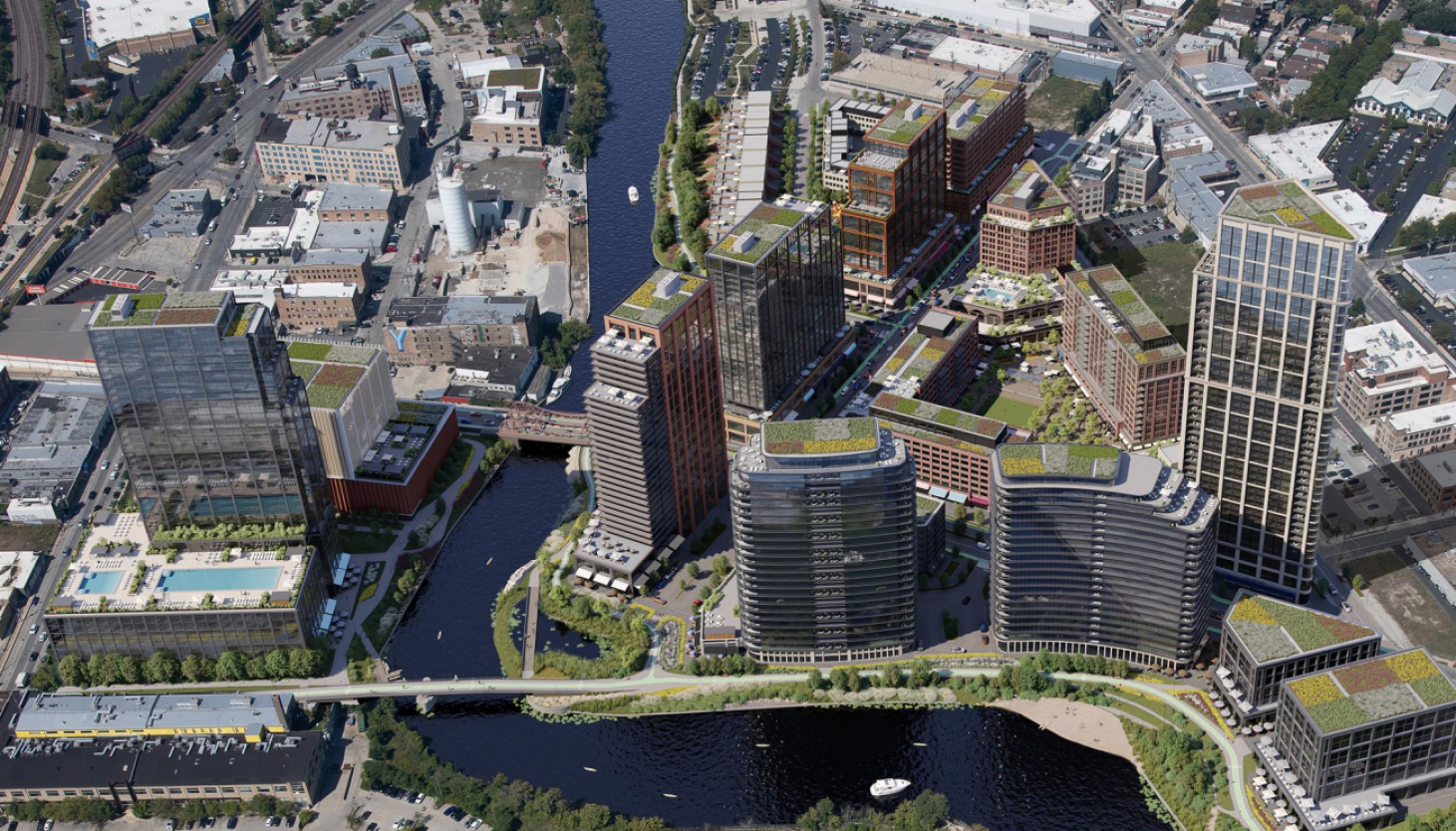
Big financing steps forward for The 78, Foundry Park projects
-

 Fitness8 minutes ago
More Muscle, Less Fat—Is This High-Tech Workout A New Fitness Answer?
-

 Movie Reviews20 minutes ago
Film Review: “The Odyssey” – MediaMikes
-
World32 minutes ago
Movie Review: In Christopher Nolan’s ‘The Odyssey,’ an ancient epic is reborn
-

 Health1 hour ago
The Epicenter of Drug Deaths in America Is Shifting West
-
 Lifestyle1 hour ago
Homelessness is more common than you think. : It’s Been a Minute
-

 Technology2 hours ago
Lucid’s bankruptcy rumor is a bad sign for the EV future
-

 World2 hours ago
Slain American mother Jamey Carney remembered as ‘ray of sunshine’ at Ireland funeral

