Massachusetts
Who is Michael J. Curll? 5 facts about man who attacked Trump supporter in Massachusetts


Published on: Oct 26, 2025 11:50 am IST
Michael J. Curll, 48, is facing criminal charges after allegedly attacking a man in an inflatable costume of Donald Trump in Swampscott, Massachusetts.
A man is facing criminal charges after allegedly attacking an individual in an inflatable costume of President Donald Trump in Swampscott, Massachusetts. The suspect, 48-year-old Michael J. Curll, has been accused of attacking Jonathan Silveira, a Trump supporter from Peabody, who was heading to a ‘No Kings’ protest. He was attacked near King’s Beach, and said he did not make it to the rally.
The protest, which started on Humphrey Street and was organized by North Shore Indivisible, saw a crowd of about 1,200 people.
Read More | Who is Robert Flores? Man, 66, arrested after threatening to ‘run over’ No Kings protesters in downtown San Antonio
“He came up behind me and kicked me,” Silveira told WHDH. “I lost my balance and I felt the pressure, but it was more like a push. That’s when I hit the pole. Then he kind of grabbed the railing, so I couldn’t get away or get off him. He was trying to get me to go to the ground, and I wasn’t going to the ground.”
Read More | Why are ‘No Kings’ protesters turning up in frog, chicken, rooster, T. rex costumes? Explaining the trend
Five facts to know about Michael J. Curll
- Curll violently attacked Silveira, “yelling” and “screaming,” the victim alleged. “He just didn’t want me there. He kept yelling and screaming,” Silveira said, according to NBC10 Boston. “I kept telling him to get away from me, and he kept telling people around him that he wanted to punch me in the face.”
- Silveira’s girlfriend captured the incident on video. Curll’s arrest was also captured on camera. “I don’t understand why he got that crazy. I was just trying to get a few laughs,” Silveira said. “I thought it would be a couple of back-and-forths, you know, nothing like that.”
- Curll has pleaded not guilty to the crime. He pleaded not guilty to assault and battery with a dangerous weapon.
- Curll’s attorney said that it was Silveira who started the altercation, and that his client was hit in the face with a metal pole. Silveira has denied the accounts, telling NBC10 Boston, “Absolutely not. Not even close.”
- Curll is set to be back in court in December. He is now facing various unrelated charges in Massachusetts and Connecticut, including assault and battery, drug possession and criminal trespassing.




Following similar legislature in his native Vermont, singer-songwriter supports “The Great Divide Act” combating speculative tickets, resale fees, and more
Noah Kahan has thrown his support behind a new Massachusetts bill aimed at capping ticket resale prices.
Like other states in recent weeks — including Washington, D.C. just a day earlier — Massachusetts Governor Maura Healey has announced “An Act Relative to Closing the Great Divide between Ticket Prices and Affordability” — or “The Great Divide Act,” named in part after Kahan’s latest LP — a bill that would limit ticket resales prices, bar speculative tiket sales, and cut down on some ticket fees.
Kahan, who previously backed a similar bill in his native Vermont and is fresh off four sold-out shows at Boston’s Fenway Stadium, appeared via video at Healey’s press conference Thursday.
“I heard about what you’re announcing today and I just wanted to let you know how excited I am about it,” Kahan said. “The artist community and fans will greatly benefit from limiting ticket scalping and the sales of speculative tickets. I love my fans and want to protect them however I can. Artists alone could not tackle the market manipulation of secondary resellers. So, thank you so much for making this a priority in Massachusetts.”
Under the proposed Great Divide Act, concert tickets on the secondary market would be capped at 110 percent of their original face value, and secondary ticket sites would similarly only be allowed to take a 10 percent cut of resold tickets.
In the aftermath of the World Cup games at Gillette Stadium, where “speculative tickets” — or sellers offering tickets they don’t actually have — resulted in hundreds of people getting turned away from the soccer games, the Great Divide Act will also aim at prohibiting the practice. “Far too many Massachusetts residents have experienced the pain of being excited to buy tickets to see their favorite singer or sports team, only to realize that resale prices and fees have driven up the cost to outrageous levels,” Healey said Thursday.

SPRINGFIELD, Mass. (WWLP) – Springfield bankruptcy attorney Andrea M. O’Connor has been named to the 2026 Massachusetts Super Lawyers list.
According to the firm, Andrea M. O’Connor of Shatz, Schwartz and Fentin, P.C., has been named to the 2026 Massachusetts Super Lawyers list in the Bankruptcy: Consumer practice area, marking the fourth consecutive year she has received the recognition.
O’Connor’s practice draws on experience representing both debtors and creditors, serving as a Chapter 7 trustee and clerking for the U.S. Bankruptcy Court for the District of Massachusetts. The firm said she develops legal strategies tailored to her clients’ individual needs and goals.
O’Connor graduated magna cum laude from Western New England University School of Law, where she served as editor-in-chief of the Western New England Law Review. She is admitted to practice law in Massachusetts and Connecticut, as well as before the U.S. District Courts for Massachusetts and Connecticut, the U.S. Court of Appeals for the First Circuit, and the U.S. Court of Appeals for the Second Circuit.
Beyond her legal practice, O’Connor serves as chair of the Bankruptcy Section of the Hampden County Bar Association and is co-chair of both the Western Massachusetts Bankruptcy Conference and the MCLE Bankruptcy Conference. She also serves on committees for the U.S. Bankruptcy Court for the District of Massachusetts.
Before earning placement on the Massachusetts Super Lawyers list from 2023 through 2026, O’Connor was recognized as a Super Lawyers Rising Star each year from 2019 through 2022.
Super Lawyers is a peer-reviewed attorney rating service that recognizes lawyers in more than 70 practice areas. The organization says its selection process includes attorney nominations, independent research and peer evaluations.
Local News Headlines
WWLP-22News, an NBC affiliate, began broadcasting in March 1953 to provide local news, network, syndicated, and local programming to western Massachusetts. Download the 22News Plus app on your TV to watch live-streaming newscasts and video on demand.

Massachusetts’ recent smoky skies and hazy sunsets may look unusual, but experts say what we’re seeing is part of a growing pattern fueled by bigger and longer wildfire seasons.
The strange haze has lingered for two days — so far — thanks to a weather pattern bringing smoke straight from parts of Ontario, Canada, straight to New England.
NBC10 Boston NBC10 Boston
“A lot of the fires farther up north are burning longer and more intensely than they have previously, so that’s been a big change and may be why we’re seeing more of the smoke,” said James Urban, an associate professor in the Fire Protection Engineering Department at Massachusetts’ Worcester Polytechnic Institute.
It looks like Boston’s getting a break from the wildfire smoke that’s making the sky hazy enough that you can actually look at the sun, if briefly. But that break may not last. Plus, we’re looking at rain moving in this weekend.
He explained the nuances about how climate chance may play a role in what we’re seeing this summer.
“In general, drier conditions make things more flammable, but also, if you have a period before that of wet winter but not a lot of freezing, you may get a lot of plant growth, and then when it dries out in a drought, you get a lot of fuel that may ignite,” Urban said.
Why does smoke travel cross-country and change the color of the sky?
We went to a museum to find out more about what’s causing the unearthly images in the sky.
“With smoke, it’s driven into the air with the heat and then gets caught in the upper air current, so it travels over the mountains and comes straight across the country,” said Noreen Johnson Smith, president and CEO at Worcester’s EcoTarium.
Mass. or Mars? Photos of the eerie, rusty skies caused by Canadian wildfires
The way the sun looks has to do with how smoke scatters light.
“We’re seeing these bright orange and red suns because the blues aren’t able to reach our eyes at the moment,” said Murphy Florman, an educator at the museum.
How smoke affects air quality
An air quality alert for Massachusetts has been extended through all day on Thursday, with the Department of Environmental Protection saying in a statement, “elevated levels of fine particles [mean that] air quality statewide is expected to be unhealthy for sensitive groups.”
Massachusetts is under an air quality alert due to the Canadian wildfire smoke that’s made the skies dark and hazy and turned the sun into an “orange orb.” Here are the factors making the air hard to breathe for some and what medial professionals say about it.
Tufts Medical Center pulmonologist Dr. Sucharita Kher said that it’s important to be aware of the air quality where you live, especially if you’re going to be spending time outside. The conditions Massachusetts has been experiencing are especially harmful to those with heart or lung disease.
“The symptoms of that can be tightness in the chest, they can experience more wheezing, they can have more swelling in their airways leading them to cough more, produce more phlegm,” she said. “All of that ultimately leading to worsening symptoms of that underlying disease.”
Needham pharmacist Kevin Ryan said certain medications can help with symptoms, such as histamines like Claritin or Zyrtec, as is wearing an N-95 mask.
“If you feel like you’re doing fine outside, that’s great. If you if you don’t feel like you can breathe effectively, then limit your exposure,” he said.
Canadian wildfire, smoke map
-
 Lifestyle2 minutes ago
L.A. Affairs: After losing our spouses, we found love again. But were we cheating on our children?
-
 Politics8 minutes ago
A new piece of Democrats’ midterm strategy: Being ‘practical’
-
 Science14 minutes ago
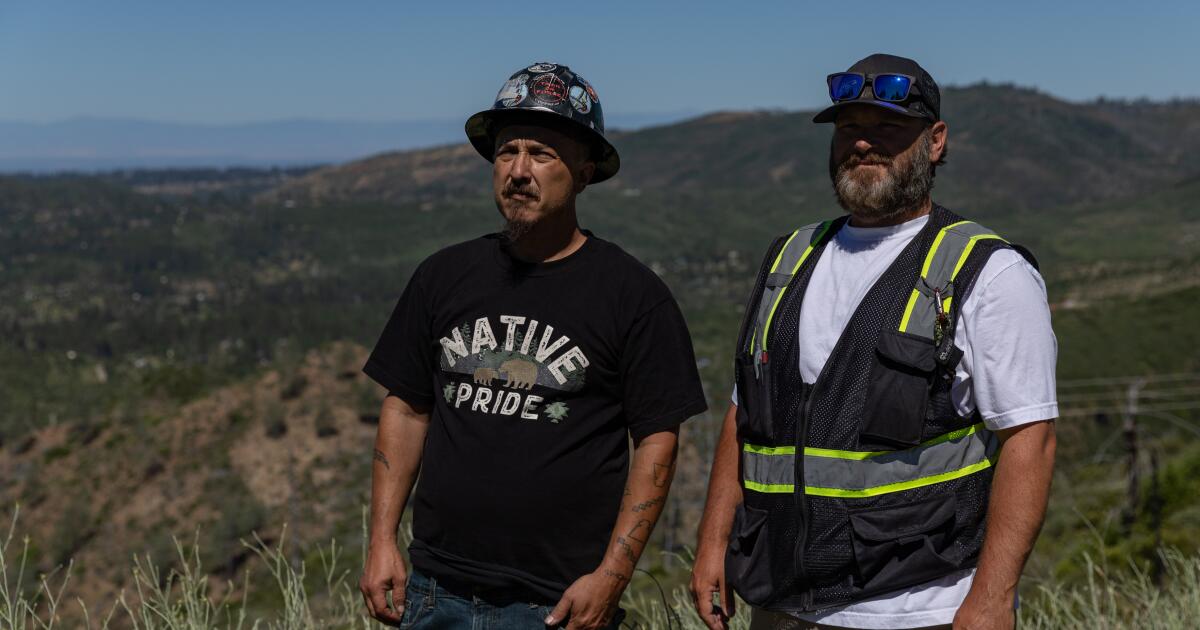
After wildfires destroyed 95% of this California tribe’s forests, members uncovered 1,200 ancestral sites
-
 Sports20 minutes ago
World Cup championship and third-place game: Start times and how to watch
-

 World32 minutes ago
Rule of Law in Hungary shows ‘radical change’ under Magyar, EU says
-

 News1 hour ago
Where Wildfire Smoke Is The Worst Right Now—And What To Do About It
-

 Los Angeles, Ca3 hours ago
LADWP begins long-term repairs after West Hollywood water main rupture
-

 Detroit, MI3 hours ago
Livestream: Mayor Sheffield, Detroit health chief to address wildfire smoke threat

