Massachusetts
Could we quit complaining and be Massachusetts boosters … just this once?


Can I hear just a few positive things in 2026? Amanda Gutierres of the new women’s soccer team, Boston Legacy FC, at Gillette Stadium. Boston Legacy
For one year — just one year! — What if we all tried to be Mass. boosters, rather than Mass. criticizers, Mass. fault-finders or plain old Massholes?
What if we made that a New Year’s Resolution that we actually stick with until December?
If you’re a resident of Massachusetts, you can undoubtedly add to this list of problems that our state has: high taxes, pricey housing, unreliable public transit, bad traffic, cold weather, elected officials emitting hot air and residents voting with their feet by moving.
But if there was ever a year to look at the Dunkin’ cup as half full, I’d argue that 2026 is it.
A partial list of good stuff we could be bragging about would include:
• An NFL team that won its first playoff game with a quarterback who could be the season’s MVP, and an NBA team that surprisingly has a solid chance of making it to the playoffs.
• Boston is continuing to get better at enjoying winter, with Frostival and Winteractive. A Ferris wheel on the Greenway? A “street snowboarding” contest on City Hall Plaza? I’ll be there!
• The inaugural season of Boston Legacy FC, our new National Women’s Soccer League team, opens in March.
• Seven FIFA World Cup games will be held in Foxborough in June.
• Marking the 250th anniversary of the Declaration of Independence on the Fourth of July and other Revolutionary happenings throughout the year.
• Later in July, a fleet of tall ships from around the world arrives in Boston Harbor for Sail Boston.
• Worcester and Auburn are getting ready to celebrate the 100th anniversary of the birth of modern rocketry, with Robert Goddard’s early tests in 1926. In other nerdy news, the MIT Museum has plans to mark the 50th birthday of the biotech industry in Cambridge. Just two of many major industries born in Massachusetts.
Most residents of other states would view two or three of those things as opportunities to boast or back-pat.
They’d invite friends and relatives from all over to come for a visit, and see it as an opportunity to show off their state’s positives — or at least to appreciate the work it took to bring these things together in a single year.
Maybe we should, too.
Traffic will be bad at times. Hotel and Airbnb prices will skyrocket.
And you could live up to the stereotype by bemoaning that. Or you could see 2026 as a pretty great year to live in Massachusetts.



Massachusetts
‘That comes with a price tag’: How snow removal is busting town budgets – The Boston Globe

“The way we experience climate change is through extremes,” said Shel Winkley, a meteorologist at Climate Central. “All of that comes with a price tag.”
Across the region, officials are trying to figure out how to pay that price. The Massachusetts Department of Transportation has already spent more than $185 million on snow and ice removal this winter — about $20 million beyond what was spent during the “Snowmageddon” winter of 2015. State officials are weighing whether to seek aid from the Trump administration.
Providence has had to cap spending for the rest of the fiscal year after record-setting snowfall. In Boston, where officials have trimmed the snow removal budget, the city was on track to spend nearly double what it had set aside for winter cleanup — even before the February blizzard hit. Cambridge has spent $6 million, more than 10 times the placeholder amount it budgeted for winter cleanup.
“This is an additional pressure point on an already pressurized budget situation,” said Adam Chapdelaine, executive director of the Massachusetts Municipal Association. “In some communities, it’s likely going to force some hard decisions.”
In Edgartown, officials want to tap into budget reserves to make up the cost, a step that requires voter approval. If voters don’t support that move, it could mean raising taxes, said James Hagerty, the town administrator.
Local officials said federal funding would help, but they’re not counting on it. Some worried that partisan disparities in which states have received disaster funding under the Trump administration would put Massachusetts at a disadvantage.
“We are hopeful that the state and federal government might step in to assist, but it’s just waiting at this point,” said Gregory Berman, Chatham’s director of natural resources.
The skyrocketing costs are yet another reminder that winters here don’t feel the same. New England is largely trending toward shorter and milder winters. Massachusetts has lost about 30 days of snow cover each year over the last few decades.
However, experts say the relationship between climate change and total annual snowfall is more complicated. Think of it as two competing forces. On one hand, global warming increases the amount of moisture in the atmosphere; when conditions are cold enough, this added moisture can fuel heavier snowstorms. On the other hand, rising temperatures mean that winter precipitation falls more frequently as rain than snow.
The data reflect this mixed picture. An analysis of historic snowfall totals by Climate Central, a nonprofit that conducts climate change research, found that annual snowfall has actually increased over the past 50 years in Boston and parts of coastal Massachusetts, while inland areas have seen declines.
Looking ahead, researchers project that the most intense storms may become even heavier, producing more snow than blizzards past. This shift may already be underway. In the past 40 years, Boston has recorded 10 snowstorms that produced at least 20 inches of snow. In the eight decades prior to that, there were just three.
These massive storms can trigger extra expenses, as municipalities have to pay for equipment rentals, contractors, and overtime for cleanup around the clock.
Julie Wormser, chief climate officer in Cambridge, said that total snowfall data surprised her.
“Based on how quickly the ocean is heating up off New England, my bet is that the next 50 years of data will reverse that snowfall trend,” she said.
Cities and towns in Western Massachusetts, Cape Cod, and the North Shore were hit especially hard. This winter, they received more than two feet of snow above their average.

On Cape Cod, Sandwich officials overspent their snow budget by $250,000, driven largely by the February blizzard. Town Manager George “Bud” Dunham said a day of minor plowing and treating roads can cost about $10,000, but major storms push that figure past $50,000. The town is still cleaning up downed brush and tree limbs.
If not for the storm, Dunham said, the town might have invested in new snow equipment or set aside funds for retired employees’ health insurance costs.
Mattapoisett, a coastal community on Buzzards Bay, also blew through its budget, spending nearly triple what officials had set aside. Still, Michael Lorenco, the administrator, said the town should be able to absorb the hit within its $37 million budget without raising taxes.
“I’m not a scientist, but towns near the coast seem to be getting more snow than they normally would in the past,” Lorenco said.
That doesn’t change the city’s responsibilities.
“Climate change or not,” he added, “we have to clean up the roads.”
Ken Mahan of the Globe staff contributed reporting.
Kate Selig can be reached at kate.selig@globe.com. Follow her on X @kate_selig.
Massachusetts
Massachusetts bakery that made signature pizza trays for more than 100 years closes for good

A Framingham institution that has been in business for more than a century closed its doors for the final time on Sunday.
Framingham Baking Company, known for its signature pizza trays, has officially shut down permanently. Crowds have been lining up around the block in the shop’s final days, with Sunday serving as their last day in business.
“That’s a wrap! Special thanks to all of our loyal customers! It was a great run. We love you!” Framingham Baking Company posted on Facebook Sunday after selling its final slices of pizza.
Founded in 1917, the bakery on Waverly Street became known for the square pizza slices.
The third-generation owners say they couldn’t find anyone to take over the business.
“We’re closing today after 109 years in business,” owner Joan Thomas said. “My grandparents, my parents, and my siblings – three generations have run this bakery.”
Customers explained why they were willing to wait in long lines to get their hands on some treats one more time.
“So many years of eating this pizza, and the bread, and the cookies. You had to be there for the end,” one woman said.
“My grandfather was a delivery guy for a long time. My first job was riding around with him in the van delivering to all the local restaurants. It’s tough to see it close, but it’s had an amazing run. Here for my last delivery. Bring some pizza home to my family,” another man added.
One customer waiting in line said it wasn’t just pizza the Framingham Baking Company provided, it was memories.
“Brought it to the cousins’ every birthday party, every gathering. Any time there was family there was pizza,” he said.


Here are five ways how you can save some money when food shopping.
Here are five ways how you can save some money when food shopping.
Your household can earn more than $200,000 a year and still be considered part of the “middle class” in Massachusetts, according to a recent study by SmartAsset.
Massachusetts ranks as the top state with the highest income range for households to be considered middle class, based on SmartAsset’s analysis using 2024 income data from the U.S. Census Bureau. The Pew Research Center defines the middle class as households earning roughly two-thirds to twice the national median household income.
According to a 2022 Gallup survey, about half of U.S. adults consider themselves middle class, with 38% identifying as “middle class” and 14% as “upper-middle class.” Higher-income Americans and college graduates were most likely to identify with the “middle class” or “upper-middle class,” while lower-income Americans and those without a college education generally identified as “working class” or “lower class.”
Here’s how much money your household would need to bring in annually to be considered middle class in Massachusetts.
How much money would you need to make to be considered middle class in MA?
In Massachusetts, households would need to earn between $69,900 and $209,656 annually to be considered middle class, according to SmartAsset. The Bay State has the highest income range in the country for middle-class households. The state’s median household income is $104,828.
In Boston, the range is slightly lower. Households need to earn between $65,194 and $195,582 annually to qualify as middle class, giving the city the 19th-highest income range among the 100 largest U.S. cities. Boston’s median household income is $97,791.
How do other New England states compare?
Massachusetts has the highest income range for middle-class households in New England. Here’s what households would have to earn in neighboring states:
- Massachusetts (#1 nationally) – $69,885 to $209,656 annually; median household income of $104,828
- New Hampshire (#6 nationally) – $66,521 to $199,564 annually; median household income of $99,782
- Connecticut (#10 nationally) – $64,033 to $192,098 annually; median household income of $96,049
- Rhode Island (#17 nationally) – $55,669 to $167,008 annually; median household income of $83,504
- Vermont (#19 nationally) – $55,153 to $165,460 annually; median household income of $82,730
- Maine (#30 nationally) – $50,961 to $152,884 annually; median household income of $76,442
Which state has the lowest middle-class income range?
Mississippi ranks last for the income range needed to be considered middle class, according to SmartAsset. Households there would need to earn between $39,418 and $118,254 annually. The state’s median household income is $59,127.

USC baseball takes two of three from Maryland to win another series

Hail, damaging winds possible late Monday, all day Tuesday for Southeast Michigan

‘That comes with a price tag’: How snow removal is busting town budgets – The Boston Globe

April Snowflakes Expected Across Central Minnesota And Western Wisconsin This Week

When will you get your April 2026 SSI check in MS? See payment schedule

Florida High School Football Rankings: Top 25 teams – Oct. 21

How old is Bo Nix? What to know about Oregon quarterback ahead of 2024 NFL Draft

Cleary's 21 help Le Moyne down Central Connecticut State 69-64 in OT

99th annual Pony Swim held in Virginia

Indiana Members Credit Union announced as new anchor tenant at Bottleworks District

Video: Iran to Allow More Oil Ships Through Strait of Hormuz, Trump Says

Dem senator warns deportation could let Virginia woman’s illegal immigrant killer ‘escape accountability’

Newsletter: G7 ministers to hold talks on war’s economic fallout
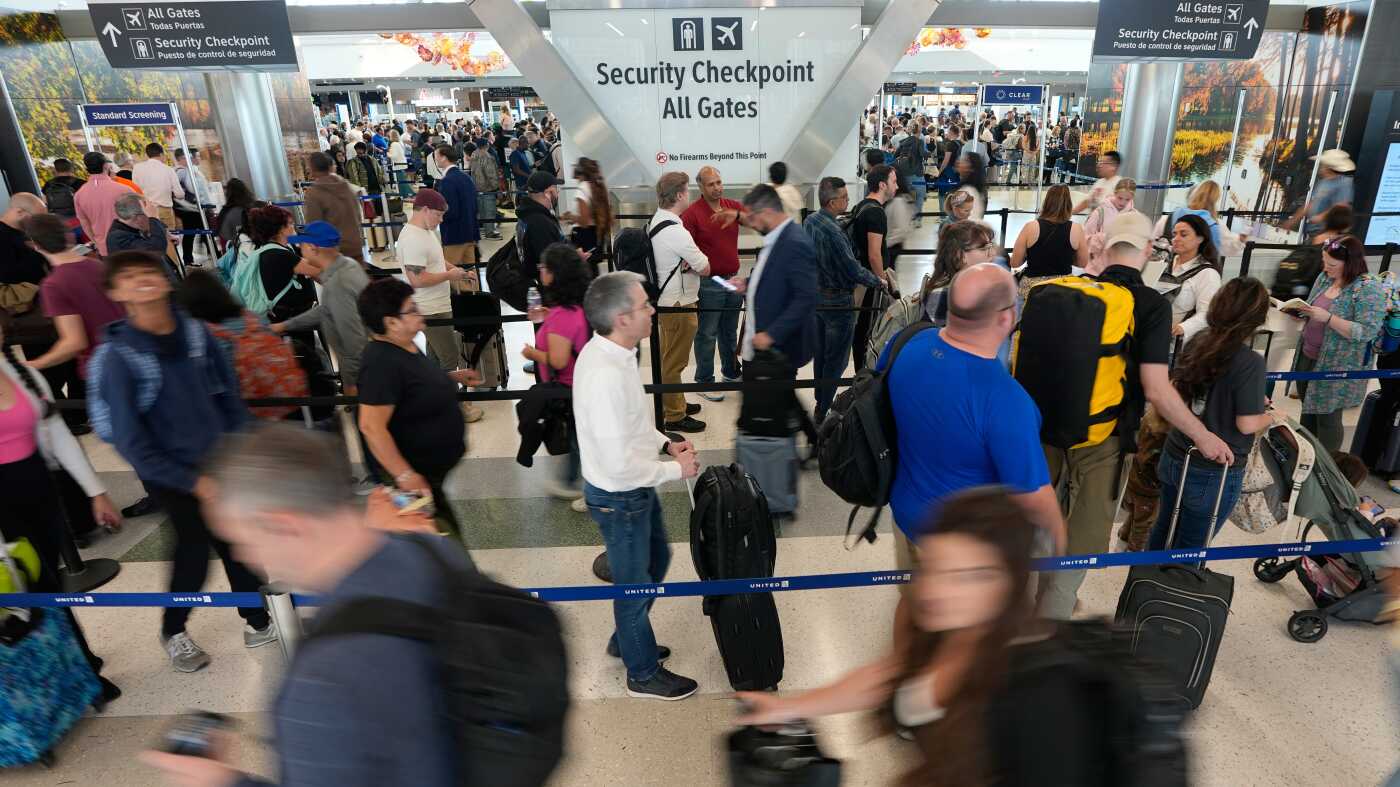
ICE officers could remain at airports after TSA workers are paid

Scathing report claims nation’s oldest labor union ‘betrayed’ MAGA members through ‘shocking’ spending
-

 Sports1 week ago
IOC addresses execution of 19-year-old Iranian wrestler Saleh Mohammadi
-

 Miami, FL4 days ago
Jannik Sinner’s Girlfriend Laila Hasanovic Stuns in Ab-Revealing Post Amid Miami Open
-

 New Mexico1 week ago
Clovis shooting leaves one dead, four injured
-

 Politics1 week ago
Schumer gambit fails as DHS shutdown hits 36 days and airport lines grow
-

 Tennessee7 days ago
Tennessee Police Investigating Alleged Assault Involving ‘Reacher’ Star Alan Ritchson
-

 Minneapolis, MN4 days ago
Boy who shielded classmate during school shooting receives Medal of Honor
-

 Science1 week ago
Record Heat Meets a Major Snow Drought Across the West
-

 Technology1 week ago
YouTube job scam text: How to spot it fast