Northeast
Maryland governor to discuss rebuilding collapsed Baltimore bridge with Congress

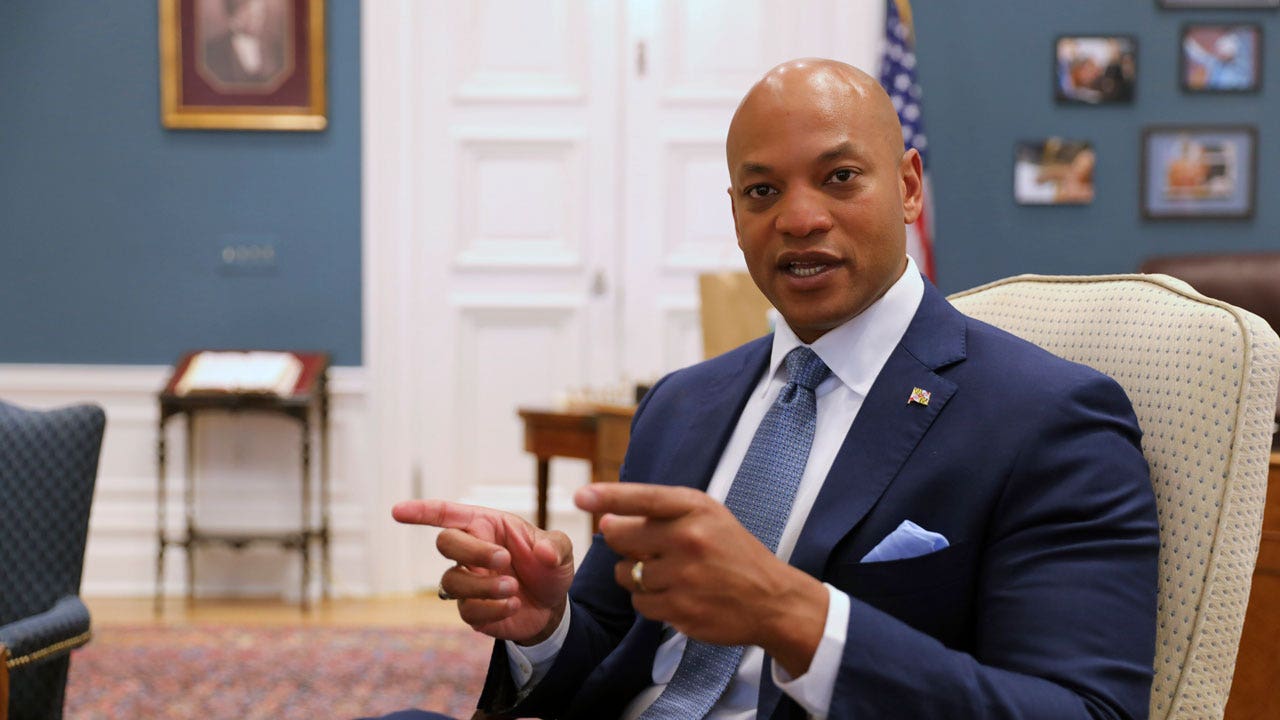
Maryland Gov. Wes Moore said Monday he plans to meet with members of Congress to discuss support for rebuilding the collapsed Francis Scott Key Bridge, which has blocked the main shipping channel at Baltimore’s port for nearly two weeks.
“I’m going to be spending part of this week with our delegation going down and meeting with leaders and ranking members in the Congress and letting them know that this issue is not partisan. This is a patriotic responsibility to be able to support one of this country’s great economic engines,” Moore said in an interview with The Associated Press. “This is an opportunity to support a port that is directly responsible for the hiring of tens of thousands of people.”
As Maryland lawmakers reached the end of their legislative session Monday, a measure authorizing use of the state’s rainy day fund to help port employees was approved and sent to Moore’s desk. The governor planned to sign the emergency legislation Tuesday, putting it into effect right away.
MARYLAND’S RISING STAR DEM GOVERNOR FACES FIRST NATIONAL TEST AFTER BALTIMORE BRIDGE COLLAPSE
The bridge collapsed March 26 after being struck by the cargo ship Dali, which lost power shortly after leaving Baltimore, bound for Sri Lanka. The ship issued a mayday alert with just enough time for police to stop traffic, but not enough to save a roadwork crew filling potholes on the bridge.
Authorities believe six workers — immigrants from Mexico, Guatemala, Honduras and El Salvador — plunged to their deaths in the Patapsco River. Two others survived. The bodies of three workers have been recovered, but the search for the other victims continues.
Moore said the state remains focused on supporting the families of the six workers and bringing them closure.
Maryland Gov. Wes Moore speaks about ongoing work at the Francis Scott Key Bridge collapse site, as well as the last day of the state’s legislative session, during an interview in his office on April 8, 2024, in Annapolis, Maryland. (AP Photo/Brian Witte)
“We are still very much focused on bringing closure and comfort to these families, and the operations to be able to bring that closure to these families,” Moore said. “It has not stopped. It continues to be a 24/7 operation.”
Temporary, alternate channels have been cleared, and the U.S. Army Corps of Engineers said last week that it expects to open a limited-access channel for barge container ships and some vessels moving cars and farm equipment by the end of April. Officials are aiming to restore normal capacity to Baltimore’s port by the end of May.
Moore was upbeat about progress in reopening channels.
He said that if he had been told the morning of the collapse that there would be two channels open in two weeks, “I would have said that sounds really ambitious, considering what we saw, but that’s where we are.”
The governor also spoke of progress in removing debris, saying that crews were able to pull 350 tons of steel from the Patapsco River on Sunday.
More than 50 salvage divers and 12 cranes are on site to help cut out sections of the bridge and remove them from the key waterway. Crews began removing containers from the deck over the weekend, and they’re making progress toward removing sections of the bridge that lie across the ship’s bow so it can eventually move, according to the Key Bridge Response Unified Command.
Read the full article from Here

Continue Reading
Powerball, Mega Millions jackpots: What to know in case you win
Here’s what to know in case you win the Powerball or Mega Millions jackpot.
Just the FAQs, USA TODAY
The Vermont Lottery offers several draw games for those willing to make a bet to win big.
Those who want to play can enter the MegaBucks and Lucky for Life games as well as the national Powerball and Mega Millions games. Vermont also partners with New Hampshire and Maine for the Tri-State Lottery, which includes the Mega Bucks, Gimme 5 as well as the Pick 3 and Pick 4.
Drawings are held at regular days and times, check the end of this story to see the schedule.
Here’s a look at April 10, 2026, results for each game:
Winning Vermont Mega Millions numbers from April 10 drawing
03-18-36-42-49, Mega Ball: 06
Check Vermont Mega Millions payouts and previous drawings here.
Winning Gimme 5 numbers from April 10 drawing
05-13-27-28-36
Check Gimme 5 payouts and previous drawings here.
Winning Pick 3 numbers from April 10 drawing
Day: 9-5-2
Evening: 6-6-5
Check Pick 3 payouts and previous drawings here.
Winning Pick 4 numbers from April 10 drawing
Day: 8-9-4-3
Evening: 5-4-0-3
Check Pick 4 payouts and previous drawings here.
Winning Millionaire for Life numbers from April 10 drawing
13-20-26-32-54, Bonus: 01
Check Millionaire for Life payouts and previous drawings here.
Feeling lucky? Explore the latest lottery news & results
Are you a winner? Here’s how to claim your lottery prize
For Vermont Lottery prizes up to $499, winners can claim their prize at any authorized Vermont Lottery retailer or at the Vermont Lottery Headquarters by presenting the signed winning ticket for validation. Prizes between $500 and $5,000 can be claimed at any M&T Bank location in Vermont during the Vermont Lottery Office’s business hours, which are 8a.m.-4p.m. Monday through Friday, except state holidays.
For prizes over $5,000, claims must be made in person at the Vermont Lottery headquarters. In addition to signing your ticket, you will need to bring a government-issued photo ID, and a completed claim form.
All prize claims must be submitted within one year of the drawing date. For more information on prize claims or to download a Vermont Lottery Claim Form, visit the Vermont Lottery’s FAQ page or contact their customer service line at (802) 479-5686.
Vermont Lottery Headquarters
1311 US Route 302, Suite 100
Barre, VT
05641
When are the Vermont Lottery drawings held?
- Powerball: 10:59 p.m. Monday, Wednesday, and Saturday.
- Mega Millions: 11 p.m. Tuesday and Friday.
- Gimme 5: 6:55 p.m. Monday through Friday.
- Lucky for Life: 10:38 p.m. daily.
- Pick 3 Day: 1:10 p.m. daily.
- Pick 4 Day: 1:10 p.m. daily.
- Pick 3 Evening: 6:55 p.m. daily.
- Pick 4 Evening: 6:55 p.m. daily.
- Megabucks: 7:59 p.m. Monday, Wednesday and Saturday.
- Millionaire for Life: 11:15 p.m. daily
What is Vermont Lottery Second Chance?
Vermont’s 2nd Chance lottery lets players enter eligible non-winning instant scratch tickets into a drawing to win cash and/or other prizes. Players must register through the state’s official Lottery website or app. The drawings are held quarterly or are part of an additional promotion, and are done at Pollard Banknote Limited in Winnipeg, MB, Canada.
This results page was generated automatically using information from TinBu and a template written and reviewed by a Vermont editor. You can send feedback using this form.

One might imagine that jokes about slavery would be off the table in 2026. “Not at all,” Mr. Cross said. The bit, in which he imagines that he would have been a generous, benign slave owner, grew out of an exchange he had during preparation for an earlier tour. At the time he needed a setup for it, he said. “It felt like it was like, ‘Oh my, I’m trying to be shocking.’” Then he thought of tying it to a hike on the Inca Trail, built by enslaved workers. With that context, he said, it worked.
“I’ve done plenty of stuff that is, for lack of a better word, button-pushing,” he said.
Is that fun for him?
“Oh, yeah,” he said. “I wouldn’t do it if it wasn’t. It makes the set that night memorable and interesting and potentially dangerous. I mean, it’s live. That’s part of the fun of doing a live show.”


Utah6 minutes ago
Jazz lose by winning in the ‘Tanking Super Bowl’ — but optimism reigns as team imagines possibilities for next season
Vermont12 minutes ago
VT Lottery Mega Millions, Gimme 5 results for April 10, 2026

Virginia18 minutes ago
‘Don’t Fairfax Me’: How Virginia’s largest county became center of antiredistricting campaign – WTOP News

Wisconsin30 minutes ago
Report: Wisconsin transfer John Blackwell down to six schools, not two
West Virginia36 minutes ago
Trump promised to cut electric costs in half. In energy-rich West Virginia, bills now top mortgages

Florida1 year ago
Florida High School Football Rankings: Top 25 teams – Oct. 21

Oregon2 years ago
How old is Bo Nix? What to know about Oregon quarterback ahead of 2024 NFL Draft

Connecticut2 years ago
Cleary's 21 help Le Moyne down Central Connecticut State 69-64 in OT

Virginia2 years ago
99th annual Pony Swim held in Virginia

Indiana2 years ago
Indiana Members Credit Union announced as new anchor tenant at Bottleworks District

Politics3 hours ago
Trump adversary running for Senate borrows his filibuster playbook

World4 hours ago
Russian propaganda unit targets Hungary’s elections

News4 hours ago
WATCH: Artemis II astronauts splash down on Earth

Politics15 hours ago
Swalwell’s former female staffer drops bombshell allegations of sexual assault, exposing himself: report

World16 hours ago
NASA’s Artemis II prepares for splashdown on Earth
-

 Atlanta, GA6 days ago
1 teenage girl killed, another injured in shooting at Piedmont Park, police say
-

 Education1 week ago
Video: Toy Testing with a Discerning Bodega Cat
-

 Movie Reviews1 week ago
Vaazha 2 first half review: Hashir anchors a lively, chaos-filled teen tale
-

 Georgia4 days ago
Georgia House Special Runoff Election 2026 Live Results
-

 Pennsylvania5 days ago
Parents charged after toddler injured by wolf at Pennsylvania zoo
-

 Arkansas20 hours ago
Arkansas TV meteorologist Melinda Mayo retires after nearly four decades on air
-
 Milwaukee, WI5 days ago
Potawatomi Casino Hotel evacuated after fire breaks out in rooftop HVAC system
-
 Entertainment1 week ago
Inside Ye’s first comeback show at SoFi Stadium