Maine
Grant program offers Maine caregivers a lifeline


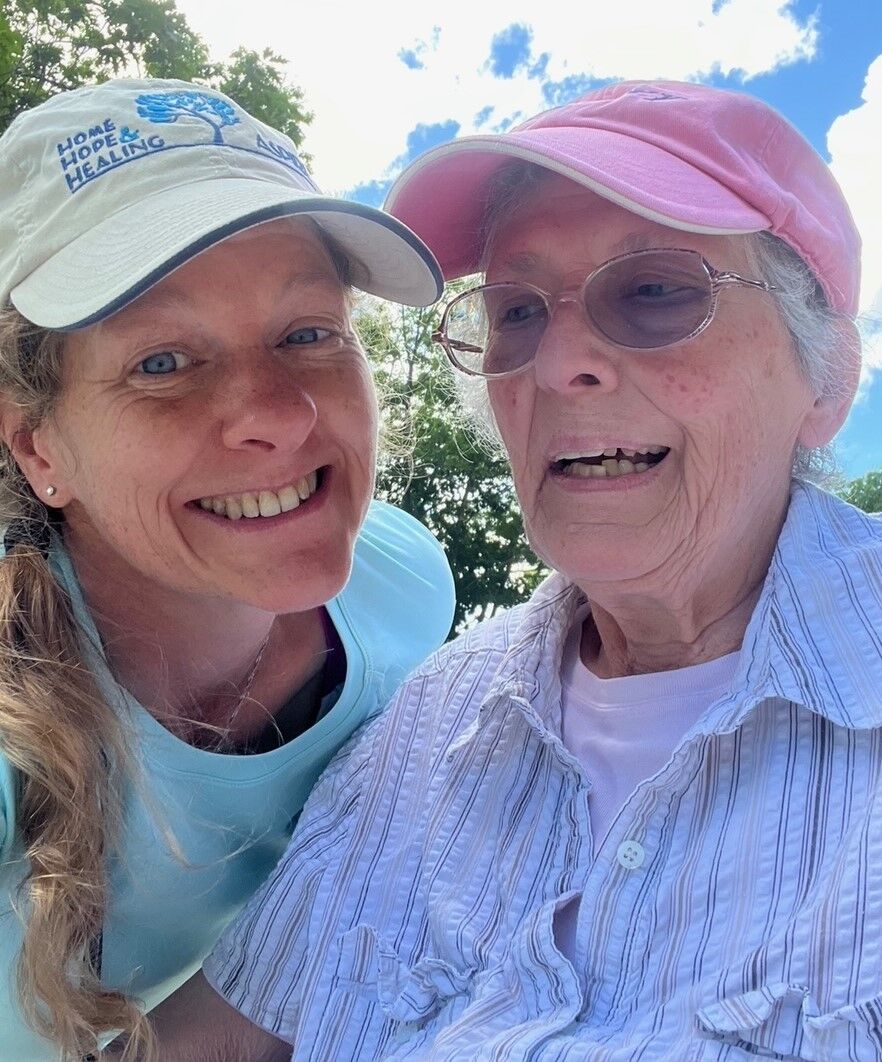
Kristy Basso sets a timer for 25 minutes any time she does a chore outside her West Paris home. As the primary caregiver for her 77-year-old mother, who has dementia, Basso is worried about leaving her mom alone for too long.
Earlier this year, when two of her five children, who are both in the military, were going to be stationed in the same place at the same time, Basso wanted to take a rare vacation. But she had to “jump through hoops” to find a caregiver who could watch her mom, Kathleen Parsons. That was only her second overnight trip since 2020.
With assistance from a pilot grant program called Respite for ME, Basso can now pay a caregiver to spend three hours with her mom every other week.
Although participants in Respite for ME say the program provides a welcome breather, it’s set to end on Sept. 30, and it will be up to the legislature to decide whether to permanently fund it.
“I’m kind of dreading that because I won’t be able to have someone come in anymore and I’ll just be more tired,” Basso said.
Respite for ME was funded through Gov. Janet Mills’ Maine Jobs & Recovery Plan, using $5.1 million in American Rescue Plan funds, and began enrolling caregivers in October 2022. The two-year program offers grants up to $5,171 to those providing care to a loved one at home.
In addition to paying for temporary caregivers, the funds can be used for counseling, training, financial guidance and assistive technology.
At least 23 nursing homes in Maine have closed over the past decade, and concerns about the quality of care at assisted-living facilities have grown.
As the state’s population — the oldest in the nation — continues to age, the responsibility to care for older adults could increasingly fall on family caregivers.
The Alzheimer’s Association estimates that 51,000 caregivers in the state provided 87 million hours of unpaid care last year, valued at $1.9 billion.
Drew Wyman, executive director of the Maine chapter of the Alzheimer’s Association, said caring for loved ones with dementia comes with an extra emotional toll.
“You don’t know what you’re going to get when you’re dealing with someone with cognitive decline,” he said. “And the bulk of this caregiving in Maine falls on family members.”
Taking care of yourself
Dr. Susan Wehry, who directs AgingME, a geriatrics workforce enhancement program at the University of New England, said data has shown that respite care is “vital.” She applauded Maine for giving participants a lot of latitude in how the respite dollars can be spent, noting that limiting grants to medical needs isn’t as effective.
“One of the self-defeating beliefs is ‘nobody can take as good of care of my husband as I can,’ ” Wehry said. “While that may or may not be true, it is also true that if you don’t take care of yourself, you won’t be able to take care of him for long, either.”
A state-funded respite program for low-income Mainers who care for someone with Alzheimer’s or dementia has been in effect for decades.
Respite for ME was intended to expand the program to include people caring for individuals over 60; those caring for people of any age with dementia; and those caring for adults with disabilities.
Relatives over age 55 who provide care to someone else’s children are also eligible. There is no income criteria, but the caregiver must not be getting paid for the care and must have suffered economic hardship because of the COVID-19 pandemic.
The grants are administered by the state’s five nonprofit areas on aging, including SeniorsPlus in western Maine.
Betsy Sawyer-Manter, president and CEO of SeniorsPlus, said she hopes to see the program continue, noting that those providing in-home care deserve support.
“This is a huge undertaking and with the continual growth of the older Mainer population as well as grandparents providing kinship care, it is vital for these unsung heroes,” she said.
So far, 1,072 participants have received a total of more than $2.3 million, according to the Department of Health and Human Services. An initial report published after the first year of the program found that three-quarters of the recipients at the time identified as women and 63 percent made less than $35,000 a year.
The labor of caregiving
After her mom was diagnosed with Alzheimer’s disease in 2017, Basso eventually gave up her job as a private-duty nurse to care for her full-time.
Her family doesn’t qualify for any of the state’s income-based waivers, so Basso provides the care without compensation. She said she’s fortunate to have income from her husband’s job: “If I was a single mom, I wouldn’t be able to do this at all.”
A recent survey of Maine caregivers found that more than half reported that caregiving was somewhat or very much a financial strain, and nearly 60 percent took time off work, went in late or left early to provide care.
A progress report on the Respite for ME program’s first year found that the funds improved the mental health of participating family caregivers. Half of them reported lower burden scores. High stress scores decreased 7 percent; high depression scores decreased 9 percent; high financial strain decreased 13 percent; and negative impacts on job performance decreased 16 percent.
In addition to some respite care, Basso has used the grant money to buy her mom a bidet, a handrail for the stairs and a bench for the shower.
Basso, who was a nurse for 20 years and worked in dementia wards of nursing homes, said her mom would qualify for a nursing home, but neither of them wanted that. Her mom also worked as a nurse and had made it clear she didn’t want to end up in a nursing home.
“While working in a nursing home, you’re always doing the best that you can. However, you end up having more patients than you can care for as well as you want to,” Basso said. “As a nurse, you have 30 people on your floor that you’re responsible for, and I know that my mother just wouldn’t thrive in an environment like that.”
She said she’s fortunate to have the skills and knowledge to care for her mom, but said there are times she loses patience and has to walk away for a moment. It’s like caring for a child, Basso said, but in reverse.
“I do it because I love her. She’s always loved me and it’s the best that I can do for her,” Basso said. “But it doesn’t mean that it’s easy.”
As nursing homes close, Basso expects more families will care for loved ones at home, which she worries could lead to more elder abuse and neglect. People who don’t have a background in caregiving may get frustrated more easily and lash out, she said.
Basso said there should be more resources so people understand how to deal with certain behaviors.
A survey by the Alzheimer’s Association found that two-thirds of dementia caregivers reported difficulty finding resources and support, Wyman said.
The organization offers a free 24-7 hotline (800-272-3900) staffed by clinicians and specialists that provides support and information for family caregivers, as well as free training sessions and virtual support groups.
Wehry said there’s been a recent shift in caregiver training to focus more on dementia-related behaviors and how to understand them. Her training program at UNE emphasizes the notion of “respite with, not respite from,” which means creating opportunities for caregivers to take a break with their loved one, such as eating at a “dementia-friendly restaurant.”
If society were more accepting of people with dementia, she believes, that would lessen the demand on family caregivers and reduce the need for respite services.
“There will be those times where you need a break. That’s OK,” Wehry said. “But a healthier society would be where you need fewer of those breaks because you’d be able to have a good life with the people that you’re supporting.”



For many hunters, drawing a Maine moose permit is a once-in-a-lifetime opportunity. After years — and sometimes decades — of applying, the excitement of seeing your name among the winners quickly turns into a new challenge: planning for the hunt.
Whether you’re going on your first moose hunt or preparing for another trip into the Maine woods, there are several important steps permit winners should take as soon as possible.
Hire a registered Maine guide
Many permit winners hire a registered Maine guide to help locate a moose, scout hunting areas and navigate unfamiliar country. You’re paying for their knowledge, experience and time spent scouting before the season ends. Even if you’re a Maine resident, hiring a guide should be a consideration. Most hunters don’t have the time to make multiple scouting trips, and trail cameras aren’t always an option because cell service is limited or nonexistent in many hunting areas.
If you’re considering hiring a guide, don’t wait too long. Available openings often fill up the night of the lottery.
Book lodging for your moose hunt
Sporting camps, cabins, campgrounds and hotels near popular moose hunting areas will also fill up quickly. If your hunt will take place hours from home, securing lodging should definitely be one of your first priorities. Waiting until summer will leave you with fewer options and a longer commute to your hunting area.
Find a meat processor
The state maintains an official list of moose meat processors. The last thing you want to be doing is calling around on a warm September day trying to find a butcher willing to take your moose. Processors can only handle so many animals each season, and much like guides and lodging, many fill their schedules quickly. Calling ahead and having a plan in place can save a lot of stress after a successful hunt.
Line up your hunting partners and helpers
If you’re not hunting with a guide, it’s helpful to know who will be accompanying you. Aside from sharing the experience, friends and family can help scout, call, spot animals, film the hunt and retrieve a harvested moose.
How will you retrieve the moose?
Depending on where the animal is harvested, you may need an ATV, side-by-side, trailer, winch, ropes or other equipment to retrieve it. Keep in mind that ATVs and side-by-sides are prohibited in the North Maine Woods, so you may need to quarter and pack the moose out instead. In that case, game bags, packs, knives and saws will be essential, while items such as a jet sled or game cart may help make the job easier.
Gather your moose hunting gear
In addition to your weapon, consider what you’ll need for the hunt itself. Tarps, coolers, headlamps, GPS units, an inReach, radios, rain gear and extra fuel can all make a hunt more comfortable and efficient.
If you’re planning on getting away from the roads, you may need or want a wall tent. You’ll also need cots or other sleeping gear, a heating source, water, cooking gear and emergency supplies. A spare tire, jumper cables, chainsaw and basic tools can also be invaluable when traveling remote logging roads.
Prepare for meat care and transportation
Make plans to have coolers, ice, transportation and storage well before opening day.
Sight in your rifle or practice with your bow
Don’t be the hunter who misses because their scope was 8 inches off, got bumped during travel or hasn’t been checked since last season. Confirm your rifle is properly sighted in before the hunt, and shoot again after arriving in camp. Stock up on ammo and spend time practicing from realistic field positions.
Don’t overlook shooting sticks, either. Many hunters regret leaving them behind. Shot opportunities are often farther than expected, and a stable rest can make all the difference when anticipation and excitement start to take over.
The same applies if you choose to bring a bow. Reps, shooting from different positions and accurately judging distance can all improve your chance of success.
Scout your zone
If you don’t hire a guide, make sure you’re familiar with your hunting area. Not only will you likely run into other hunters during the week, you may arrive at your preferred spot only to find another truck already parked there. Having backup options is key.
Conditions also vary dramatically from year to year, so what worked for hunters last season may not work this fall.
Depending on the weather, moose may be farther away from roads, requiring hunters to do more walking. Last September’s hunt saw lower success rates in every wildlife management district compared to 2024.
Moose biologist Lee Kantar noted that drought conditions and slightly earlier September dates can lead to changes in moose behavior. Drought and warm weather likely affect moose movement, feeding patterns and activity levels, resulting in moose staying closer to areas with moisture and green vegetation.
“If bulls are not widely searching for cows, if bulls and cows are bedding or ruminating more in dark growth during the day, and if hunters do not adjust and ‘go in after them’, then success will drop,” Kantar said
The same challenges can affect October hunts.
Study maps, use onX, review aerial imagery and learn access roads before the season begins. Many logging roads shown on maps are no longer passable or have been blocked off.
Prepare physically for the hunt
Even hunters who plan to hunt from roads may end up walking several miles in a day.
Just getting into a producing moose area can require long walks down logging roads, skid trails or old cuts. Moose hunting can be physically demanding, with long days outdoors, rough terrain, bugs and heavy lifting. Spending a few months improving your fitness can make the experience more enjoyable.
Create a checklist
Make a list of everything you’ll need including licenses, permits, firearms, ammo, retrieval equipment, coolers, camping gear, food, water and emergency supplies. The more organized you are, the smoother the hunt is likely to be.

VINALHAVEN, Maine (WGME) — Two boaters are charged and a third is dead after he went overboard in Downeast Maine.
Just before 5 Thursday, Maine Marine Patrol says a boater fell overboard in “Hurricane Sound” near Vinalhaven.
He’s identified as 57-year-old Marshal Ames.
Marine Patrol says before they arrived, a good Samaritan from Hurricane Island was able to reach Ames and began CPR, but he was pronounced dead by first responders.
Officers say when the other crewmembers arrived on shore, they got into a fight with them.
The crew members, 39-year-old Geoffrey Barrett and 27-year-old Theodore Lane, are facing charges including assault.
The Maine State Police major crimes unit is now part of the investigation.

Scott A. Harrison, Ed.D., M.B.A., is a senior advisor at The Harrison Group, a consultancy based in Yarmouth.
Maine has long valued local control in education. That tradition reflects an important belief that communities should have a strong voice in shaping their schools. But local control should not prevent us from asking a harder question: Are there core functions that could be delivered more effectively through a single statewide framework?
One of the most important is educator evaluation and professional growth. Maine law already recognizes the importance of this work. Under Title 20-A, Chapter 508 (Educator Effectiveness), districts must implement performance evaluation and professional
growth systems that evaluate educators, assign effectiveness ratings and support
professional growth.
The law further requires superintendents to use those ratings to inform key human capital decisions, including recruitment, hiring, induction, mentoring, professional development, compensation, assignment and dismissal. In short, educator evaluation is not intended to be a compliance exercise. It is intended to be a primary lever for the continual improvement of teaching and learning.
In 2012, LD 1858 sought to advance that vision by giving districts broad flexibility to design their own systems. Districts could choose instructional frameworks, establish measures of effectiveness and determine how evaluators would be trained and calibrated. The goal was to balance local autonomy with professional accountability.
More than a decade later, however, the evidence suggests that flexibility alone has not produced consistent results.
My research involving 130 educators across four Maine school districts found only modest perceptions of performance evaluation and professional growth systems’ effectiveness.
On a four-point scale, average ratings ranged from 2.48 to 2.99. While educators generally agreed that districts provide individualized growth plans and can differentiate levels of instructional effectiveness, they rated several critical implementation areas notably lower, including instructional coaching, evaluator training, feedback quality, evaluator calibration and the use of evaluation data to inform professional learning and personnel decisions.
Although the sample was relatively small, the findings closely mirror what I have observed while working with predominantly rural Maine districts over the past decade.
The qualitative findings were equally revealing. Teachers and administrators described systems that are often cumbersome, inconsistently implemented and difficult to sustain. Educators reported spending significant time developing goals and documenting evidence, while administrators acknowledged that competing priorities frequently reduce evaluation to a compliance exercise rather than a meaningful opportunity for growth.
Participants cited insufficient training, inconsistent expectations, limited coaching support and weak connections between evaluation results and professional learning. Perhaps most significant, though not surprising given the realities of today’s schools, the primary obstacle appears to be not commitment, but capacity — the time, expertise and tools required to implement these complex systems with fidelity.
Designing and sustaining high-quality evaluation systems requires expertise in instructional leadership, observation and feedback, adult learning, professional development, data use and evaluator calibration. While some districts have built this capacity, many — particularly smaller and rural systems — have not. Even where expertise exists, time remains a major barrier.
Effective evaluation depends on regular observation, coaching, feedback and calibration. Yet for principals balancing instructional leadership with the daily demands of running a school, carrying out these responsibilities consistently can be extraordinarily difficult.
As a result, Maine has effectively asked more than 250 districts to independently build and maintain highly complex educator effectiveness systems. The outcome is predictable: uneven quality and implementation, and variable impact on teaching and learning.
This raises an important policy question: Should every district continue to design, train, calibrate and maintain its own evaluation system, or would educators and students be better served by a common statewide framework supported by regional and state expertise?
A statewide approach would not eliminate local control. Districts would continue to make decisions about hiring, staffing, curriculum, budgeting and school improvement priorities. Instead, the state would provide shared infrastructure: a common instructional and evaluation framework, validated tools, evaluator training, calibration supports, professional learning resources and implementation assistance.
The benefits extend beyond evaluation. A common framework would create stronger alignment across Maine’s educator pipeline. Colleges and universities could align coursework, clinical experiences and assessments to the exact same standards used in schools while sharing responsibility for educator success beyond initial placement.
Preparation programs, districts and the state would become partners in a continuous system of educator development, creating mutual accountability for results and a stronger return on Maine’s investment in teacher preparation.
Such alignment matters. As systems thinker Peter Senge observed, people working within the same system tend to produce similar results. If we want more consistent outcomes for students, we must pay closer attention to the systems shaping educator practice.
A statewide approach would not eliminate local control. Districts would continue to make decisions about hiring, staffing, curriculum, budgeting and school improvement priorities.
A common framework would establish a shared language and clearer expectations throughout the career continuum. It would also make continuous improvement easier. Rather than asking hundreds of districts to independently revise complex systems, the state could evaluate implementation, refine practices, share lessons learned and respond to emerging research. Educators have experienced too many short-lived initiatives that consume considerable time and effort before fading away.
A coherent statewide system would provide greater stability and more meaningful long-term improvement. The question is not whether local control matters. It does. The question is whether every district should be expected to independently build and sustain complex systems that require specialized expertise, significant resources and ongoing refinement.
If Maine is serious about improving outcomes for students, it should rethink which functions are best managed locally and which are better supported through statewide infrastructure. Educator effectiveness is one example. There are likely others.
In a previous op-ed here, I argued that Maine should reconsider whether teacher compensation is best negotiated district by district. The same question applies here. When critical human capital systems are essential to student success, a coherent statewide framework may be better positioned to advance equity, efficiency and effectiveness while preserving local decision-making where it matters most.
The goal is not less local control, but a smarter balance between local autonomy and statewide support — one that strengthens schools and improves outcomes for every student, regardless of geography.
-

 Wisconsin2 minutes ago
Showers Return to Southern Wisconsin for Father’s Day
-

 West Virginia5 minutes ago
Blennerhassett Island to commemorate West Virginia Day Saturday – Mountain Media, LLC
-
Wyoming10 minutes ago
How Investors May Respond To Black Hills (BKH) Customer‑Funded Wyoming Data Center Infrastructure Plan
-

 Crypto17 minutes ago
Latam Insights: Inside Argentina’s Tax Relief for Exchanges and El Salvador’s Growing Bitcoin Stack
-

 Finance20 minutes ago
San Diego County finances teetering toward structural deficit, watchdog study finds
-

 Fitness25 minutes ago
At 31, I’m the Strongest I’ve Ever Been—This Female-Focused Training Plan Is to Thank
-

 Movie Reviews35 minutes ago
‘Bob and David Climb Machu Picchu’ Tribeca 2026 Review: A Travelogue of Old Friends, Older Knees, and Same Absurd Timing
-
World47 minutes ago
In Taylor Swift’s beach town, every clue becomes a wedding rumor


