Northeast
Harvey Weinstein back in New York court for hearing ahead of retrial in sex crime case

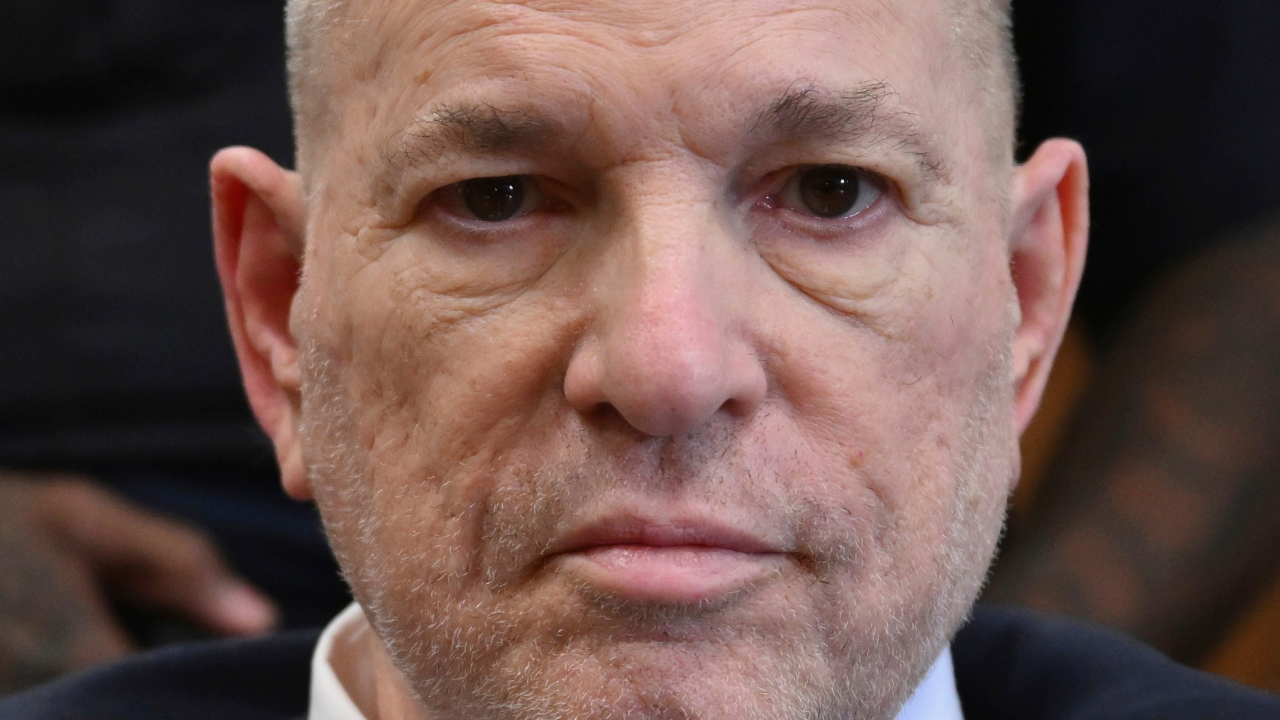
- Harvey Weinstein appeared in a New York court on Wednesday for a hearing ahead of his retrial on sex crimes charges.
- Judge Curtis Farber granted the prosecution’s request to combine Weinstein’s original case and a new charge into a single trial.
- Weinstein faces retrial on two sex crime charges after his 2020 conviction was overturned earlier this year, and in September, he was charged with a new assault. He pleaded not guilty.
Harvey Weinstein is back in court in New York on Wednesday for a hearing ahead of his retrial on sex crimes charges stemming from his landmark #MeToo case.
After the hearing got underway, Judge Curtis Farber granted a prosecution request to consolidate that case and a newer charge into a single trial.
The former movie mogul was facing retrial on two sex crime charges after the state’s highest court overturned his 2020 conviction earlier this year. Then in September, he was hit with a new charge accusing him of another assault. He has pleaded not guilty.
HARVEY WEINSTEIN PLEADS NOT GUILTY TO NEW SEX CRIME CHARGE IN NEW YORK
Weinstein was convicted on charges that he forcibly performed oral sex on a TV and film production assistant in 2006, and rape in the third degree for an attack on an aspiring actor in 2013. In the new charge, prosecutors say he forced oral sex on a different woman in a Manhattan hotel in the spring of 2006.
Harvey Weinstein appears in Manhattan Criminal Court on May 29, 2024, in New York. (Angela Weiss/Pool Photo via AP, File)
Manhattan District Attorney Alvin Bragg’s office had argued in court filings that holding separate trials would be “extraordinarily inefficient” and waste judicial resources. Prosecutors said the cases have significant overlap as they involve similar criminal statutes, witnesses, expert testimony and documentary evidence.
Weinstein’s lawyers had argued in court filings that the cases should remain separate. They said prosecutors are attempting to “expand the scope” of the court-ordered retrial and transform it into “an entirely new proceeding” by including the new charges.
There’s also the question of when Weinstein’s retrial is expected to actually begin.
HARVEY WEINSTEIN’S NEW SEXUAL ASSAULT TRIAL SET AFTER RAPE CONVICTION OVERTURNED
Faber had tentatively scheduled Weinstein’s trial to open on Nov. 12, but both defense lawyers and prosecutors have voiced concerns the date won’t give their side enough time to prepare.
Weinstein has been in custody at the city’s Rikers Island jail complex and has faced numerous health complications while behind bars.
He was also convicted of rape in Los Angeles in 2022, though his lawyers have appealed.
The sexual assault and harassment allegations against Weinstein turbocharged the #MeToo movement in 2017.
The 72-year-old former producer co-founded the film and television production companies Miramax and The Weinstein Company. He produced films including “Shakespeare in Love” and “The Crying Game.”
Read the full article from Here



Ten people are displaced after a fire broke out at the 400 block of Washington Avenue in Bridgeport.
At around 5:30 p.m., the Bridgeport Fire Department responded to a fire alarm.
Upon arrival, firefighters located heavy smoke conditions after the fire was extinguished in one unit by the sprinkler system.
Nine units were affected, displacing ten people.
There were no reported injuries.
The American Red Cross is working to help those who were displaced.

Julie Smith of Readfield is a single parent whose son was in the Principles of Economics class at Brown University during the Dec. 13 shooting that resulted in the deaths of two students.
When classrooms become crime scenes, leadership is no longer measured by intentions or press statements. It is measured by outcomes—and by whether the people responsible for public safety are trusted and empowered to act without hesitation.
On December 13, 2025, a gunman opened fire during a review session for a Principles of Economics class at Brown University. Two students were murdered. Others were wounded. The campus was locked down as parents across the country waited for news no family should ever have to receive.
Maine was not watching from a distance.
My son, a recent graduate of a rural Maine high school, is a freshman at Brown. He was in that Principles of Economics class. He was not in the targeted study group—but students who sat beside him all semester were. These were not abstract victims. They were classmates and friends. Young people who should have been worried about finals, not hiding in lockdown, texting parents to say they were alive.
Despite the fact that the Brown shooting directly affected Maine families, Gov. Janet Mills offered no meaningful public acknowledgment of the tragedy. No recognition that Maine parents were among those grieving, afraid, and desperate for reassurance. In moments like these, acknowledgment matters. Silence is not neutral. It signals whose fear is seen—and whose is ignored. The violence at Brown is a Maine issue: our children are there. Our families are there. The fear, grief, and trauma do not stop at state lines.
The attack and what followed the attack deserve recognition. Law enforcement responded quickly, professionally, and courageously. Campus police, city officers, state police, and federal agents worked together to secure the campus and prevent further loss of life. Officers acted decisively because they understood their mission—and because they knew they would be supported for carrying it out.
That kind of coordination does not happen by accident. It depends on clear authority, mutual trust, and leadership that understands a basic truth: in moments of crisis, law enforcement must be free to work together immediately, without second-guessing.
Even when officers do everything right, the damage does not end when a campus is secured. Students return to classrooms changed—hyper-alert, distracted, scanning exits instead of absorbing ideas. Parents carry a constant, low-level dread, flinching at late-night calls and unknown numbers. Gun violence in schools does not just injure bodies; it fractures trust, rewires behavior, and leaves psychological scars that no statement or reassurance can undo.
That reality makes silence—and policy choices that undermine law enforcement—impossible to ignore.
After the Lewiston massacre in 2023, Governor Mills promised lessons would be learned—that warning signs would be taken seriously, mental-health systems strengthened, and public-safety coordination improved. Those promises mattered because Maine had already paid an unbearable price.
Instead of providing unequivocal support for law enforcement, the governor has taken actions that signal hesitation. Her decision to allow LD 1971 to become law is the latest example. The law introduces technical requirements that complicate inter-agency cooperation by emphasizing legal boundaries and procedural caution. Even when cooperation is technically “allowed,” the message to officers is unmistakable: slow down, worry about liability, protect yourself first.
In emergencies, that hesitation can cost lives. Hesitation by law enforcement in Providence could have cost my son his life. We cannot allow hesitation to become the precedent for Maine policies.
In 2025 alone, hundreds of gun-related incidents have occurred on K–12 and college campuses nationwide. This is not theoretical. This is the environment in which our children are expected to learn—and the reality Maine families carry with them wherever their children go.
My son worked his entire academic life—without wealth or legacy—for the chance to pursue higher education, believing it would allow him to return to Maine rather than leave it behind. Now he is asking a question no 18-year-old should have to ask: why come home to a state whose leaders hesitate to fully stand behind the people responsible for keeping him alive?
Maine’s leaders must decide whose side they are on when crisis strikes: the officers who run toward danger, or the politics that ask them to slow down first.
Parents are done with hollow promises. Students deserve leaders who show their support not with words—but with action.

Colts fans react to Chris Ballard, Shane Steichen keeping their jobs: ‘What an embarrassing joke’

Steeler, voted the cutest TSA dog in America, stars in downloadable calendar

MR. EDDIE JAMES RAMSEY Obituary | Thomson, GA | Thomson Funeral System

Washington DC Pedestrian killed struck crash collision I-295 DC-295

Cleveland Spectrum customers experiencing outages after plow truck hits utility pole

Florida High School Football Rankings: Top 25 teams – Oct. 21

Cleary's 21 help Le Moyne down Central Connecticut State 69-64 in OT

How old is Bo Nix? What to know about Oregon quarterback ahead of 2024 NFL Draft

99th annual Pony Swim held in Virginia

Video: ‘It Didn’t Have to Happen This Way:’ U.Va. Faculty Call for Review of Police Response to Protests

Dan Bongino officially leaves FBI deputy director role after less than a year, returns to ‘civilian life’
Hundreds march in silence to honour Crans-Montana fire victims

Here’s a partial list of U.S. elected officials opposing Trump’s invasion of Venezuela

Crans Montana organises solemn march for the victims • FRANCE 24 English

Kamala Harris blasts Trump administration’s capture of Venezuela’s Maduro as ‘unlawful and unwise’
-
 Entertainment1 week ago
How the Grinch went from a Yuletide bit player to a Christmas A-lister
-

 World7 days ago
Hamas builds new terror regime in Gaza, recruiting teens amid problematic election
-

 Indianapolis, IN1 week ago
Indianapolis Colts playoffs: Updated elimination scenario, AFC standings, playoff picture for Week 17
-

 Southeast1 week ago
Two attorneys vanish during Florida fishing trip as ‘heartbroken’ wife pleads for help finding them
-
 Business1 week ago
Google is at last letting users swap out embarrassing Gmail addresses without losing their data
-

 World1 week ago
Best of 2025: Top five defining moments in the European Parliament
-

 World1 week ago
Snoop Dogg, Lainey Wilson, Huntr/x and Andrea Bocelli Deliver Christmas-Themed Halftime Show for Netflix’s NFL Lions-Vikings Telecast
-
 News1 week ago
DOJ says it may need a ‘few more weeks’ to finish releasing Epstein files