Northeast
Former NRA CEO Wayne LaPierre found liable for corruption, cost gun rights group more than $5 million: jury

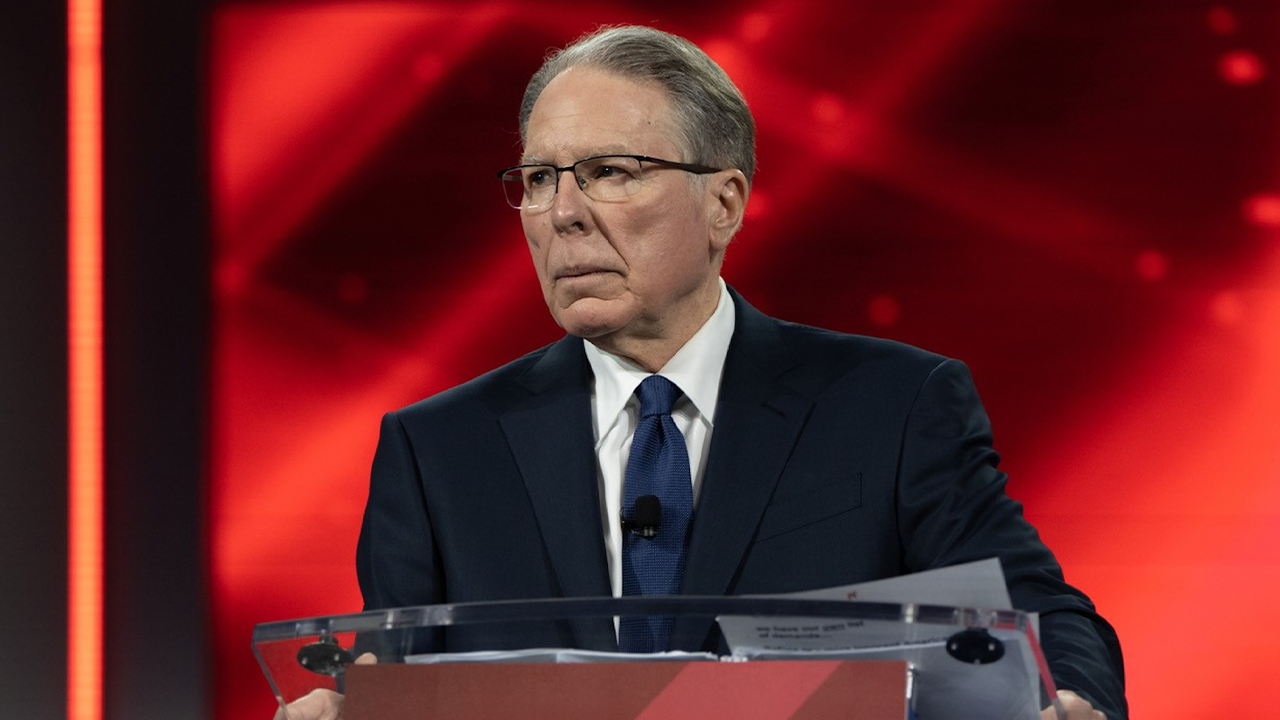
A Manhattan jury in the civil corruption case brought by New York Attorney General Letitia James against the National Rifle Association (NRA) and its former CEO found the organization liable for financial mismanagement.
The jury determined Wayne LaPierre’s violations of his duties cost the NRA $5,400,000, but he had already repaid roughly $1 million to the organization.
LaPierre was ordered to repay the group $4,351,231.
The New York jury said the NRA’s CEO for three decades misspent millions of dollars of the group’s money on luxury personal purchases.
The decision came at the end of five days of deliberations.
NEW YORK AG OFFICE, EX-NRA OFFICIAL REACH SETTLEMENT DAYS BEFORE TRIAL AGAINST GUN ADVOCACY GROUP’S LEADERSHIP
Former NRA CEO and Executive Vice President Wayne LaPierre. (NRA)
James brought the lawsuit in 2020 and named the NRA, LaPierre, former CFO Wilson “Woody” Philips and general counsel John Frazer as defendants. The attorney general’s office argued the executives used millions in company funds on luxury personal purchases and trips, including hundreds of thousands of dollars on LaPierre’s trips to the Bahamas, according to the AG’s office.
The NRA, however, has long said the case was politically motivated by an attorney general who campaigned for the office by vowing to investigate and take on the group. James was elected to office in November 2018 and publicly slammed the NRA in the lead-up to her becoming New York’s chief law officer. While on the campaign trail, James called the group “an organ of deadly propaganda” and vowed to investigate whether the NRA could keep its charity status.
NEW YORK AG CASE AGAINST NRA LEADER FACES TRIAL AFTER COURT AGAIN REJECTS GUN GROUP’S CLAIM OF POLITICAL PROBE
“The NRA is an organ of deadly propaganda masquerading as a charity for public good,” James wrote in a campaign press release in July 2018. “Its agenda is set by gun-makers who think arming teachers is a better idea than making it harder for kids to get military grade guns.”
New York Attorney General Letitia James speaks outside the New York Supreme Court ahead of former President Trump’s civil business fraud trial in New York on Oct. 2, 2023. (AP Photo/Brittainy Newman)
Weeks before her election, she described the NRA as “a terrorist organization” in comments to Ebony magazine and “a criminal enterprise” in remarks to local New York media.
In August 2020, she filed a dissolution lawsuit aiming to break up the NRA over alleged corruption. A New York Supreme Court justice ultimately blocked James’ effort to dissolve the organization in a 2022 decision, saying the suit did not meet the requirements of ordering a “corporate death penalty” on the group. The judge did allow the suit against the NRA’s top officials to proceed. James accused officials at the NRA of “years of illegal self-dealing” that provided a “lavish lifestyle.”
WAYNE LAPIERRE ANNOUNCES RESIGNATION AS NRA CHIEF
At the trial, which began last month, LaPierre and the three other defendants were accused by Assistant Attorney General Monica Connell of getting caught “with their hands in the cookie jar” and argued the four were trying to deflect and downplay the use of the funds.
“They’re going to try to get you to think about anything except what happened to those cookies,” she said. “They’re going to blame anyone else but themselves.”
National Rifle Association Executive Vice President Wayne LaPierre speaks during the Leadership Forum at the NRA-ILA Meeting at the George R. Brown Convention Center in Houston May 27, 2022. (AP Photo/Michael Wyke)
State attorneys argued during the trial that LaPierre spent roughly $11 million in NRA funds on private flights and about $500,000 on a handful of trips to the Bahamas, as well as “appearing to dole out lucrative no-show contracts to former employees in order to buy their silence and continued loyalty.”
NEW YORK AG CASE AGAINST NRA LEADER FACES TRIAL AFTER COURT AGAIN REJECTS GUN GROUP’S CLAIM OF POLITICAL PROBE
LaPierre, who stepped down as NRA CEO and executive vice president last month after serving since 1991, said earlier in the trial he had made governance changes within the organization since 2021 and had paid about $300,000 back to the group. LaPierre’s attorney argued during the trial that the former NRA chief’s use of private flights was necessary for safety reasons due to his prominent national stature amid the acrimonious gun debate.
“This is a story made up by a person with an agenda that wanted him off the field,” LaPierre’s attorney, Kent Correll, said Thursday in closing arguments.
New York Attorney General Letitia James described the NRA as “a terrorist organization” in comments to Ebony magazine. (Michael M. Santiago/Getty Images)
“If this case was so important, why wouldn’t she be here?” he added, referring to James’ absence from the courtroom Thursday.
JUDGE ORDERS NEW YORK TO DOLE OUT NEARLY HALF A MILLION IN LEGAL FEES TO NRA AFTER SUPREME COURT VICTORY
The NRA’s legal team argued during the trial that the organization worked to address any potential corruption when such issues were first raised by internal complaints.
“When the fraud was discovered, it dug in. It turned over the rocks it was told not to overturn,” attorney Sarah Rogers said. “The NRA left no stone unturned.”
NRA Executive Vice President and CEO Wayne LaPierre speaks to guests at the 2023 NRA-ILA Leadership Forum April 13, 2023, in Indianapolis. (Scott Olson/Getty Images)
“If this was a case about corruption,”she added, “it wasn’t by the NRA.”
In a statement following the verdict, the NRA said the jury confirmed what “they contended all along — that it was victimized by certain former vendors and ‘insiders’.”
NRA President Charles Cotton said that members should be “heartened” by the organization’s “commitment to best practices.”
“We appreciate the service of the jury and the opportunity to present evidence about the positive direction of the NRA today,” Cotton said. “NRA members should be heartened by the NRA’s commitment to best practices, and we will continue to amplify our compliance record in the pivotal next phase of these proceedings. To the extent there were control violations, they were acted upon immediately by the NRA Board beginning in summer 2018.”
NRA counsel William A. Brewer III maintained that the lawsuit was an “unprecedented weaponization” against the NRA to “supress” the organization.
“The NRA is eager to break the seal on facts surrounding an unprecedented weaponization of power against the NRA and its speech,” Brewer said. “There is little question former and current public officials were conspiring with Everytown and others to financially damage and politically suppress the NRA. Their actions harmed democracy and the rule of law – and letting relevant facts and documents remain secret does, too.”
Read the full article from Here


-
Now Playing

Maine Democratic Senate candidate Graham Platner denies new allegations of sexual assault
05:19
-
UP NEXT
Democratic socialist Melat Kiros unseats Rep. Diana DeGette in Colorado House primary
02:07
-
Kornacki breaks down key Colorado primary results
02:23
-
Supreme Court allows states to count mail-in ballots that arrive after Election Day
00:47
-
‘The politics of the past ends today’: Chevalier celebrates projected New York primary win
01:11
-
‘Glorious time to be a New Yorker’: Brad Lander addresses his voters after NY-10 projected primary win
02:04
-
Espaillat projected to lose primary to Mamdani-backed Darializa Avila Chevalier
02:58
-
Brad Lander projected winner in N.Y. Democratic primary for 10th Congressional district
05:12
-
Alan Wilson projected winner in South Carolina Republican governor primary
03:55
-
Maryland Gov. Wes Moore projected winner in Democratic primary
00:18
-
Steve Kornacki explains what to watch in primaries across New York, Utah
03:58
-
Sen. Aisha Wahab projected to move to runoff in race to replace Swalwell
01:33
-
Rep. Barry Moore speaks on Trump’s support after projected GOP Alabama Senate runoff win
00:55
-
Rep. Barry Moore projected winner in Alabama GOP Senate primary
03:18
-
Rep. Mike Collins says mission is to put a ‘Republican’ in Georgia Senate seat
01:20
-
Rep. Mike Collins wins GOP runoff in Georgia Senate race, NBC News projects
02:33
-
‘My job is to earn your trust’: Platner speaks to voters after projected win
04:32
-
Nithya Raman to advance in L.A. mayoral runoff race, NBC News projects
01:55
-
Critical California governor’s race begins to take shape
01:42
-
Democrat Xavier Becerra advances to California governor general election, NBC News projects
04:30
Hallie Jackson NOW
-
Now Playing
Maine Democratic Senate candidate Graham Platner denies new allegations of sexual assault
05:19
-
UP NEXT
Democratic socialist Melat Kiros unseats Rep. Diana DeGette in Colorado House primary
02:07
-
Kornacki breaks down key Colorado primary results
02:23
-
Supreme Court allows states to count mail-in ballots that arrive after Election Day
00:47
-
‘The politics of the past ends today’: Chevalier celebrates projected New York primary win
01:11
-
‘Glorious time to be a New Yorker’: Brad Lander addresses his voters after NY-10 projected primary win
02:04
NBC News Channel
Hallie Jackson NOW
Hallie Jackson NOW
Hallie Jackson NOW
Play All

It’s not just great white sharks that are taking stripers from fishermen these days.
Porbeagle sharks — which stick around the Bay State all year — have been spotted several times in the last week chomping on striped bass that fishermen caught.
Those on a recent whale watch off the Cape even got a front-row seat to the action.
“We hope you lunge after your Fourth of July hot dog like this porbeagle going after a striped bass on our Provincetown whale watch yesterday!” Captain John Boats posted.
“It was incredible to see this top predator in its element in this National Geographic moment,” Captain John Boats added. “Our naturalist said it may have even been his favorite whale watch he has ever been on… Thanks to MA Sharks for your support and for showing us how to ID different shark species!”
MA Sharks is run by shark researcher John Chisholm, who on the day before July 4th received four different reports of porbeagle sharks taking striped bass.
“It was a busy day for porbeagle shark sightings yesterday,” Chisholm posted. “This is one of four reports we received yesterday of them taking striped bass from the N Shore to Nantucket. If you have an encounter like this, please let me know.”
Meanwhile over the holiday weekend, great white sharks were spotted all across the region.
In Cape Cod Bay, an 8-foot white shark was seen about two miles west of Wellfleet’s Jeremy Point.
On the South Shore, a dead seal with shark bites was found along Rexhame Beach in Marshfield.
And up on the North Shore, a small white shark was spotted about five miles off Marblehead.
Then much farther north, a beach was closed to swimming in Maine after a report of two sharks near Reid State Park.
“Swimming areas currently have been cleared,” the Maine town of Georgetown posted Sunday morning. “Be safe, stay alert, and enjoy Georgetown.”
A couple hours later, the swimming area at Reid was reopened.
“If you are in or on the water, please stay alert,” the town added.
White sharks come to the region every summer and fall to hunt for seals close to shore.
Before heading into the water, Chisholm urges people to review shark safety guidelines, including: be aware that sharks hunt for seals in shallow water; stay close to shore where rescuers can reach you; don’t isolate yourself; avoid areas where seals are present; avoid areas where schools of fish are visible; avoid murky or low-visibility water; limit splashing; and follow all signage and flag warnings at beaches and instructions of the lifeguards.
Chisholm also encourages beachgoers to use the Atlantic White Shark Conservancy’s Sharktivity app to view shark activity, get shark alerts and report sightings.
New Hampshire
Seacoast Double Shooting | Escapee Captured | 10-Year Preservation Plan Released: PM Patch NH

Inmate Who Failed To Return To Concord Transitional Housing Unit In June In Custody: Follow-Up: Eric Wollen, who previously lived in Nashua, was placed on escape status by the DOC after failing to return to the North End unit June 11.
Missing Man Found Due To Drug Sale Charges | Indictments | Staycation, Simplified | More: PM Patch NH: Also: How to win an argument with an 800 lb. steer; Goodlander joins “Promise to America” effort; gun threat-domestic violence case update.
Here are some other posts readers may have missed:
Stay Connected While Apart: Meaningful Ways To Support A Loved One During Deployment
Gunman Dead After Double Shooting Near Popular Hampton Beach, New Hampshire AG Says
-

 Iowa3 minutes ago
Iowa Democrats and Republicans gain voters, independent voters decrease
-
 Kansas6 minutes ago
Veterans Community Project opens expanded outreach center in Kansas City, expands nationally
-

 Kentucky11 minutes ago
Where Kentucky Basketball recruits stand in the latest round of 2027 recruiting rankings
-

 Louisiana18 minutes ago
Trump administration plans to open new Louisiana ICE facility
-

 Maine21 minutes ago
Maine Democratic Senate candidate Graham Platner denies new allegations of sexual assault
-

 Maryland26 minutes ago
Armed security hired, tickets sold for large Maryland July 4th party that turned deadly
-

 Michigan33 minutes ago
J Batt still heading to Kentucky, which owes $5M buyout with Guskiewicz staying at MSU
-

 Massachusetts36 minutes ago
Another shark species off Massachusetts is taking striped bass from fishermen

