Mississippi
How SCOTUS Callais Ruling Erased a Mississippi Voting Rights Victory


In 2022, Dyamone White, then in her late 20s, filed a lawsuit in federal court arguing that Black voters like her didn’t have a fair chance to elect justices to the Mississippi Supreme Court.
Three years later, she won a significant victory. A federal judge ruled that Mississippi Supreme Court election districts violated the Voting Rights Act and that Black candidates who wanted to run for the state’s highest court were unlikely to succeed. U.S. District Court Judge Sharion Aycock instructed lawmakers to draw a new map to give Black voters more power, with court-ordered special elections to follow, likely this fall.
“WE WON,” White wrote in a social media post that day in August 2025. “This isn’t just a personal victory — it’s a win for every Mississippian who has waited too long for fair representation. I became a plaintiff because I refused to accept that our state’s highest court could exclude the very people it serves. Today, that changes.”
But that change still hasn’t happened — and a recent seismic ruling from the U.S. Supreme Court means it may never happen.
In late April, the conservative majority of the U.S. Supreme Court issued a decision in Louisiana v. Callais that dramatically weakened the Voting Rights Act, making it much harder for racial minorities to win voting discrimination lawsuits.
The decision further intensified a mid-decade redistricting war that’s been spreading across the country ahead of the congressional elections in the fall. But the decision affects politics beyond the federal level. The now-upended court battle about Mississippi’s judicial elections will serve as an early test of whether voting rights plaintiffs can still mount a convincing case in some circumstances.
Earlier this month, a federal appeals court vacated Aycock’s ruling from last year after the plaintiffs and defendants agreed that the Callais decision had dramatically changed the legal landscape.
That removed the state’s obligation to draw a new court map. It also eliminated the possibility that the state would hold special elections for its Supreme Court seats this fall, ending Black voters’ hope that 2026 may yield fairer representation at the top of the state’s judiciary. The case will now head back to Aycock’s court for new arguments under the higher standard created by the Callais decision.
The plaintiffs still see a path forward to win new maps. Attorneys with the American Civil Liberties Union and the Southern Poverty Law Center argue on behalf of White and her fellow plaintiffs that they can still prevail under that new standard.
Looking to the court battles ahead, White is also looking back. She is from the tiny town of Edwards, a rural community near the state’s capital city region, and she recites its history of Black resistance to oppression, from the Civil War to the Civil Rights movement and beyond.
“It’s an area that is resilient,” White said. “The people I grew up around, they were all fighters.”
Dyamone White with Reuben Anderson, the first Black justice on the Mississippi Supreme Court, in 2024.
The Voting Rights Act, passed in 1965, was a key tool in dismantling the Jim Crow regime of White supremacy that blocked Black residents from ballot box access in Mississippi and across the South.
Among other provisions, the law prohibited states from diluting the voting power of racial minorities and required that those voters have an opportunity to elect candidates of their choosing.
So, with Callais decided, what’s changed?
When plaintiffs filed suit over the Mississippi Supreme Court voting districts in 2022, they had to show a violation of the law only by pointing to discriminatory effects of the voting districts in use, regardless of what the original architects of those districts may have intended.
Those effects? Black people make up about 38% of Mississippi’s population, but the state has just one Black justice currently sitting on its nine-member Supreme Court. Only four Black justices have ever been on the court, all serving since 1985 and never more than one at a time. All four first reached the court through a gubernatorial appointment to fill a vacancy.
That has meant very little Black representation on a body that interprets state laws and the state constitution, hears appeals in criminal and civil cases and has some control over the operations of lower courts.
With no need to delve into the intention of the legislators who created the current districts in the late 1980s, Aycock, a George W. Bush appointee, ruled that the Mississippi Supreme Court districts as drawn have the effect of diluting Black voting power, violating the Voting Rights Act.
U.S. Supreme Court Justice Samuel Alito’s majority opinion in the Callais case, however, sets a higher standard. A Voting Rights Act violation may now be found “only when circumstances give rise to a strong inference that intentional discrimination occurred.”
Legal experts have said that proving intentional discrimination is challenging — made even more difficult by the Alito opinion’s endorsement of partisan gerrymandering as a legitimate purpose of redistricting. The conservative justice wrote that states can now defend themselves against race dilution claims by arguing that Black districts are being eliminated not because of racist motivations but partisan ones since Black voters have typically supported Democratic candidates.
States like Louisiana and Tennessee have moved to quickly eliminate Black-majority Congressional districts. They will likely defend their new maps as partisan gerrymanders, not racially motivated ones.
“It’s going to be just lightning-strike rare for a Voting Rights Act claim to work where partisanship is permitted,” said Justin Levitt, a former Department of Justice official and election law expert who teaches at Loyola Marymount University Law School.
However, Mississippi Supreme Court elections are nonpartisan, and that may make a meaningful difference in the current litigation, said Amir Badat, a civil rights lawyer who has argued a number of voting rights claims in the state.
Badat said that even under Callais, lawmakers may not be able to hide behind partisan intent to shield themselves from judicial scrutiny.
“In this kind of narrow circumstance, you still have viable Section 2 claims,” said Badat, referencing the section of the Voting Rights Act that bans discriminatory election practices.
Levitt agrees that voting rights cases in nonpartisan elections may still be possible to win under Callais, though he added that the overall impact of the decision likely makes even those cases quite difficult.
While the legal standard may have changed, White, the lawsuit’s lead plaintiff, says one thing has not: The reality faced by Black voters who want to see a fair state Supreme Court map.
“We laid out the facts of representation in the state. You can’t deny that, “ White said. “We can go back to court again, and the facts remain the same. Representation is not equal.”
This article was produced in collaboration with Bolts, a nonprofit publication that covers criminal justice and voting rights in local governments; sign up for their newsletter.



JACKSON, Miss. (WLBT) – Mississippi leaders across the board are reflecting on the legacy of service Sen. Lindsey Graham had in Washington, D.C.
3 On Your Side spoke on the phone with Sen. Cindy Hyde-Smith who shared that Graham treated her like a little sister when she arrived to the Senate.
Their friendship grew outside of work, but one thing she’ll really cherish is the teamwork they developed to get things done with President Donald Trump.
“There were times he would come to me and say, OK sister, you’re going to have to break this news to Trump. If it was a difficult situation, he would say you got to soften him up, you call him and then I’ll call him after you but you’re the one that’s going to have to take care of this. Or you’ve got to go to Mar-a-Lago and handle this, but we were a pretty good team together because we were both close to the President,” said Sen. Hyde-Smith.
Sen. Hyde-Smith added, since coming to Washington, D.C., she looked up to Sen. Graham like an older brother in the chamber.
Want more WLBT news in your inbox? Click here to subscribe to our newsletter.
See a spelling or grammar error in our story? Please click here to report it and include the headline of the story in your email.
Copyright 2026 WLBT. All rights reserved.

STARKVILLE — Mississippi State baseball signee Landon Brown will play for the Bulldogs instead of signing a pro contract, he told the Clarion Ledger on July 12 during the 2026 MLB Draft.
Brown, a right-handed pitcher from Rosharon, Texas, was ranked as the No. 77 prospect by MLB.com. He pitched and played corner infield for Iowa Colony while winning Brazoria County Player of the Year.
He won’t be eligible again for the MLB draft until 2029.
Brown is 6-foot-4, 210 pounds. He has a fastball that reaches 98 mph as part of a four-pitch mix. He also throws a slider, cutter and splitter.
Brown committed to Mississippi State in 2024 under previous coach Chris Lemonis.
He is the third high school draft prospect to reveal he will play for MSU instead of signing a pro contract. Shortstop Noah Danza withdrew from the MLB draft before it began, and pitcher Denton Lord announced after the fifth round that he was heading to Mississippi State.
Three Mississippi State signees were drafted in the first 10 rounds: shortstop Rocco Maniscalco, catcher Will Brick and outfielder Martin Shelar.
Landon Brown stats
- 66⅔ innings
- 0.63 ERA
- 110 strikeouts
- 13 walks
- .424 batting average
- 13 home runs
Sam Sklar is the Mississippi State beat reporter for the Clarion Ledger. Email him at ssklar@usatodayco.com and follow him on X @sklarsam_.


Odds of winning the Powerball and Mega Millions are NOT in your favor
Odds of hitting the jackpot in Mega Millions or Powerball are around 1-in-292 million. Here are things that you’re more likely to land than big bucks.
The Mississippi Lottery offers several draw games for those aiming to win big.
Here’s a look at July 11, 2026, results for each game:
Winning Mississippi Match 5 numbers from July 11 drawing
08-09-21-28-30
Check Mississippi Match 5 payouts and previous drawings here.
Winning Cash 3 numbers from July 11 drawing
Midday: 8-3-9, FB: 2
Evening: 7-9-2, FB: 7
Check Cash 3 payouts and previous drawings here.
Winning Cash 4 numbers from July 11 drawing
Midday: 7-3-0-4, FB: 2
Evening: 1-3-6-0, FB: 7
Check Cash 4 payouts and previous drawings here.
Winning Cash Pop numbers from July 11 drawing
Midday: 14
Evening: 03
Check Cash Pop payouts and previous drawings here.
Feeling lucky? Explore the latest lottery news & results
Story continues below gallery.
Are you a winner? Here’s how to claim your lottery prize
Winnings of $599 or less can be claimed at any authorized Mississippi Lottery retailer.
Prizes between $600 and $99,999, may be claimed at the Mississippi Lottery Headquarters or by mail. Mississippi Lottery Winner Claim form, proper identification (ID) and the original ticket must be provided for all claims of $600 or more. If mailing, send required documentation to:
Mississippi Lottery Corporation
P.O. Box 321462
Flowood, MS
39232
If your prize is $100,000 or more, the claim must be made in person at the Mississippi Lottery headquarters. Please bring identification, such as a government-issued photo ID and a Social Security card to verify your identity. Winners of large prizes may also have the option of setting up electronic funds transfer (EFT) for direct deposits into a bank account.
Mississippi Lottery Headquarters
1080 River Oaks Drive, Bldg. B-100
Flowood, MS
39232
Mississippi Lottery prizes must be claimed within 180 days of the drawing date. For detailed instructions and necessary forms, please visit the Mississippi Lottery claim page.
When are the Mississippi Lottery drawings held?
- Cash 3: Daily at 2:30 p.m. (Midday) and 9:30 p.m. (Evening).
- Cash 4: Daily at 2:30 p.m. (Midday) and 9:30 p.m. (Evening).
- Match 5: Daily at 9:30 p.m. CT.
- Cash Pop: Daily at 2:30 p.m. (Midday) and 9:30 p.m. (Evening).
This results page was generated automatically using information from TinBu and a template written and reviewed by a Mississippi editor. You can send feedback using this form.
-

 News29 minutes ago
One person killed in Maine in second fatal ICE-involved shooting in less than a week | CNN
-

 New York2 hours ago
How a Family of 5 Lives on $46,000 a Year in Wakefield
-

 Los Angeles, Ca2 hours ago
Southern California braces for 110-degree heat, thunderstorms this week
-
 Detroit, MI2 hours ago
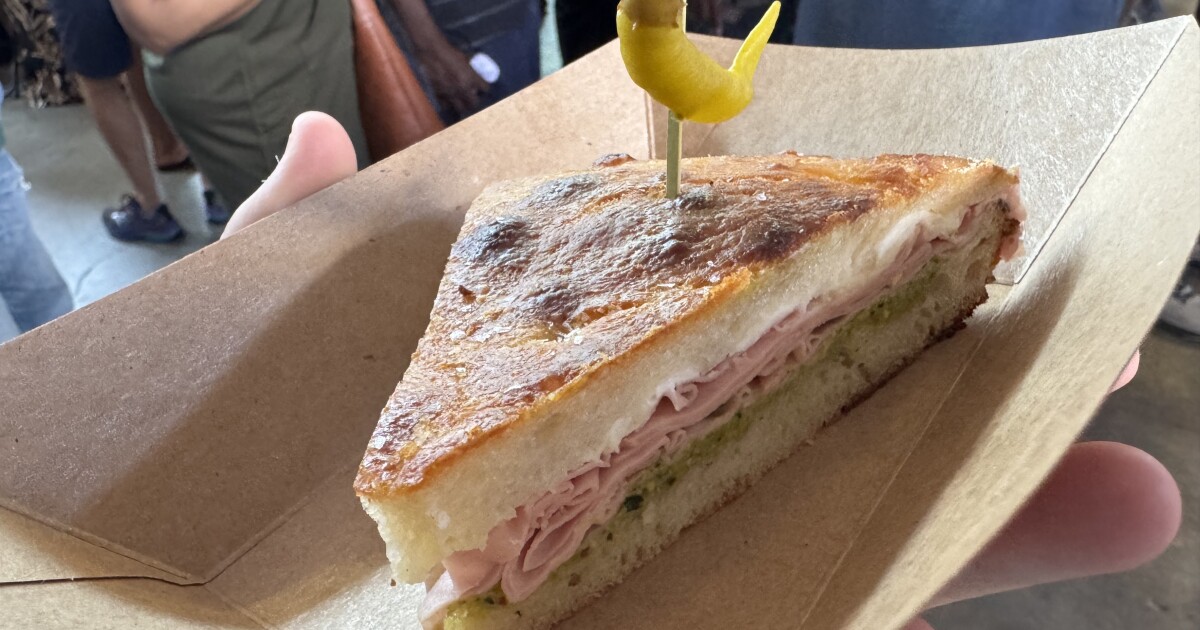
Detroit Sandwich Party returns to Eastern Market on Sept. 6
-

 San Francisco, CA3 hours ago
A Leak of San Francisco Police Drone Footage Exposes the New Reality of Urban Surveillance
-

 Dallas, TX3 hours ago
Viral East Dallas coffee shop fears major sales drop amid six-week road closure
-

 Miami, FL3 hours ago
3 hurt in fire on Lincoln Road that started underground
-

 Boston, MA3 hours ago
Rideshare driver charged in Logan airport passenger assault to appear in court

