Northeast
Family of mom murdered in ritzy DC suburb decades ago gets justice as perp nobody expected pleads guilty

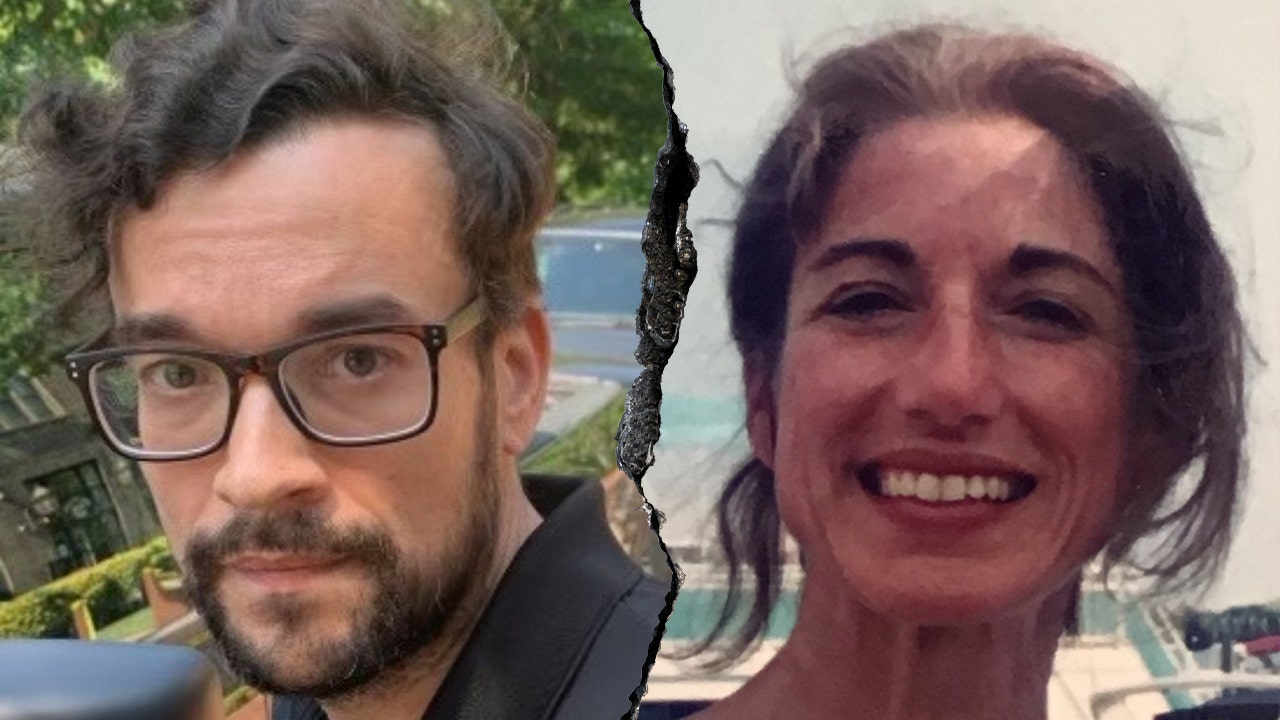
A killer nobody expected has pleaded guilty in the 2001 murder of a Chevy Chase, Maryland, mother.
Defendant Eugene Gligor, 45, of Washington, D.C., walked free through the nation’s capital for more than 20 years before his DNA linked him to then-50-year-old Leslie Preer’s murder in 2001.
Preer’s daughter, Lauren Preer, told FOX 5 D.C. that she dated the suspect when they were both 15 years old. She was 24 when her mother was killed.
Montgomery County authorities linked DNA found beneath Preer’s fingernails at the time of her murder to Gligor’s “distant relative from Romania” who had voluntarily submitted her DNA to an online database, ultimately leading authorities directly to him last year, Montgomery County State’s Attorney John McCarthy said during a Wednesday press conference.
CALIFORNIA 1977 COLD-CASE MURDER SUSPECT IDENTIFIED AS 69-YEAR-OLD FORMER ARMY PRIVATE LIVING IN OHIO
Defendant Eugene Gligor, 45, of Washington, D.C., walked free through the nation’s capital for more than 20 years before his DNA linked him to then-50-year-old Leslie Preer’s murder in 2001. (Montgomery County State’s Attorney)
Gligor had lived in the D.C. area since committing the gruesome crime some 24 years ago. Fox News Digital has reached out to his attorney for comment.
“Lauren, her family, and friends have waited 24 years to finally get closure and justice for this horrific crime that tore her family apart,” family attorney Benjamin Kurtz told Fox News Digital. “The fact that it turned out to be someone they allowed in their home with open arms, just makes it that much harder to understand.”
CALIFORNIA ATTORNEY GENERAL TAKES STANCE ON MENENDEZ BROTHERS PROSECUTOR STAYING ON CASE AMID RESENTENCING BATTLE
Kurtz added that “Lauren has been given a sense of peace knowing that her father has finally been vindicated of any wrongdoing, even if after his death, and she feels he can finally rest in peace with the knowledge her killer has been caught.”
She also “wanted to express her gratitude to the Montgomery County Police Department who never stopped trying to get justice for her family and to the State’s Attorney’s Office for their efforts of securing a guilty plea from Leslie’s murderer.”
“Lastly, while the guilty plea will never bring back her mother, or create any of the moments she never got to experience due to losing her at such a young age, she and her family can finally have some closure to this horrific loss and try to start the healing process,” Kurtz said. “She wanted to express her sincere appreciation to all of her family and friends for the love and support over the years and decades and during the last year waiting for a conviction.”
SIGN UP TO GET THE TRUE CRIME NEWSLETTER
Preer’s boss found her dead in the second story of her Chevy Chase home on May 2, 2001, after she did not show up for work that day and ruled her death a homicide. There was blood all over the house. (Montgomery County State’s Attorney)
Preer’s boss found her dead in the second story of her Chevy Chase home on May 2, 2001, after she did not show up for work that day. Her death was ruled a homicide. There was blood all over the house, McCarthy said.
She died of blunt force trauma and strangulation.
In 2022, police submitted DNA collected from the crime scene to a lab for forensic genetic genealogical DNA analysis and later identified Gligor as a potential suspect.
McCarthy called Preer’s case “historic” during a May 7 press conference, saying it was the first time familial DNA was used in a cold-case murder in the county.
ATTEMPTED MURDER FUGITIVE BUSTED AS 40-YEAR SCHEME POSING AS DEAD COLLEGE MATE UNRAVELS
“This was excellent police work that took place for over two decades,” former Washington, D.C., homicide detective Ted Williams told Fox News Digital. “This is how science, familial DNA, was able to help law enforcement catch a person who felt that they had committed the crime.… The fact that the DNA that was found under [Preer’s] fingernails was preserved all of those years and was later used to track down Mr. Gligor – he would have gotten away with murder, absent having this… near-exact science, and that is familial DNA.”
“[H]e would have gotten away with murder.”
Authorities obtained a sample of Gligor’s DNA by staging a fake second security screening at Dulles International Airport. They escorted the then-suspect into a room, where there were several water bottles. Gligor drank one water bottle and threw it away before leaving the room, according to court filings obtained by The Washington Post.
GET REAL-TIME UPDATES DIRECTLY ON THE TRUE CRIME HUB
John McCarthy, speaking on Lauren Preer’s behalf during the Wednesday press conference, remembered Leslie Preer as a “spectacular, loving, wonderful person.” (Facebook)
“There are times, unfortunately, when the evidence that is gathered at a crime scene does not lead in any one specific direction,” Williams said. “I am sure that at the early stages of the investigation, the investigators were looking at anybody they believed may very well have been involved with this murder, but [Gligor] did not come up on their radar screen. That happens in murder cases all the time… and at some stage or another, the development of the scientific evidence… is something or two that law enforcement now have in their possession to go back many, many years.”
Gligor worked at a real-estate firm and was known as a “zen” and friendly person, the Post reported last year, when he was named as a suspect.
DNA SAMPLE TIES ELDERLY MAN TO 40-YEAR-OLD COLD CASE MURDER OF TEXAS WOMAN
Court records and accounts from those who knew him obtained by the Post show that he was a mischievous high-schooler with some history of substance abuse. His parents divorced while he and Lauren were dating in high school, and he did not take the separation well. He was also expelled from boarding school, the Post reported.
Following Preer’s death, when friends and family offered support to Lauren, Gligor apparently drove cross-country to visit a friend in Oregon while Lauren was grieving. That friend told the Post that Gligor didn’t tell him he was coming to Oregon until he was already on his way.
Lauren recalled a moment years before her mother’s murder, when she and Gligor were still dating, when Gligor was accused of assaulting a woman on a bike path between the two then-teenagers’ houses. Lauren told the Post she went to the police station with a friend, insisting to officers that Gligor was innocent.
FOLLOW THE FOX TRUE CRIME TEAM ON X
“We both said, there is no way Eugene would have done this,” Preer recalled to the Post.
Authorities have not shared any kind of motive behind Preer’s murder. McCarthy said it will be up to the defendant to share what the motive was in his decision to kill Preer, adding later that there was no evidence to suggest the murder was “premeditated,” and Preer had no criminal record.
McCarthy, speaking on Lauren’s behalf during the Wednesday press conference, remembered Preer as a “spectacular, loving, wonderful person.”
Gligor faces up to 30 years in prison, which was the maximum penalty for second-degree murder in 2001 when the incident occurred. A sentencing hearing is scheduled for Aug. 28, 2025, at 9 a.m.
Read the full article from Here

New Hampshire
Nashua downtown apartment project earns Plan NH 2026 Merit Award of Excellence » Nashua Ink Link


 Listen to this article
The basics:
- HAX Plasma Forge will open at Princeton’s historic SRI campus in late 2026
- NJEDA, SOSV, PPPL are investing in plasma tech startups
- Startups will receive lab space, engineering support, seed funding
- Project aims to grow New Jersey’s AI, semiconductor and clean energy sectors
The same Princeton campus where researchers once helped pioneer color television, semiconductor technologies and wartime radar systems is preparing for its next chapter — one that New Jersey leaders hope could help shape the future of artificial intelligence, fusion energy and advanced manufacturing.
SOSV’s HAX Plasma Forge selected the historic SRI campus at 201 Washington Road in Princeton as its home ahead of a planned late-2026 opening, establishing what organizers hope will become a hub for commercializing plasma technologies and building companies around them. The facility, announced last year as one of New Jersey’s Strategic Innovation Centers, represents the second HAX operation in the state following the launch of HAX Newark several years ago.
Backed by the New Jersey Economic Development Authority, Princeton-based venture capital firm SOSV and the U.S. Department of Energy’s Princeton Plasma Physics Laboratory, the latest initiative aims to turn research breakthroughs into startups, jobs and new industries while reinforcing New Jersey’s position in fields ranging from semiconductors to clean energy.
The project carries approximately $49 million in direct commitments from NJEDA and SOSV – each contributing $24.5 million – along with technical collaboration and in-kind support from PPPL, one of the world’s leading plasma research institutions.
When completed, the Plasma Forge is expected to include up to 10,000 square feet of laboratory and coworking space designed for startups working in plasma technologies, semiconductors, advanced materials and manufacturing. Participating companies may receive up to $550,000 in seed funding from SOSV while also gaining access to specialized plasma research infrastructure, metrology tools and engineering support.
Participating startups will also have access to PPPL scientists, SOSV’s engineering and supply-chain teams, and a global network of founders, investors and corporate partners. Organizers envision companies at varying stages of growth working side-by-side with larger industry players seeking to commercialize plasma technologies.
The right home


For SOSV General Partner and HAX Managing Director Duncan Turner, selecting the right home for the Plasma Forge was about more than securing laboratory space.
“We just wanted somewhere that was as geographically close to PPPL as possible, because we just want that natural exchange of intellect, of ideas, of culture between the two organizations,” Turner told NJBIZ. He noted that the search was also shaped by HAX’s substantial technical and infrastructure requirements, as previously seen at its Newark facility.
The Plasma Forge will rely heavily on collaboration with PPPL scientists and researchers, creating a pipeline intended to move plasma technologies from laboratory settings into commercial applications.
The SRI campus ultimately emerged as the clear choice. “What got us with SRI was just the history of the place,” said Turner.


And the site’s history is difficult to overstate. Formerly home to RCA Laboratories and the David Sarnoff Research Center, the campus played a central role in developing technologies that helped define the modern electronics industry. Researchers there contributed to breakthroughs in LCD displays and semiconductor manufacturing, while work at the site aided radar and defense systems during World War II.
‘Workhorse of infrastructure’
That legacy resonated with project leaders seeking to launch the next generation of technology companies in New Jersey. “The HAX Plasma Forge isn’t just renting space, they’re joining a lineage of innovators who specialize in turning frontier science into the bedrock of global industry,” said SRI International CEO David Parekh.
“We’re in David Sarnoff’s old office,” said Turner. “Everything about it just felt like it was just a kind of the perfect logistical-plus-infrastructural place to start with, most importantly, but then kind of completed the story with this – like, oh, wow, this is bringing a bunch of what started this, a lot of this industry up in Jersey, bringing it back to some of the original places.”
The site’s appeal extends well beyond its historical significance.
“SRI has so many capabilities,” Susan Schofer, partner at SOSV and chief science officer at SOSV HAX, told NJBIZ. “It’s a workhorse of a site in terms of just infrastructure. So that’s a great thing to have. It’s not brand new but it’s a workhorse of infrastructure that we can really leverage in terms of electricity and air handling.”
Turner noted that the campus already includes specialized facilities critical for advanced manufacturing and plasma research. “There’s a clean room there already,” Turner noted. “There’s a range of different air handling systems that means we don’t need to put those in.”
That existing infrastructure is particularly valuable because plasma research often requires highly specialized laboratory environments, extensive power capacity and sophisticated ventilation systems. “It’s not just poetic, but the infrastructure’s there. It’s already been built – just built a long time ago,” Turner explained.
Veteran guidance
The Plasma Forge’s arrival at SRI also represents the latest chapter in New Jersey’s broader effort to build an innovation-driven economy through Strategic Innovation Centers, or SICs. The state launched the initiative to support research, entrepreneurship and commercialization in emerging industries.
As the Plasma Forge moves toward launch, organizers also draw on guidance from an advisory board that includes semiconductor and industrial veterans such as:
- Richard Gottscho, former chief technology officer at Lam Research
- Gilroy Vandentop, formerly of Intel and now at Texas A&M
- Kieran Drain, former CEO of Tyndall National Institute
- Faran Nouri, a semiconductor and venture executive with leadership roles across Lam Research and Applied Materials
The group also includes senior technical leaders from PPPL, such as Chantal Badre, Ahmed Diallo and Yevgeny Raitses, reflecting a mix of national lab expertise and industry experience that is expected to inform early startup selection and technical validation.
‘An exciting new chapter’
The Plasma Forge was announced in June 2025 when NJEDA, SOSV and PPPL unveiled plans to create a plasma-focused innovation center in the Princeton area. The center is envisioned as a bridge between scientific discovery and commercialization, leveraging PPPL’s expertise in plasma science and SOSV’s experience building hard-tech startups.
“Partnering with SOSV and NJEDA will expand our scientific footprint, enabling our expertise to drive economic development and advance new technologies. This is an exciting new chapter,” PPPL Director Steve Cowley said at the time of the announcement.
State officials described the effort as an opportunity to leverage New Jersey’s research strengths and expand its presence in rapidly growing sectors. “Through targeted investments and expanded resources for our state’s entrepreneurs, New Jersey is poised to lead in innovative industries like plasma and artificial intelligence,” then-Gov. Phil Murphy said when the initiative was announced last year.
Down to a science
The Plasma Forge builds on an earlier partnership between NJEDA and SOSV that officially launched HAX Newark in April 2024 as the state’s first Strategic Innovation Center and SOSV’s U.S. headquarters for hard-tech startups. The Newark facility supports companies developing technologies spanning energy, advanced manufacturing, robotics and other industrial sectors.
“We were the first SIC,” said Turner. “The NJEDA is a machine now. They know exactly what they’re doing. They’ve got this down. They’ve got a process for helping to make sure that we’re meeting the requirements from the state, but then also getting the right infrastructure in to meet the different demands of each of the SICs.”


“NJEDA has been great. I think they’ve been incredibly supportive of us,” said Schofer. “We’re super lucky to have been the first SIC, because we were in it together and learning together. They’re a great partner. And they really want to not only bring innovation to New Jersey but keep it here.
“I think that’s exciting. And it’ll be exciting to see where this goes. Right now, we have a new governor and a new CEO of NJEDA. But I think we’re still going to get a lot of support, and it’ll be really fun to do the next few years.”
Schofer and Turner also applauded the selection of Evan Weiss as NJEDA chief executive by the Sherrill administration – as he is a familiar face for the SOSV/HAX leaders from his time leading the Newark Alliance.
HAX home to 25 startups
Since launching in Newark, HAX has helped build a growing startup ecosystem in the city. Schofer said approximately 25 companies now occupy the space day-to-day, while roughly 65 companies have come through the program since its early days — before the official launch when the founders worked out of a temporary space as construction was underway.
Turner said some companies are beginning to outgrow the facility and remain in New Jersey. “It takes a bit of time for these companies to grow, but what we’re really seeing now is we have got a mini ecosystem here,” said Turner. “We have founders that are staying here, choosing to stay here. They’re building their companies here.


“We’ve got companies that, for the first time, are outgrowing the space here and have now found places in Jersey,” he continued. “That’s what we wanted to make happen, and that is happening.”
State officials hope to replicate that success in Princeton, where the Plasma Forge will focus specifically on technologies involving plasma, often described as the fourth state of matter.
Physical AI
While plasma may sound like an obscure field of science, it already underpins many modern technologies, particularly semiconductor manufacturing. Organizers believe advances in artificial intelligence, materials science and manufacturing are creating new opportunities to commercialize plasma applications.
Turner stressed that the timing is particularly significant because artificial intelligence itself is evolving. “We’re at this very interesting point where AI is going away from screens into physical AI,” he said.
Physical AI really just means that we’re going to be computing a lot more at the edge versus in data centers.
– Duncan Turner, SOSV general partner and HAX managing director
He explained that physical AI extends beyond chatbots and software applications into robots, sensors and intelligent machines operating in the real world. “Physical AI really just means that we’re going to be computing a lot more at the edge versus in data centers,” Turner noted.
“When we looked at the plasma opportunity and just trying to dig in to understand where those technologies would play in the market, it became very clear that one of the huge opportunities here is in the infrastructure behind AI,” said Schofer. “We’ve already, of course, adopted LLMs [large language models]. But now, how do we really stand-up physical AI? And there’s so much work to do there in terms of infrastructure.”
She added that plasma technologies could play a central role in that shift. “We saw that as a huge opportunity,” Schofer explained. “We saw semiconductor as this huge space that we were less expert in, honestly, and so we really wanted to bring in some people that could help us understand from a technology point of view. But also, really understand the industry and have a range of perspectives on that industry.”
Where plasma comes into play
Those changes are expected to require new chip architectures, more efficient computing systems and advanced manufacturing processes — areas where plasma technologies play an increasingly important role.
“In order to do that, we need completely different chip architectures than what we have at the moment,” Turner explained. “There’s therefore pressure on those to get more efficient with energy, get into more interesting areas, deal with more sophisticated real-time data. So, they need to be manufactured in a different way. That’s number one. Secondly, you’ve then got this push for domestic manufacturing of semiconductors.”


Turner added, “Plasma will be the predominant force in enabling us to get down to these smaller feature sizes and these more advanced nodes that are going to power a lot of physical AI.”
The opportunities also extend beyond semiconductors. Turner identified fusion energy, quantum computing, advanced materials and sustainable manufacturing as additional areas where plasma technologies could create new industries.
NJ’s ‘plasma valley’
One long-term goal is to create what organizers describe as a “plasma valley” in New Jersey, bringing together startups, established companies, researchers and investors. Initially, organizers expect to support approximately five startup companies annually. They aim to spin out at least one company from PPPL each year.
However, the vision extends beyond startup acceleration alone. “What we see this as is a lot bigger than just accelerating the companies that we’re going to be investing in,” said Turner. “It’s also creating the ability to work with a national research lab but not confined by some of the challenges of having to do things within the lab. So, it’s an area where we can get some momentum with a variety of different strategics who want to be able to interface with the incredible technology that’s built in PPPL.”
Larger corporations and later-stage companies may also establish a presence at the site, allowing them to collaborate with researchers and startups while exploring commercialization opportunities.
“Anybody that is either a startup, commercial entity already, or a strategic large, multinational company, they all have a place at this site,” said Turner.
The same goal
For New Jersey officials, that ecosystem-building approach aligns with broader efforts to strengthen the state’s innovation economy. And the partnership with PPPL adds another layer of significance. Managed by Princeton University for the U.S. Department of Energy, the laboratory is globally recognized for plasma research and fusion science.
Turner said alignment between the organizations has been critical. “PPPL – very much aligned with the goals,” Turner said. “We’re all working toward the same goal of, let’s commercialize this incredibly impactful technology into meaningful companies.”
He added that the laboratory’s expertise gives startups access to world-class science while helping researchers navigate commercialization.
“We are so thankful that they bring just world-renowned knowledge and validation of some of these technologies that we’re going to then be able to think about how we engineer and scale from in a commercial setting,” Turner explained. “It’s set up for perfect success – and that’s what’s making me feel really good about this. The rubber will hit the road when we start working together, both teams, and I feel like we’ve got the right setup to make it happen.”
Next steps
Construction at the Princeton site is expected to proceed in phases, with a soft opening targeted for late 2026 with additional laboratory facilities coming online later.
Organizers envision the Plasma Forge as a long-term investment – one designed not simply to support startups, but to create enduring industries in New Jersey. “We feel really good about it,” Turner reiterated. “It’s a new model for venture capital. It’s a new way to commercialize existing national research. It’s going to be a 10-year, 15-year journey.”
For New Jersey, the effort represents a bet that the next generation of transformative technologies can be built in the Garden State.
For SOSV/HAX, Plasma Forge represents a long-term effort to build a new innovation ecosystem in New Jersey around plasma technologies and their applications. “It’s going to be here for decades,” said Turner.

Michigan State basketball has extended an offer to a high-end four-star big man from Pennsylvania.
Jayden Jenkins of Warminster, Pa. announced on Sunday that he’s received an offer from the Spartans. He made the offer from Michigan State known by posting on his social media X account on Sunday.
Jenkins is listed as a four-star prospect, with a recruiting rating of 98.46 in 247Sports’ composite system. He ranks as the No. 7 center and No. 1 player from Pennsylvania in the 2027 class. He’s also ranked as the No. 39 overall prospect in the class.
Michigan State joins a list of nearly 20 schools that have offered Jenkins, according to 247Sports. Notable programs to offer him includes Georgia, Oklahoma State, Mississippi State, Penn State, Pittsburgh, West Virginia, Virginia Tech, East Carolina, Villanova, Seton Hall and St. Bonaventure.
It’s notable anytime Michigan State basketball hands out an offer to a prospect since they typically only do so to players that are key priorities for them. So this announcement of an offer shows that Michigan State is clearly focused on Jenkins in the 2027 class.
Contact/Follow us @The SpartansWire on X (formerly Twitter) and like our page on Facebook to follow ongoing coverage of Michigan State news, notes and opinion. You can also follow Robert Bondy on X @RobertBondy5.
-
Missouri52 seconds ago
Missouri Lottery Pick 3, Pick 4 winning numbers for June 28, 2026
-
Montana6 minutes ago
French Montana, Rick Ross & Max B Turn the BET Awards Into “ – BET Awards 2026 | BET
-

 Nebraska13 minutes ago
"They've Built This": Nebraska commit Barrett Kitrell carries on family football legacy
-

 Nevada16 minutes ago
One dead, four hospitalized after head-on crash on I-15 in Clark County
-

 New Hampshire28 minutes ago
Nashua downtown apartment project earns Plan NH 2026 Merit Award of Excellence » Nashua Ink Link
-

 New Jersey31 minutes ago
Princeton Plasma Forge to power New Jersey innovation
-

 New Mexico36 minutes ago
Search operation continues to close area in Cochiti Lake
-
North Carolina43 minutes ago
NC Lottery Pick 3 Day, Pick 3 Evening results for June 28, 2026


