Northeast
Connecticut lawmaker introduces bill that would legalize sports betting on flights to, from state


A bill in Connecticut has been introduced that would allow sports gambling on flights that are set to depart or arrive in the state, despite other state’s laws on betting.
State Rep. Christopher Rosario introduced the bill on Wednesday. Federal laws, however, could keep the bill from advancing, including the Gambling Devices Act of 1962, which prohibits the use of gambling devices on commercial flights.
However, with bets being able to be placed at the tap of a finger, attorney Daniel Wallach does not see that as much of a hurdle.
Some of the more than 400 proposition bets for Super Bowl LI between the Philadelphia Eagles and the New England Patriots are displayed at the Race & Sports SuperBook at the Westgate Las Vegas Resort & Casino on Jan. 26, 2018 in Las Vegas. (Ethan Miller/Getty Images)
“A cell phone is not a gambling device,” Wallach told Front Office Sports. “A cell phone doesn’t determine winners or losers; it’s just a means of communication. No different than a pencil writing your name on a betting slip and handing it to an agent. [The act] doesn’t prohibit monetary gambling; it prohibits gambling devices.”
The largest issue, perhaps, is the fact that there are a dozen states that have kept sports gambling illegal. Thirty-seven states have made it legal in some capacity within the last decade. The Federal Wire Act of 1961 states that interstate gambling is prohibited.
Delta Air Lines appears to be close to partnering with DraftKings, which has become a sports gambling powerhouse after starting off as a daily fantasy company.
Connecticut is looking to make sports gambling legal on flights to and from the state. (Fox News)
DEREK JETER SAYS VOTERS SHOULD BE ‘ACCOUNTABLE’ AFTER ICHIRO FALLS 1 VOTE SHY OF UNANIMOUS HALL OF FAME NOD
Eilers & Krejcik, an independent research firm, conducted a new study showing sports betting would pay off for the state of Texas, where sports betting remains illegal.
The study, “Legal Online Sports Betting In Texas: Revenue Forecast And Economic Impact Analysis,” estimates the market could generate over $360 million in direct tax revenue for the state, while adding over 8,000 jobs.
Guests watch Game Six of the World Series at the three-level Circa Sportsbook during the grand opening of Circa Resort & Casino on Oct. 27, 2020 in Las Vegas. (Ethan Miller/Getty Images for Circa Resort & Casino)
The report estimated Texas would benefit from over $2.6 billion annually in economic output, adding that non-gaming tax revenues generated from legal sports betting are expected to total $24.3 million per year.
Follow Fox News Digital’s sports coverage on X, and subscribe to the Fox News Sports Huddle newsletter.
Read the full article from Here


A man was charged with murder and interfering with police on Sunday night.
According to police, officers were dispatched to an apartment on Washington Street for a wellness check of a woman who was reportedly unconscious and not breathing.
When officers arrived, they made contact with a man in the apartment who refused to cooperate and would not allow officers access. They then had to force entry into the apartment where they located the victim suffering from severe head trauma as well as the aggressive male, police said.
The man was secured and transported to the Hartford Police Detention Facility and is being held on a million-dollar bond.
The victim was revealed to be 76-year-old Linda Anthony and was pronounced deceased on scene.
The Hartford Police Major Crimes and Crime Scene Divisions responded to the scene and assumed the investigation.

The ad begins with a woman standing in a department store who sort of looks like Gov. Janet Mills, but not quite.
“Introducing the Janet Mills collection, featuring a confusing choice that forces girls to compete against biological males,” the female narrator says over banal instrumental music as the video cuts to “Mills” holding a stopwatch by an outdoor track.
The Mills collection comes “with a no-parent-permission-required estrogen kit,” the narrator continues, as the imposter holds a kit of syringes while patting a boy’s hair, which seems suspiciously stiff. The commercial ends with a real picture of the governor.
As far as ads generated by artificial intelligence go, the one from the National Republican Senatorial Committee is not very convincing. But the commercial serves as a reminder about how the emerging technology is being integrated into political campaigns and other areas of life in Maine.
If state Democratic leaders get their way, AI-generated ads like this won’t be allowed in Maine without a disclaimer.
As AI technology rapidly improves, state policymakers are weighing a variety of measures that could affect how Mainers interact with it. They are taking a two-pronged approach to protect people, especially children, from potential harms — while also preparing for the possible benefits.
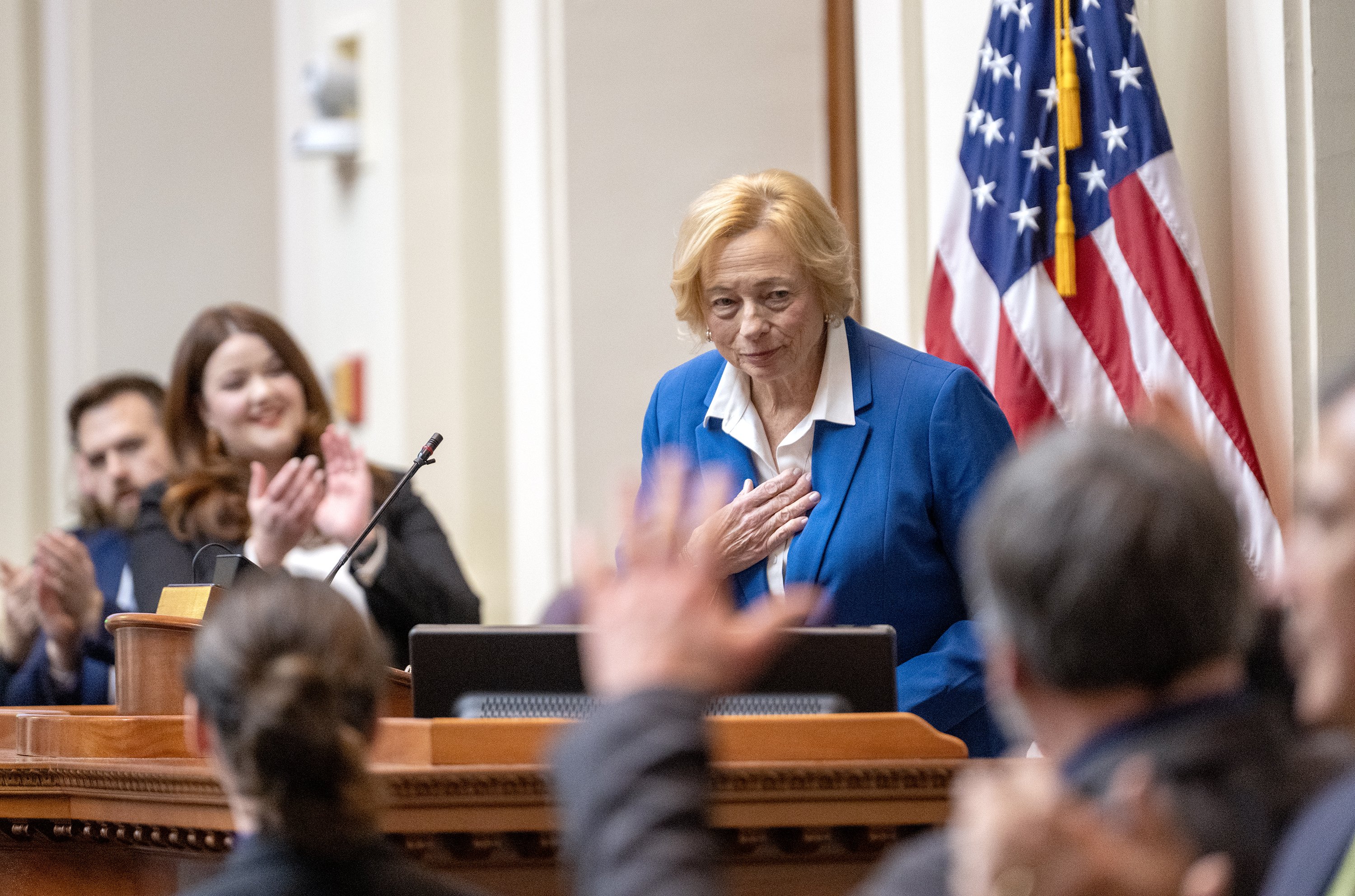
The technology comes in the form of virtual personal assistants, internet search results and targeted advertising by businesses. It’s being used by governments for things ranging from traffic signals to budgets and policymaking to facial recognition to surveillance.
Mills said in a written statement that AI could help improve lives, drive economic growth and solve complex problems, but that it must be used in a “prudent, responsible, and ethical manner.”
“As AI becomes more prevalent in our society, its considerable promise must be balanced against harms — known and unforeseen — that can emerge from its widespread use,” she said. “It’s clear we’re only at the beginning of AI’s evolution.”
The governor has proposed $6.7 million in her supplemental budget to begin implementing some of the recommendations of a 21-member task force she created last year to study the issue.
Her proposal, which is being reviewed by lawmakers, would create a statewide AI literacy campaign; fund local and state partnerships to help municipalities use the technology and offer grants to support job training programs to keep Maine’s workforce competitive and productive in AI-enabled workplaces, among other things.
Lawmakers, meanwhile, are considering bills to address potential harms. In a rare bipartisan move, Republicans and Democrats voted unanimously last month in support of a bill (LD 524) making AI-generated child sex abuse material illegal. But that bill must receive about $55,000 before it can be sent to the governor.
They are also considering bills:
- To require political ads in state and local elections to include a disclosure when AI-generated or altered material is used (LD 517).
- To stop human-like chatbots or social AI companions from interacting with children (LD 2162).
- And to regulate how the technology is used in mental health settings (LD 2082).
Last year, lawmakers passed a measure including AI-generated images in the state’s ban on so-called “revenge porn,” and one requiring companies to inform consumers when they’re interacting with an AI assistant. Mills signed both into law.
Other proposals regulating AI use in medical and dental insurance claims and in setting rents died in committees. So did one prohibiting the use of AI in “dynamic pricing,” in which businesses use the technology to offer different real-time prices to different consumers.
Over 1,000 measures focusing on artificial intelligence were debated in state capitols last year, the National Conference of State Legislatures said.
Some states, such as Colorado and California, are taking steps to enact a broad regulatory framework for AI. California has provisions preventing discrimination in the workplace and requiring watermarks on AI content and transparency around data used to produce reports.
But Maine lawmakers are seeking to address potential harms on a case-by-case basis — at least for now.
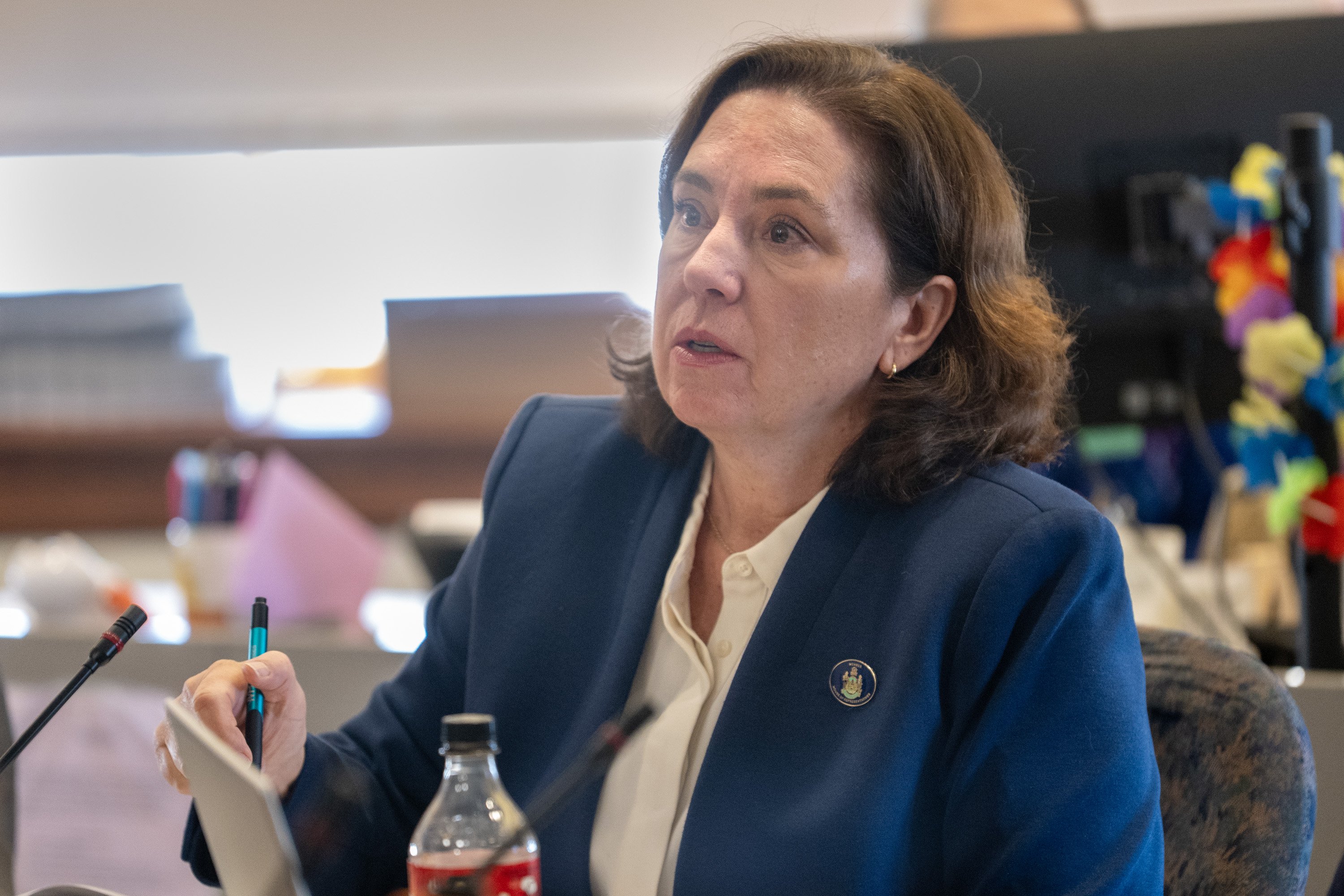
“I think of it as almost a whack-a-mole type of approach where we are developing legislation that very narrowly addresses specific harms of AI,” said Rep. Amy Kuhn, D-Falmouth, who is taking the lead for House Democrats.
“That sort of overarching regulatory framework just feels a little premature for Maine to me right now. I want to see that work its way through the states and let some other states take a swing before we get in there.”
Republicans, however, are worried about overregulation.

Rep. Jennifer Poirier, R-Skowhegan, said her caucus is focused on protecting children from potential harms associated with AI, but she worries that regulation will never keep up with AI’s evolution.
“You can’t always legislate your way out of everything,” Poirier said. “If you have a minor that has access to AI, and it can be used to harm them in any way, it’s our responsibility as adults to keep them safe. … But we are adults, and we need to use our own common sense.”
A recent poll from Pan Atlantic Research showed widespread concern about AI, with 66% of the 810 Mainers surveyed saying they’re mostly concerned about the potential problems of AI, while 25% were mostly optimistic.
More advanced programs can generate text, analyze reports and create increasingly lifelike images and videos. A recent AI video purporting to show Tom Cruise and Brad Pitt throwing down over the death of convicted sex offender Jeffrey Epstein raised alarm bells in Hollywood over its realism.
Other programs have been used by businesses in ways critics say can be exploitative. Consumer Reports recently published a story about how the online grocery shopping service Instacart used AI to charge certain customers higher prices — up to 23% more — if they were flagged as having higher incomes. Instacart reportedly stopped offering stores this option for “surveillance pricing” after the story was published in December.
A lobbying effort is underway to promote AI regulation in Maine. The “Protect What’s Human” campaign launched a website earlier this year, and a spokesperson said they have invested about $210,000 in ads supporting AI regulations. The commercials are targeting Republicans voters in the Bangor and Portland regions. The group is planning to spend another $110,000 on TV, streaming services, social media and podcasts.
Other proposals passed by the Legislature reflect lawmakers’ attempts to get ahead of the AI issue in indirect ways.
The House and Senate have each recently passed a strict data privacy law that would greatly restrict the amount of data — a person’s location, browsing and shopping histories and biometric information, for example— that companies can collect, store and sell. One of the main arguments was that such data can be used to train AI models. However, the chambers will have to iron out the differences between their two versions of the measure, LD 1822, if it is to become law.
And local residents are beginning to grapple with proposed data centers, which have been controversial in other parts of the county because they consume large amounts of water. This is especially true for centers powering AI.
Lawmakers are considering a bill, LD 307, to create a moratorium on such centers and establish a state council to study and review the impact of building them in Maine.
Construction is underway on a data center in Aroostook County, while another is being proposed in Sanford. Others have been proposed in Wiscasset and Lewiston, but did not move forward.
“This whole world is shifting to computer everything,” Poirier said, “and it’s important that we keep up with the times on that.”
Massachusetts
Massachusetts beach towns look to ease ‘overly strict’ conservation rules: ‘Common sense’

As certain shorebirds rebound in population along the Massachusetts coast, beach towns are pushing for the state to strike a healthier balance between conservation and recreation.
State Rep. Kenneth Sweezey, a South Shore Republican, is leading the charge on Beacon Hill, authoring legislation to untangle what he describes as “overly strict” regulations hindering his region’s access to its beaches.
Over the years, Duxbury Beach, in particular, has borne the brunt of protecting recovering bird species, including piping plovers and terns, limiting business and recreational opportunities at the prominent South Shore coastline.
The Duxbury Beach Reservation, a private landlord, has had to close certain roads and portions of the shoreline while birds are nesting. Residents and visitors are also required to have an oversand vehicle permit, which costs more than $150, for beach access.
Under one of Sweezey’s proposals, the state Division of Fisheries and Wildlife would only restrict over-sand vehicle access or other recreational activities if the bird species is listed as endangered or threatened under the federal Endangered Species Act.
Sweezey has said that piping plovers are the only species nesting on Duxbury Beach, which his district includes, that are federally endangered, while other birds carry a state designation.
“Birds may be federally protected because they’re doing poorly in one region of the nation, even though they may be thriving in the Commonwealth,” Sweezey said at the State House last week. “Those differences sort of create problems when you’re looking at human access, recreational opportunities on the beaches and conservation on the beach.”
Sweezey made his appeal to the Joint Committee on Environment and Natural Resources, touting shorebird management expert Chris Kennedy for helping him craft his proposals.
Kennedy, a wildlife biologist who has worked for the state Environmental Police and Division of Fisheries and Wildlife over the decades, is championing an equal balance between conservation and recreation.
In response to a post in the ‘Save Duxbury Beach’ Facebook page, Kennedy highlighted how the Bay State has seen a nearly “tenfold” jump in nesting plovers since 1986, going from 140 to over 1,200 last year. Roseate and common terns are also “strongly increasing,” while least terns are “slowly climbing.”
“Reasonable public access is not anti-birds,” Kennedy stated. “It is simply common sense.”
The 1,221 nesting pairs of plovers identified in 2025 marked a record high for the species’ population, up even from the 1,196 in 2024, numbers show.
According to the state’s Natural Heritage & Endangered Species Program, Duxbury Beach had 149 days of recreational activity last year.
Sweezey is also calling state regulators to conduct a review of their recreational management guidelines that protect piping plovers, terns and their habitats across the state at least once every two years. Part of that process would include two public hearings.
Patrick Parquette, a government affairs officer for the Massachusetts Striped Bass Association, called the state’s current shorebird management program “long outdated,” having been adopted in 1993.
Parquette pointed out how, decades ago, nests of certain shorebirds needed to be a minimum of an eighth of a mile apart. Today, species, including the piping plover, are nesting within 100 feet of each other.
“At the time, it was based on the best thinking that we had,” he said. “I don’t think there’s a reasonable human being in this building, no matter the ilk or philosophy they come from, that would say that our knowledge base 33 years ago could compare with today’s knowledge base.”
Andrew Marshall, founder of the Save Duxbury Beach nonprofit advocacy group, centers his concerns around climate change and its effects on the Plymouth County town of roughly 16,000.
“We’re being unfairly punished due to climate change, with some of these southern birds moving up to the north here,” Marshall told lawmakers. “These birds aren’t rare or threatened. They’re just new in our area.”
A third piece of legislation that Sweezey has crafted would ban state regulators from prohibiting any beach management program from using all legally authorized shorebird nesting mitigation tools under the state’s habitat conservation plan.
Sweezey said a goal of the bill would be to promote parity among Massachusetts beaches.
“These bills,” the representative said, “are critically important to our environment, our coastal traditions and local economies down in Duxbury, but really along the entire coast.”
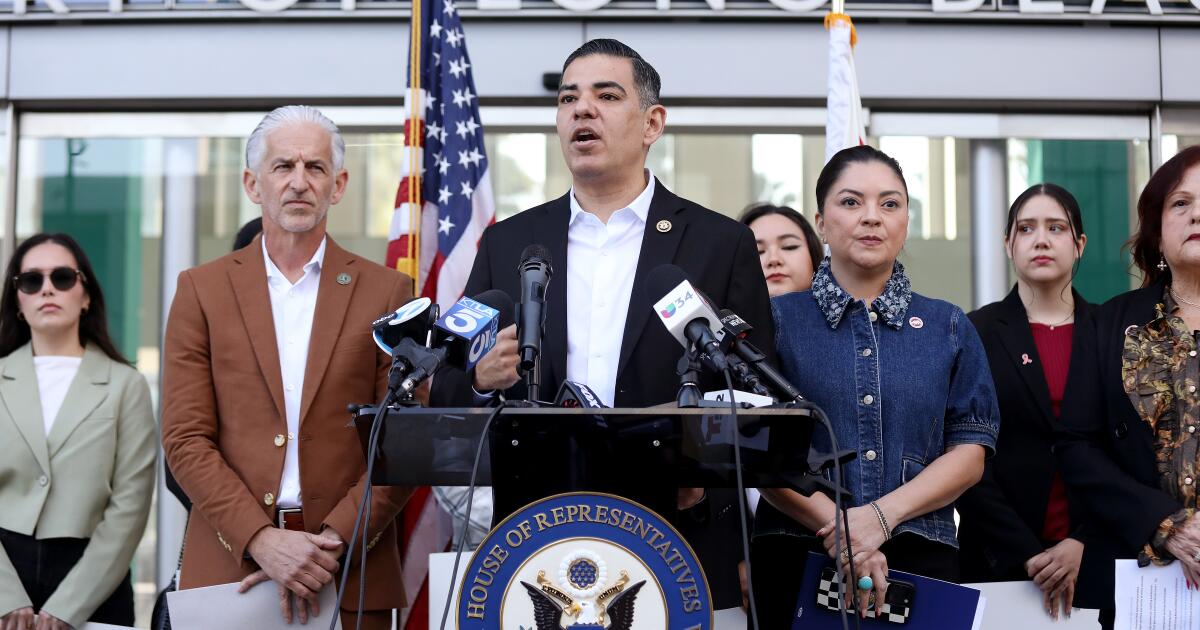
Candidates scramble, one quits, after redistricting shakes up California’s congressional races

Outraged over incentives for data centers that are no good for Colorado (Letters)

Man charged with murder in Hartford

Spike in utility bills after cold snap forces Delaware customers to make tough choices

Our leaders look to the past, but it's not a pretty picture

Florida High School Football Rankings: Top 25 teams – Oct. 21

How old is Bo Nix? What to know about Oregon quarterback ahead of 2024 NFL Draft

Cleary's 21 help Le Moyne down Central Connecticut State 69-64 in OT

99th annual Pony Swim held in Virginia

Indiana Members Credit Union announced as new anchor tenant at Bottleworks District

Video: Airports Struggle to Staff T.S.A. During Partial Government Shutdown

Before-and-after satellite imagery offers a rare look at damage inside Iran
Hungary's opposition leader Péter Magyar calls on Russia to refrain from election interference

Video appears to show U.S. cruise missile striking Iranian school compound

Trump vows block on signing new laws until SAVE America Act passes Senate
-

 Wisconsin1 week ago
Setting sail on iceboats across a frozen lake in Wisconsin
-

 Massachusetts6 days ago
Massachusetts man awaits word from family in Iran after attacks
-

 Maryland1 week ago
AM showers Sunday in Maryland
-

 Florida1 week ago
Florida man rescued after being stuck in shoulder-deep mud for days
-

 Pennsylvania4 days ago
Pa. man found guilty of raping teen girl who he took to Mexico
-

 Oregon1 week ago
2026 OSAA Oregon Wrestling State Championship Results And Brackets – FloWrestling
-

 News1 week ago
2 Survivors Describe the Terror and Tragedy of the Tahoe Avalanche
-

 Sports4 days ago
Keith Olbermann under fire for calling Lou Holtz a ‘scumbag’ after legendary coach’s death