Northeast
Church fights New Jersey town over plans to seize property and turn it into park

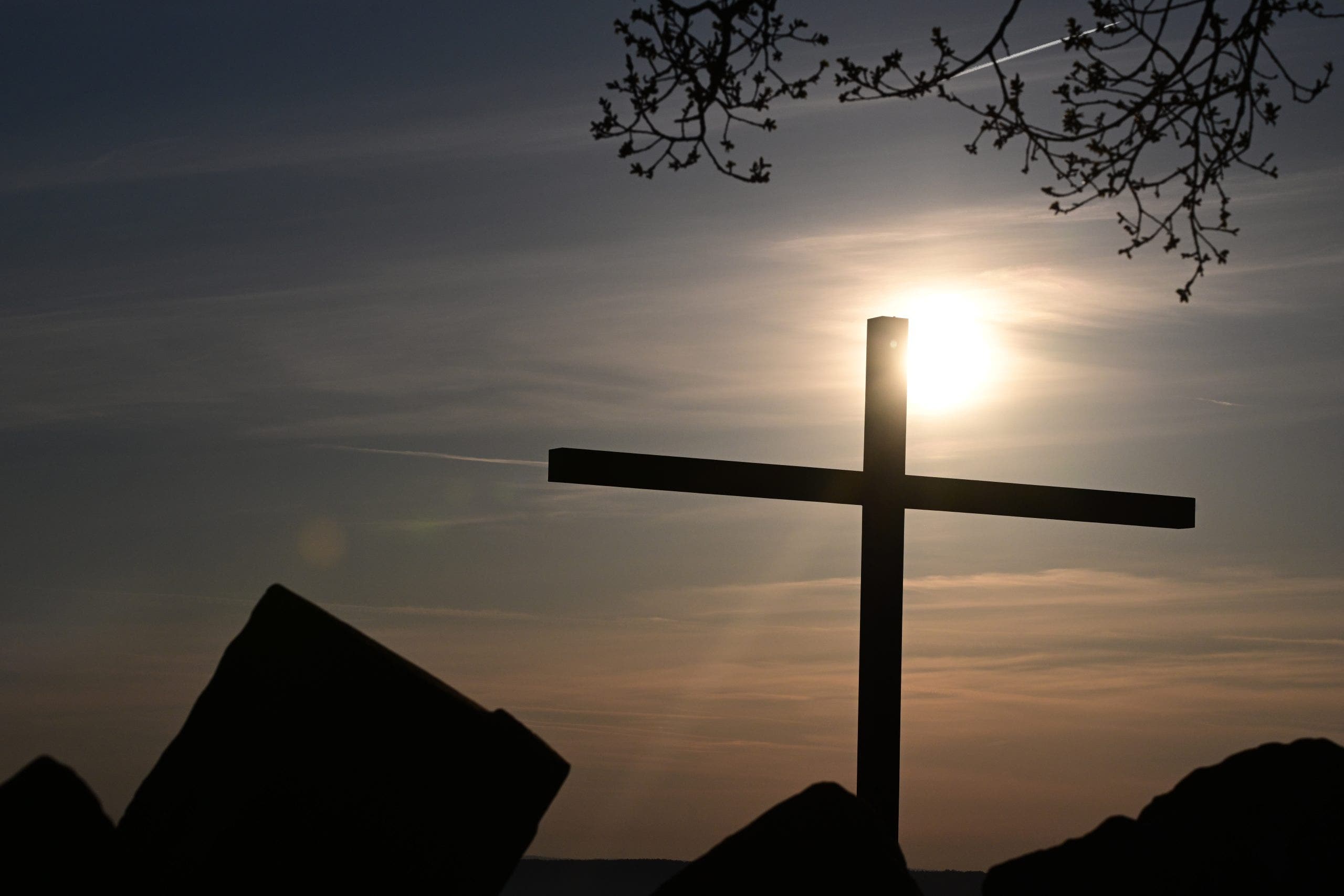
A Christian church is fighting a New Jersey town for attempting to seize their property, alongside other land, and turn it into a waterfront park.
Christ Episcopal Church is fighting plans from Toms River, NJ officials to seize their church property, alongside three other town marinas, as part of the township’s plans to revitalize the downtown community.
Bishop Sally French, in a letter to parishioners, told churchgoers that on April 30, about a day before a scheduled town meeting, officials were alerted by a concerned community member that the church’s property had been “added to a proposal for an eminent domain ordinance.” The church, which has been a part of the community for 160 years, says the action comes amid trying to build a homeless shelter on their property.
“As a Christian leader and a resident of New Jersey, I am troubled by the township’s move to block the faithful ministry of Christ Church and their care for those in need, and I am saddened that the mayor and township council are prioritizing pickleball courts over responding to hunger and homelessness,” Bishop Sally French said in a statement provided to Fox News Digital. “I ask that Toms River lift the burden these proceedings have placed on our parish and diocese, and I pray that we can move forward in serving our neighbors.”
PSAKI BOMBS: MSNBC’S NEWEST PRIMETIME PROGRAM SHEDS 53% OF VIEWERS FROM KEY DEMO IN SECOND EPISODE
Republican Mayor Rodrick told Fox News Digital he feels the plan is in the best interest of the constituents because children do not have a playground in the immediate area. The town ordinance allows officials to enter into negotiations to secure the areas or acquire them by eminent domain should the church not want to sell the property.
“We have about 20,000 residents, 5,000 households within a stone’s throw of the Episcopal church,” he said. “The property is very large, it’s a 10-acre parcel and has a tremendous amount of parking and the parking, we would never be allowed to make that much parking on a property that size anymore. It would be very difficult… so it would be great for the kids in the local area and the families in that area to have a park that they can walk to with their kids and a playground. We’re also interested in doing a skate park there.”
Rodrick argued that the project, which he believes would benefit both residents and businesses, is part of a larger plan to “redevelop downtown” and make it more of a “destination” for residents. The agenda would “enhance business downtown” by bringing more customers to the area.
He also spoke to Fox News Digital about how he is proud of his budget as mayor, explaining they were “DOGE before DOGE was cool” as they cut the budget from $146 million to $135 million.
The Episcopalian church has a different take on the matter, with the bishop offering her full support to the community church.
“The people of Christ Episcopal Church have my support and gratitude for their Gospel ministry of feeding the hungry and providing shelter to unhoused people,” she said. “Jesus tells us to care for the poor and vulnerable as we would care for him, and the people of Christ Church are putting that commandment into action.”
Should the town acquire the property, Rodrick says the church would have time to purchase another property or may choose to consolidate churches according to the church leader’s digression, pointing to there possibly being a silver lining to consolidation for the church due to the high value of the property compared to liabilities.
“Nationwide, the Episcopal church is in steep decline. I think they lost 40,000 members last year. A lot of these Protestant churches have seen big decreases in membership. They still have a lot of these legacy costs and pensions for their pastors that they need to make payments on and it costs a lot of money. So, if you have 75 people put $10 in, and you bring in $3,000 a month, do you know what it must cost to heat a 20,000-square-foot church? So, they could probably benefit from some consolidation and many of the smaller Protestant denominations are doing that.”
The church is standing alongside “approximately 150 church members, community members, clergy” and others in their fight against the ordinance, according to the website.
“Christ Church Toms River is a vital resource in the community,” Mother Lisa Hoffman, rector of Christ Church in Toms River, told Fox News Digital. “Our outreach includes nearly 20 12-step meetings per week. While the members of Christ Church are disappointed with this situation, we are determined to protect our Gospel ministry.”
As for next steps, the council has already voted four to three and “anticipates” it will pass for a second time four to three, according to the mayor.
Read the full article from Here


How can people possibly afford to live in one of the most expensive cities on the planet? It’s a question New Yorkers hear a lot, often delivered with a mix of awe, pity and confusion.
We surveyed hundreds of New Yorkers about how they spend, splurge and save. We found that many people — rich, poor or somewhere in between — live life as a series of small calculations that add up to one big question: What makes living in New York worth it?
Weixun Hu enjoys what might sound like the ultimate professional perk. New Yorkers pay some of the country’s highest taxes on their income, more than $12,000 on average per person between state and local governments. But Mr. Hu’s income tax this year? $0.
That’s because Mr. Hu, 32, who was born in Guangzhou, China, conducts social development research at an international organization, where most employees are exempt from national income taxes or reimbursed for the cost. His gross and net income are one in the same; he earns roughly $110,000 after his insurance and pension contributions.
Mr. Hu became one of New York City’s 3.1 million foreign-born residents nearly three years ago, after reassignment from a post in Bangkok in the summer of 2023. But he quickly ran into a hurdle: finding an apartment with no credit history, no tax returns and no one to co-sign a lease.
“It sounds very cool that you don’t pay taxes,” Mr. Hu said. “It also creates a lot of problems.”
He discovered that many of his co-workers landed in a handful of pricey residential developments including Stuyvesant Town. Yet renting there felt worlds apart from Thailand’s capital city, where a luxury studio in a high-rise condo with a rooftop infinity pool and premium gym might run $600 per month.
So he found a studio in Long Island City, Queens, where he has in-unit laundry and falls asleep to the sound of waves hitting the shore near Hunters Point South. His employer subsidizes $700 of his $3,900 rent, and utilities and internet cost about $150 monthly.
“It’s much better value compared to renting in Manhattan,” he said.
Saving for Tomorrow
A good deal of young adults in New York City don’t know how to drive, and expect to remain renters for most of their lives. Not Mr. Hu.
He puts away $2,000 or so a month into a high-yield savings account, aspiring to buy a car. His sights are set on a Mazda CX-5. But he expects he’ll need to pay upfront in cash, another consequence of lacking a credit or tax history — and it’ll take about three more years to build up enough.
Eventually, he wants to own a home. “I know most people in New York City don’t care,” he said. “But for me, it’s very important.”
Mr. Hu also supports his parents in their retirement, sending about $3,000 every three months. As their only child, he feels both a sense of guilt for living about 8,000 miles from home — and an obligation to pay them back for their sacrifices.
“People will say, ‘Oh, you’re single. You don’t have a wife. You don’t have kids,’” he said. “‘So all your money is yours.’”
“And I’m like, ‘Excuse me, my parents are still alive.’”
In other ways, though, Mr. Hu fits the profile of an everyday bachelor: He rarely cooks meals at home. “My oven is basically storage space.”
Rather, he searches for affordable deals on Too Good To Go, a popular app where restaurants sell excess food at a discounted price. His No. 1 spot is Chinese Musician in Greenpoint, which offers a three-course meal for $9.
Sometimes, Mr. Hu does the $16 tonkotsu ramen at Nishida Sho-ten on 49th Street for lunch, an $8 lamb over rice meal for dinner from the halal truck in front of Bellevue Hospital or a hot dog for $3.25 from Gray’s Papaya. He’ll swing by the Dollar General in Astoria to stock up on his favorite drink, Coca-Cola Orange Cream.
And he saves up for an upscale dining experience every couple of months. He recently feasted at the Michelin-starred chef Daniel Boulud’s steakhouse, La Tête d’Or, where he spent roughly $300 and ordered what he called the standout filet mignon.
The Lions Over the Knicks
For any sports buff, it’s an incredible time to live in New York City.
But for Mr. Hu, ticket prices to see the Knicks play at Madison Square Garden felt “a little bit off-putting” — and that was even before their championship run. So he started religiously following basketball at Columbia, going to games that often run $10 to $12 on the Morningside Heights campus.
Yankees games, where a 400-level seat might run $45, are a no; he opts to watch the Columbia Lions up close at Robertson Field in Inwood without charge.
He is willing to spend up to about $300 on some singular sports showdowns. He can still recall how Kylian Mbappé flew down the field at MetLife Stadium during a Real Madrid match against Borussia Dortmund last summer.
Typically, though, he elects for low- or no-cost events like this spring’s edition of the Madison Avenue Gallery Walk.
And he regularly joins free lectures at the Asia Society, where he has a complimentary membership through his employer, and at local universities like N.Y.U., where he’s met the minds behind two of his favorite video games, The Elder Scrolls and Monument Valley.
A Sense of Wanderlust
Ever since Mr. Hu can recall, he’s felt a magnetic pull to experience the world. And few things embody such a yearning as aviation.
He sometimes goes to Canarsie to watch planes land at Kennedy International Airport, studying the way pilots pull up the nose of their aircrafts and slow the descent before touching down. He’s even found others who share his passion on walks in the neighborhood.
And traveling draws him even closer to his hobby.
He spent $4,400 on a trip to Guangzhou last June to fly for the first time in an Airbus A380, the only full-length double-deck aircraft in the world. Qatar Airways is one of the few airlines that still has an active fleet — so Mr. Hu arranged his trip by way of Doha.
“Some people treat it as bragging,” he said. “But no, it’s just to admire such an incredible machine that’s very rare to be seen these days.”
“It’s a weird, niche hobby, but I’m happy spending my money on it.”
As a young man living in his seventh country — after Belgium, China, Italy, Poland, Thailand and the United Kingdom — he appreciates that as “a foreigner in this city, you don’t have to worry about whether you stand out.”
He’s relished exploring from Crown Heights to Jackson Heights, taking the train to a random stop and popping into bodegas to chat up the owners. He considers Staten Island — and its Chinese Scholar’s Garden in Snug Harbor where adult admission costs $5 — to be a hidden gem.
And when he boarded the U.S.S. Bataan during a past Fleet Week, he felt obliged to tell a Marine that he was Chinese. “He said: ‘Oh, no worries at all. Everybody can be an American’.”
“To be honest, I still don’t think it’s a value option for the money,” Mr. Hu said of New York City. “But there’s something so unique, and I think it’s that inclusiveness.”
“You don’t need to go to the world,” he said. “The world comes to you.”
We are talking to New Yorkers about how they spend, splurge and save.

Britten partnered with the Massachusetts Port Authority (Massport) to bring an ambitious public-facing installation to life, celebrating Boston’s role in the global excitement surrounding the FIFA World Cup 2026.
Massport envisioned a bold experiential marketing activation at Piers Park II in East Boston, centered around a Guinness World Record attempt for the world’s largest soccer ball. The nearly 50-foot structure needed to become a highly visible waterfront landmark while meeting strict engineering, safety, and verification requirements. The challenge extended far beyond fabrication. The installation needed to withstand unpredictable coastal conditions, operate safely in a public environment, and be completed on a fixed timeline tied to FIFA fan programming.
Massport needed an experienced event production partner capable of transforming a large-scale concept into a fully engineered, installed, and record-breaking experience. Britten served as the central event fabrication partner, managing production coordination, logistics, and on-site execution from concept through completion. Working alongside Massport and engineering partners, Britten helped translate the creative vision into a buildable solution capable of meeting Guinness World Records standards. Every detail, from material selection and structural integrity to panel alignment and inflation systems, required precision to support a nearly 50-foot inflatable structure.
After off-site fabrication, Britten coordinated transportation, staging, and installation at Piers Park II. The waterfront location introduced additional challenges, including wind exposure, tidal conditions, limited staging space, and public access. Britten oversaw anchoring systems, inflation sequencing, and installation operations to ensure the soccer ball was safely deployed and successfully verified. Through close collaboration with stakeholders, engineers, and Guinness World Records officials, Britten delivered a seamless execution where creative vision, engineering expertise, and experiential marketing came together.
The completed installation achieved official Guinness World Records recognition as the world’s largest soccer ball, measuring approximately 47.9 feet in diameter. The record-breaking brand activation transformed Piers Park II into a must-visit destination along Boston’s waterfront, creating a memorable community experience connected to the FIFA World Cup. Visible across Boston Harbor and from approaching aircraft, the installation generated widespread attention and became a recognizable symbol of Boston’s tournament celebrations.


Pittsburgh voted best Fourth of July celebration in America
In 2026, Pittsburgh gets the bragging rights for the nation’s Best Fourth of July Celebration, as determined by voters in USA Today 10BEST Readers’ Choice Awards.
Pittsburgh has long been known for its connections to horror films starting with George A. Romero’s Night of the Living Dead in 1968.
Now, in honor of that designation and the legacy of Romero, who died in 2016, the Pittsburgh Film Festival has announced it is introducing a new award this year.
The inaugural Romero Awardfor Best Horror Feature will be presented at the 45th annual Three Rivers Film Festival, scheduled to run from Nov. 4-15, according to the group’s website. Presented with support from the George A. Romero Foundation, the award will be selected by a panel of industry judges.
Named in honor of Romero, the award celebrates bold, visionary work in the horror genre. As the birthplace of Night of the Living Dead, Pittsburgh remains a vital home for horror storytelling, making the Romero Award a natural addition to the festival’s juried honors, the group said.
“The GARF is devoted to preserving Romero’s legacy and continues to support creatives and independent filmmaking in genres and horror spaces,” Suzanne Romero, George’s widow and founder and president of the George A. Romero Foundation, said recently. She died June 24 at her home in Toronto after a long illness.
Film Pittsburgh’s executive director, Shanna Carrick, added, “We are proud to partner with the GARF to introduce an international competition for best independent horror film. Pittsburgh has a deep love of horror films and we believe that our audiences will be thrilled to experience new voices in the genre.”
The festival is currently accepting submissions, with the full lineup to be announced in October.
The festival will also continue to celebrate its horror offerings with its beloved Chiller Theater, named in honor of the late Pittsburgh horror show host Chilly Billy Cardille. The spooky showcase features the best new independent horror shorts from around the globe and Allegheny County.
-

 New York14 minutes ago
How a Global Researcher Lives on $110,000 in Long Island City
-

 Los Angeles, Ca17 minutes ago
Mass shooting at L.A. street takeover leaves 1 dead, 6 injured
-

 Detroit, MI37 minutes ago
On the front lines of chronic absenteeism: What Detroit’s Health Hubs do to get kids to school
-

 San Francisco, CA47 minutes ago
S.F. police arrest 20 at 300-person SoMa block party during Pride
-
Dallas, TX52 minutes ago
CJ Goodwin announces retirement after 8 seasons with Cowboys
-

 Miami, FL53 minutes ago
Several people reportedly hurt in ‘mass casualty’ crash near Miami Gardens – WSVN 7News | Miami News, Weather, Sports | Fort Lauderdale
-

 Boston, MA59 minutes ago
Inside Britten’s Record-Breaking Boston Waterfront Activation
-

 Denver, CO1 hour ago
Denver area events for June 29


