


Get the latest Boston sports news
Receive updates on your favorite Boston teams, straight from our newsroom to your inbox.


McGrory’s 20th-century perspective — that Boylston Street would be better if vehicle traffic could move unimpeded — is almost amusing. He’s certainly right about one thing, though: “There’s little middle ground” in this debate. He seems to feel that bicycles deserve their own space on the streets of Boston as long as they don’t ride on the streets he likes or cause him one minute of delay on his drive.
Nathaniel Woodward
Stockbridge
Thank you, Brian McGrory, for a timely and well-reasoned column about the changes to Boylston Street. Having worked in that area for 20 years, I was appalled, on a recent return visit, to see the chaotic mess this beautiful street has become. In general I applaud efforts to support commuters who pursue alternatives to driving a car into the city, but these changes have to make sense.
Leaving the bike lane discussion to others, I question the new bus line as not only intrusive but also unnecessary. In my experience, when there were three lanes, the bus was rarely slowed by traffic, and given that there are bus stops all along Boylston Street, it would seem the dedicated lane makes no difference in terms of bus speed or time of the commute.
As new efforts to move people through the city — by bike, car, or bus — are introduced, I hope that the architects of these changes are evaluating whether they achieve their goals and that they are willing to rethink things if they do not.
Pat Kelleher
South Boston
The Brian McGrory column criticizing the bike lanes on Boylston Street unfortunately follows the historical American ideology favoring motorized transportation. This is most evidenced by his complaint that “what used to be three through lanes … has been reduced to a maximum of two.” The headline itself, “Is the Boylston Street bike lane really necessary?” only serves to maintain the hegemony of motorized transportation, something which is way past time for change.
McGrory’s testament that various forms of transportation, such as delivery drivers, are “not going away” is a surrender to these drivers frequently double-parking and violating other regulations while often interfering with other vehicular traffic as well as cyclists and pedestrians. Nowhere to be found in his piece is the suggestion of enforcing laws.
Stating that there is insufficient walk time for crossing the street at selected intersections is a valid criticism, but more importantly, all roads should simply be safe for all users, including pedestrians.
We obviously need improved planning and good implementation. Cheap shots, though, are not helpful.
Robert Rosofsky
Milton
Brian McGrory is lamenting necessary and reasonable changes that haven’t been executed well. But the fact is we don’t need fewer bike lanes. What we need is fewer cars. For that matter, maybe we don’t need any cars on Boylston or Newbury street. They could be magnificent boulevards — no congestion, no chaos; more outdoor seating.
Not only in Copenhagen but also in numerous other European cities the concept works well: enough parking around the city center, public transportation, and a network of bike lanes. The result: vibrant pedestrian zones and commercial centers.
The Boylston Street bike lane is not the problem. Rather, it is the lack of a well-planned, visionary infrastructure concept for the entire city. But that requires all of us changing our relationship to cars, agreeing on funding, and accepting a period of construction. Either we do and come out much better at the end of it, or we keep living with traffic jams and a noisy, messy Boston.
Michaela Nielsen
Quincy
I thought Brian McGrory was spot-on in his criticism of the disaster that traffic on Boylston Street has turned into. It led me to wonder whether our municipal government is actually preparing Bostonians to participate in a new pedestrian olympics.
We have long competed for the greatest number of falls on broken pavements and close encounters with cyclists (old-fashioned and increasingly motorized) speeding on sidewalks as well as in bike lanes. A new competition would involve attempting to cross Boylston Street at intersections where it’s impossible to tell whether there’s oncoming traffic because cars and delivery vans are blocking the view. One popular event would be to identify the pedestrians who use the most colorful language in yelling at drivers and cyclists who come close to hitting them — or in describing the politicians who have created this mess.
Kathryn Ruth Bloom
Boston
Contrary to what columnist Brian McGrory argues, people who bike to the Prudential Center, Copley Square, the Boston Public Library, or the restaurants and stores in Back Bay have an entitlement to Boylston Street equal to drivers.
On Sunday afternoon, I needed to pick up an item at a store in the Pru. Having commuted by bike to my downtown law office for decades, I knew the quickest way to get there and back was by bicycle. Thanks to the new bike lanes that Mayor Michelle Wu has championed, it took me little more than 15 minutes to get to the Prudential Center from Brookline by way of Beacon Street, Mass. Ave., and then Boylston. There was an available bike rack next to a street busker. I picked up my item and headed home, crossing Newbury Street, closed to vehicular traffic on Sundays in the summer and crowded with shoppers, tourists, and others enjoying the fresh air.
The round trip took me an hour, including the shopping. I couldn’t have done that in a motor vehicle.
I concede that the two vehicle lanes on Boylston were crowded with cars, but from what I saw, the cars moved about as fast as in the old days of three lanes for which McGrory longs.
Boylston Street was not built for only motor vehicles. It was built for people who travel on Boylston Street in many ways.
Thank you, Mayor Wu.
Andrew M. Fischer
Brookline


Boston Red Sox
No games have been played, but the Red Sox’s series against the New York Mets is already off to a rocky start.
That’s thanks to a series of travel issues that caused a 17-hour delay from the time Boston was supposed to depart Chicago to the time it actually took off. The Red Sox should have left Illinois at 9:45 p.m. Eastern Time Thursday night, landing in New York around midnight.
Instead, the team took off at approximately 3 p.m. ET on Friday. They’ll land around 5 p.m., making it to New York just barely in time for their 7:15 p.m. game against the Mets.
The Boston Globe‘s Tim Healey and Alex Speier reported the delay, and their sources didn’t give any specific reason for the issues, just that Boston “encountered multiple plane issues in trying to continue to New York.”
As of 4 p.m. ET, the Red Sox-Mets game will continue as scheduled at 7:15 p.m. Friday. Sonny Gray is set to take the bump for Boston, which enters Friday an undefeated 6-0 on its recent road trip.
Receive updates on your favorite Boston teams, straight from our newsroom to your inbox.

BOSTON (WHDH) – Police are investigating a shooting in Downtown Crossing that occurred Thursday night.
Officials said the shooting occurred around 10:30 p.m. near Tremont and Temple Streets.
When officers arrived on scene, they found a man with a gunshot wound; he is expected to survive.
Police have not said if any arrests have been made.
(Copyright (c) 2026 Sunbeam Television. All Rights Reserved. This material may not be published, broadcast, rewritten, or redistributed.)

Local News
An East Boston father is suing ICE, alleging immigration agents unlawfully stopped, arrested, and detained him because of his race and national origin despite having his legal status, his lawyers said.
Lawyers for Civil Rights filed the lawsuit Thursday on behalf of Jose Pineda, a 62-year-old Salvadoran immigrant who has lived in the U.S. for more than three decades and is authorized to remain and work through humanitarian relief, the nonprofit legal organization said in a press release.
The suit is seeking damages under the Federal Tort Claims Act, alleging false arrest, false imprisonment, assault, and severe emotional distress.
“I came to the United States to escape the civil war that devastated El Salvador. I worked hard, started a family, and built a life here,” said Pineda, who works as a landscaper and lives with his wife and 13-year-old daughter. “I never expected to feel that kind of fear again, much less in the United States.”
According to the 30-page complaint, written by LCR senior attorneys Victoria Miranda and Mirian Albert, Pineda has been a recipient of Temporary Protected Status, which allows certain foreign nationals from designated countries to live and work legally in the U.S.
Pineda also had a pending asylum petition and had been granted a T visa, which provides immigration protections to trafficking victims, the complaint states.
“We will not stand idly by as ICE wreaks havoc on immigrant families. Through racial profiling, ICE agents are carrying out an unquestionably discriminatory agenda,” Miranda said in the release. “The law exists to protect people like Mr. Pineda, and it must be enforced against ICE.”
The lawsuit stems from a May 2025 encounter in Weymouth, where Pineda was driving a landscaping truck to a job site when agents in unmarked ICE vehicles surrounded him, according to the complaint.
“The aggressive nature of the questioning made it clear to Mr. Pineda that he was not being judged based on any evidence of unlawful conduct, but rather on his identity, race, ethnicity, and/or national origin,” Pineda’s attorneys wrote.
The lawsuit alleges ICE officers then “forcibly” handcuffed and shackled Pineda before taking him to the agency’s field office in Burlington.
Officers searched Pineda’s belongings during the stop and again at the field office, allegedly confiscating $600 in cash that he intended to use to pay his family’s rent. The money has not been returned, according to the complaint.
Pineda spent two days in ICE custody under what the lawsuit describes as “cruel and inhumane conditions.”
“After what ICE did to me, and after everything my family has endured, I don’t know if I will ever truly feel safe again,” Pineda said.
According to the complaint, he was held in severely overcrowded cells containing more than 40 people — at times as many as 60 — leaving little room to sit and forcing him to remain standing for much of his detention. Detainees also allegedly shared a single toilet and sink without soap or toilet paper and were not provided toothbrushes, clean clothes, or showers.
Fluorescent lights remained on around the clock, making it difficult to sleep, while temperatures became “extremely cold” overnight and some detainees received only aluminum blanekts for warmth, the complaint states.
Pineda was given only a two-minute phone call during his detention and received two bottles of water each day, along with “inadequate and limited” food and water, according to the complaint.
“Mr. Pineda has suffered devastating and ongoing physical and emotional harm that has impacted all aspects of his life,” his attorneys wrote. “Mr. Pineda brings this action to seek accountability for these violent and traumatizing tortious acts of the ICE officers and to address the harms inflicted upon him.”
According to LCR, Pineda was released following advocacy by Centro Presente, a Massachusetts immigrant rights organization.
After his release, ICE initiated removal proceedings against him depsite his humanitarian protections, the organization said. Those proceedings were ultimately dismissed.
“ICE targeted Mr. Pineda based on nothing more than his perceived national origin and the nature of his work,” Albert said in the press release. “Our laws prohibit this kind of arbitrary and discriminatory enforcement. Through this lawsuit, we seek to hold the federal government accountable for the violence and harm inflicted on Mr. Pineda.”
ICE referred questions about the lawsuit to the Department of Homeland Security. DHS did not immediately respond to a request for comment Thursday evening.
Get everything you need to know to start your day, delivered right to your inbox every morning.


Belgium to introduce new road tax in 2027, even for transiting drivers
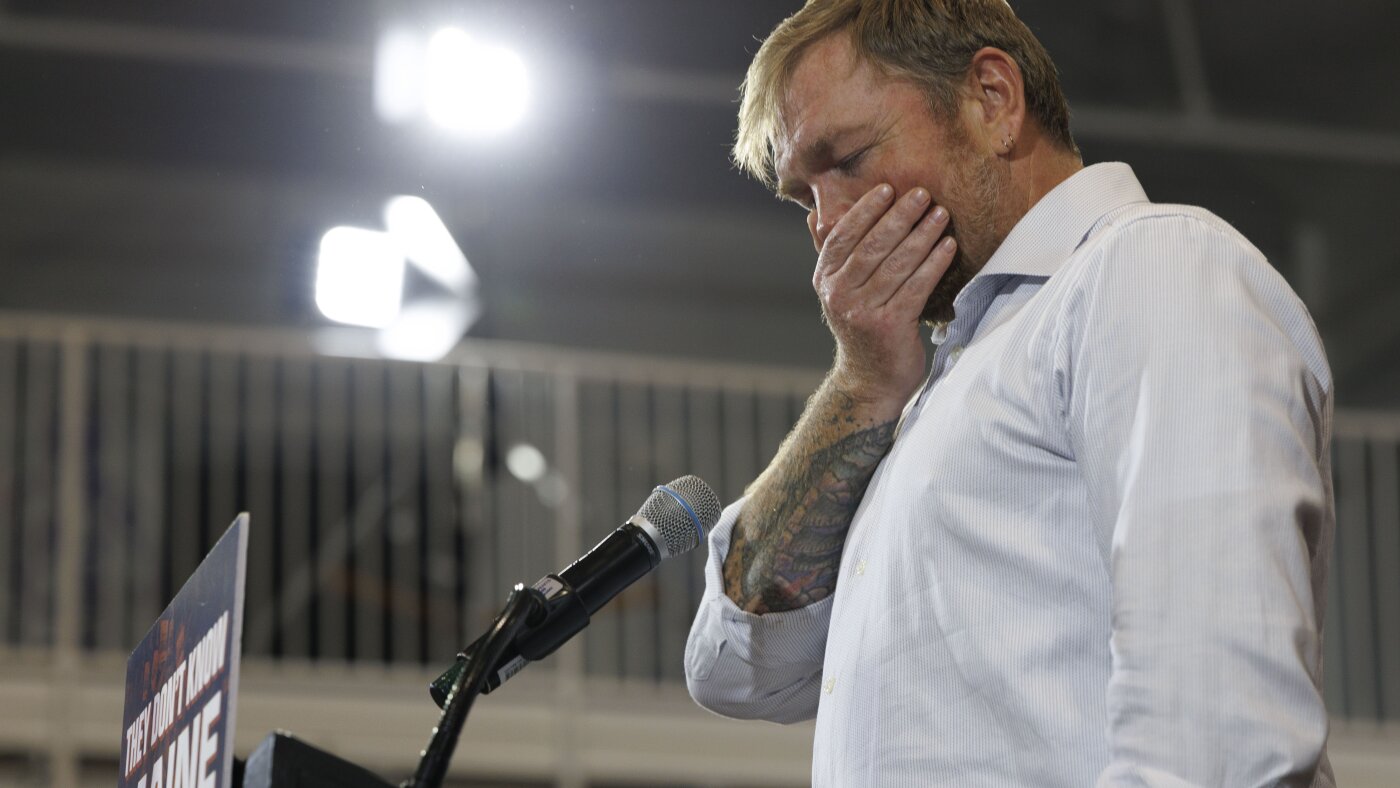
Graham Platner makes it official in Maine, submitting paperwork to leave Senate race


Knee irritation forces Shohei Ohtani out of Friday start, All‑Star game


Detroit Evening Report: Waymo cars blocking first responders – WDET 101.9 FM


San Francisco Mayor Daniel Lurie Blocks Vacant Grocery Store Tax Proposal | KQED


Oregon Battling Miami, Mario Cristobal for Four-Star EDGE Recruit


FC Dallas Forward Logan Farrington Inks Contract Extension


Red Sox face lengthy travel issues ahead of series vs. Mets

