News
Trump Pauses U.S. Military Aid to Ukraine to Pressure Zelenskyy Into Deal


Donald Trump ordered a “pause” on U.S. military aid to Ukraine on Monday, hoping to push Ukrainian president Volodymyr Zelenskyy into agreeing to a peace deal with Russia.
The move comes only days after a contentious meeting between Trump, JD Vance, and Zelenskyy in the Oval Office, which saw the U.S. leaders berating Zelenskyy, claiming that he was ungrateful for their help. The Trump administration has now apparently paused all military aid until the Ukrainian government is “committed” to the goal of peace.
“President Trump has been clear that he is focused on peace,” a White House official told Fox News on Monday night. “We need our partners to be committed to that goal as well. We are pausing and reviewing our aid to ensure that it is contributing to a solution.”
They added that the decision is “not permanent termination of aid, it’s a pause.” “The orders are going out right now,” the official confirmed. According to Fox News, the official said the move was “in response to Zelenskyy’s conduct over the last week.”
Trump himself has not commented on the decision, however earlier on Monday the president responded on Truth Social to a headline of Zelenskyy saying the end of the war was “very, very far away.”
“This is the worst statement that could have been made by Zelenskyy, and America will not put up with it for much longer!” Trump wrote. “It is what I was saying, this guy doesn’t want there to be Peace as long as he has America’s backing and, Europe, in the meeting they had with Zelenskyy, stated flatly that they cannot do the job without the U.S. – Probably not a great statement to have been made in terms of a show of strength against Russia. What are they thinking?”
Zelenskyy clarified the headline, noting on X that “it is very important that we try to make our diplomacy really substantive to end this war the soonest possible.”
“We need real peace and Ukrainians want it most because the war ruins our cities and towns,” he wrote. “We lose our people. We need to stop the war and to guarantee security. We are working together with America and our European partners and very much hope on US support on the path to peace. Peace is needed as soon as possible.”
Zelenskyy was invited to the White House on Friday for a meeting that was broadcast around the world. The meeting was designed to reach an economic agreement focused on giving the United States access to rare-earth mineral deposits in the war-torn country. Zelensky was also hoping to get security guarantees from Washington, as the Trump administration pushes ahead with efforts to reconcile with Russia and start negotiations aimed at bringing the war in Ukraine to an end.
Things took a turn when Trump and Vance spent most of the meeting shouting aggressively at Zelenskyy. During the conversation, Trump claimed that Ukraine owes the United States “$500 billion,” saying that this was the amount of military aid Washington had provided to Kyiv. The true amount of aid provided is closer to $115 billion.
On Monday night, Vance appeared on Fox News to discuss Friday’s White House exchange. “If you want real security guarantees, if you want to actually ensure that Vladimir Putin does not invade Ukraine again, the very best security guarantee is to give Americans economic upside in the future of Ukraine,” Vance told host Sean Hannity. He added, “What is the actual plan here? You can’t just fund the war forever. The American people won’t stand for that.”
Several U.S. politicians and other world leaders have responded to Trump’s decision. Democratic Rep. Brendan Boyle of Pennsylvania, co-chair of the Congressional EU Caucus, said in a statement, “Donald Trump’s decision to unilaterally pause funding for Ukraine is reckless, indefensible, and a direct threat to our national security.”
He continued, “This aid was approved by Congress on a bipartisan basis — Republicans and Democrats alike recognized that standing with Ukraine is standing for democracy and against Putin’s aggression. Yet, Trump, who has repeatedly praised Putin and undermined our allies, is now playing political games with critical military assistance.”
Oleksandr Merezhko, a Ukrainian member of parliament in President Zelensky’s party, told the BBC, “It’s unbelievable what’s unfolding because I couldn’t imagine in my worst dreams that Trump would be cutting off military aid to Ukraine when we need it so much.”
Merezhko added, “I think Mr. Trump should seriously think about how he’s going to enter in history. To me it’s a date that will go down in history infamy.”





A series of tornadoes hit parts of Texas, Illinois, and Indiana late Tuesday and overnight, as forecasters warn that the threat of severe weather, including flooding, will continue on Wednesday for tens of millions of people from Texas to Michigan.
At least four tornado touchdowns were reported in eastern Illinois, the National Weather Service (NWS) said, leaving a trail of damage stretching into Indiana, where at least two people were killed.
Video of a separate tornado in Taylor county, central Texas, on Tuesday was posted to weather.com. Officials there reported 60mph wind gusts and “baseball-sized” hail.
A search continued on Wednesday for possible victims of a supercell of storms that followed a path from Kankakee county, Illinois, into Indiana late on Tuesday. Rob Churchill, chief of the Lake Township fire department in Indiana, said in a video on Facebook that the small town of Lake Village had taken “a direct hit”.
“We have multiple homes destroyed, please stay away from the area,” he said.
Fire department officials said at an early morning Wednesday press conference that there were two fatalities, WTHR News, an NBC affiliate, reported. Details were not immediately available.
Shannon Cothran, sheriff of Newton county in Indiana, said in a separate Facebook video that the immediate threat of dangerous weather had passed, but first responders were faced with challenging circumstances as they dealt with the storm’s aftermath.
“[There’s] a lot of damage. Please do not come here. Do not try to help right now. We’ve got a lot of first responders out here doing their job, just give us some room,” he said.
The tornadoes in parts of Illinois and Indiana downed trees and power lines in an area south of Chicago, and overwhelmed 911 operators, officials said. The Kankakee county sheriff’s office said one tornado touched down near the Kankakee fairgrounds before moving north-east into Aroma park, where it caused extensive damage.
JB Pritzker, the Democratic Illinois governor, said in a post on X early Wednesday that he was briefed on the storm and tornado damage and that the state’s emergency management agency was in contact with local officials.
“Keeping in our thoughts all Illinoisans impacted by the severe weather – we’ll be here to help them recover,” he said.
Severe storms dumping rain and hail in parts of the midwest were threatening to bring intense tornadoes, damaging winds and very large hail from the southern plains to the southern Great Lakes, according to the NWS. States from Oklahoma to Michigan were under tornado watches.
Andrew Lyons, a meteorologist with the weather service’s storm prediction center, told the Associated Press that the exact number of tornado touchdowns would not be known until after officials conducted damage assessments.
He described it as a fairly typical early spring strong storm system that was expected to continue to move east and northeast towards the Atlantic coast on Wednesday, likely bringing more severe weather, he said.
Brandon Buckingham, an AccuWeather meteorologist, said at least 10 tornadoes were spotted in Illinois, Indiana and Texas.
“There were nearly 200 filtered reports of severe weather spanning more than 2,500 miles from Texas to Michigan,” he said in a post on the weather service’s website.
The forecaster said the chain of storms would peak midweek and “could become the most widespread and impactful severe weather outbreak so far this year”.
The severe weather could reach Washington DC by Wednesday afternoon, CBS News reported, bringing new threats of damaging winds and tornadoes. A line of storms was forecast to sweep east and move into Ohio and Tennessee, including the cities of Cincinnati, Memphis and Nashville, it said.

American Steve Emt competes in Sunday’s mixed doubles match against Italy, which the U.S. won.
Maja Hitij/Getty Images
hide caption
toggle caption
Maja Hitij/Getty Images
Anyone watching the Winter Paralympics has probably taken note of Steve Emt, who — along with Laura Dwyer — is representing Team USA in the Games’ first-ever mixed doubles event.
Their performance is one thing: The pair notched three dramatic, back-to-back wins in the round-robin tournament to reach the semifinals, marking the first time the U.S. has qualified for a medal round in wheelchair curling since the 2010 Paralympics.

After losing to Korea in the semifinals, Emt and Dwyer will face Latvia in the bronze medal match on Tuesday, in the hopes of winning the U.S. its first Paralympic medal in wheelchair curling.
But it’s their teamwork and attitude on ice that really set them apart. Emt, in particular, has charmed the internet, with his booming baritone delivering a steady stream of encouragement to his doubles partner and demands to the granite stones they’re sliding (“curl!” “sit!”).
“I have three older siblings. I was always on the basketball court getting beat up by them, so I had to assert myself on the court, around the kitchen table, everything,” he said when asked about his deep voice this week.

Steve Emt and Laura Dwyer have made sure to celebrate their wins, of which there have been many throughout this wheelchair curling mixed doubles round-robin tournament.
Maja Hitij/Getty Images
hide caption
toggle caption
Maja Hitij/Getty Images
While Emt, 56, is competing in a new event, he’s no stranger to the sport: The 10-time national champion and three-time Paralympian is the most decorated Paralympic curler in U.S. history.
But he didn’t know what curling was until he got recruited off the street just over a decade ago.
Emt, who is 6 feet, 5 inches tall, was enjoying a day in Cape Cod, Mass., in 2013 when a stranger with slicked-back hair approached and asked if he was local. Emt replied that he lived in Connecticut and suspiciously asked why.

“He said, ‘Well, I train with the Paralympic rowing team here in the Cape. I saw you pushing up the hill back there. With your build, I could make you an Olympian in a year,’” Emt recalled, referring to his wheelchair. “And I heard ‘Olympics,’ I’m like: Let’s go. What the hell is curling?”
After their conversation, Emt drove home and did some research, confirming that curling was not related to weightlifting, as he originally suspected.
“I went back two weeks later and I threw my first stone, and it just bit me,” he said.
Before long, Emt was making the two-and-a-half-hour drive to Massachusetts to spend the weekend training with that stranger-turned-coach, Tony Colacchio. He made the U.S. wheelchair curling team in 2014 and competed at his first world championship in 2015. Emt made his Paralympic debut in Pyeongchang in 2018, five years after that fateful encounter.
Emt, speaking to reporters in October, said the sport of curling has changed him as a person, mellowing him out. But the existence of the sport as a competitive outlet for athletes with disabilities changed his life.

Emt had been an all-star high school athlete, an Army West Point cadet and a UConn basketball walk-on before a drunk driving incident paralyzed him from the waist down at 25 years old.
“I’m a jock … I need to compete, and I didn’t have anything going on in my life,” Emt said. “Seventeen years after my crash, I had a hole, and then [Colacchio] came along and stalked me into the sport.”
By that point, Emt had spent years working as a middle school math teacher, a high school basketball coach and a motivational speaker. The latter has been his full-time job for almost a decade, taking him to over 100 schools across the country each year. He tells those teenagers about the chance Colacchio took on him, encouraging them to “be a Tony.”
“Go sit with that kid at lunch that’s sitting alone … smile [at] somebody in a hallway, get your heads out of your phones, get your heads out of the sand,” he continued. “We’re all going through something … and a simple ‘hello’ or ‘good morning,’ it could change their day. It could change somebody’s life.”
Why Emt now shares his story

This is the third Paralympics for Emt, who is already eyeing Salt Lake City 2034.
Mattia Ozbot/Getty Images
hide caption
toggle caption
Mattia Ozbot/Getty Images
Emt wasn’t always so willing to open up. For the first half a year after his 1995 crash, he told everyone a deer had run in front of his car rather than admit he had gotten behind the wheel drunk.
“I was lying to myself, I was lying to everybody around me,” he said. “I didn’t want kids to look at me in my hometown, in the state, and everyone around the country, as a drunk driver. I wanted them to look at me as a stud athlete and a great person.”
Emt had been a “stud athlete”: His talents in high school basketball, soccer and baseball made him a star in his hometown of Hebron, Conn., and earned him a spot on the basketball team at West Point.

But he dropped out two years later, after his father’s sudden death from a heart attack. He went home to Connecticut and eventually enrolled at UConn, where he walked on to its storied basketball team, joining future NBA greats like Donyell Marshall. Emt says, with a chuckle, that he had 38.7 seconds of playing time in his two years.
Emt was wearing his Big East championship jacket the night of his 1995 accident, which he says left him for dead on the side of the highway. When he woke up from a coma a few days later, he learned he would never walk again.
And he didn’t want to tell people why, until a newspaper reporter approached him six months later wanting to tell his story — and encouraged him to be honest. He said the opportunity to “come clean” helped him accept what he’d done and forgive himself.
“That’s my label: Yeah I’m a curler, yeah I’m a speaker, yeah I’m a drunk driver,” he said. “I’m in a wheelchair because of a drunk driving crash, and I want you to know it and I want you to learn from me.”
Emt first got into motivational speaking about eight months after his accident, and has been doing it ever since. He calls it his therapy.

He says that and curling — which is about shaking hands with competitors instead of smack-talking them — has helped him slow down and appreciate the little things. Relocating to Wisconsin and the chiller pace of Midwest life has also helped. And he says he cherishes the platform that curling has given him.
“I want people to know: ‘Hey, when you’re ready to talk, I’m here for you.’ This is what I do, from my speaking to my curling, whatever it is, there are so many opportunities to be successful again,” he said. “When you wake up and you’re told you’re never going to walk again, it’s like, what do I do now? … And I just want people to know that there are so many avenues out there, so many things to do.”
Emt, the oldest Paralympian on Team USA, originally aimed to make it to three Games. But he’s now eyeing even more, as he’d like to compete on home turf in Salt Lake City in 2034 (two Games away).
“I’m going to be like 90 years old competing at the Paralympics,” he laughed.

Note: Map shows the area with a shake intensity of 3 or greater, which U.S.G.S. defines as “weak,” though the earthquake may be felt outside the areas shown. The New York Times
A minor, 2.3-magnitude earthquake struck about 12 miles north of New York City on Tuesday, according to the United States Geological Survey.
The temblor happened at 10:17 a.m. Eastern in Sleepy Hollow, N.Y., data from the agency shows.
The Westchester County emergency services department said in a statement that it had not received any reports of damage.
As seismologists review available data, they may revise the earthquake’s reported magnitude. Additional information collected about the earthquake may also prompt U.S.G.S. scientists to update the shake-severity map.
Source: United States Geological Survey | Notes: Shaking categories are based on the Modified Mercalli Intensity scale. When aftershock data is available, the corresponding maps and charts include earthquakes within 100 miles and seven days of the initial quake. All times above are Eastern. Shake data is as of Tuesday, March 10 at 10:30 a.m. Eastern. Aftershocks data is as of Tuesday, March 10 at 2:18 p.m. Eastern.

400 million barrels of oil to be released from strategic reserves as Iran targets commercial ships
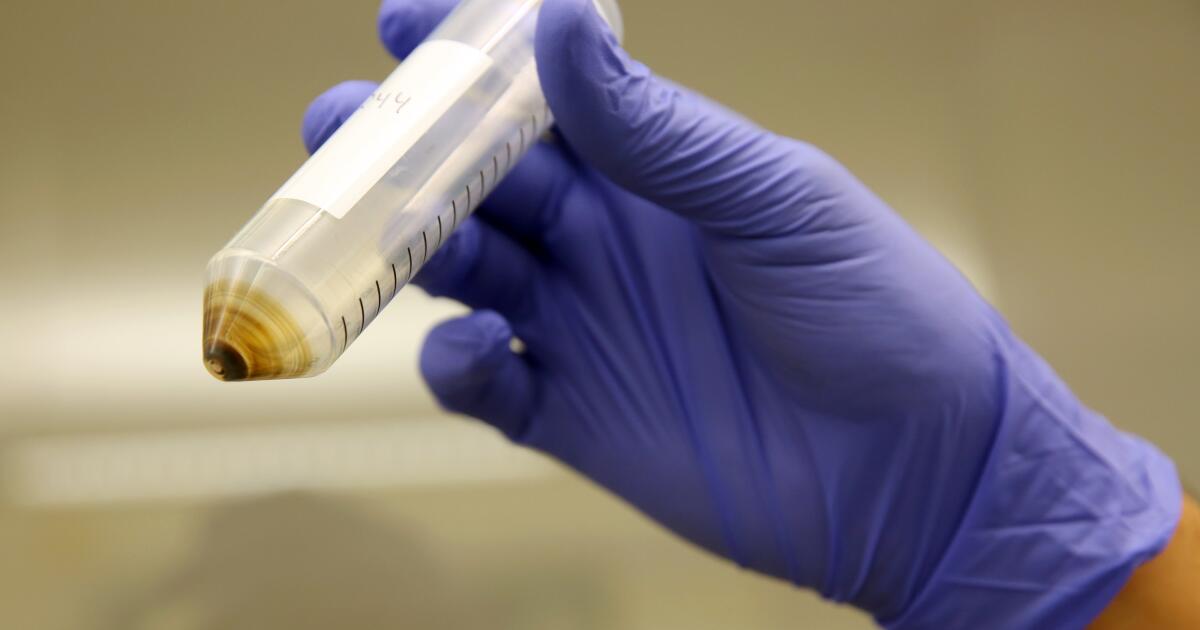
Nearly 40% of California produce contains PFAS pesticides, report finds

Jessica Pegula’s commitment to hard work every day has turned her into a leader

Not ‘a litre of oil’ to pass Strait of Hormuz, expect $200 price tag: Iran

Tornadoes hit Illinois, Indiana and Texas as severe storms sweep US

Florida High School Football Rankings: Top 25 teams – Oct. 21

Cleary's 21 help Le Moyne down Central Connecticut State 69-64 in OT

How old is Bo Nix? What to know about Oregon quarterback ahead of 2024 NFL Draft

99th annual Pony Swim held in Virginia

Indiana Members Credit Union announced as new anchor tenant at Bottleworks District
Not ‘a litre of oil’ to pass Strait of Hormuz, expect $200 price tag: Iran
Tornadoes hit Illinois, Indiana and Texas as severe storms sweep US

EXCLUSIVE: ICE says El Paso detention facility will stay open under new contractor after $1.2B deal scrapped

Von der Leyen ‘acting outside of competence,’ Araud tells Euronews
Wheelchair curler Steve Emt’s path from drunk driver to three-time Paralympian
-

 Wisconsin1 week ago
Setting sail on iceboats across a frozen lake in Wisconsin
-

 Massachusetts1 week ago
Massachusetts man awaits word from family in Iran after attacks
-

 Detroit, MI5 days ago
U.S. Postal Service could run out of money within a year
-

 Pennsylvania6 days ago
Pa. man found guilty of raping teen girl who he took to Mexico
-

 Miami, FL7 days ago
City of Miami celebrates reopening of Flagler Street as part of beautification project
-

 Sports7 days ago
Keith Olbermann under fire for calling Lou Holtz a ‘scumbag’ after legendary coach’s death
-

 Virginia7 days ago
Giants will hold 2026 training camp in West Virginia
-

 Culture1 week ago
Try This Quiz on the Real Locations in These Magical and Mysterious Novels