News
Trial begins for officer accused of failing to protect children during Uvalde shooting


Flowers and candles are placed around crosses to honor the victims killed in a school shooting, May 28, 2022, outside Robb Elementary School in Uvalde, Texas.
Jae C. Hong/AP
hide caption
toggle caption
Jae C. Hong/AP
CORPUS CHRISTI, Texas — One of the first police officers to respond to the 2022 school shooting in Uvalde, Texas, goes on trial Monday on charges that he failed to protect children during the attack, when authorities waited more than an hour to confront the gunman.

Adrian Gonzales, a former Uvalde schools officer, faces 29 counts of child abandonment or endangerment in a rare prosecution of an officer accused of not doing more to stop a crime and protect lives.
The teenage gunman killed 19 students and two teachers at Robb Elementary in one of deadliest school shootings in U.S. history.
Nearly 400 officers from state, local and federal law enforcement agencies responded to the school, but 77 minutes passed from the time authorities arrived until a tactical team breached the classroom and killed the shooter, Salvador Ramos. An investigation later showed that Ramos was obsessed with violence and notoriety in the months leading up to the attack.
Gonzales and former Uvalde schools police chief Pete Arredondo were among the first on the scene, and they are the only two officers to face criminal charges over the slow response. Arredondo’s trial has not yet been scheduled.
The charges against Gonzales carry up to two years in prison if he is convicted. The trial, which is expected to last up to three weeks, begins with jury selection.
Gonzales pleaded not guilty. His attorney has said Gonzales tried to save children that day.
Police and Texas Gov. Greg Abbott initially said swift law enforcement action killed Ramos and saved lives. But that version quickly unraveled as families described begging police to go into the building and 911 calls emerged from students pleading for help.
The indictment alleges Gonzales placed children in “imminent danger” of injury or death by failing to engage, distract or delay the shooter and by not following his active shooter training. The allegations also say he did not advance toward the gunfire despite hearing shots and being told where the shooter was.
State and federal reviews of the shooting cited cascading problems in law enforcement training, communication, leadership and technology, and questioned why officers waited so long.
According to the state review, Gonzales told investigators that once police realized there were students still sitting in other classrooms, he helped evacuate them.
Some family members of the victims have said more officers should be indicted.
“They all waited and allowed children and teachers to die,” said Velma Lisa Duran, whose sister Irma Garcia was one of the two teachers who were killed.
Prosecutors will likely face a high bar to win a conviction. Juries are often reluctant to convict law enforcement officers for inaction, as seen after the Parkland, Florida, school massacre in 2018.
Sheriff’s deputy Scot Peterson was charged with failing to confront the shooter in that attack. It was the first such prosecution in the U.S. for an on-campus shooting, and Peterson was acquitted by a jury in 2023.
At the request of Gonzales’ attorneys, the trial was moved about 200 miles (320 kilometers) southeast to Corpus Christi. They argued Gonzales could not receive a fair trial in Uvalde, and prosecutors did not object.
Uvalde, a town of 15,000, still has several prominent reminders of the shooting. Robb Elementary is closed but still stands, and a memorial of 21 crosses and flower sits near the school sign. Another memorial sits at the downtown plaza fountain, and murals depicting several victims can still be seen on the walls of several buildings.
Jesse Rizo, whose 9-year-old niece Jackie was one of the students killed, said even with three-hour drive to Corpus Christi, the family would like to have someone attend the trial every day.
“It’s important that the jury see that Jackie had a big, strong family,” Rizo said.



Note: Map shows the area with a shake intensity of 4 or greater, which U.S.G.S. defines as “light,” though the earthquake may be felt outside the areas shown. The New York Times
A light, 4.9-magnitude earthquake struck in Louisiana on Thursday, according to the United States Geological Survey.
The temblor happened at 5:30 a.m. Central time about 6 miles west of Edgefield, La., data from the agency shows.
U.S.G.S. data earlier reported that the magnitude was 4.4.
As seismologists review available data, they may revise the earthquake’s reported magnitude. Additional information collected about the earthquake may also prompt U.S.G.S. scientists to update the shake-severity map.
Source: United States Geological Survey | Notes: Shaking categories are based on the Modified Mercalli Intensity scale. When aftershock data is available, the corresponding maps and charts include earthquakes within 100 miles and seven days of the initial quake. All times above are Central time. Shake data is as of Thursday, March 5 at 8:40 a.m. Eastern. Aftershocks data is as of Thursday, March 5 at 10:46 a.m. Eastern.

To read this article for free
Register now
Once registered, you can:
• Read free articles
• Get our Editor’s Digest and other newsletters
• Follow topics and set up personalised events
• Access Alphaville: our popular markets and finance blog
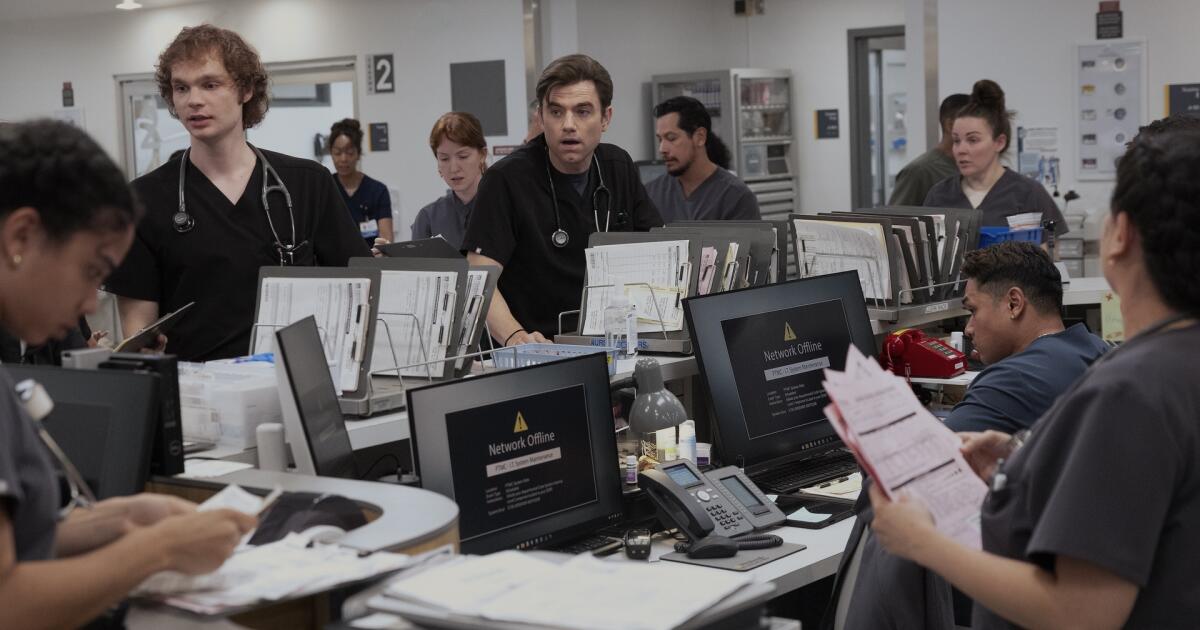
Commentary: As ‘The Pitt’ suffers a digital meltdown, a human with analog experience saves the day

Britney Spears Open to Treatment Plan as Team Weighs Options

Anxiety grows among California Democrats as gubernatorial candidates rebuff calls to drop out
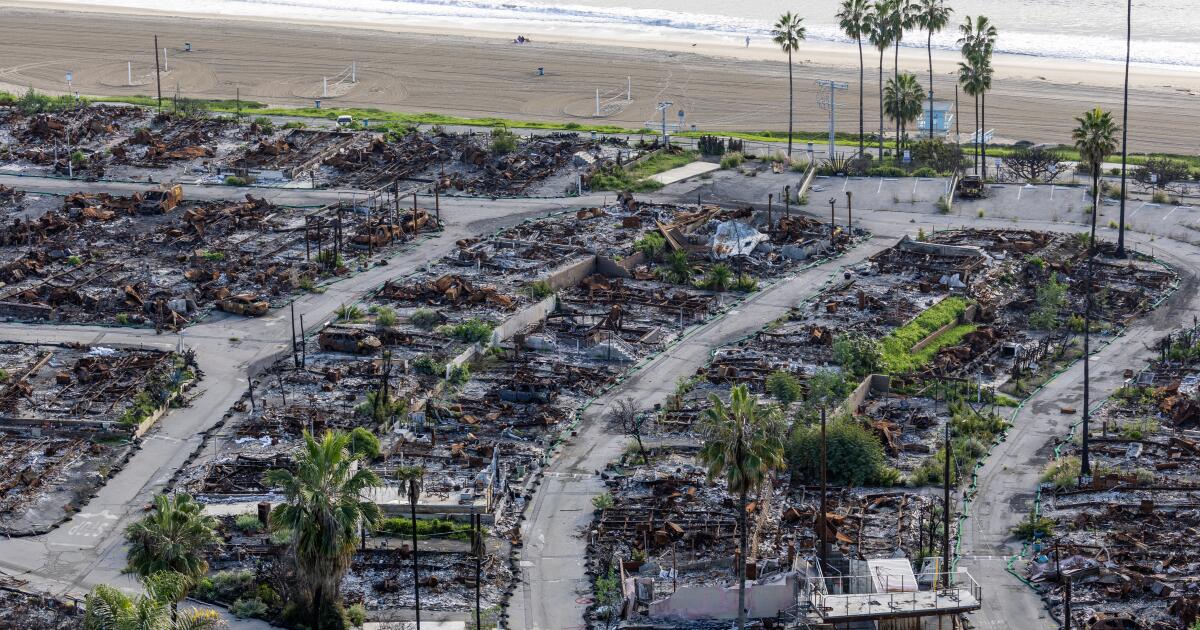
Owners of fire-destroyed Palisades mobile home park seek to displace residents for development deal
Fatigue a factor as early matches begin at Indian Wells

Florida High School Football Rankings: Top 25 teams – Oct. 21

Cleary's 21 help Le Moyne down Central Connecticut State 69-64 in OT

How old is Bo Nix? What to know about Oregon quarterback ahead of 2024 NFL Draft

99th annual Pony Swim held in Virginia

Indiana Members Credit Union announced as new anchor tenant at Bottleworks District
Fact check: Did French border guards mock influencers returning from Dubai amid Iran war?
Iran’s fight for survival / The widening war / Trump’s nebulous goals : Sources & Methods

Map: 4.9-Magnitude Earthquake Shakes Louisiana

Paxton vows he’s ‘staying in this race’ even if Trump backs Cornyn in Texas GOP clash

Which Kurdish groups is the US rallying to fight Iran?
-

 World1 week ago
Exclusive: DeepSeek withholds latest AI model from US chipmakers including Nvidia, sources say
-

 Wisconsin4 days ago
Setting sail on iceboats across a frozen lake in Wisconsin
-

 Massachusetts1 week ago
Mother and daughter injured in Taunton house explosion
-

 Maryland5 days ago
AM showers Sunday in Maryland
-

 Massachusetts3 days ago
Massachusetts man awaits word from family in Iran after attacks
-

 Florida5 days ago
Florida man rescued after being stuck in shoulder-deep mud for days
-

 Denver, CO1 week ago
10 acres charred, 5 injured in Thornton grass fire, evacuation orders lifted
-

 Oregon6 days ago
2026 OSAA Oregon Wrestling State Championship Results And Brackets – FloWrestling