News
Supreme Court’s birthright citizenship battle targets judges’ power to block policies nationwide


Washington — The Supreme Court on Thursday is set to consider a bid by the Trump administration to narrow three lower court orders blocking President Trump from ending birthright citizenship, in cases that test judges’ power to block a president’s policies nationwide.
The arguments before the court, taking place in a rare May session, will be the first involving a policy rolled out by Mr. Trump in his second term. But the high court is not examining the legality of the president’s birthright citizenship executive order, which seeks to deny U.S. citizenship to children born to a mother or father who are in the U.S. unlawfully or on a temporary basis.
Instead, the Trump administration has said district court judges overseeing three legal challenges to Mr. Trump’s policy lacked the authority to issue sweeping injunctions that extend beyond the parties involved in the litigation. The plaintiffs that brought the three lawsuits are 22 states, two organizations and seven individuals, and the Justice Department is pushing for the injunctions to apply only to them.
A decision from the Supreme Court in favor of the administration could allow it to partially enforce the birthright citizenship measure while the litigation proceeds — but not enforce it against the plaintiffs, including residents of California, New York and 20 other states.
“This is one of a range of efforts to close the courthouse doors, to make it harder, more expensive, more complicated, slower to challenge illegal government action,” said Cody Wofsy, deputy director of the Immigrants’ Rights Project at the American Civil Liberties Union. “A case like birthright citizenship puts that in really stark relief where you have an executive order that is blatantly illegal, but the administration is asking the Supreme Court to make it harder for courts to protect people and vindicate constitutional rights.”
The fight over nationwide, or universal, injunctions has been simmering for years, and several of the justices themselves have indicated that the Supreme Court would have to clarify their legality.
“Universal injunctions are legally and historically dubious,” Justice Clarence Thomas wrote in a concurring opinion to the Supreme Court’s 2018 decision upholding the travel ban Mr. Trump put in place during his first term. “If federal courts continue to issue them, this court is dutybound to adjudicate their authority to do so.”
But criticisms of these broad orders reached a fever pitch this year, as the Trump administration fends off more than 200 legal challenges targeting nearly every aspect of the president’s second-term agenda, and courts around the country issue injunctions that stop his policies from taking effect.
Most of these decisions have been appealed, and the Trump administration has sought emergency relief from the Supreme Court in more than a dozen cases, including over his birthright citizenship executive order. The high court left the lower court injunctions preventing implementation of the birthright citizenship policy in place for now.
Among the president’s other plans that have been blocked were his transgender military ban, which the Supreme Court then allowed to take effect; his effort to restrict federal funding to medical institutions that provide gender-affirming care for young people; and cuts to certain federal funds.
“The pace of universal injunctions has gotten to the point where it really is an urgent issue for the court to resolve, not just because it has meant the thwarting of the president’s ability to implement the policies for which he was elected, but also because it has led to an inundation of emergency petitions to the Supreme Court as a result of these universal injunctions,” said Joel Alicea, a law professor at the Catholic University of America.
These sweeping orders have frustrated not just Mr. Trump and his agenda, but also his predecessors. A study from the Harvard Law Review published in April 2024 found that at least 127 nationwide injunctions were issued from 1963 through 2023, though most of those, 96, were entered from 2001 through 2023.
In March, the Congressional Research Service identified 86 nationwide injunctions that were issued under Mr. Trump’s first four years in office and 28 during former President Joe Biden’s term. But the report warned that it is “not possible to provide a single definitive count of nationwide injunctions.”
As to Mr. Trump’s second term, the Congressional Research Service identified 17 nationwide injunctions issued during his first two months back in office. The Trump administration estimates there have been at least 28 of these orders entered against it by judges.
“What universal injunction practice effectively means is that a single district court judge has a veto over the president’s national policy and because there are 94 district courts in the country, that means that you have 94 opportunities in theory to shut down any given national policy,” Alicea said. “That is a recipe for genuine paralysis in terms of national policy-making and in a way that subverts the separation of powers because single district court judges were never supposed to have this kind of authority to stop national policy in its tracks.”
Mr. Trump and his allies have attacked by name the judges issuing these decisions, and his administration has extended that battle to the relief they are granting. In a filing in one of the birthright citizenship cases, the Justice Department said universal injunctions have reached “epidemic” proportions since Mr. Trump returned to the White House in January.
“Those injunctions thwart the executive branch’s crucial policies on matters ranging from border security, to international relations, to national security, to military readiness,” Solicitor General D. John Sauer wrote. “They repeatedly disrupt the operations of the Executive Branch up to the Cabinet level.”
Republicans in Congress have also taken up the cause against universal injunctions. The GOP-controlled House in April passed a bill that would restrict district court judges from issuing broad injunctive relief. It’s unclear whether the measure will pass the Republican-led Senate, where 60 votes are needed for legislation to advance.
But Wofsy, of the ACLU, said the number of lawsuits and injunctions stems from the volume of executive actions taken by the president in the opening months of his second term.
“The administration has been subject to so many nationwide injunctions and injunctions more generally because it’s doing an incredible volume of illegal things, and that is not a reason to take away a tool that the judiciary has to check executive authority. It’s the opposite,” he said. “Now more than ever it is vital that the judiciary is a strong and robust check against illegal executive actions.”
The Supreme Court may not stop universal injunctions altogether but could curtail them, as there are instances where relief naturally extends beyond the parties involved in a case. Take, for example, a landowner who sues a factory for polluting a river. In that instance, an injunction that orders the factory to stop would benefit all who live along it, not just the single plaintiff.
“The basic principle here is courts may only issue injunctions that are as broad as necessary to remedy the plaintiff’s asserted harm,” Alicea said. “Sometimes that will require an injunction that gives protection even to nonparties as an incidental result of giving protection to the actual plaintiff.”
If the Supreme Court does curtail judges’ ability to enter universal injunctions, courts could still enter tailored relief. Plaintiffs seeking to represent a broader group of people could also file class-action lawsuits. In the context of the birthright citizenship case, a class-action lawsuit could be brought by affected pregnant women in the U.S. illegally and children at risk of losing their right to U.S. citizenship, the Trump administration has argued.
But Wofsy said class-action lawsuits, like nationwide injunctions, are one of many tools available to federal courts and may not be appropriate in every case.
“The existence of that tool doesn’t mean courts shouldn’t have other tools available,” he said. “The question here isn’t, ‘should nationwide injections be entered in every case?’ The question is, ‘are we going to take away the discretion that district courts have to use this as an appropriate tool to craft a remedy in a case where it’s necessary?’”
He said birthright citizenship is an example of a situation in which the constitutional question is so clear, there is no reason the government needs to apply the policy to a single child while the legal challenges move forward.
“Citizenship really cuts through so many aspects of our society. It matters for so many educational, health, nutrition, other kinds of programs,” Wofsy said. “The idea that we would have a patchwork system where people’s citizenship isn’t just a matter of whether you’re born in the United States, but who your parents are, what their status is, do you have documentation, are you a member of this organization, were you born in this state or that state invites confusion, chaos, discrimination and for no real purpose.”



Note: Map shows the area with a shake intensity of 4 or greater, which U.S.G.S. defines as “light,” though the earthquake may be felt outside the areas shown. The New York Times
A light, 4.9-magnitude earthquake struck in Louisiana on Thursday, according to the United States Geological Survey.
The temblor happened at 5:30 a.m. Central time about 6 miles west of Edgefield, La., data from the agency shows.
U.S.G.S. data earlier reported that the magnitude was 4.4.
As seismologists review available data, they may revise the earthquake’s reported magnitude. Additional information collected about the earthquake may also prompt U.S.G.S. scientists to update the shake-severity map.
Source: United States Geological Survey | Notes: Shaking categories are based on the Modified Mercalli Intensity scale. When aftershock data is available, the corresponding maps and charts include earthquakes within 100 miles and seven days of the initial quake. All times above are Central time. Shake data is as of Thursday, March 5 at 8:40 a.m. Eastern. Aftershocks data is as of Thursday, March 5 at 10:46 a.m. Eastern.

To read this article for free
Register now
Once registered, you can:
• Read free articles
• Get our Editor’s Digest and other newsletters
• Follow topics and set up personalised events
• Access Alphaville: our popular markets and finance blog
News
Man accused of plot to assassinate Trump testifies Iran pressured him, says Biden and Haley were other possible targets

The allegation sounded like the stuff of spy movies: A Pakistani businessman trying to hire hit men, even handing them $5,000 in cash, to kill a U.S. politician on behalf of Iran ‘s powerful paramilitary Revolutionary Guard.
It was true, and potential targets of the 2024 scheme included now-President Donald Trump, then-President Joe Biden and former presidential candidate and ex-U.N. Ambassador Nikki Haley, the man told jurors at his attempted terrorism trial in New York on Wednesday. But he insisted his actions were driven by fear for loved ones in Iran, and he figured he’d be apprehended before anything came of the scheme.
“My family was under threat, and I had to do this,” the defendant, Asif Merchant, testified through an Urdu interpreter. “I was not wanting to do this so willingly.”
Merchant said he had anticipated getting arrested before anyone was killed, intended to cooperate with the U.S. government and had hoped that would help him get a green card.
U.S. authorities were, indeed, on to him – the supposed hit men he paid were actually undercover FBI agents – and he was arrested on July 12, 2024, a day before an unrelated attempt on Trump’s life in Butler, Pennsylvania. During a search, investigators said they found a handwritten note that contained the codewords for the various aspects of the plot, CBS News previously reported.
Merchant did sit for voluntary FBI interviews, but he ultimately ended up with a trial, not a cooperation deal.
“You traveled to the United States for the purpose of hiring Mafia members to kill a politician, correct?” Assistant U.S. Attorney Nina Gupta asked during her turn questioning Merchant Wednesday in a Brooklyn federal court.
“That’s right,” Merchant replied, his demeanor as matter-of-fact as his testimony was unusual.
The trial is unfolding amid the less than week-old Iran war, which killed Iranian Supreme Leader Ayatollah Ali Khamenei in a strike that Trump summed up as “I got him before he got me.” Jurors are instructed to ignore news pertaining to the case.
The Iranian government has denied plotting to kill Trump or other U.S. officials.
Merchant, 47, had a roughly 20-year banking career in Pakistan before getting involved in an array of businesses: clothing, car sales, banana exports, insulation imports. He openly has two families, one in Pakistan and the other in Iran – where, he said, he was introduced around the end of 2022 to a Revolutionary Guard intelligence operative. They initially spoke about getting involved in a hawala, an informal money transfer system, Merchant said.
Merchant testified that his periodic visits to the U.S. for his garment business piqued the interest of his Revolutionary Guard contact, who trained him on countersurveillance techniques.
The U.S. deems the Revolutionary Guard a “foreign terrorist organization.” Formally called the Islamic Revolutionary Guard Corps, the force has been prominent in Iran under Khamenei.
Merchant said the handler told him to seek U.S. residents interested in working for Iran. Then came another assignment: Look for a criminal to arrange protests, steal things, do some money laundering, “and maybe have somebody murdered,” Merchant recalled.
“He did not tell me exactly who it is, but he told me – he named three people: Donald Trump, Joe Biden and Nikki Haley,” he added.
In 2024, multiple sources familiar with the investigation told CBS News Merchant planned to assassinate current and former government officials across the political spectrum.
Merchant allegedly sketched out the plot on a napkin inside his New York hotel room, prosecutors said, and told the individual “that there would be ‘security all around’ the person” they were planning to kill.
“No other option”
After U.S. immigration agents pulled Merchant aside at the Houston airport in April 2024, searched his possessions and asked about his travels to Iran, he concluded that he was under surveillance. But still he researched Trump rally locations, sketched out a plot for a shooting at a political rally, lined up the supposed hit men and scrambled together $5,000 from a cousin to pay them a “token of appreciation.”
He even reported back to his Revolutionary Guard contact, sending observations – fake, Merchant said – tucked into a book that he shipped to Iran through a series of intermediaries.
Merchant said he “had no other option” than to play along because the handler had indicated that he knew who Merchant’s Iranian relatives were and where they lived.
In a court filing this week, prosecutors noted that Merchant didn’t seek out law enforcement to help with his purported predicament before he was arrested. He testified that he couldn’t turn to authorities because his handler had people watching him.
Prosecutors also said that in his FBI interviews, Merchant “neglected to mention any facts that could have supported” an argument that he acted under duress.
Merchant told jurors Wednesday that he didn’t think agents would believe his story, because their questions suggested “they think that I’m some type of super-spy.”
“And are you a super-spy?” defense lawyer Avraham Moskowitz asked.
“No,” Merchant said. “Absolutely not.”
SC legislature considers legal sports betting – again

DOE selects nine school districts for 2026 South Dakota Perkins Reserve grant

How much have Tennessee gas prices risen amid war in Iran?
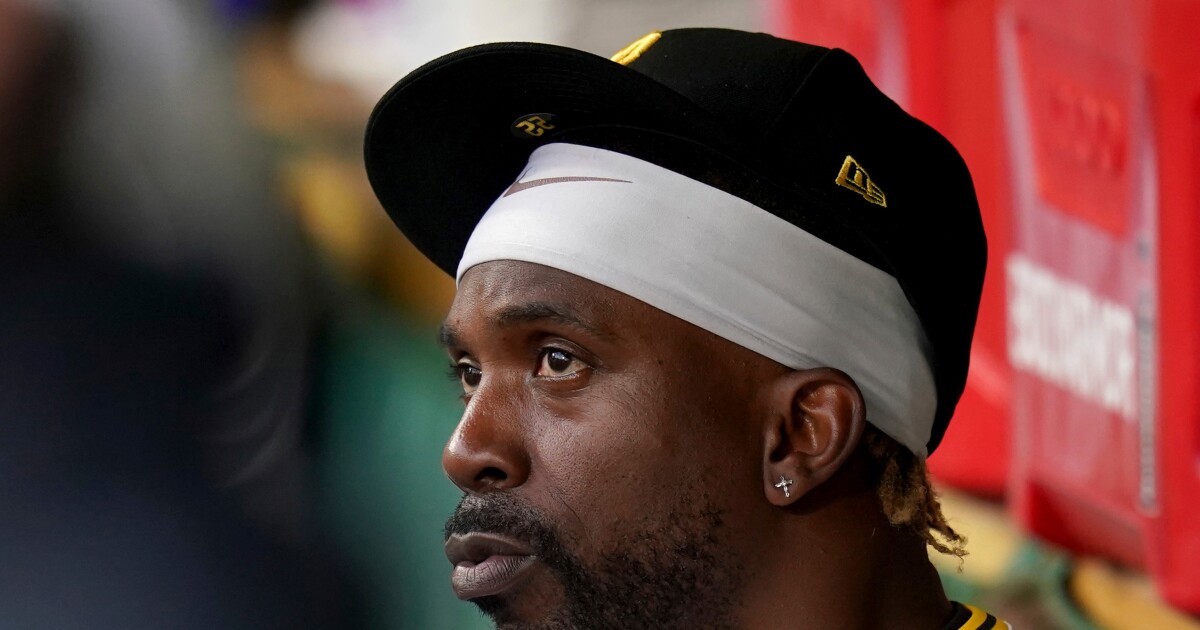
Andrew McCutchen, 39, and the Texas Rangers agree to a minor league contract, AP source says

22-year-old arrested in Utah in connection to Las Vegas double-homicide

Florida High School Football Rankings: Top 25 teams – Oct. 21

Cleary's 21 help Le Moyne down Central Connecticut State 69-64 in OT

How old is Bo Nix? What to know about Oregon quarterback ahead of 2024 NFL Draft

99th annual Pony Swim held in Virginia

Indiana Members Credit Union announced as new anchor tenant at Bottleworks District

Map: 4.9-Magnitude Earthquake Shakes Louisiana

Paxton vows he’s ‘staying in this race’ even if Trump backs Cornyn in Texas GOP clash

Which Kurdish groups is the US rallying to fight Iran?

Man accused of plot to assassinate Trump testifies Iran pressured him, says Biden and Haley were other possible targets

DHS defends McLaughlin against allegations husband’s company profited millions from ad contracts: ‘Baseless’
-

 World1 week ago
Exclusive: DeepSeek withholds latest AI model from US chipmakers including Nvidia, sources say
-

 Massachusetts1 week ago
Mother and daughter injured in Taunton house explosion
-

 Wisconsin4 days ago
Setting sail on iceboats across a frozen lake in Wisconsin
-

 Maryland4 days ago
AM showers Sunday in Maryland
-

 Florida4 days ago
Florida man rescued after being stuck in shoulder-deep mud for days
-

 Denver, CO1 week ago
10 acres charred, 5 injured in Thornton grass fire, evacuation orders lifted
-

 Massachusetts2 days ago
Massachusetts man awaits word from family in Iran after attacks
-

 Oregon6 days ago
2026 OSAA Oregon Wrestling State Championship Results And Brackets – FloWrestling