News
Memphis committee recommends replacing police chief, 1 year after Tyre Nichols death


Memphis Police Chief Cerelyn “C.J.” Davis speaks to the city council as Mayor Paul Young stands behind her at city hall on Tuesday.
Chris Day/The Commercial Appeal via AP
hide caption
toggle caption
Chris Day/The Commercial Appeal via AP

Memphis Police Chief Cerelyn “C.J.” Davis speaks to the city council as Mayor Paul Young stands behind her at city hall on Tuesday.
Chris Day/The Commercial Appeal via AP
MEMPHIS, Tenn. — A Memphis City Council committee voted Tuesday to replace police chief Cerelyn “CJ” Davis a year after the fatal beating of Tyre Nichols by five officers generated intense criticism of her department and led to a federal investigation into how it fights crime.
The council’s executive committee, which includes all of the council’s 13 members, recommended by a 7 -6 vote to reject the reappointment of Davis. The council will vote later on a binding vote on the fate of Davis, who was hired by the city in 2021.
The new mayor — Paul Young, who took office Jan. 1 after he was elected in November — had sought the reappointment of Davis, saying he firmly believed she was the right person for the job but that he would make a change if she did not produce the results the city needs. Davis was appointed by previous Mayor Jim Strickland, who left office due to term limits.
Davis was in charge of the department when Nichols, who was Black, was hit with a stun gun, pepper sprayed, punched and kicked by officers after a traffic stop. The officers were part of a crime-suppression team called the Scorpion unit, which was established in 2021, after Davis took over as Memphis Police Director.
Nichols died on Jan. 10, 2023 — three days after the beating — and camera footage of it was released publicly. The beating was part of a series of cases of police brutality against Black people that sparked protests and renewed debate the need for police reform in the U.S.
In all, seven officers were fired for violating department policies, resulting in Nichols’ death, while an eighth was allowed to retire before he could be fired.
Five of the fired officers — Tadarrius Bean, Demetrius Haley, Emmitt Martin, Desmond Mills Jr. and Justin Smith — were charged with second-degree murder and other offenses in state court, and with civil rights violations in federal court. The five officers are Black.
Mills pleaded guilty in November to federal charges of excessive force and obstruction of justice. The plea is part of a larger deal in which prosecutors said he had also agreed to plead guilty later to state charges. The four other officers have pleaded not guilty to the state and federal charges.
The officers said they pulled Nichols over because he was driving recklessly, but Davis, the police director, has said no evidence was found to support that allegation.
Davis disbanded the Scorpion unit after the beating, and was initially praised for quickly firing the officers. But Nichols’ death shined a bright light on the department and Davis, and calls for her ouster increased among activists and citizens frustrated with an increase in overall crime — which includes a city-record 398 homicides and a jump in auto burglaries to more than 14,000 last year.
The U.S. Department of Justice announced an investigation in July into how Memphis police officers use force and conduct arrests, one of several “patterns and practices” investigations it has undertaken in other cities. The probe is looking at how officers use force and conduct arrests, and answers long-standing calls for such an investigation from critics of the way police treat minorities in majority-Black Memphis.
In March, the Justice Department said it was conducting a separate review concerning use of force, de-escalation strategies and specialized units in the police department.
Davis, the city and the former officers are also being sued by Nichols’ mother in federal court. Filed in April, the $550 million lawsuit blames them for his death and accuses Davis of allowing the Scorpion unit’s aggressive tactics to go unchecked despite warning signs.
The committee meeting was contentious at times, with council members questioning Davis about her record and whether her officers support her. A group of uniformed police officers sat in the audience in support of their boss. Some audience members held signs saying “We support chief Davis,” while others had signs saying “No on chief Davis.”
Davis made a presentation that detailed accomplishments during her tenure, including hiring more than 400 officers and expanding community-oriented policing. Young also spoke in support of her and the other people he recommended for appointment to city jobs.
But council chair JB Smiley Jr., who voted against Davis’ reappointment, said Memphis “deserves better.”
“Chief Davis had two and a half years,” Smiley said. “That’s ample time to get it right.”



Note: Map shows the area with a shake intensity of 4 or greater, which U.S.G.S. defines as “light,” though the earthquake may be felt outside the areas shown. The New York Times
A light, 4.9-magnitude earthquake struck in Louisiana on Thursday, according to the United States Geological Survey.
The temblor happened at 5:30 a.m. Central time about 6 miles west of Edgefield, La., data from the agency shows.
U.S.G.S. data earlier reported that the magnitude was 4.4.
As seismologists review available data, they may revise the earthquake’s reported magnitude. Additional information collected about the earthquake may also prompt U.S.G.S. scientists to update the shake-severity map.
Source: United States Geological Survey | Notes: Shaking categories are based on the Modified Mercalli Intensity scale. When aftershock data is available, the corresponding maps and charts include earthquakes within 100 miles and seven days of the initial quake. All times above are Central time. Shake data is as of Thursday, March 5 at 8:40 a.m. Eastern. Aftershocks data is as of Thursday, March 5 at 10:46 a.m. Eastern.

To read this article for free
Register now
Once registered, you can:
• Read free articles
• Get our Editor’s Digest and other newsletters
• Follow topics and set up personalised events
• Access Alphaville: our popular markets and finance blog
News
Man accused of plot to assassinate Trump testifies Iran pressured him, says Biden and Haley were other possible targets

The allegation sounded like the stuff of spy movies: A Pakistani businessman trying to hire hit men, even handing them $5,000 in cash, to kill a U.S. politician on behalf of Iran ‘s powerful paramilitary Revolutionary Guard.
It was true, and potential targets of the 2024 scheme included now-President Donald Trump, then-President Joe Biden and former presidential candidate and ex-U.N. Ambassador Nikki Haley, the man told jurors at his attempted terrorism trial in New York on Wednesday. But he insisted his actions were driven by fear for loved ones in Iran, and he figured he’d be apprehended before anything came of the scheme.
“My family was under threat, and I had to do this,” the defendant, Asif Merchant, testified through an Urdu interpreter. “I was not wanting to do this so willingly.”
Merchant said he had anticipated getting arrested before anyone was killed, intended to cooperate with the U.S. government and had hoped that would help him get a green card.
U.S. authorities were, indeed, on to him – the supposed hit men he paid were actually undercover FBI agents – and he was arrested on July 12, 2024, a day before an unrelated attempt on Trump’s life in Butler, Pennsylvania. During a search, investigators said they found a handwritten note that contained the codewords for the various aspects of the plot, CBS News previously reported.
Merchant did sit for voluntary FBI interviews, but he ultimately ended up with a trial, not a cooperation deal.
“You traveled to the United States for the purpose of hiring Mafia members to kill a politician, correct?” Assistant U.S. Attorney Nina Gupta asked during her turn questioning Merchant Wednesday in a Brooklyn federal court.
“That’s right,” Merchant replied, his demeanor as matter-of-fact as his testimony was unusual.
The trial is unfolding amid the less than week-old Iran war, which killed Iranian Supreme Leader Ayatollah Ali Khamenei in a strike that Trump summed up as “I got him before he got me.” Jurors are instructed to ignore news pertaining to the case.
The Iranian government has denied plotting to kill Trump or other U.S. officials.
Merchant, 47, had a roughly 20-year banking career in Pakistan before getting involved in an array of businesses: clothing, car sales, banana exports, insulation imports. He openly has two families, one in Pakistan and the other in Iran – where, he said, he was introduced around the end of 2022 to a Revolutionary Guard intelligence operative. They initially spoke about getting involved in a hawala, an informal money transfer system, Merchant said.
Merchant testified that his periodic visits to the U.S. for his garment business piqued the interest of his Revolutionary Guard contact, who trained him on countersurveillance techniques.
The U.S. deems the Revolutionary Guard a “foreign terrorist organization.” Formally called the Islamic Revolutionary Guard Corps, the force has been prominent in Iran under Khamenei.
Merchant said the handler told him to seek U.S. residents interested in working for Iran. Then came another assignment: Look for a criminal to arrange protests, steal things, do some money laundering, “and maybe have somebody murdered,” Merchant recalled.
“He did not tell me exactly who it is, but he told me – he named three people: Donald Trump, Joe Biden and Nikki Haley,” he added.
In 2024, multiple sources familiar with the investigation told CBS News Merchant planned to assassinate current and former government officials across the political spectrum.
Merchant allegedly sketched out the plot on a napkin inside his New York hotel room, prosecutors said, and told the individual “that there would be ‘security all around’ the person” they were planning to kill.
“No other option”
After U.S. immigration agents pulled Merchant aside at the Houston airport in April 2024, searched his possessions and asked about his travels to Iran, he concluded that he was under surveillance. But still he researched Trump rally locations, sketched out a plot for a shooting at a political rally, lined up the supposed hit men and scrambled together $5,000 from a cousin to pay them a “token of appreciation.”
He even reported back to his Revolutionary Guard contact, sending observations – fake, Merchant said – tucked into a book that he shipped to Iran through a series of intermediaries.
Merchant said he “had no other option” than to play along because the handler had indicated that he knew who Merchant’s Iranian relatives were and where they lived.
In a court filing this week, prosecutors noted that Merchant didn’t seek out law enforcement to help with his purported predicament before he was arrested. He testified that he couldn’t turn to authorities because his handler had people watching him.
Prosecutors also said that in his FBI interviews, Merchant “neglected to mention any facts that could have supported” an argument that he acted under duress.
Merchant told jurors Wednesday that he didn’t think agents would believe his story, because their questions suggested “they think that I’m some type of super-spy.”
“And are you a super-spy?” defense lawyer Avraham Moskowitz asked.
“No,” Merchant said. “Absolutely not.”

How much have Tennessee gas prices risen amid war in Iran?
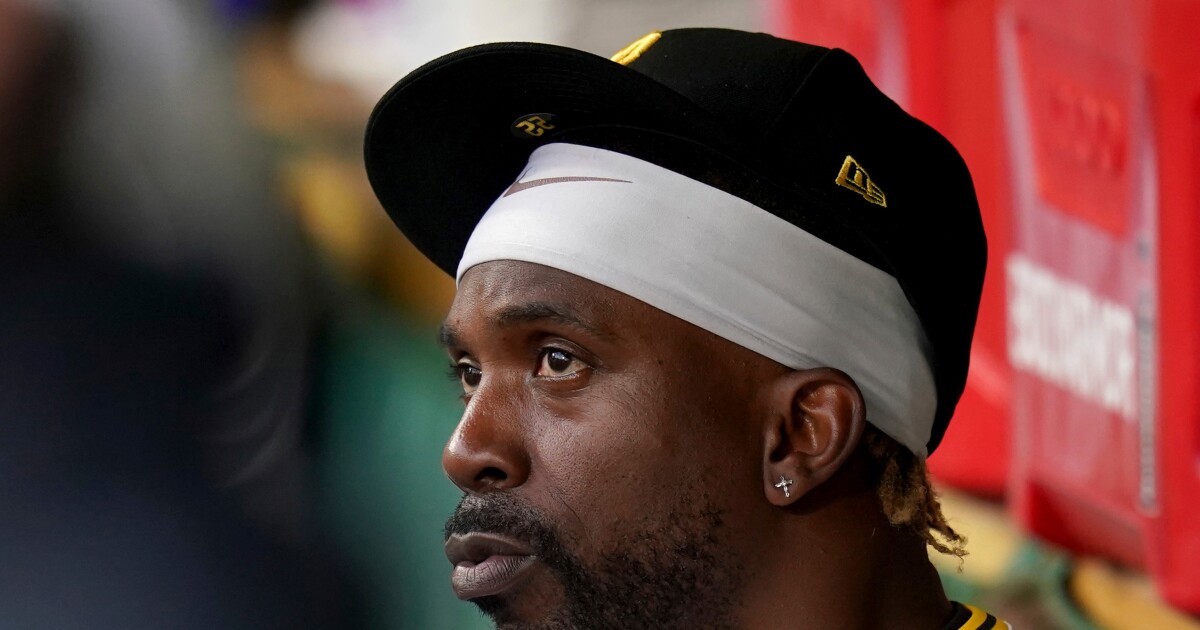
Andrew McCutchen, 39, and the Texas Rangers agree to a minor league contract, AP source says

22-year-old arrested in Utah in connection to Las Vegas double-homicide

Vermont high school playoff scores, results, stats for Thursday, March 5

Obama calls on voters to help Democrats’ Virginia redistricting ahead of midterm elections

Florida High School Football Rankings: Top 25 teams – Oct. 21

Cleary's 21 help Le Moyne down Central Connecticut State 69-64 in OT

How old is Bo Nix? What to know about Oregon quarterback ahead of 2024 NFL Draft

99th annual Pony Swim held in Virginia

Indiana Members Credit Union announced as new anchor tenant at Bottleworks District

Map: 4.9-Magnitude Earthquake Shakes Louisiana

Paxton vows he’s ‘staying in this race’ even if Trump backs Cornyn in Texas GOP clash

Which Kurdish groups is the US rallying to fight Iran?

Man accused of plot to assassinate Trump testifies Iran pressured him, says Biden and Haley were other possible targets

DHS defends McLaughlin against allegations husband’s company profited millions from ad contracts: ‘Baseless’
-

 World1 week ago
Exclusive: DeepSeek withholds latest AI model from US chipmakers including Nvidia, sources say
-

 Massachusetts1 week ago
Mother and daughter injured in Taunton house explosion
-

 Wisconsin4 days ago
Setting sail on iceboats across a frozen lake in Wisconsin
-

 Maryland4 days ago
AM showers Sunday in Maryland
-

 Florida4 days ago
Florida man rescued after being stuck in shoulder-deep mud for days
-

 Denver, CO1 week ago
10 acres charred, 5 injured in Thornton grass fire, evacuation orders lifted
-

 Massachusetts2 days ago
Massachusetts man awaits word from family in Iran after attacks
-

 Oregon6 days ago
2026 OSAA Oregon Wrestling State Championship Results And Brackets – FloWrestling