Connect with us

News

Donald Trump asks US Supreme Court to overturn Colorado ballot ruling

Published

on

Donald Trump asks US Supreme Court to overturn Colorado ballot ruling

Unlock the Editor’s Digest for free

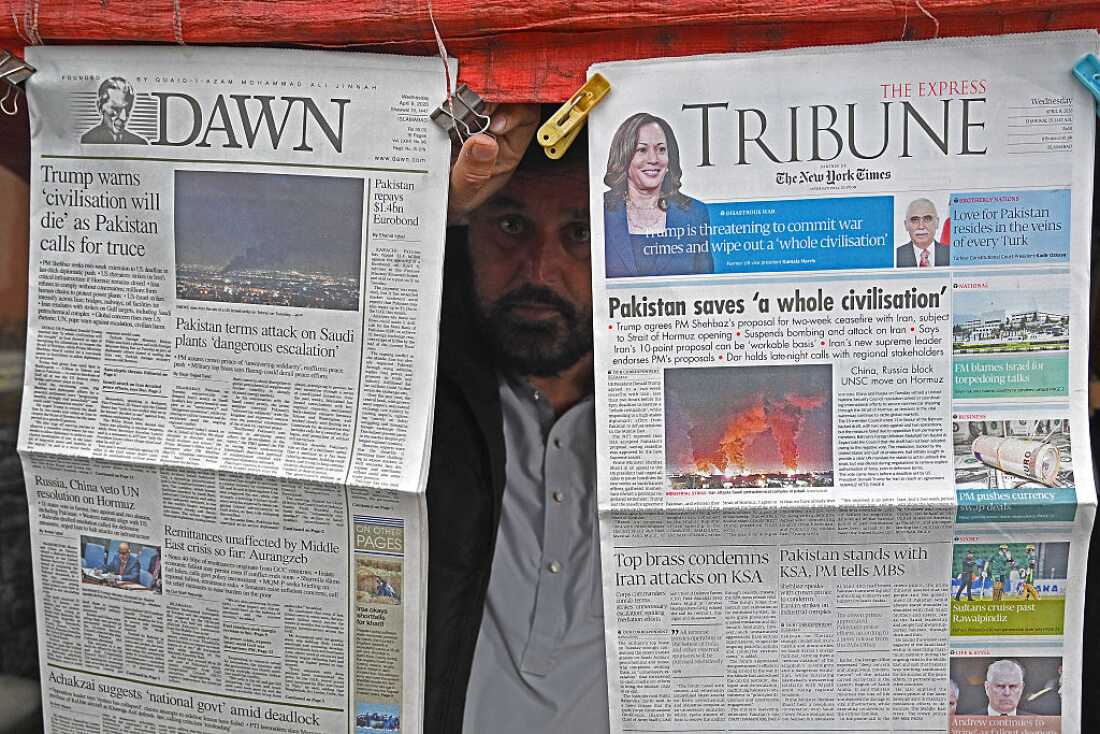
Donald Trump has asked the US Supreme Court to overturn a decision to ban him from Colorado’s presidential primary ballot, setting the stage for the nation’s highest court to decide whether states can stop him from seeking higher office for his role in the January 6 2021 attack on the US Capitol.

The Colorado supreme court ruled last month to disqualify Trump from the state’s presidential primary ballot, saying he was not fit to be president under the 14th amendment to the US constitution, which prohibits individuals who have engaged in insurrection or rebellion from holding office. The court’s decision was put on hold until January 4 to allow time for an appeal.

In a petition filed to the US Supreme Court on Wednesday, Trump’s lawyers argued that the Colorado ruling “is not and cannot be correct”, noting that if it were allowed to stand, it would mark the first time in US history that the “judiciary had prevented voters from casting ballots for the leading major-party presidential candidate”.

Advertisement

Trump’s lawyers claimed in their petition to the US Supreme Court that the Colorado judges had “misinterpreted and misapplied the text” of the constitution, and said Congress, not state courts, should decide who is eligible to serve as president. They argued the former president did not “engage in an insurrection” and “never told his supporters to enter the Capitol”.

The petition asks the nine-member US Supreme Court, which includes three justices appointed by Trump, to consider a major decision that stands to shape the 2024 presidential race.

The US’s highest court will probably separately consider in the coming months the question of whether Trump is “absolutely immune” from federal prosecution for crimes allegedly committed while he was in the White House, as he fights multiple criminal cases while campaigning for the presidency.

The US Department of Justice tried to fast-track a decision over whether that argument was valid, but the Supreme Court rejected the request just before Christmas, sending the matter to an intermediate appeals court first — though the higher court will almost certainly be asked to consider the question again. The appeals court is set to hear arguments in that case next week.

Wednesday’s petition came just one day after Trump appealed against a separate move by Maine’s secretary of state, Shenna Bellows, to remove him from the presidential primary ballot in that state. Trump asked a court in Maine to reverse that decision, arguing that Bellows was a “biased decision maker”.

Advertisement

Bellows has also said that Trump is not qualified to be president under section three of the 14th amendment given his efforts to overturn the 2020 presidential election.

However, courts in a handful of other states — including Michigan and Minnesota — have rejected similar lawsuits seeking to disqualify Trump from seeking the presidency.

Trump has refused to accept the results of the 2020 ballot, which he lost to Joe Biden, and argued that the contest had been “rigged” against him. On January 6 2021, he encouraged mobs of his supporters who descended on the national mall and later marched to the US Capitol, where they stormed the legislature and tried to interrupt the certification of Biden’s Electoral College victory.

He remains the undisputed frontrunner in a shrinking field of Republican candidates vying for the party’s nomination for president ahead of this year’s general election in November. The nominating process will kick off in less than two weeks, with the Iowa caucuses on January 15.

Trump’s popularity with Republican voters has only been bolstered by his mounting legal woes, which include 91 criminal charges spread across four separate cases. Trump enjoys the support of half of Republican voters in Iowa, according to the latest FiveThirtyEight polling average, followed by Florida governor Ron DeSantis at 18.4 per cent and former South Carolina governor Nikki Haley at 15.7 per cent.

Advertisement

Trump and his allies have alleged that Biden, the incumbent president, and fellow Democrats are engaged in “election interference” to try and keep him off the ballot.

Steven Cheung, Trump’s campaign spokesperson, said in a statement on Wednesday that “crooked Joe Biden’s comrades” were “doing all they can to disenfranchise all American voters by attempting to remove President Trump, the leading candidate in the 2024 presidential election, from the primary ballot”.

“We urge a clear, summary rejection of the Colorado Supreme Court’s wrongful ruling and the execution of a free and fair election this November,” he added.

News

Why men should really be reading more fiction

Published

on

Why men should really be reading more fiction

Unlock the Editor’s Digest for free

A friend sent a meme to a group chat last week that, like many internet memes before it, managed to implant itself deep into my brain and capture an idea in a way that more sophisticated, expansive prose does not always manage. Somewhat ironically, the meme was about the ills of the internet. 

“People in 1999 using the internet as an escape from reality,” the text read, over an often-used image from a TV series of a face looking out of a car window. Below it was another face looking out of a different car window overlaid with the text: “People in 2026 using reality as an escape from the internet.” 

Oof. So simple, yet so spot on. With AI-generated slop — sorry, content — now having overtaken human-generated words and images online, with social media use appearing to have peaked and with “dumb phones” being touted as this year’s status symbol, it does feel as if the tide is beginning to turn towards the general de-enshittification of life. 

Advertisement

And what could be a better way to resist the ever-swelling stream of mediocrity and nonsense on the internet, and to stick it to the avaricious behemoths of the “attention economy”, than to pick up a work of fiction (ideally not purchased on one of these behemoths’ platforms), with no goal other than sheer pleasure and the enrichment of our lives? But while the tide might have started to turn, we don’t seem to have quite got there yet on the reading front, if we are on our way there at all.

Two-fifths of Britons said last year that they had not read a single book in the previous 12 months, according to YouGov. And, as has been noted many times before on both sides of the Atlantic, it is men who are reading the least — just 53 per cent had read any book over the previous year, compared with 66 per cent of women — both in overall numbers and specifically when it comes to fiction.

Yet pointing this out, and lamenting the “disappearance of literary men”, has become somewhat contentious. A much-discussed Vox article last year asked: “Are men’s reading habits truly a national crisis?” suggesting that they were not and pointing out that women only read an average of seven minutes more fiction per day than men (while failing to note that this itself represents almost 60 per cent more reading time).

Meanwhile an UnHerd op-ed last year argued that “the literary man is not dead”, positing that there exists a subculture of male literature enthusiasts keeping the archetype alive and claiming that “podcasts are the new salons”. 

That’s all well and good, but the truth is that there is a gender gap between men and women when it comes to reading and engaging specifically with fiction, and it’s growing.

Advertisement

According to a 2022 survey by the US National Endowment for the Arts, 27.7 per cent of men had read a short story or novel over the previous year, down from 35.1 per cent a decade earlier. Women’s fiction-reading habits declined too, but more slowly and from a higher base: 54.6 per cent to 46.9 per cent, meaning that while women out-read men by 55 per cent in 2012 when it came to fiction, they did so by almost 70 per cent in 2022.

The divide is already apparent in young adulthood, and it has widened too: data from 2025 showed girls in England took an A-Level in English literature at an almost four-times-higher rate than boys, with that gap having grown from a rate of about three times higher just eight years earlier.

So the next question is: should we care and, if so, why? Those who argue that yes, we should, tend to give a few reasons. They point out that reading fiction fosters critical thinking, empathy and improves “emotional vocabulary”. They argue that novels often contain heroic figures and strong, virtuous representations of masculinity that can inspire and motivate modern men. They cite Andrew Tate, the titan of male toxicity, who once said that “reading books is for losers who are afraid to learn from life”, and that “books are a total waste of time”, as an example of whose advice not to follow. 

I agree with all of this — wholeheartedly, I might add. But I’m not sure how many of us, women or men, are picking up books in order to become more virtuous people. Perhaps the more compelling, or at least motivating, reason for reading fiction is simply that it offers a form of pleasure and attention that the modern world is steadily eroding. In a hyper-capitalist culture optimised for skimming and distraction, the ability to sit still with a novel is both subversive and truly gratifying. The real question, then, is why so many men are not picking one up.

jemima.kelly@ft.com

Advertisement

Continue Reading

News

Slow-moving prisoner releases in Venezuela enter 3rd day after government announces goodwill effort

Published

on

Slow-moving prisoner releases in Venezuela enter 3rd day after government announces goodwill effort

SAN FRANCISCO DE YARE, Venezuela — As Diógenes Angulo was freed Saturday from a Venezuelan prison after a year and five months, he, his mother and his aunt trembled and struggled for words. Nearby, at least a dozen other families hoped for similar reunions.

Angulo’s release came on the third day that families had gathered outside prisons in the capital, Caracas, and other communities hoping to see loved ones walk out after Venezuela ’s government pledged to free what it described as a significant number of prisoners. Members of Venezuela’s political opposition, activists, journalists and soldiers were among the detainees that families hoped would be released.

Angulo was detained two days before the 2024 presidential election after he posted a video of an opposition demonstration in Barinas, the home state of the late President Hugo Chávez. He was 17 at the time.

“Thank God, I’m going to enjoy my family again,” he told The Associated Press, adding that others still detained “are well” and have high hopes of being released soon. His faith, he said, gave him the strength to keep going during his detention.

Minutes after he was freed, the now 19-year-old learned that former President Nicolás Maduro had been captured by U.S. forces Jan. 3 in a nighttime raid in Caracas.

Advertisement

The government has not identified or offered a count of the prisoners being considered for release, leaving rights groups scouring for hints of information and families to watch the hours tick by with no word.

President Donald Trump has hailed the release and said it came at Washington’s request.

On Thursday, Venezuela ’s government pledged to free what it said would be a significant number of prisoners. But as of Saturday, fewer than 20 people had been released, according to Foro Penal, an advocacy group for prisoners based in Caracas. Eight hundred and nine remained imprisoned, the group said.

A relative of activist Rocío San Miguel, one of the first to be released and who relocated to Spain, said in a statement that her release “is not full freedom, but rather a precautionary measure substituting deprivation of liberty.”

Among the prominent members of the country’s political opposition who were detained after the 2024 presidential elections and remain in prison are former lawmaker Freddy Superlano, former governor Juan Pablo Guanipa, and Perkins Rocha, lawyer for opposition leader María Corina Machado. The son-in-law of opposition presidential candidate Edmundo González also remains imprisoned.

Advertisement

One week after the U.S. military intervention in Caracas, Venezuelans aligned with the government marched in several cities across the country demanding the return of Maduro and his wife Cilia Flores. The pair were captured and transferred to the United States, where they face charges including conspiracy to commit narco-terrorism.

Hundreds demonstrated in cities including Caracas, Trujillo, Nueva Esparta and Miranda, many waving Venezuelan flags. In Caracas, crowds chanted: “Maduro, keep on going, the people are rising.”

Acting president Delcy Rodríguez, speaking at a public social-sector event in Caracas, again condemned the U.S. military action on Saturday.

“There is a government, that of President Nicolás Maduro, and I have the responsibility to take charge while his kidnapping lasts … . We will not stop condemning the criminal aggression,” she said, referring to Maduro’s ousting.

On Saturday, Trump said on social media: “I love the Venezuelan people and I am already making Venezuela prosperous and safe again.”

Advertisement

After the shocking military action that overthrew Maduro, Trump stated that the United States would govern the South American country and requested access to oil resources, which he promised to use “to benefit the people” of both countries.

Venezuela and the United States announced Friday that they are evaluating the restoration of diplomatic relations, broken since 2019, and the reopening of their respective diplomatic missions. A mission from Trump’s administration arrived in the South American country on Friday, the State Department said.

Venezuelan Foreign Minister Yván Gil responded to Pope Leo XIV, who on Friday called for maintaining peace and “respecting the will of the Venezuelan people.”

“With respect for the Holy Father and his spiritual authority, Venezuela reaffirms that it is a country that builds, works, and defends its sovereignty with peace and dignity,” Gil said on his Telegram account, inviting the pontiff “to get to know this reality more closely.”

Advertisement
Continue Reading

News

Video: Raising a Baby in Altadena’s Ashes

Published

on

Video: Raising a Baby in Altadena’s Ashes

“So, my daughter, Robin, was born Jan. 5, 2025.” “Hi, baby. That’s you.” “When I first saw her, I was like, ‘Oh my God, she’s here.’” “She was crying and immediately when she was up on my face, she stopped crying.” “I got the room with the view.” “But it wasn’t until way later, I saw a fire near the Pasadena Mountains.” “We’re watching the news on the TV, hoping that it’s just not going to reach our house.” “The Eaton fire has scorched over 13,000 acres.” “Sixteen people confirmed dead.” “More than 1,000 structures have been destroyed.” “And then that’s when we got the call. Liz’s mom crying, saying the house is on fire.” “Oh, please. No, Dios mio. Go back. Don’t go that way. It’s closed. Go, turn. Turn back.” “Our house is burning, Veli.” “Oh my God.” “It was just surreal. Like, I couldn’t believe it.” “There’s nothing left.” “Not only our house is gone, the neighbors’ houses are gone, her grandma’s house is gone. All you could see was ash.” “My family has lived in Altadena for about 40 years. It was so quiet. There’s no freeways. My grandmother was across the street from us. All our family would have Christmas there, Thanksgivings. She had her nopales in the back. She would always just go out and cut them down and make salads out of them. My grandmother is definitely the matriarch of our family. My parents, our house was across the street. And then me and Javi got married right after high school.” “My husband’s getting me a cookie.” “Me and Javi had talked a lot about having kids in the future. Finally, after 15 years of being married, we were in a good place. It was so exciting to find out that we were pregnant. We remodeled our whole house. We were really preparing. My grandmother and my mom, they were like, crying, and they were like, so excited.” “Liz!” “I had this vision for her, of how she would grow up, the experiences maybe she would have experiencing my grandmother’s house as it was. We wanted her to have her childhood here. But all of our preparation went out the window in the matter of a few hours.” “And we’re like, ‘What do we do?’ And then we get a phone call. And it was Liz’s uncle. He was like, ‘Hey, come to my house. We have a room ready for you.’” “In my more immediate family, nine people lost their homes, so it was about 13 people in the house at any given point for the first three months of the fire. It was a really hard time. We had to figure out insurance claim forms, finding a new place to live, the cost of rebuilding — will we be able to afford it? Oh my gosh, we must have looked at 10 rentals. The experience of motherhood that I was hoping to have was completely different. Survival mode is not how I wanted to start. “Hi, Robin.” “Robin — she was really stressed out. “She’s over it.” “Our stress was radiating towards Robin. I feel like she could feel that.” “There was just no place to lay her safely, where she could be free and not stepped over by a dog or something. So she was having issues gaining strength. So she did have to go to physical therapy for a few months to be able to lift her head.” “One more, one more — you can do it.” “All the stress and the pain, it was just too much.” “Then Liz got really sick.” “I didn’t stop throwing up for five hours. Javi immediately took me to the E.R. They did a bunch of tests and figured out it was vertigo, likely stress-induced. It felt like, OK, something has to slow down. I can’t just handle all of it myself all the time. My mom is so amazing and my grandmother, they really took care of us in a really wonderful way. So — yeah.” “We’ve been able to get back on our feet. “Good high-five.” “I think it has changed how I parent. I’m trying to shed what I thought it would be like, and be open to what’s new. Robin is doing much better. She’s like standing now and trying to talk. She says like five words already. Even if it’s not exactly home for Robin, I wanted to have those smells around. You walk in and it smells like home. For us, it’s definitely tamales. My grandmother’s house is not being rebuilt. I can tell she’s so sad. “Let me just grab a piece of this.” “So right now, where Javi’s standing is the front. One bedroom there, here in the middle, and Robin’s bedroom in the corner. My grandma will live with us versus across the street, which is silver linings. Yeah, and we did make space for a garden for her.” “What are you seeing? What do you think? What do you think, Robin?” “The roots of Altadena — even though they’re charred — they’re going to be stronger than before.” “How strong you can be when something like this happens, I think is something that’s really important for her to take on. And that I hope Altadena also takes on.”

Continue Reading

Trending