Milwaukee police are looking into the death of a Black man in an incident that is drawing comparisons to the 2020 killing of George Floyd, after footage emerged that appears to show hotel guards pinning the man to the ground as he called for help.
News
Black man dies, crying for help, after hotel guards pin him down, video shows


Ben Crump, a civil rights lawyer representing Mitchell’s family, said in a statement that a witness to the June 30 incident had reported seeing one of the guards “striking him in the head with an object.” Police did not address those allegations.
“It is deeply troubling that we have lost another Black man in an encounter with security personnel, raising serious concerns about the use of force, lack of accountability, and absence of mental health considerations,” Crump added in the statement. “The circumstances surrounding Dvontaye’s death outside the Hyatt Regency Hotel are disturbing and as described by a witness, reminiscent of the killing of George Floyd.”
Floyd, who was Black, died in Minneapolis in 2020 after a White police officer knelt on his neck for more than nine minutes — an incident that sparked a wave of global protests over racial inequality. The officer, Derek Chauvin, was convicted and sent to federal prison.
Police said they were called to the Hyatt for a person causing a disturbance about 3:20 p.m. on June 30. They received a report that the person began fighting while being escorted out. When they arrived, officers found the person unresponsive and unsuccessfully tried “lifesaving measures.”
Crump’s statement identified the person as Mitchell and said his mother “believes he was suffering from a mental health episode.”
“Shocking cell phone video corroborates accounts of several witnesses,” the statement added. “Dvontaye’s family is now left searching for answers and justice in the face of this tragic loss.”
It is not clear what happened immediately before or after the videos were recorded. In one video broadcast by local media, a guard appears to address the person shooting the video, shouting: “This is what happens when you go into the ladies’ room.” The company that runs the hotel, Aimbridge Hospitality, did not immediately respond to a question about whether Mitchell had entered a women’s restroom.
Mitchell’s family and legal team should be given access to the full footage of what happened that day, his mother, Brenda Giles, said during a news conference near the hotel Monday, adding: “I want justice for my son.”
“From the time he got here, to the time he went in there, to the time he ran into this bathroom … we should be able to see all of that. Why haven’t they showed us?” asked Mitchell’s sister, Nayisha Mitchell.
Milwaukee police said they are looking into the incident and the cause of Mitchell’s death.
“The matter has been referred to our office and is currently pending further investigation. There’s no timeline for a charging decision at this time,” the Milwaukee district attorney’s office told The Post on Tuesday.
The Milwaukee County Medical Examiner’s Office said July 1 that the preliminary cause of Mitchell’s death was homicide, the Milwaukee Journal Sentinel reported.
The medical examiner’s office said in 2018 that it defines homicide as “death ‘at the hands of another’ regardless of intent,” purely based on “the medical evidence present at the time of the investigation,” and its determination does not necessarily mean that someone else is legally responsible for the death.
The office did not respond to a request for comment early Tuesday.
Giles told Milwaukee NBC affiliate WTMJ that Mitchell was “a loving son, brother, uncle, daddy.” But she said Mitchell changed after losing his father in 2016.
Nayisha Mitchell said her brother went into a depression after that and “was trying to also work on himself.”
She told WISN 12 News that the security team “should have been trained to deal with this type of situation. Mental illness is real.”
A spokesperson for Hyatt said: “We extend our heartfelt condolences to Dvontaye Mitchell’s family, all those who knew and loved him, and the Milwaukee community in light of this tragedy.”
The spokesperson said the Hyatt Regency Milwaukee is “operated by Aimbridge Hospitality, which is responsible for the management of hotel employees, including the disciplinary actions related to the individuals involved in this incident. We understand Aimbridge Hospitality is still completing its investigation, and to date, has suspended its employees involved in the incident.”
A spokesperson for Aimbridge Hospitality said: “We offer our sincere condolences to Mr. Mitchell’s family and loved ones. We continue to do everything we can to support law enforcement’s ongoing investigation into this incident and have no further comment at this time. We remain committed to maintaining a safe and welcoming environment for all hotel guests and associates.”



“Gus,” a Tyrannosaurus rex skeleton, is pictured during a press preview at Sotheby’s in New York City on July 1.
Timothy A. Clary/AFP via Getty Images
hide caption
toggle caption
Timothy A. Clary/AFP via Getty Images
If you ever wanted to own an actual T. rex and not just a toy, you now have a chance. But it’s going to cost you some bones. Millions of them.
The Tyrannosaurus rex fossil known as “Gus” will go up for auction Tuesday morning at Sotheby’s New York City office. The starting bid for the dinosaur is $19 million and the auction house estimates it could sell for $20 to $30 million.
Gus was found in Harding County, S.D., on private land in 2021, according to Sotheby’s. The T. rex skeleton, which is 38 feet long and 12 and half feet tall, is believed to be from the late Cretaceous period from about 67 million years ago.

“Judging from the overall size and degree of bone development it can be determined that Gus’ skeleton belonged to a very large, robust, adult individual,” the auction house said in the listing.
Thomas Heitkamp, president of Theropoda Expeditions, the company that excavated the site, said in a Sotheby’s video about the discovery that nearly a thousand pieces were collected.
The creature is named after the owner of the ranch where it was discovered, Gary “Gus” Licking. He died during the excavation process, which ran through 2023, and was not able to see Gus fully assembled, according to Cassandra Hatton of Sotheby’s.
“Gary had for years roamed around his 6,500 acre property and seeing T. rex teeth and little bits of fossils and such, and he realized that there was probably something really important under the ground,” Hatton said in the video.

Gus is one of the largest and most complete T. rex specimens ever found, according to Sotheby’s.
It’s not the first time dinosaur bones have been for sale to the highest bidder.
The first auction for a dinosaur was held by Sotheby’s in 1997. The creature, a T. rex named Sue, was purchased by a few large companies for the Field Museum in Chicago. It went for $8.4 million.
In 2024, Apex the stegosaurus sold for $44.6 million, the most ever for a dinosaur fossil. It was purchased by billionaire investor Ken Griffin, who loaned it to the American Natural History Museum in New York for four years.
Paleontologist Scott Persons, who is the curator of natural history at the South Carolina State Museum, says dinosaurs fetching tens of millions of dollars reflects an “increase in market demand.”
“More and more dinosaurs are being sold this way and at ridiculous prices,” he says in an email to NPR.
He says people who can afford to spend this much on an auction could do more to support further research.
“A sum like that could endow a research program at a public museum of your choosing,” he says. “That would pay for a career’s worth of fieldwork, the discovery of whole new species, and the public exhibition of the findings.”

Note: Map shows the area with a shake intensity of 3 or greater, which U.S.G.S. defines as “weak,” though the earthquake may be felt outside the areas shown. The New York Times
A light, 4.1-magnitude earthquake struck in Southern California on Sunday, according to the United States Geological Survey.
The temblor happened at 3:38 a.m. Pacific time about 1 mile southeast of Frazier Park, Calif., data from the agency shows.
U.S.G.S. data earlier reported that the magnitude was 4.4.
As seismologists review available data, they may revise the earthquake’s reported magnitude. Additional information collected about the earthquake may also prompt U.S.G.S. scientists to update the shake-severity map.
Subsequent quakes have been reported in the same area. Such temblors are typically aftershocks caused by minor adjustments along the portion of a fault that slipped at the time of the initial earthquake.
Aftershocks detected
Quakes and aftershocks within 100 miles
Aftershocks can occur days, weeks or even years after the first earthquake. These events can be of equal or larger magnitude to the initial earthquake, and they can continue to affect already damaged locations.
The New York Times
When quakes and aftershocks occurred
Sources: United States Geological Survey (epicenter, aftershocks, shake intensity); LandScan via Oak Ridge National Laboratory (population density) | Notes: Shaking categories are based on the Modified Mercalli Intensity scale. When aftershock data is available, the corresponding maps and charts include earthquakes within 100 miles and seven days of the initial quake. All times above are Pacific time. Shake data is as of Sunday, July 12 at 11:54 a.m. Eastern. Aftershocks data is as of Sunday, July 12 at 2:24 p.m. Eastern.

The death of a Mexican man in Houston at the hands of Immigration and Customs Enforcement is threatening to upend already-strained relations between Mexico and the United States.
Mexican President Claudia Sheinbaum took the unusual step of announcing at a press conference on Thursday that Mexico is seeking civil and criminal investigations in the US related to the deaths of 17 Mexican nationals during immigration enforcement operations or at detention centers.
These investigations aim to “protect the human rights of Mexicans in the United States,” the Mexican government said.
The impetus for the announcement was the ICE shooting death of Lorenzo Salgado Araujo in Texas last week. ICE officials said agents shot Salgado Araujo, whom they said was in the US illegally, after he rammed a law enforcement vehicle and refused to follow verbal commands during a traffic stop.
His family has disputed ICE’s account, telling CNN that the 52-year-old father of three would have stopped if he had known the car that followed him belonged to law enforcement.
At her press conference announcing the request for criminal investigations, Sheinbaum also called for petitions to the Inter-American Commission on Human Rights and the United Nations High Commissioner for Human Rights.
Asked about Sheinbaum’s comments, the US Department of Homeland Security defended ICE’s actions.
“ICE agents are trained to use the minimum necessary force to resolve dangerous situations to prioritize the safety of the public and our officers,” the agency said.
The agency also said that detainees in ICE custody “receive full due process, are provided with adequate food, water, and medical treatment, and have opportunities to communicate with their families and attorneys.”
Analysts who spoke with CNN said that Salgado’s death and Mexico’s response may signal a major rift between Mexican and US authorities.
“This is no minor incident,” said José Luis Valdés Ugalde, academic at the Center for Research on North America at the National Autonomous University of Mexico (UNAM). “It affects the bilateral relationship and the pending issues that Mexico and the United States have before them,” including “security, migration, and trade.”
International affairs expert and newspaper columnist Fausto Pretelin said the relationship between Mexico and the United States was at “its worst moment” in the aftermath of the killing of Salgado Araujo. But he thinks Sheinbaum’s actions will damage relations further, for little more than political points gained within Mexico.
“It’s a performance,” Pretelin said of Sheinbaum’s announcement. “The opportunity to take these issues seriously is lost. And when I say seriously, I mean that diplomatic channels should be used.”
Yet some might argue that diplomatic channels have seen plenty of traffic, especially on this issue. Mexico’s government has already issued 11 diplomatic notes of protest to the US over the deaths of its citizens, Foreign Minister Roberto Velasco told reporters.
Now, his country had to go “beyond the diplomatic realm.”
While Pretelin and Valdés Ugalde have warned that Sheinbaum’s announcement spells trouble for US-Mexico relations, some experts believe that the Mexican president hasn’t gone nearly far enough.
Academic and columnist Tomás Milton Muñoz Bravo, professor of international relations at UNAM, says that this type of response should have come much earlier.
“It’s incredible that 17 deaths had to occur for Mexican authorities to finally announce a strategy that goes beyond the merely diplomatic to the judicial,” said Muñoz Bravo. “Of course, the announcement has been made, but I still want to see the actions that have been stated actually develop.”
Yet Valdés Ugalde points out that the US shows no signs of caring about Mexican criticisms of its immigration policy. Likewise, Valdés Ugalde said, Mexico has not known how to defend the migrant community and has made what he describes as “mistakes” in its foreign policy.
One of these, according to Valdés Ugalde, has been rejecting extradition requests for politicians allegedly linked to drug trafficking on the grounds of national sovereignty. This has given the Trump administration an opening to retaliate in other areas, such as the renegotiation of the US-Mexico-Canada Agreement, which protects many Mexican exports from American tariffs.
“There are no signs of rebuilding the relationship; the relationship is very damaged by the attitudes of both governments and by Mexico’s defensive stance,” Valdés Ugalde said.
Muñoz Bravo said that the November midterm elections in the US could open an opportunity for Mexico if Republicans lose their control of Congress.
“What we’re going to see in November is extremely important,” he said. If Trump “does not have a majority in the chambers, there will be checks and balances that will even allow for room to negotiate with other actors in the United States.”
Until then, tensions between the neighbors remain high, with any further deaths of Mexican migrants threatening to deepen the rift.
-
 Lifestyle43 minutes ago
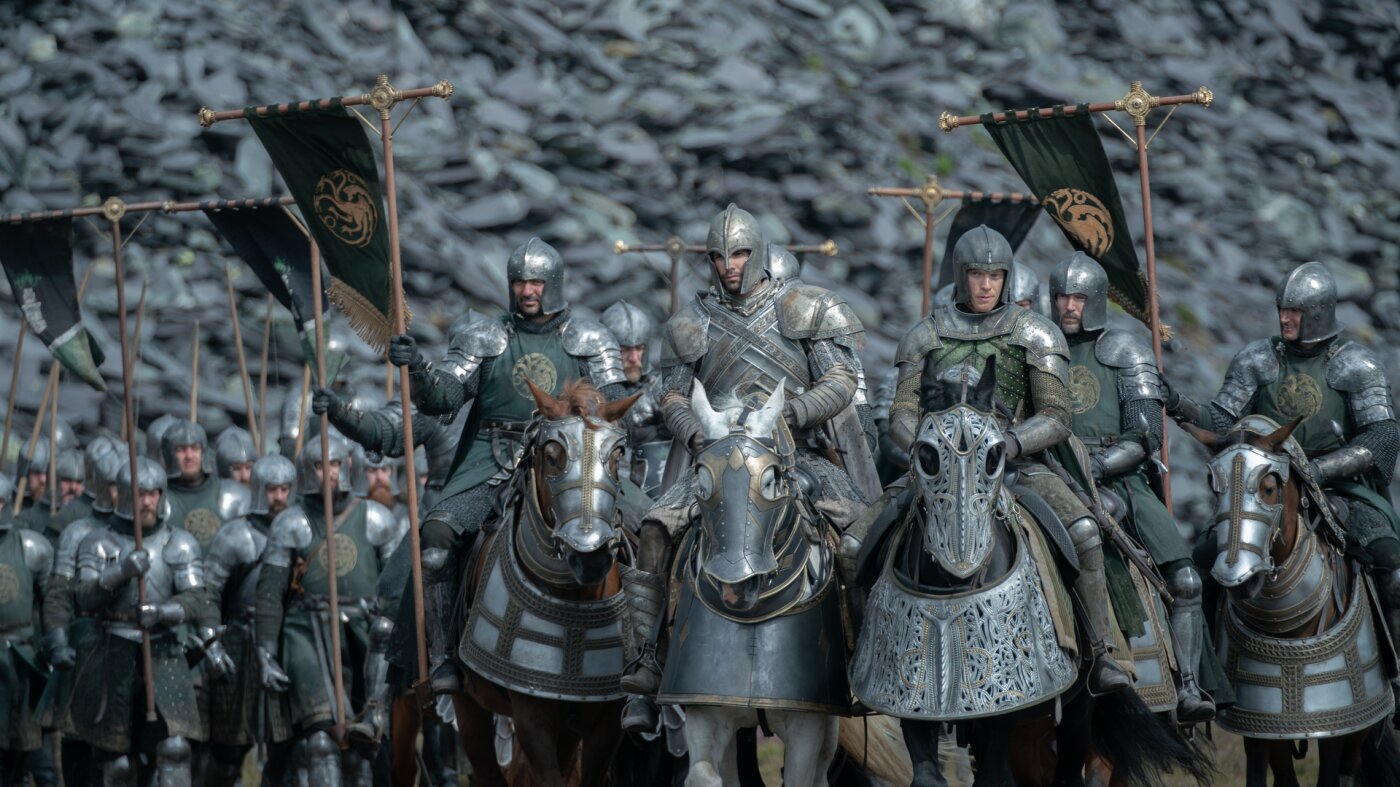
‘House of the Dragon,’ Season 3, Episode 4: “Now we begin?” It’s Season 3!
-

 Technology55 minutes ago
Lorde says Ray-Ban Meta AI glasses are ‘not sexy’
-

 World1 hour ago
Four Americans caught in horrific Mexico highway pileup that killed at least 10
-

 Politics1 hour ago
Medical examiner releases preliminary findings in Lindsey Graham’s death as death certificate remains pending
-

 Health1 hour ago
Terminally ill man marries longtime love in hospital as final wish comes true
-

 Sports1 hour ago
Stefon Diggs, still seeking new NFL home, insists no team has a better No 2 receiver ‘than me’
-

 Technology1 hour ago
Google may use your photos and voice to train AI
-
 Business2 hours ago
‘Moana’ loses its way at the box office with a $43-million domestic opening

