Wisconsin
Your guide to Ironman Wisconsin 2024: Course, race and spectator info for the Madison triathlon


Ironman Wisconsin, the famous 140.6-mile triathlon, returns to Madison on Sunday.
In the 22nd installment of the event, endurance athletes will swim through Lake Monona, bike through hilly farmlands in and around Verona, and finish a marathon just past Capitol Square.
Ironman Wisconsin is one in a series of over 170 triathlons, including over 40 full Ironman events, put on worldwide by the Ironman brand.
Earlier this year, the Madison course won a top-five Global Ironman Athletes’ Choice Award when it was voted the third-best overall Ironman race in a post-race survey given to athletes at over 40 Ironman triathlons across the world in 2023.
Its Lake Monona swim route was named the athlete-favorite swim of all Ironman races worldwide, and Ironman Wisconsin was voted the No. 1 Ironman race in North America for 2023, based on overall event satisfaction.
Ironman Wisconsin also hosts an Ironman 70.3 triathlon the day before the full-distance event; this is often known as a “half Ironman.” It will follow a similar, though obviously shorter, route to Sunday’s 140.6-mile race.
Planning to watch Ironman Wisconsin, or perhaps even compete in the ultra-distance event? Here’s what you need to know:
When is Ironman Wisconsin 2024?
Ironman Wisconsin 2024 is Sunday, Sept. 8. The swim, the first of the three events in the triathlon, begins at 7 a.m., according to the race weekend schedule. Athletes have 17 hours to finish the three-stage event from the time they cross the timing mat at the swim start. There are additional time cut-offs for each portion of the race; more information can be found in the Athlete Guide.
Ironman Wisconsin’s Ironman 70.3 race is Saturday, Sept. 7. The swim starts at 7 a.m., according to the race weekend schedule. Athletes have 8 hours and 30 minutes to finish the triathlon from the time they cross the timing mat at the swim start. There are additional time cut-offs for each portion of the race; more information can be found in the 70.3 Athlete Guide.
Where can I watch Ironman Wisconsin?
Everyone is welcome to watch Ironman Wisconsin from various spots along the course. According to the race website, these are the best spots to watch the race:
- Swim: Ironman recommends you watch the swim from the Monona Terrace for a panoramic view or from the Capital City Trail along the waterfront.
- Bike: The bike course passes through downtown Madison twice, allowing for easy viewing. A map of the bike route can be found online. The 140.6-mile race also offers a free shuttle service for spectators to Verona, where you can catch even more of the bike portion. Shuttle services run Sunday from 8 a.m. to 5 p.m. from the corner of Washington and Pinckney Streets in downtown Madison. More information can be found in the online spectator guide.
- Run: The two-loop run course goes through downtown Madison, and there are many viewing areas throughout downtown. The finish line is on Martin Luther King Jr. Blvd. between East Doty and West Wilson streets.
Ironman also offers VIP spectator packages for purchase that include catered meals, private restrooms and athlete perks. You can find more information or purchase a package here: ironman.com/im-wisconsin-supporters.
Ironman Wisconsin 2024 athlete tracking
You can track Ironman athletes in real-time on race day using the Ironman Tracker Mobile App. The free app is available on the App Store and Google Play.
How long is an Ironman?
The full Ironman distance is 140.6 miles, consisting of a 2.4-mile swim, followed by a 112-mile bike, followed by a marathon ― a 26.2-mile run. The ultra-endurance race is widely recognized as one of the most difficult one-day sporting events in the world.
Ironman Wisconsin and other Ironman races also hold an Ironman 70.3 race, also known as a “half Ironman” because it’s half the distance of an Ironman. Ironman 70.3 races consist of a 1.2-mile swim, 56-mile bike and 13.1-mile half marathon run.
Most full Ironman races have a time limit of 16 or 17 hours to complete the race. The average time to finish an Ironman is 12 hours and 38 minutes for men and 13 hours and 35 minutes for women, according to triathlon coach Ryan Jones with TRIGearLab.
Where does the Ironman Wisconsin course go?
The Ironman Wisconsin 140.6-mile course begins with a two-loop, 2.4-mile swim in Lake Monona, near the Helix parking ramp at the Monona Terrace. Following the swim, athletes make their way up the Helix to change and prepare their gear for the bike portion. This is known as a transition, or T1.
After T1, athletes ride down the Helix and head southwest from downtown Madison to the hilly, two-loop portion of the 112-mile bike course. This looped portion rides through farmlands in Verona, Mount Horeb, Cross Plains and the surrounding area.
T2 occurs back at the Monona Terrace, where athletes exchange bike gear for running gear and begin the 26.2-mile run. The run course travels along iconic Madison landmarks ― including Lake Mendota, State Street and the turf at Camp Randall ― before finishing just past the Capitol Square.
Turn-by-turn directions for the bike and run courses can be found online.
How hard is Ironman Wisconsin?
The Ironman Wisconsin bike course is categorized by Ironman as “hilly.” Ironman categorizes courses as either “flat,” “rolling” or “hilly.”
Ironman has called the course “challenging,” and ACTIVE.com calls it “notoriously difficult.” According to ACTIVE.com, the total elevation gain on the course is 4,120 feet.
Where can I find the Ironman Wisconsin results?
Ironman Wisconsin results can be found here: ironman.com/im-wisconsin-results.
Ironman Wisconsin 70.3 results can be found here: ironman.com/im703-wisconsin-results.
More: Madison’s Ironman Wisconsin voted the best Ironman triathlon in the U.S. by athletes
More: Lori Nickel: This Wisconsin woman is America’s fastest female Ironman



March continues on the ice as Dartmouth Big Green takes on Wisconsin Badgers in a regional semifinal matchup in the 2026 NCAA Men’s Hockey Tournament.
MORE: How to live stream NCAA men’s hockey tournament 2026: TV channel, schedule
How to Watch Wisconsin vs Dartmouth
-
Date: Thursday, March 26, 2026
Advertisement
Wisconsin enters the tournament as one of the more complete teams in the field, combining strong defensive structure with high-end offensive talent. The Badgers have leaned on forward Cruz Lucius, a dynamic scorer capable of creating chances in transition, along with Kirsten Simms, who has been a consistent offensive presence throughout the season. On the blue line, Wisconsin’s physicality and ability to limit quality scoring chances have made it a difficult matchup.
Dartmouth arrives as a disciplined and well-coached group that thrives on structure and goaltending. The Big Green will look to slow the game down and rely on key contributors like John Fusco and Cade Webber to control play in their own zone while generating offense through efficient puck movement.
This matchup will likely come down to pace and execution. Wisconsin prefers to push tempo and create scoring opportunities off the rush, while Dartmouth will aim to keep things tight, limit mistakes, and capitalize on special teams opportunities.
Fans can watch the NCAA hockey tournament across the ESPN family of networks, with games airing on ESPN, ESPN2, and ESPNU, while select matchups stream exclusively on ESPN+.
Advertisement
Watch Wisconsin vs Dartmouth Live on Fubo
Regional restrictions may apply. If you purchase a product or register for an account through one of the links on our site, we may receive compensation.
— Enjoy free coverage of the top news & trending stories on The Big Lead —
MARCH MADNESS: 2026 Sweet 16 TV schedule, game times & dates for NCAA Tournament
NFL: Puka Nacua’s attorney downplays biting allegation, claims ‘blackmail’
MLB: Traded Blue Jays outfielder who ‘hated’ Ross Atkins gets honest about GM
NBA: Ranking the 15 teams with best chance to win NBA Finals
SPORTS MEDIA: Pat McAfee makes $100k charity wager with Brewers star for MLB Opening Day
Advertisement
ENTERTAINMENT: ABC teases Taylor Frankie Paul ‘Bachelorette’ season despite ongoing drama


Manuel Franco claims his $768 million Powerball jackpot
Manuel Franco, 24, of West Allis was revealed Tuesday as the winner of the $768.4 million Powerball jackpot.
Mark Hoffman, Milwaukee Journal Sentinel
The Wisconsin Lottery offers multiple draw games for those aiming to win big.
Here’s a look at March 25, 2026, results for each game:
Winning Powerball numbers from March 25 drawing
07-21-55-56-64, Powerball: 26, Power Play: 4
Check Powerball payouts and previous drawings here.
Winning Pick 3 numbers from March 25 drawing
Midday: 6-0-9
Evening: 8-8-8
Check Pick 3 payouts and previous drawings here.
Winning Pick 4 numbers from March 25 drawing
Midday: 2-3-0-0
Evening: 4-4-1-3
Check Pick 4 payouts and previous drawings here.
Winning All or Nothing numbers from March 25 drawing
Midday: 01-02-04-08-09-10-11-12-19-20-21
Evening: 04-05-06-07-09-10-13-14-16-18-21
Check All or Nothing payouts and previous drawings here.
Winning Badger 5 numbers from March 25 drawing
02-09-15-18-29
Check Badger 5 payouts and previous drawings here.
Winning SuperCash numbers from March 25 drawing
02-06-15-18-24-26, Doubler: N
Check SuperCash payouts and previous drawings here.
Winning Megabucks numbers from March 25 drawing
09-13-18-28-37-38
Check Megabucks payouts and previous drawings here.
Feeling lucky? Explore the latest lottery news & results
Are you a winner? Here’s how to claim your lottery prize
- Prizes up to $599: Can be claimed at any Wisconsin Lottery retailer.
- Prizes from $600 to $199,999: Can be claimed in person at a Lottery Office. By mail, send the signed ticket and a completed claim form available on the Wisconsin Lottery claim page to: Prizes, PO Box 777 Madison, WI 53774.
- Prizes of $200,000 or more: Must be claimed in person at the Madison Lottery office. Call the Lottery office prior to your visit: 608-261-4916.
Can Wisconsin lottery winners remain anonymous?
No, according to the Wisconsin Lottery. Due to the state’s open records laws, the lottery must, upon request, release the name and city of the winner. Other information about the winner is released only with the winner’s consent.
When are the Wisconsin Lottery drawings held?
- Powerball: 9:59 p.m. CT on Monday, Wednesday, and Saturday.
- Mega Millions: 10:00 p.m. CT on Tuesday and Friday.
- Super Cash: 9:00 p.m. CT daily.
- Pick 3 (Day): 1:30 p.m. CT daily.
- Pick 3 (Evening): 9:00 p.m. CT daily.
- Pick 4 (Day): 1:30 p.m. CT daily.
- Pick 4 (Evening): 9:00 p.m. CT daily.
- All or Nothing (Day): 1:30 p.m. CT daily.
- All or Nothing (Evening): 9 p.m. CT daily.
- Megabucks: 9:00 p.m. CT on Wednesday and Saturday.
- Badger 5: 9:00 p.m. CT daily.
That lucky feeling: Peek at the past week’s winning numbers.
Feeling lucky? WI man wins $768 million Powerball jackpot **
WI Lottery history: Top 10 Powerball and Mega Million jackpots
This results page was generated automatically using information from TinBu and a template written and reviewed by a Wisconsin editor. You can send feedback using this form.

GREEN BAY, Wis. (WBAY) – Wisconsin native and American Idol contestant Genevieve Heyward is anxiously waiting to see if she makes it to the top 14.
Two Mondays ago, she sang “Pink Pony Club” by Chappell Roan, and the judges had nothing but good things to say.
We spoke with Genevieve about exceeding her own expectations as she waits for the results.
“I just think going into any of these, specifically American Idol, you kind of have to just go in, and you got to be grounded through it. But that’s the other thing I’ve learned. You just got to stay grounded and don’t have any expectations for what you think is going to happen. You almost have to ride the wave,” said Heyward.
Viewers will find out if she advances to the next round on Monday, March 30th, right here on WBAY-TV 2.
Copyright 2026 WBAY. All rights reserved.

Indiana coach Cignetti sends message to star transfer with pre-practice dress code lesson

Drone food delivery launches in New Jersey

FKA twigs sues ex-boyfriend Shia LaBeouf over ‘unlawful’ NDA
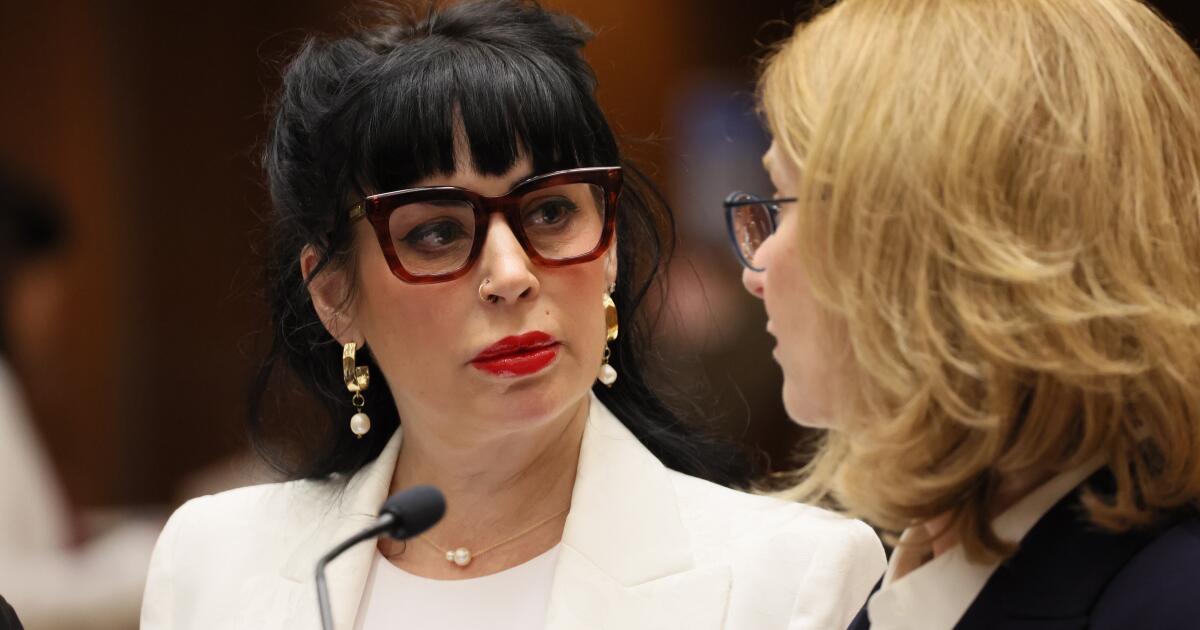
LAPD chief backed cops who shot at author, Weezer bassist’s ex; commission overruled him

What European Luxury Can Learn From American Fashion

Florida High School Football Rankings: Top 25 teams – Oct. 21

How old is Bo Nix? What to know about Oregon quarterback ahead of 2024 NFL Draft

Cleary's 21 help Le Moyne down Central Connecticut State 69-64 in OT

99th annual Pony Swim held in Virginia

Indiana Members Credit Union announced as new anchor tenant at Bottleworks District

Rubio joins crucial G7 talks as Iran war set to dominate second day

A surprise resignation could open the door for an independent to win a Montana Senate seat

Video: Savannah Guthrie Says She Believes Her Mother Was Taken for Ransom

Stefanik grills University of Michigan leader on lack of audit after string of Chinese national arrests

Photos: More than one million displaced by Israel’s evacuations in Lebanon
-

 Detroit, MI1 week ago
Drummer Brian Pastoria, longtime Detroit music advocate, dies at 68
-

 Science1 week ago
How a Melting Glacier in Antarctica Could Affect Tens of Millions Around the Globe
-

 Movie Reviews1 week ago
‘Youth’ Twitter review: Ken Karunaas impresses audiences; Suraj Venjaramoodu adds charm; music wins praise | – The Times of India
-
 Science1 week ago
I had to man up and get a mammogram
-

 Sports6 days ago
IOC addresses execution of 19-year-old Iranian wrestler Saleh Mohammadi
-

 New Mexico4 days ago
Clovis shooting leaves one dead, four injured
-

 Texas7 days ago
How to buy Houston vs. Texas A&M 2026 March Madness tickets
-

 Tennessee3 days ago
Tennessee Police Investigating Alleged Assault Involving ‘Reacher’ Star Alan Ritchson