Wisconsin
Unlicensed ‘midwife’ Heather Baker may face criminal charges in Brown County


A Wisconsin woman who practiced midwifery without a license for more than a decade has been referred to prosecutors for potential criminal investigation, Brown County District Attorney David Lasee confirmed Tuesday.
Heather Baker, a 49-year old De Pere woman, marketed herself as a “traditional midwife” and traveled across the U.S. and Mexico to assist women with home births – despite being told to stop by Wisconsin’s licensing agency in 2014.
As first reported by the Journal Sentinel and Green Bay Press-Gazette, the Wisconsin Department of Safety and Professional Services opened an investigation into Baker after 10 complaints were filed against her during a two-month span this summer.
Several of the complaints suggest Baker’s practices may violate state regulations governing licensed midwives and standards of care accepted nationally by the American College of Obstetricians and Gynecologists.
Those practices include using drugs to delay or induce labor, discouraging ultrasounds and other prenatal care, and failing to transfer mothers to the hospital in potentially dangerous situations, according to the complaints.
Baker did not respond to a request for comment.
Department of Safety and Professional Services spokesperson John Beard declined comment other than to say the department’s investigation is ongoing.
The complaints being investigated by the agency span incidents in Florida, Rhode Island and Mexico, including one regarding the death of Jennifer Nosek’s baby during her home birth in Sayulita, Mexico.
Nosek and her husband Rene Lemos, whose son was stillborn in April, are pursuing a case of criminal negligence against Baker in Mexico.
The couple allege in the lawsuit that “Baker’s negligent process as a pseudo-midwife” led several mothers to experience complications in their births due to the use of misoprostol — a drug used to treat postpartum hemorrhaging, and in some cases, to induce labor.
A group of mothers in Mexico who filed complaints with Wisconsin regulators and helped gather evidence for Nosek’s lawsuit released a statement in response to Baker’s referral for potential criminal investigation.
“Our hope is that the irreparable damage she has caused can be brought to light, accountability can be sought through the justice system and more objective information about her services will become apparent in hope that future families are saved from the traumatic and tragic outcomes others have experienced at her hands,” the statement read.
Alyssa N. Salcedo is a data and investigative journalist pursuing her master’s in journalism at DePaul University. She can be reached at asalced4@depaul.edu.
Jessica Van Egeren of the Journal Sentinel staff contributed to this article.



About 1,000 animal welfare activists who tried to gain entry on Saturday to a beagle breeding and research facility in Wisconsin were turned back by police who fired rubber bullets and pepper spray into the crowd and arrested the group’s leader.
It was the second attempt in as many months by protesters to take beagles from the Ridglan Farms facility in Blue Mounds, a small town about 25 miles (about 40 kilometres) southwest of Wisconsin’s capital, Madison.
Dane County Sheriff Kalvin Barrett said in a video statement that 300 to 400 protesters were “violently trying to break into the property” and assault officers. He said protesters have ignored designated areas for peaceful protest and blocked roads to prevent emergency vehicles from entering.
“This is not a peaceful protest,” Barrett said.
The sheriff’s department said a “significant” number of people were arrested out of about 1,000 protesters at the site but did not give an exact total as they were still being processed as of the afternoon.
Protesters tried to overcome barricades that included a manure-filled trench, hay bales and a barbed-wire fence. Some protesters did get through the fence but were unable to enter the facility, where an estimated 2,000 beagles are kept, the Wisconsin State Journal reported.


Wisconsin guard Andrew Rohde reflects on early March Madness exit
Wisconsin guard Andrew Rohde said the Badgers ‘thought we could do so many things’ in the NCAA Tournament before it ended abrupty with an upset loss.
Wisconsin men’s basketball has added a sharpshooting wing via the transfer portal.
Miami (Ohio) transfer Eian Elmer has signed with the Badgers, the team announced April 18. The 6-foot-7 wing will join UW with one year of eligibility remaining.
Elmer averaged a career-high 12.7 points and 5.9 rebounds while shooting 49.8% from the field and 42.9% from 3-point range in 2025-26. His production helped the RedHawks go 32-2 and earn an at-large NCAA Tournament bid.
“We are really excited to add another excellent addition to our spring signees,” UW coach Greg Gard said in a release. “Eian brings a wealth of experience and scoring punch as a 6-7 wing. … A terrific shooter, his skillset and production fit excellently into our plan as we build out next year’s team. Throughout our evaluation process, our staff loved his size, power and skill and truly believe he will thrive in our system.”
Elmer is Wisconsin’s third transfer portal addition since the end of the 2025-26 season, joining former George Washington guard Trey Autry and former Hofstra forward Victory Onuetu. UW also added Australian guard Owen Foxwell.
The additions of Autry, Onuetu and now Elmer leave Gard’s staff with three more roster spots to fill ahead of the 2026-27 season.
The Badgers are looking to replace much of their production from a 2025-26 team that went 24-11. Nolan Winter is expected to be the team’s only returning starter after John Blackwell and Aleksas Bieliauskas entered the transfer portal and Nick Boyd and Andrew Rohde exhausted their eligibility.

MILWAUKEE – Friday’s severe storms have passed. And with that, the threat of any severe weather has also passed for the immediate future as no storms or rain are expected for several days.
However, plenty of damage remains across southeastern Wisconsin as of Saturday morning, in addition to the ongoing flooding threat.
Several area rivers are at flood stage, and there are multiple river flood warnings in effect.
FOX6 Weekend WakeUp on Saturday begins at 6 a.m.
On the scene in the morning
What we know:
Farmstead damage in Franklin
FOX6’s Hayley Spitler is in Franklin on Saturday morning, April 18, getting a daylight look at the damage from last night’s storms.
Storm damage in Caledonia
Friday’s storms left quite the mark across southern and southeastern Wisconsin, including at L and L Farms and Greenhouse in Caledonia.
FOX6 Weather Extras
Local perspective:
Meanwhile, FOX6Now.com offers a variety of extremely useful weather tools to help you navigate the stormy season. They include the following:
FOX6 Storm Center app
FOX LOCAL Mobile app
FOX Weather app
Maps and radar
We have a host of maps and radars on the FOX6 Weather page that are updating regularly — to provide you the most accurate assessment of the weather. From a county-by-county view to the Midwest regional radar and a national view — it’s all there.
SIGN UP TODAY: Get daily headlines, breaking news emails from FOX6 News
School and business closings
When the weather gets a little dicey, schools and businesses may shut down. Monitor the latest list of closings, cancellations, and delays reported in southeast Wisconsin.
FOX6 Weather Experts in social media
The Source: Information in this post was compiled by the FOX6 Weather Experts.
-
 Sports2 minutes ago
Ryan Ward has a solid debut, but bullpen blows it again as Dodgers lose to Rockies
-

 World14 minutes ago
Schools, shops shut in northern Israel to protest the Lebanon ceasefire
-
 News44 minutes ago
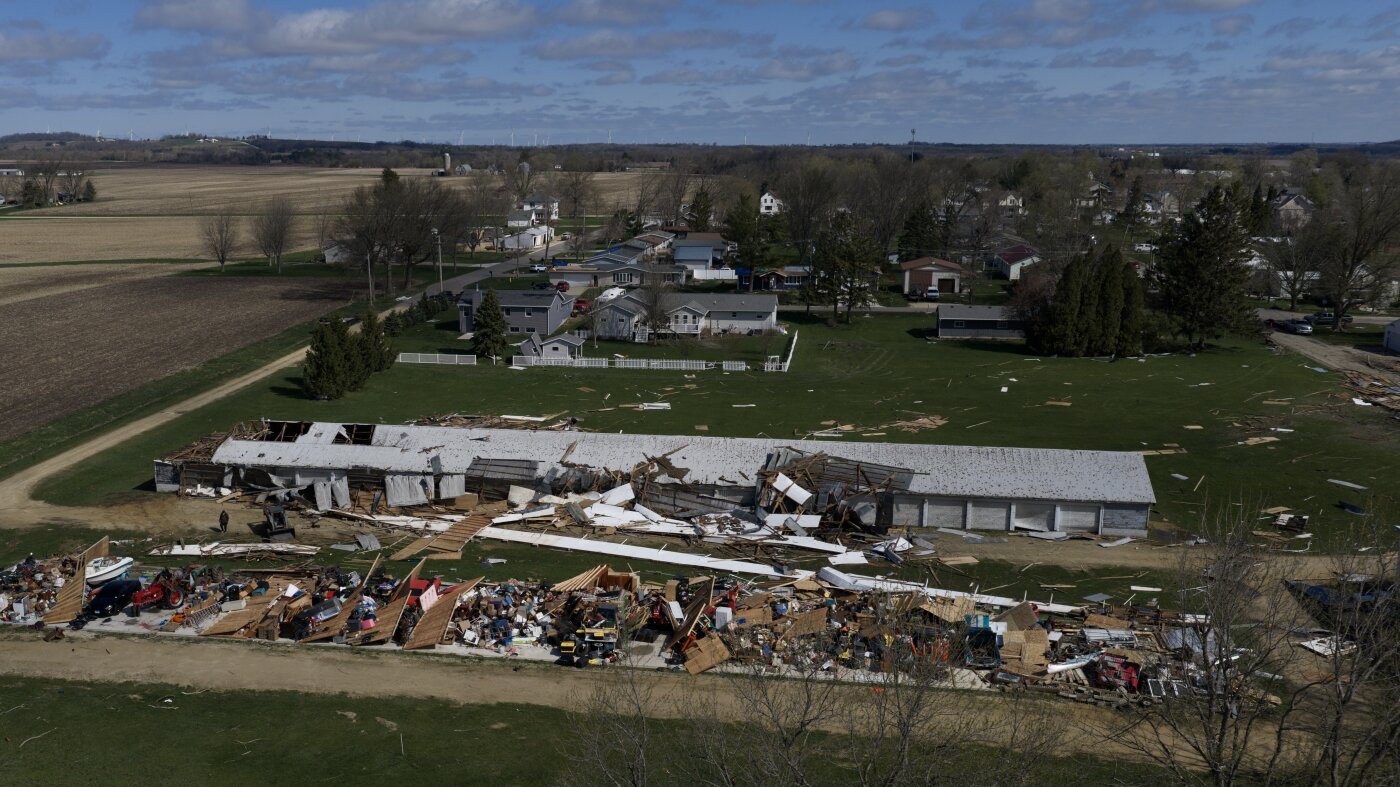
Communities launch cleanup after severe weather and tornadoes churn across Midwest
-

 Detroit, MI3 hours ago
Game 21: Tigers at Red Sox, Garrett Crochet battles both Detroit and the weather
-

 San Francisco, CA3 hours ago
Why do gray whales keep dying in San Francisco’s waters?
-

 Dallas, TX3 hours ago
Dallas Mavericks Owners Might Be Making Big Mistake in Search for New GM
-

 Miami, FL3 hours ago
Defense dominates, Mensah flashes in Miami’s spring game – The Miami Hurricane
-
Boston, MA3 hours ago
A crowd scientist is helping the Boston Marathon manage a growing field of 30,000-plus runners

