Wisconsin
Preview: No.5 Wisconsin meets No.4 UCLA in Big Ten Tournament Quarterfinals


Preview: No.5 Wisconsin meets No.4 UCLA in Big Ten Tournament Quarterfinals
No.5 Wisconsin (24-8, 13-7 Big Ten) vs. No.4 UCLA (22-9, 13-7 Big Ten)
Date/Time – Friday, March 14, 1:30 p.m.
Arena – Gainbridge Fieldhouse (18,345)
Watch – Big Ten Network (Guy Haberman, Stephen Bardo, Rick Pizzo)
Radio – Badgers Radio Network (Matt Lepay and Brian Butch), Sirius 106 or 195, stream online on iHeartRadio.
Series – UCLA leads 6-2 (UCLA leads 2-0 in neutral sites)
Last Meeting – UCLA won, 85-83, on January 23, 2025, in Los Angeles
Follow Online: The Badgers’ Den
Twitter: @Badger_Blitz
Betting line: Wisconsin -1.0
Projected Starting Five (Wisconsin)
Player to Watch: On only five shot attempts, Winter posted 18 points in Wisconsin’s Thursday win over Northwestern, matching the second-highest output of his career. Winter drew nine fouls, went a career-best 9-for-10 from the line, and added six rebounds in the 70-63 victory.
Projected Starting Five (UCLA)
Player to watch: Earning third-team All-Big Ten honors, Bilodeau leads UCLA in scoring and three-point shooting percentage (41.2 percent, 35-for-85). He has scored in double figures in 23 of 30 games this year, including scoring 16 points on 6-for-10 shooting earlier this season against the Badgers.
Series Notes
This will be the first postseason matchup between the two schools.
The Bruins have won the last six meetings, including neutral wins in the 1995 Maui Invitational and the 2017 Hall of Fame Classic.
Wisconsin Notes
With 24 wins, this season already equals the 11th-highest win total in Wisconsin history and the third-highest under Greg Gard. Another win would give the Badgers 25 wins for the third time under Gard and the 11th time in the last 22 seasons.
The Badgers are 16-8 against the top two quadrants of the NET rankings, going 6-7 in Quad 1 and 10-1 in Quad 2. UW is one of nine schools with 16+ Quad 1/2 wins.
Wisconsin is 10-5 away from home, including a mark of 6-5 in true road games and 4-0 in neutral site contests. Over the last two seasons, UW is 9-2 in neutral site games. Only two Major Conference teams have a better winning percentage in neutral site games over the last two seasons: Auburn and 2024 National Champion UConn.
Northwestern shot 37.0 percent from the field Thursday, the Badgers’ lowest by an opponent since holding Nebraska to 33.9 percent shooting on Jan. 26. UW is 10-2 this season when holding teams below 40 percent.
The Badgers finished the game with 10 turnovers against the Wildcats, marking the 20th game with 10 or fewer turnovers this season. UW is 16-4 in those games.
UCLA Notes
Through games played on March 11, the Bruins ranked No. 23 in the country in scoring defense (65.1 ppg), No. 17 in turnovers forced per game (15.3), and No. 8 in turnover margin (+4.5).
Through March 11, the Bruins ranked No. 8 in the nation in turnover margin (+4.5), having committed 334 turnovers and forced 474 turnovers by the opposition.
Nine of UCLA’s 10 rotation players have totaled more assists than turnovers through 31 games. Clark (87 assists, 35 turnovers) has recorded a team-best 2.5 assist-turnover ratio. Including Clark, the Bruins have three guards with an assist-turnover ratio better than 2.0-to-1 (Dylan Andrews and Johnson).
Johnson has been named a Big Ten All-Defensive Team selection (one of five), currently ranking sixth in the league in steals per game (1.7 spg, 53 steals in 31 games). Johnson, who hails from Milwaukee, earned Pac-12 All-Defensive Team honors as a sophomore in 2023 and junior in 2024.
The Bruins’ bench has outscored the opposition in 22 of 31 games this season (16-6 record in those 22 games). Sophomore Sebastian Mack has played in all 31 games, entering off the bench in 30 games. Mack has averaged 9.8 points and 2.2 rebounds per game, shooting 43.8 percent from the field and 73.8 percent at the free throw stripe.
Prediction
Before Saturday’s clunker against Penn State, Wisconsin’s last poor defensive effort came at Pauley Pavilion against the Bruins. The Badgers shot 51.0 percent from the field, 15-for-30 from three, and 18-for-21 from the line and lost by two. The reasons were simple: the Badgers committed 13 turnovers, saw the Bruins shoot 50.9 percent, and were picked apart by their ball-screen defense against reserves Sebastian Mack and Aday Mara. That latter fact resulted in 23 fouls as the Badgers were out of position and forced to chase and reach.
Mack scored 19 against the Badgers and hasn’t scored more than 14 since. Mara had 22 and also hasn’t scored more than 14 since playing UW. Crowl and Winter have seemed to be consistently outworked by true centers all season. Mara’s on that list with the Michigan combination of Vladislav Goldin and Danny Wolf, Oregon’s Nate Bittle, Michigan State’s Jaxon Kohler, and Penn State’s Yanic Konan Niederhauser. It’s optimistic to say UW has grown in the department, but the performances against Bittle, Kohler, and Niederhauser have come in the last three weeks. However, those three players are better than Mara.
UCLA has won 11 of its last 14 games and is quietly peaking at the right time. However, the Badgers don’t appear to have the same offensive rhythm as they did the last time these two teams met in Westwood. Furthermore, UW’s stellar defensive performance Thursday comes with the caveat that Northwestern was really beat up with injuries. UCLA hung 93 on USC in the season finale to claim the final double bye.
Initially planning to pick Wisconsin based on the Badgers getting their feet under them with their victory over the Wildcats, I feel UW’s offense won’t be able to crack UCLA’s tough defense.
Worgull’s Prediction: UCLA by 6
Record: 25-7 (23-9 ATS)
Points off Prediction: 267 (8.3 per game)
_________________________________________________
*Chat about this article in The Badgers’ Den
*Check out our videos, interviews, and Q&As on our YouTube channel
*Subscribe and listen to the BadgerBlitz.com podcast (as seen on Apple, Google, Spotify and wherever you listen to podcasts)
*Follow us on Twitter: @McNamaraRivals, @TheBadgerNation, @_Perko_, @seamus_rohrer, @DonnieSlusher_
*Like us on Facebook

Wisconsin
Former Wisconsin judge to be sentenced after conviction in obstructing arrest of Mexican immigrant

Former Wisconsin Judge Hannah Dugan, who was convicted of felony obstruction for helping an immigrant evade federal officers in a case that highlighted President Donald Trump’s sweeping immigration crackdown, is scheduled to be sentenced Wednesday in federal court.
Dugan, 67, faces up to five years in prison after a jury convicted her on Dec. 19. She resigned from her position as a Milwaukee County circuit judge two weeks later amid threats of impeachment from Republican state lawmakers. She had been a judge for nine years.
Trump administration tried to make an example out of Milwaukee judge
The Trump administration brought the case against Dugan as the president pressed ahead with his sweeping immigration crackdown. Trump’s administration and his allies branded Dugan as an activist judge, while Dugan’s attorneys said during the trial that the Trump administration was trying to make an example out of Dugan to “crush her.”
Immigrant rights advocates and other Dugan allies argued that the administration was trying to use her case to blunt judicial opposition to Trump’s immigration efforts. The case became a bellwether nationally in the conflict between the judiciary and Trump’s immigration crackdown.
Republican U.S. Rep. Tom Tiffany, a fierce Trump loyalist running for Wisconsin governor, urged authorities to “lock her up” in a social media post following her conviction.
Dugan’s attorneys declined to comment ahead of the sentencing. Dugan did not testify during her trial, but her attorneys said she would be making comments to the court on Wednesday. That would be her first public comments on the case in more than a year.
Prosecutors push for ‘serious sentence’
Dugan’s attorneys argued that as a judge she was immune from prosecution. U.S. District Judge Lynn Adelman, who will hand down the sentence, has rejected attempts by Dugan to vacate her obstruction conviction.
Prosecutors argued in a sentencing memo filed last week that Dugan violated her oath as a judge and put both law enforcement and the public at risk.
“Judges are entrusted with tremendous discretion, but there is a line they cannot cross,” Executive Assistant U.S. Attorney Richard Frohling wrote. “The defendant crossed that line.”
Dugan’s attorneys argued she has “punished enough,” including resigning as a judge and facing threats of violence. They argued in her sentencing memo that she should not be sentenced to any jail time besides the part of one day she already spent in federal custody.
Under federal sentencing guidelines, the presentence report calls for 15 to 21 months behind bars. The judge is not bound by those guidelines.
Prosecutors said the average sentence for obstruction cases is 16 months, but they did not recommend a sentence.
“This was a serious offense, and it warrants a correspondingly serious sentence,” Frohling wrote.
No matter what she is sentenced to, Dugan’s attorneys said they plan to file an appeal.
Dugan’s case was a first for Wisconsin
Dugan’s case marked the first time that a state judge in Wisconsin went to trial on charges of obstructing immigration agents. She was found not guilty of concealing an individual to prevent arrest, a misdemeanor.
On April 18, 2025, immigration officers went to the Milwaukee County courthouse after learning 31-year-old Eduardo Flores-Ruiz had reentered the country illegally and was scheduled to appear before Dugan for a hearing in a state battery case.
Dugan confronted agents outside her courtroom and directed them to the chief judge’s office because she told them their administrative warrant wasn’t sufficient grounds to arrest Flores-Ruiz.
After the agents left, she led Flores-Ruiz and his attorney out a private jury door. Agents spotted Flores-Ruiz in the corridor, followed him outside and arrested him after a foot chase. A week later, FBI agents arrested Dugan in the courthouse, leading her outside in handcuffs.
Flores-Ruiz was deported in November.

MENASHA, Wis. (WFRV) — History was made today, as Melodee Liegel successfully completed her nearly 17-hour swim just before 9:00 p.m. on July 7.
The swim, which started at the Fond du Lac Lighthouse and ended in Menasha, was just under 28 whole miles in length. Liegel began her swim at 4:00 in the morning, treading water only occasionally for snack and rest breaks.
Liegel, a resident of Delafield, Wisconsin, is the first person in history to complete the swim, which covered the entirety of Lake Winnebago.
Local fishing guide Troy Peterson was riding alongside Melodee as she completed her swim. His Facebook has more information, as does their website tracking her swim.
WFRV will update this story as necessary.

GREEN BAY (WLUK) — It was a bittersweet sign off on Good Day Wisconsin Tuesday.
It was morning anchor and field reporter, Savannah Wood’s last day at FOX 11.
The Good Day Wisconsin crew says goodbye to Savannah Wood on her last day at FOX 11, July 7, 2026. (WLUK)
She thanked the station and the Northeast Wisconsin community for embracing her over the past two years.
You’ve all watched many of my early morning field trips across Northeast Wisconsin over the last couple of years, many, too many to count, and I’ve had the privilege of getting to experience so much of what makes this community truly what it is and meet amazing people along the way,” Savannah said.
Savannah will be staying in news but going back to her home state of Pennsylvania to be closer to family.
JOIN THE CONVERSATION (1)
Goodbye and good luck Savannah!
-

 Arizona21 seconds ago
Arizona man pleads guilty after illegally living in forest for years among ‘1,000lbs of trash’
-

 Arkansas5 minutes ago
Army names intelligence facility for Arkansas Tech graduate
-

 California12 minutes ago
How California Effectively Legalized an Open-Air Sex Market
-

 Colorado15 minutes ago
Julian Lewis Says Deion Sanders’ Colorado ‘Wasn’t Really Looking at Defenses Much’ Last Season
-
 Idaho20 minutes ago
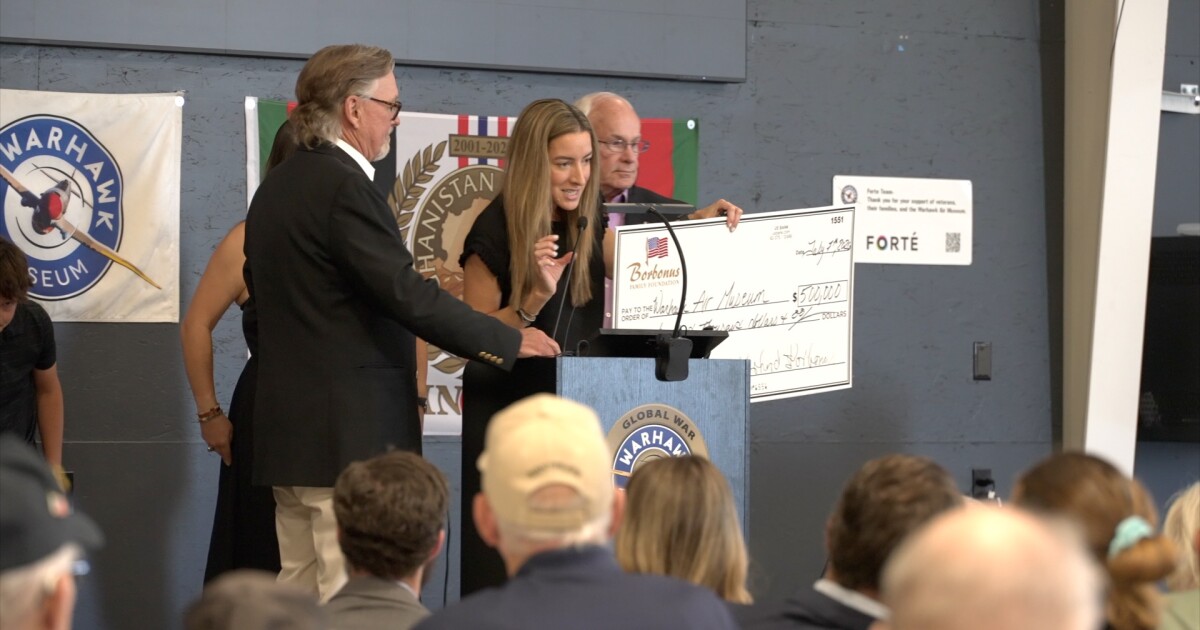
Warhawk Air Museum receives $500K grant honoring fallen Idaho soldier
-

 Connecticut20 minutes ago
Several beaches closed to swimming due to potential bacteria in the water
-

 Delaware27 minutes ago
Delaware Libraries Introduce Digital Literacy Specialists Program – State of Delaware News
-

 Florida30 minutes ago
Video shows man attack Florida deputies in snake-and-gator-infested canal, sheriff says

