Wisconsin
Exploring Milwaukee, One Of Wisconsin’s Top Drinking And Dining Destinations


Before the 1840s, Milwaukee was often spelled “Milwaukie.”
Wisconsin is renowned across the nation for its prowess at cheesemaking, but there’s a lot more to this scenic state than just its dairy products. During a visit to the lakeside city of Milwaukee, visitors can stumble upon a truly diverse drinking and dining scene, with high-end restaurants and acclaimed breweries scattered all across city limits. As you plan your next foray into the Badger State, don’t miss out on these beloved spots, each one shining a spotlight on the rich culinary heritage of Cream City.
Discover Milwaukee’s Top Spots for Fine Dining
Milwaukee was officially incorporated on January 31st, 1846.
While Milwaukee is known for classic Badger State dishes spanning from fried cheese curds to the butter burger, the city is also home to its fair share of sophisticated dining establishments. Case in point: Birch, a polished venue located on the banks of the Milwaukee River in the Lower East Side. Operated at the behest of James Beard Award-nominated Chef Kyle Knall, this prestigious spot has mastered the art of wood-fired cuisine, providing diners with a wealth of flavorful dishes cooked over an open hearth. Upon arrival, diners can look forward to dishes like the ember-roasted head-on shrimp and charred beef carpaccio, while the Contramar-inspired fish is a top-tier main dish thanks to its savory cumin aioli and poblano and fermented beet salsa.
Just south of the Menomonee River, Milwaukee’s Walker’s Point neighborhood is a treasure trove of fine dining destinations, with Morel drawing diners in droves thanks to its sophisticated New American fare that changes with each season. While menu items span from wood ear mushroom-loaded rabbit ragout to ricotta gnudi in a pea-mint broth, each dish stands as a testament to Chef Jonathan Manyo’s affinity for fresh, locally-sourced Wisconsin meat and produce. Meanwhile, those in search of inventive small plates can make their way ten minutes south to find Odd Duck, a sophisticated tapas spot that debuted in 2012. In addition to offering creative creations like wood-fired Tibetan bread, Vietnamese-inspired bánh xèo and galbi-jjim, this restaurant has also earned acclaim for its high-end cocktails, with the mezcal and hibiscus-forward #48 and citrus and jasmine-heavy #83 serving as two top choices for first-time visitors.
Immerse Yourself in Milwaukee’s International Cuisine
The state pastry of Wisconsin in the kringle, a pretzel-like dish that originated in Scandinavia.
Milwaukee has earned recognition for its strong German and Polish cultural ties, but the city’s dining scene spans far beyond the reaches of just Central Europe. During a visit to the city’s aforementioned Walker’s Point district, guests can discover a wealth of restaurants that highlight Milwaukee’s thriving Latin American food scene, with Zócalo Food Park serving as one of its most intriguing spots. Home to ten distinct drinking and dining venues operating across one space, diners are welcome to pay a visit to Anytime Arepa for a deep dive on one of Venezuela’s staple dishes, while Las Virellas has earned abundant acclaim for their hearty Puerto Rican classics, with pernil, tostones and tripletas all gracing the menu.
Further west, fans of Mexican cuisine can sample dishes like chiles rellenos and enchiladas poblanas at Guadalajara Restaurant, while Movida is a top spot for classic Spanish tapas, with sofrito-slathered meatballs, patatas bravas and garlic shrimp all up for grabs alongside a wealth of high-end wines—but of course, Walker’s Point isn’t the only neighborhood worth visiting in the heart of the city. In spite of its small size, the Historic Third Ward is packed full of can’t-miss venues like Saffron—a top spot for smoked tandoori lamb chops and dal makhani—and the Korean barbecue-focused Char’d, while those in search of traditional East African cuisine can make their way to East Town to find Alem Ethiopian Village, a cozy venue that’s home to classic dishes like quosta, doro wot, and asa tibs.
Sip Top-Tier Craft Beer Across Milwaukee
Milwaukee is also known as “Brew City” thanks to its high concentration of breweries.
First developed due to an influx of German immigrants during the mid-1800s, Milwaukee’s craft brewing scene stands as a major draw for tourism today—and for those in search of a truly iconic destination for beer lovers, there’s no beating Lakefront Brewery. Established in 1987, this storied enterprise has consistently broken barriers across the national brewing scene over the decades, serving as the first certified organic brewery in the U.S. as well as the first government-certified producer of gluten-free beer. Today, visitors can sample groundbreaking creations like the New Grist—a crisp gluten-free pilsner—or keep it classic with a pour of Eastside Dark, their award-winning Bohemian-style dark lager. Post-visit, tourists can keep the brews flowing with a stroll over to neighboring Eagle Park Brewing Company, a polished space that crafts an amazing DDH Bowie’s Space Suit New England hazy.
For those who prefer to stick closer to the Historic Third Ward, The Explorium Brewpub offers a wealth of refreshing brews served in a historic space. There are 24 taps to sample during a visit, with options ranging from the refreshing Cream City Crusher cream ale to Watermelon Peppercorn wild ale—and to sweeten the deal, the venue also crafts some truly stellar fried cheese curds alongside hearty main courses like Nashville hot wings and roasted mushroom calzones. Once you’ve made your way through Milwaukee’s top breweries, history buffs should be sure to book a tour of the Best Place, a storied facility that offers a deep dive into the history of Badger State beer. During a history tour, guests can gain insight into the past of Best Brewing Co, an iconic organization that served as the largest brewery in the nation in the late 1800s and even gave rise to the renowned Pabst Blue Ribbon lager—and of course, each tour comes with plenty of fresh PBR to enjoy along the way.



Manuel Franco claims his $768 million Powerball jackpot
Manuel Franco, 24, of West Allis was revealed Tuesday as the winner of the $768.4 million Powerball jackpot.
Mark Hoffman, Milwaukee Journal Sentinel
The Wisconsin Lottery offers multiple draw games for those aiming to win big.
Here’s a look at March 22, 2026, results for each game:
Winning Pick 3 numbers from March 22 drawing
Midday: 1-7-8
Evening: 4-2-4
Check Pick 3 payouts and previous drawings here.
Winning Pick 4 numbers from March 22 drawing
Midday: 8-9-6-0
Evening: 1-8-7-4
Check Pick 4 payouts and previous drawings here.
Winning All or Nothing numbers from March 22 drawing
Midday: 02-03-04-08-09-16-17-18-19-21-22
Evening: 01-02-04-10-11-12-14-18-19-21-22
Check All or Nothing payouts and previous drawings here.
Winning Badger 5 numbers from March 22 drawing
01-10-20-21-28
Check Badger 5 payouts and previous drawings here.
Winning SuperCash numbers from March 22 drawing
09-16-20-25-29-39, Doubler: N
Check SuperCash payouts and previous drawings here.
Feeling lucky? Explore the latest lottery news & results
Are you a winner? Here’s how to claim your lottery prize
- Prizes up to $599: Can be claimed at any Wisconsin Lottery retailer.
- Prizes from $600 to $199,999: Can be claimed in person at a Lottery Office. By mail, send the signed ticket and a completed claim form available on the Wisconsin Lottery claim page to: Prizes, PO Box 777 Madison, WI 53774.
- Prizes of $200,000 or more: Must be claimed in person at the Madison Lottery office. Call the Lottery office prior to your visit: 608-261-4916.
Can Wisconsin lottery winners remain anonymous?
No, according to the Wisconsin Lottery. Due to the state’s open records laws, the lottery must, upon request, release the name and city of the winner. Other information about the winner is released only with the winner’s consent.
When are the Wisconsin Lottery drawings held?
- Powerball: 9:59 p.m. CT on Monday, Wednesday, and Saturday.
- Mega Millions: 10:00 p.m. CT on Tuesday and Friday.
- Super Cash: 9:00 p.m. CT daily.
- Pick 3 (Day): 1:30 p.m. CT daily.
- Pick 3 (Evening): 9:00 p.m. CT daily.
- Pick 4 (Day): 1:30 p.m. CT daily.
- Pick 4 (Evening): 9:00 p.m. CT daily.
- All or Nothing (Day): 1:30 p.m. CT daily.
- All or Nothing (Evening): 9 p.m. CT daily.
- Megabucks: 9:00 p.m. CT on Wednesday and Saturday.
- Badger 5: 9:00 p.m. CT daily.
That lucky feeling: Peek at the past week’s winning numbers.
Feeling lucky? WI man wins $768 million Powerball jackpot **
WI Lottery history: Top 10 Powerball and Mega Million jackpots
This results page was generated automatically using information from TinBu and a template written and reviewed by a Wisconsin editor. You can send feedback using this form.

WEST BEND, WI — Washington County deputies say a Girl Scouts camp in West Bend, Wisconsin, was the site of a drug and illegal firearms operation uncovered earlier this month.
See Also: Firefighters save cat from third-floor blaze in Fort Pierce
Deputies responded to a domestic violence call at a home on the Camp Silver Brook grounds on March 15 where they located and arrested 48yearold Paul David. David lived at the property with his wife, who is a Girl Scouts employee, and their two children.
According to court documents, investigators found nearly 700 grams of marijuana, nine marijuana plants, psychoactive mushrooms, and 13 guns stored in areas accessible to children.
Deputies say David is a convicted felon and is prohibited from possessing firearms.
Girl Scouts officials said no scouts were harmed and confirmed the employee has been placed on leave. David has since posted bail, left the campgrounds, and is barred from coming within 1,000 feet of the property.
His next court appearance is scheduled for May.

Watch a time lapse video of the fog rolling in over Milwaukee
Check out a time lapse video of the fog rolling in over Milwaukee on Tuesday into Wednesday this week.
Looking past Saturday’s radiant sunshine is a reminder that, no matter how much we love Wisconsin’s early spring warm spells, Wisconsin weather will never love us back.
When the sun goes down, so too will the false spring, according to the National Weather Service.
The temperature overnight is forecasted to drop to the mid- to upper-30s, with winds up to 30 miles per hour in southeast Wisconsin.
By morning, the high temperature will reach the low-40s, with a 20% chance of light rain and up to 20 mile-per-hour winds.
From there, it will only get colder. Monday will see a brief return to cooler temperatures, with a mid-40 degree high. The prospect of spring may well return March 24, with Tuesday temperatures said to reach the lower 50s.

5 worst moments of March Madness Round 2, from Tyler Tanner’s miss to Kentucky flop

UPDATE: Plane found in swamp near Cleco lake, RPSO says

Maine Maple Sunday Weekend draws visitors to 100-plus sugarhouses statewide

What’s on Maryland lawmakers’ deadline day to-do list

Sweet 16 crossroads for Nimari Burnett journey to Michigan basketball

Florida High School Football Rankings: Top 25 teams – Oct. 21

How old is Bo Nix? What to know about Oregon quarterback ahead of 2024 NFL Draft

Cleary's 21 help Le Moyne down Central Connecticut State 69-64 in OT

99th annual Pony Swim held in Virginia

Indiana Members Credit Union announced as new anchor tenant at Bottleworks District

Video: Plane Collides With Vehicle at LaGuardia Airport

As cattle herds shrink and beef prices rise, investors back AI cow collars

French elections: Paris stays left as far right makes mixed gains

ICE officers set to deploy to airports as delays mount, border czar Homan confirms

Video: ICE Agents Will Be Deployed to U.S. Airports, White House Confirms
-

 Detroit, MI4 days ago
Drummer Brian Pastoria, longtime Detroit music advocate, dies at 68
-

 Oklahoma1 week ago
Family rallies around Oklahoma father after head-on crash
-

 Georgia1 week ago
How ICE plans for a detention warehouse pushed a Georgia town to fight back | CNN Politics
-
 Science1 week ago
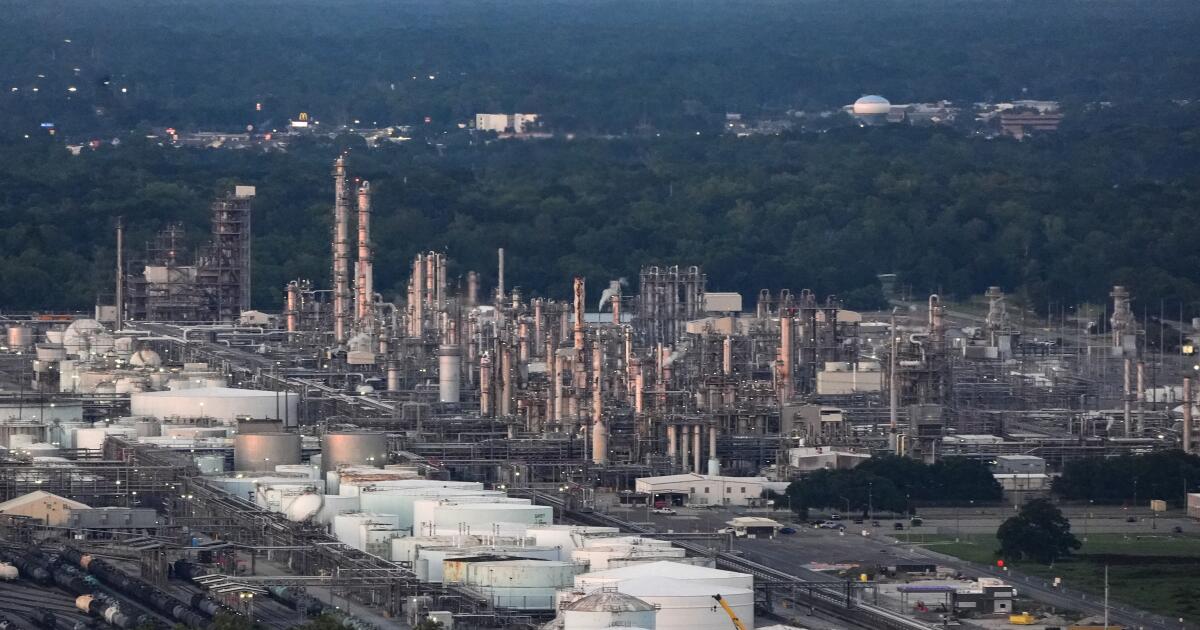
Federal EPA moves to roll back recent limits on ethylene oxide, a carcinogen
-

 Alaska1 week ago
Police looking for man considered ‘armed and dangerous’
-

 Movie Reviews4 days ago
‘Youth’ Twitter review: Ken Karunaas impresses audiences; Suraj Venjaramoodu adds charm; music wins praise | – The Times of India
-

 World1 week ago
Thousands march worldwide in solidarity with Palestine, Iran on al-Quds Day
-

 World1 week ago
Jamal Rayyan, the first face of Al Jazeera, dies at 73