South Dakota
Tumultuous period at penitentiary culminates in warden’s departure • South Dakota Searchlight


Teresa Bittinger is no longer warden of the South Dakota State Penitentiary in Sioux Falls.
Department of Corrections (DOC) employees got an email late Tuesday evening from Director of Prisons Amber Pirraglia announcing the warden’s departure. Within minutes, the email was posted to a Facebook group for the friends and families of inmates. The email was sent independently to South Dakota Searchlight by sources connected to the DOC.
Lawmakers, prison officials shut out public during discussion of weekslong lockdown
“This decision was made after careful consideration and in alignment with the goals and standards of the department,” Pirraglia wrote.
The email goes on to say that Pirraglia will serve as interim warden, and that a “nationwide search is underway” to find wardens for the South Dakota State Penitentiary and the maximum security Jameson Annex, which is located on the Sioux Falls prison site.
That would mean an additional warden. Bittinger had been warden for both facilities.
DOC spokesman Michael Winder confirmed in a Wednesday morning email that Bittinger is no longer warden. He did not characterize the nature of Bittinger’s departure and said no other personnel information will be shared.
Bittinger was warden of the prison campus in Sioux Falls for less than two years. She was appointed in March 2023 to fill the role on an interim basis and became permanent warden the following month.
Bittinger’s departure came one day after lawmakers on a legislative oversight committee spent nearly an hour and a half in a closed discussion with DOC Secretary Kellie Wasko.
The committee went into executive session after a short discussion of a weekslong lockdown at the Sioux Falls prison’s three housing units. Commission Chairman Ernie Otten, R-Tea, closed the session in part to discuss “personnel and contractual matters.”
No one mentioned Bittinger during the public portions of the hearing.
Private employers say they were pushed out of state prisons
Her departure comes at a tumultuous time for the DOC. The Sioux Falls lockdown was reportedly undertaken as a preemptive action, meant to weed out and seize contraband across three buildings.
The campus-wide searches included teardowns of three large sweat lodges, prompting a letter last week from Oglala Sioux Tribal President Frank Star Comes Out demanding an explanation.
Those were only the most recent controversies. The agency is also dealing with the fallout from incidents of inmate-on-inmate violence at Mike Durfee State Prison in Springfield in June, and from two bouts of unrest in March at the penitentiary that injured a correctional officer and sparked criminal charges for a handful of inmates. Those events came in the weeks following a temporary shutdown of electronic tablet-based communications.
The DOC has also faced criticism from the family members of inmates, who organized a group meant to pressure officials to respond to their concerns about safety, the price of commissary items for inmates and the impact of repeated lockdowns.
Meanwhile, the agency aims to build a new men’s prison in Lincoln County, about 15 miles south of the penitentiary, to replace most of the existing Sioux Falls facility that dates to 1881. The state has already committed $569 million to the plan, but has yet to lock in a guaranteed price.
State prison system puts nearly 1,300 inmates on indefinite lockdown
Neighbors to the site, long used as farmland, have presented fierce resistance. They formed a nonprofit called Neighbors Opposed to Prison Expansion, filed a zoning-related lawsuit against the DOC that remains unresolved, have organized multiple public forums and have helped spark questions from lawmakers to the DOC on the feasibility of its site selection and construction plans.
If built, the new prison will be the most expensive taxpayer-funded capital project in state history. Another construction project — an $87 million women’s prison in Rapid City, to relieve overcrowding at the women’s prison in Pierre — is underway, so far without any of the controversy that has dogged the men’s prison project.
Bittinger herself arrived in the wake of scandal. She took over for warden Dan Sullivan, who took over for former Deputy Corrections Secretary Doug Clark, who’d served as interim warden after a 2021 shake-up tied to allegations of nepotism and sexual harassment that have never been explained by Gov. Kristi Noem’s administration.
The shake-up resulted in the ouster of former warden Darin Young and others at the Sioux Falls facility.
Sullivan, a 23-year veteran of the federal prison system who came to Sioux Falls by way of Minnesota, served less than two years before Bittinger’s appointment.
GET THE MORNING HEADLINES.
YOU MAKE OUR WORK POSSIBLE.




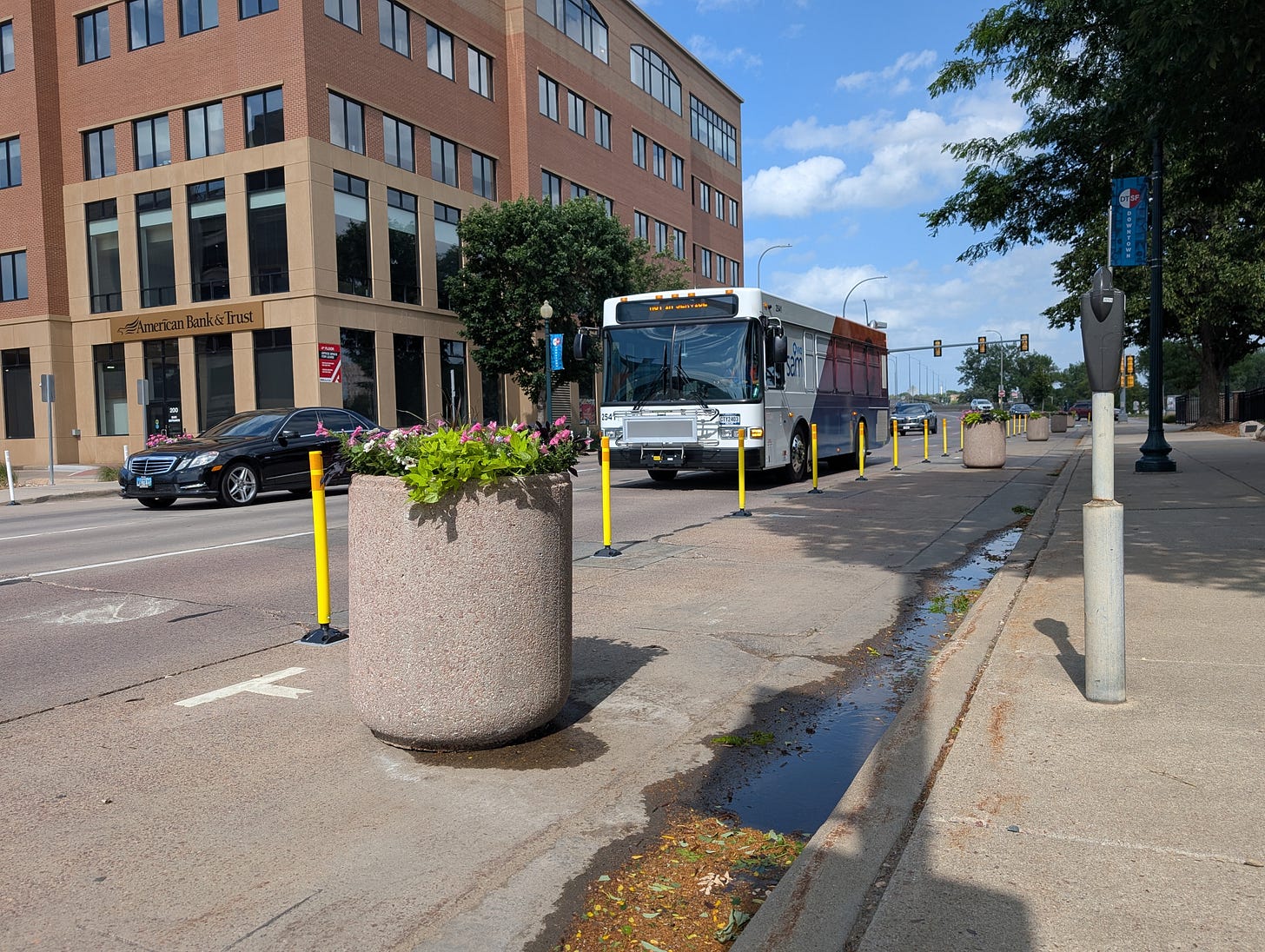
Deliberately slowed rush-hour traffic in downtown Sioux Falls is serving as a preview for commuters ahead of a major, yearslong overhaul of the city’s aging viaduct overpasses.
And Downtown Sioux Falls Inc. is using the opportunity to study traffic patterns in advance of the reconstruction of the 10th and 11th street overpasses on the east end of the core commercial district. Though the state-led project is still years away, the temporary traffic-calming measures are helping engineers gather data on vehicle speeds, volumes and behaviors.

2026 general election ballot set after referral effort falls short




Norma Lindell, 93, of Mitchell, SD, passed away Tuesday, March 31, 2026, at Avera Brady Health and Rehab in Mitchell. Visitation will be Saturday, July 18, from 1-4:00 PM at Bittner Funeral Chapel. Burial will be at St. John’s Lutheran Cemetery in Howard, SD.
NormaJean Marie (Callies) Lindell was born in Mitchell, SD, on April 18, 1932, to Peter C. and Norma A. (Killeaney) Christensen. She was the oldest daughter, along with her younger brother James N. Christensen. She lost her mother when she was eleven and helped her father raise her 2-year younger brother, Jimmy. Her grandmother also helped her dad raise her and her brother. Norma grew up in Howard, SD, and married Ira Callies. To this union were born four sons.
Norma liked working with people and eventually owned her own restaurant business in Howard. Previous to that, she worked for many years in the Black Hills area, where she managed a campground and worked at the well-known Chute Rooster in Hill City. After returning to Howard, she met and married Clyde Lindell of Milaca, Minnesota. Following his death in 1986, she moved back to South Dakota and lived in Centerville, Madison, and finally Mitchell until her death.
She was proud of her children, grandchildren, great-grandchildren, and great-great-grandchildren. She loved music and dancing. Her father taught her how to dance, and they attended many dances throughout the area.
Norma is survived by her sons: Byron (Kaelyn) Callies of Watertown, SD, Lonnie (Susan) Callies of Mitchell, SD, and Dana (Deb) Callies of South Venice, Florida, along with many generations of grandchildren.
She was preceded in death by her mother, father, brother Jimmy, and son Dale.
Celebrate a life with the whole community in The Dakota Scout. Contact obits@thedakotascout.com to have your loved one remembered today.
The South Dakota Lottery offers multiple draw games for those aiming to win big.
Here’s a look at June 28, 2026, results for each game:
Winning Millionaire for Life numbers from June 28 drawing
04-11-31-54-58, Bonus: 03
Check Millionaire for Life payouts and previous drawings here.
Feeling lucky? Explore the latest lottery news & results
Are you a winner? Here’s how to claim your prize
- Prizes of $100 or less: Can be claimed at any South Dakota Lottery retailer.
- Prizes of $101 or more: Must be claimed from the Lottery. By mail, send a claim form and a signed winning ticket to the Lottery at 711 E. Wells Avenue, Pierre, SD 57501.
- Any jackpot-winning ticket for Dakota Cash or Lotto America, top prize-winning ticket for Lucky for Life, or for the second prizes for Powerball and Mega Millions must be presented in person at a Lottery office. A jackpot-winning Powerball or Mega Millions ticket must be presented in person at the Lottery office in Pierre.
When are the South Dakota Lottery drawings held?
- Powerball: 9:59 p.m. CT on Monday, Wednesday, and Saturday.
- Mega Millions: 10 p.m. CT on Tuesday and Friday.
- Lucky for Life: 9:38 p.m. CT daily.
- Lotto America: 9:15 p.m. CT on Monday, Wednesday and Saturday.
- Dakota Cash: 9 p.m. CT on Wednesday and Saturday.
- Millionaire for Life: 10:15 p.m. CT daily.
This results page was generated automatically using information from TinBu and a template written and reviewed by a South Dakota editor. You can send feedback using this form.
-

 South Dakota2 minutes ago
Traffic slowing down ahead of yearslong viaduct makeover in downtown Sioux Falls
-
 Tennessee7 minutes ago
Poet laureate of Tennessee Margaret Britton Vaughn dies at 87
-

 Texas14 minutes ago
Texas Lands Major Commitment From In-State DL
-

 Utah17 minutes ago
Utah firefighter fears job loss after answering wildfire call
-

 Vermont22 minutes ago
Police searching for missing Troy woman
-
 Virginia29 minutes ago
Virginia to allow recreational marijuana to be sold in retail stores beginning in 2027
-
Washington32 minutes ago
Port Washington weekly vigils honor community members arrested by ICE
-

 Wisconsin37 minutes ago
3 dead after crash involving UTV, truck in western Wisconsin


