South Dakota
South Dakota DANR awarding grants for water projects

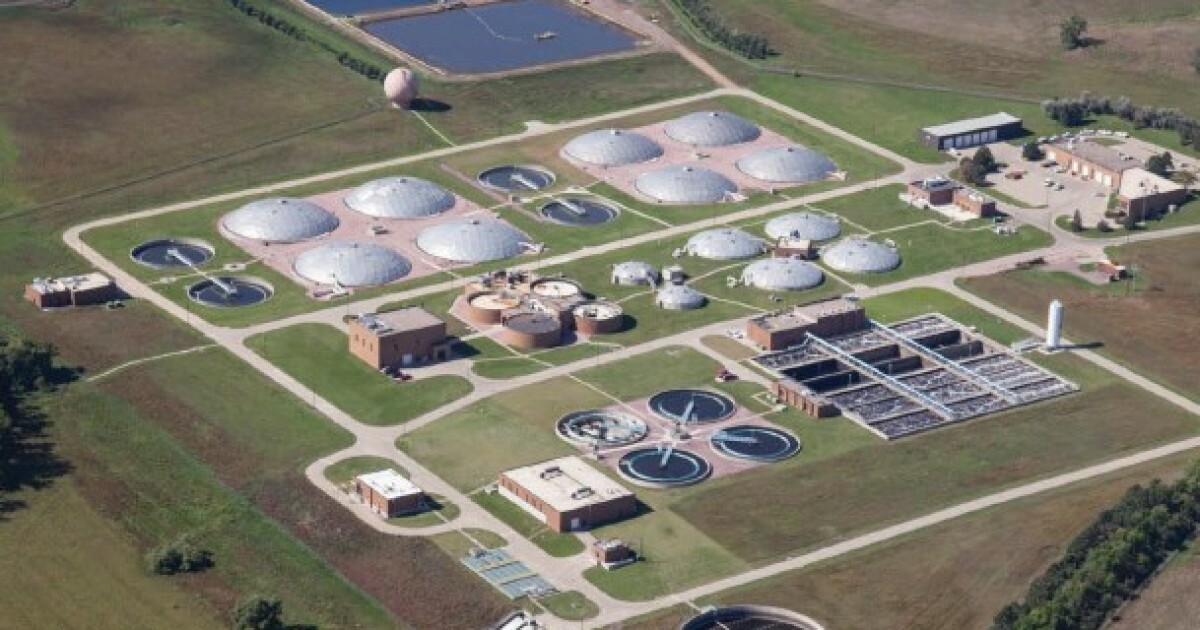
The South Dakota Department of Ag and Natural Resources is allocating $175 million in federal grants.
The American Rescue Plan Act money is going toward grants for drinking water, wastewater system improvements and the state’s riparian buffer initiative. The department is awarding $105 million in grants to nearly thirty water districts and rural water systems to improve drinking water across the state.
Another $65 million is going toward almost 20 cities and sanitary districts for waste and stormwater projects.
The department is investing $5,000,000 into riparian buffer grants. A riparian zone is a conservation practice that encourages vegetation growth along the edges of rivers, stream and lakes to help improve water quality.
The full list of approved grants:
- Aurora-Brule Rural Water received an additional $846,775 ARPA grant to install a new parallel water main, a new water storage reservoir, multiple loops within the system, a booster station, and make distribution line improvements. Previous funding for this project was awarded in April 2022
- BDM Rural Water System received an additional $1,738,345 ARPA grant to construct a new water treatment plant, install a water reservoir, install pipe to expand the water system and loop lines for added redundancy, and replace water meters. Previous funding was awarded in April 2022.
- Black Hawk Water User District received an additional $254,340 ARPA grant to install a new water main crossing I-90 near Exit 52. The existing crossing is undersized and not operating effectively. Previous funding was awarded in June 2022.
- Brookings received an additional $8,000,000 ARPA grant to construct a new lime softening water treatment facility along 34th Avenue. The new treatment plant will require the installation of raw and finished water lines to feed into the distribution system and includes the construction of six new municipal wells and a new transmission main. Previous funding was awarded in April 2022.
- Brookings-Deuel Rural Water System received an additional $1,357,708 ARPA grant to construct water main to interconnect the system’s two primary water sources, the Joint Well Field, and the Clear Lake Water Treatment Plant. The project will also include installation of a new water main to the Lake Cochrane service area to improve low pressures around the lake during periods of peak water use. Previous funding was awarded in April 2022.
- Clay Rural Water System received an additional $2,488,710 ARPA grant to construct two ground storage reservoirs near the existing Greenfield reservoir and the Wakonda Water Treatment plant. A new booster station at the Greenfield reservoir and distribution line improvements to provide additional capacity and accommodate a Highway 46 construction project is also included. Previous funding was awarded in April 2022.
- Davison Rural Water System received an additional $189,255 ARPA grant to install a water line to parallel and loop existing mains and make upgrades to its automatic meter reading technology. Previous funding was awarded in April 2022.
- Fall River Water User District received an additional $1,400,007.62 ARPA grant to install a submersible pump and finish piping at the existing Fairburn well, construct a pump station and well house, a control building/pump station, a ground storage reservoir at the well site, pipeline to connect the Fairburn well to the existing distribution system in two locations, and a ground storage reservoir along the new pipeline route. Previous funding was awarded in June 2022.
- Grant-Roberts Rural Water System received an additional $1,023,690 ARPA grant to add transmission capacity allowing the system’s two reservoirs to fill during high water use periods. Additional pipeline looping and parallels will be completed to distribute water to existing and new customers and improve the reliability of the water system. The project also includes installation new pipeline and other appurtenances to allow the town of Corona to access the Grant-Roberts Rural Water System. Previous funding was awarded in April 2022.
- Hanson Rural Water System received an additional $548,388 ARPA grant to install water lines to parallel and loop of existing mains and make upgrades to its automatic meter reading technology. Previous funding was awarded April 2022.
- Joint Well Field, Inc. received an additional $1,440,459 ARPA grant to construct a new gravity filtration water treatment plant including aeration, detention, filtration, transfer pumping, raw water supply wells, and generation equipment. Previous funding was awarded in April 2022.
- Kingbrook Rural Water System received an additional $4,972,298 ARPA to upgrade the Badger pump station, DeSmet water treatment plant, Chester water treatment plan, Oakwood pump station, and the Orland pump station. The project also involves construction of an elevated tank near Arlington and booster pump station near Bryant, and relocation and resizing of pipeline segments along Highway 25 north of DeSmet. Previous funding was awarded in April 2022.
- Lead-Deadwood Sanitary District received an additional $339,623 ARPA grant to abandon the Hanna raw water transmission pipeline and install new ductile iron or steel pipe. Both low- and high-pressure lines will be re-routed to bypass the Englewood power generation facility, and a portable backup power generator will be purchased for use at multiple locations. Previous funding was awarded in June 2022.
- Lead-Deadwood Sanitary District also received an additional $136,662 ARPA grant to make improvements to the wastewater treatment plant serving Lead, Deadwood, Central City, and other unincorporated areas. Improvements include replacement of five aeration blowers, installation of fine bubble diffusers and aeration piping, and installation of a blower control system. Previous funding was awarded In June 2022.
- Lewis & Clark Regional Water System received an additional $5,000,000 ARPA grant to construct two solids contact units, a sludge thickener, three lime sludge drying beds, and a three million gallon clear well and high service pump station to increase the treatment plant capacity. Previous funding was awarded in April 2022.
- Lincoln County Rural Water System received an additional $571,211 ARPA grant to install transmission improvements to serve newly constructed residences. The project will install approximately 16.5 miles of pipeline and includes looping of dead-end lines. Previous funding was awarded in April 2022.
- Mid-Dakota Rural Water System received an additional $6,830,882 ARPA grant to update the existing water system by installing an advanced metering infrastructure system, paralleling of pipe, addition of a new backwash recovery system, and additional membrane capacity. Previous funding was awarded in April 2022.
- Mni Wašté Water Company received an additional $6,545,503 ARPA grant to install a treated water pipeline, a water tower, and appurtenances including valves, pumps, and air releases. This project replaces the undersized pipeline along Highway 63 and will serve as the main pipeline for the northern tier of the Cheyenne River Sioux Tribe. Previous funding was awarded in April 2022.
- Randall Community Water District received an additional $10,000,000 ARPA grant to address increasing demand among existing customers and supply water to the City of Mitchell. The proposed improvements will provide enough capacity to allow Mitchell to connect its redundant water line to the system. Booster stations, storage facilities, and an upgrade to the Platte Water Treatment Plant are necessary to complete the proposed improvements. Previous funding was awarded in June 2022.
- Rapid City received an additional $8,000,000 to make improvements to its wastewater treatment facility by adding secondary clarifiers and hydraulic improvements which allows the South Plant to assume all inflow while meeting permit limits. This project would also decommission the North Plant. Previous funding was awarded in April 2022.
- Shared Resources received an additional $10,000,000 ARPA grant for a treatment plant, well field, distribution pipeline, and two storage tanks. Shared Resources is a joint effort between Minnehaha Community Water Corporation and the Big Sioux Community Water System. Previous funding was awarded in April 2022.
- Sioux Falls received an additional $8,000,000 ARPA grant to make substantial improvements throughout the city’s wastewater reclamation facility and to expand the plant capacity to accommodate growth in the region. Previous funding was awarded in May 2022.
- Sioux Rural Water System received an additional $765,583 ARPA to construct a new elevated tank in the southwest part of the system and two segments of pipeline to increase pressure and capacity. Previous funding was awarded in April 2022.
- South Lincoln Rural Water System received an additional $2,444,355 ARPA grant to make system wide improvements including installing an elevated water tank, a new pump station, and a new water treatment plant. This project addresses capacity issues in portions of the distribution system and increasing demands within the existing service area. Previous funding was awarded in April 2022.
- Southern Black Hills Water System received an additional $542,432 ARPA grant to extend the existing water system main from the two wells at Paramount Point Subdivision approximately 5 miles northeast to the Spring Creek Acres Subdivision to provide redundancy. The project will also construct a new well, booster pump station, new elevated storage reservoir, chlorination and SCADA systems, and new pressure reducing valve stations. Previous funding was awarded in April 2022.
- TM Rural Water District received an additional $1,272,908 ARPA grant to install four miles of parallel 12-inch water main to address low water pressure situations during high water demand periods. Previous funding was awarded in April 2022.
- Tripp County Water User District received an additional $2,034,121 ARPA grant to replace two storage tanks, to parallel and loop water lines to increase the water pressure within the system, and to develop a new well field to address water supply issues. Previous funding was awarded in April 2022.
- WEB Water Development Association received an additional $10,500,000 ARPA grant. The funding is part of a much larger project to increase water capacity for WEB and to provide a bulk water connection for Aberdeen and BDM Rural Water. The project is known as the Water Investment in Northern South Dakota or WINS project, undertaken by all three entities with WEB acting as the lead contracting entity at this time. Previous funding was awarded in June 2023.
- Western Dakota Regional Water System received an additional $2,165,000 ARPA grant for a feasibility study to explore the use of its Missouri River water to supply a large portion of western South Dakota with a bulk water transmission line conveying Missouri River water to various communities, tribes, and water systems. The current funding will be used to hire an engineering firm to complete facilities plan and preliminary design for the project. Previous funding was awarded in April 2022.
- West River/Lyman-Jones Rural Water System received an additional $602,702 ARPA grant to install PVC water mains serving areas in Mellette, Haakon, and Lyman counties. A new ground storage tank and necessary electrical controls would also be installed in Pennington County. Previous funding was awarded in April 2022.



Dick Werner drives his pickup through the streets of this northern South Dakota town and can hardly go a block before stopping to point out new houses or apartments that have popped up in the past few years.
To be sure, the journey doesn’t last long because the agricultural outpost of Herreid – located 7 miles south of the North Dakota border – only has about 400 residents and just a few streets that splinter off U.S. Highway 83, the main drag through town.
And yet, Werner’s excitement is palpable as he shares the stories of how he and other local leaders have spurred a rebirth of the ranching and outdoor recreation town’s population and economy by adding new housing, new municipal amenities and new businesses.
Werner, 68, is a retired banking executive who served in the state Legislature and on the Beadle County Commission before taking on a volunteer role as president of Herreid Area Housing Development (HAHD.)
He grew up in Herried but spent adulthood elsewhere, returning to his hometown in 2016 to find the local grocery store shuttered and the school population at 109, just above the threshold where state law requires dissolution of the school and assimilation into a larger nearby district.
“If you lose your school and your grocery store, your town is in trouble,” Werner said.
Herreid’s population peaked in 1960 at 767 people and has been on the decline since, falling to 416 in 2020, according to the U.S. Census. School enrollment followed suit as the population grew older and fewer families with children made Herreid their home.
Dick Werner of the Herreid, S.D., housing development group, stood on Feb. 3, 2026, in front of an early spec home developed by the organization. Credit: AP/Bart Pfankuch
Since returning, Werner has played a key role in finding the money and providing the expertise to begin rebuilding the housing stock in Herreid, a critical first step in attracting families and workers who form the backbone of the future for any small town in South Dakota.
“We were really hurting for homes because without places to live, there’s no way people can move here to work or raise a family,” he said.
Response: Grants and local donors drive growth
As with many small, remote South Dakota communities, Herreid is not a target for privately funded housing projects, largely because profit margins for developers are too narrow and it is difficult for them to get materials and skilled workers.
Instead, Herreid has turned to a unique funding model to find money for new homes and apartments.
Downtown Herreid, S.D., shown on Feb. 3, 2026, has become a thriving business district in recent years. Credit: AP/Bart Pfankuch

Over the past decade, Werner has obtained $2.2 million in grants to help pay for land, materials and construction for development of new housing, for rehabilitation of existing homes and businesses, and for municipal projects including a pool, playground and sports complex.
The list of funders is varied and includes among others the South Dakota Housing Authority, U.S. Department of Agriculture Rural Development, the Land, Water and Conservation Fund, Grow South Dakota, the South Dakota Community Foundation, Wellmark Foundation, WEB Water, CoBank, MDU Resources, Campbell County Bank, Federal Home Loan Banks, and Homes Are Possible Inc. in Aberdeen.
Meanwhile, the HAHD created another pool of about $180,000 in available funds by soliciting loans from 30 local residents who were committed to supporting future growth. The group also raised more than $250,000 from fundraising events, including $200,000 from a Queen of Diamonds raffle program held in a local tavern.
“You just have to know where to get the money,” Werner said. “You’ve got to have connections and partnerships, but it’s important to know that there are resources across the state to help your community.”
Evidence: New homes, apartments in Herreid
Successful projects have followed the funding.
HAHD has developed five speculative homes that were sold before completion and brought 25 new residents to town. It has helped new residents pay for single-family and twin homes through the state Governor’s House program, in which houses are built by prison inmates.
HAHD has acquired 16 apartment units that are fully occupied. Its next proposed project is construction of a new three-unit apartment building for which Werner just landed $700,000 in grants. The organization has also helped pay for improvements to 18 existing homes.
The HAHD is now trying to sell and support development of single-family homes on eight lots just north of downtown that are already served by sewer and water lines. The group is selling the full-size lots for only $7,000 and can provide assistance to buyers to keep their construction and mortgage costs low, Werner said.
“We want to get people into homes, to own them and have pride of ownership,” Werner said.
Insights: Economic growth follows housing
If housing is the platform that enables growth in a community, economic development is the resulting engine that can propel forward prosperity for individuals and families.
Through a team effort among town leaders, engaged local residents, the HAHD and the Herreid Economic Development Corp., the town has seen positive growth on several fronts in recent years.
Melinda Neeley, president of the development corporation, said expansion of housing in Herreid has set the stage for arrival of new businesses and residents that have stabilized the local economy.
Even with only 400 people, Herreid now boasts a thriving grocery store, medical clinic, pharmacy, bank, day care, livestock yard, diesel repair shop, and hardware and feed store.
Tax money, grants and local donations were used to help pay for a $200,000 sports complex, a $145,000 upgrade of a downtown playground, and a $1.1 million municipal pool upgrade as well a $20,000 addition of local pickleball courts.
The local K-12 public school just completed a $4 million addition and renovation project.
“I feel like we’re on an upward trajectory,” Neeley told News Watch. “It takes the help of people from all of these different groups to not just maintain what we have but to grow the services we have here.”
Moreover, the slow but steady rebuilding of the local economy has attracted or strengthened employers that are providing good jobs — including the Pig Improvement Co., Agtegra Cooperative, and a host of area ranchers and farmers as well as agricultural supply and trucking companies, Neeley said.
The volunteer economic development group owns several land lots in town that it has made available for development at low cost, Neeley said. The group also owns a few buildings downtown that it is able to rent at reasonable rates, lowering the entry and ongoing costs of businesses that want to make a go of it.
Additionally, the group has taken steps to create succession plans for business owners who plan to retire or leave town, Neeley said. The organization tries to provide affordable rent and other assistance to increase viability of new businesses or for businesses with new ownership.
“If they had to purchase the building, the cost would be much greater,” she said. “The loss of a single business could make a huge impact on our sales tax collection and the housing progress we’ve made.”
Limitations: Positive signs but work to do
Kayla and Preston Huber moved to Herreid seven years ago, and even though Kayla is a nurse, she jumped headlong into entrepreneurship by opening a grocery store called Fresh Start Market.
When she arrived, Herreid did not have a grocery store, and food options were limited within a drivable distance.
She and her husband downsized into a double-wide trailer house that they renovated because housing options were almost non-existent when they arrived.
“We got lucky when we moved back because there weren’t many options (for housing),” she said.
Huber said she has had great success and attributes some of that to efforts to generate new housing in town. “As a business owner, it’s definitely great to see,” she said.
And yet, she sees more opportunity for community growth if more housing can be developed.
“More people want to get out of cities and big-city life, and this is a great place to raise a family,” she said. “We’ve had some younger couples move back, and I know a few more that would move back if there were more places to live.”
Werner predicts that Herreid’s population will show a jump in the 2030 census, which would be the first increase in 70 years. Werner has also done calculations that he said show enrollment in the Herreid school will rise to about 150 in the next four years.
Some of the population growth has come from about 40 Hispanic residents who are in South Dakota on three-year federal work visas, some of whom have purchased homes in Herreid. The town has also attracted several Hutterite families who have moved to town in recent years, Werner said.
“If you’re in small, rural communities in South Dakota, and you’re not willing to accept diversity, you’re not going to grow because the Norwegians, Swedes, Germans and Polish are done coming here,” he said.
Werner said there’s no “special sauce” to generating growth in rural areas but that it does require an individual or a group to step up and get things started. But he cautions that it takes perseverance to keep the momentum and an ability to ignore the doubters.
“Housing development is a marathon, not a sprint, and you’ve got to have people who are committed,” he said. “There’s been all these naysayers out there on all these projects, but once they see the results, the naysayers all go away.”
During the drive around Herreid in February, Werner said that all the time and effort he has put into promoting housing and economic growth in his hometown have been well worth it.
“Probably the toughest thing you can do is to develop a property,” he said. “I’ve run banks, groups of banks and managed dozens of employees, and this is the toughest thing I’ve ever done. But it’s also the most rewarding.”
The South Dakota Lottery offers multiple draw games for those aiming to win big.
Here’s a look at March 22, 2026, results for each game:
Winning Millionaire for Life numbers from March 22 drawing
07-08-17-18-55, Bonus: 02
Check Millionaire for Life payouts and previous drawings here.
Feeling lucky? Explore the latest lottery news & results
Are you a winner? Here’s how to claim your prize
- Prizes of $100 or less: Can be claimed at any South Dakota Lottery retailer.
- Prizes of $101 or more: Must be claimed from the Lottery. By mail, send a claim form and a signed winning ticket to the Lottery at 711 E. Wells Avenue, Pierre, SD 57501.
- Any jackpot-winning ticket for Dakota Cash or Lotto America, top prize-winning ticket for Lucky for Life, or for the second prizes for Powerball and Mega Millions must be presented in person at a Lottery office. A jackpot-winning Powerball or Mega Millions ticket must be presented in person at the Lottery office in Pierre.
When are the South Dakota Lottery drawings held?
- Powerball: 9:59 p.m. CT on Monday, Wednesday, and Saturday.
- Mega Millions: 10 p.m. CT on Tuesday and Friday.
- Lucky for Life: 9:38 p.m. CT daily.
- Lotto America: 9:15 p.m. CT on Monday, Wednesday and Saturday.
- Dakota Cash: 9 p.m. CT on Wednesday and Saturday.
- Millionaire for Life: 10:15 p.m. CT daily.
This results page was generated automatically using information from TinBu and a template written and reviewed by a South Dakota editor. You can send feedback using this form.

LEADING SCORERS
vs
 SDAK
SDAK
TBD– No Data Available –

Mott & Chace Sotheby’s Announces Listing of Narragansett Landmark “Broadmoor” After Extraordinary Relocation and Luxury Transformation – Newport Buzz

Fanatics Sportsbook promo code NYPOST: Bet $5, get $200 FanCash for USC vs. South Carolina

Housing jumpstarts revitalization of Herreid, SD, population 400

Tennessee Police Investigating Alleged Assault Involving ‘Reacher’ Star Alan Ritchson

Supreme Court rejects appeal from online citizen journalist over her arrest in Texas

Florida High School Football Rankings: Top 25 teams – Oct. 21

How old is Bo Nix? What to know about Oregon quarterback ahead of 2024 NFL Draft

Cleary's 21 help Le Moyne down Central Connecticut State 69-64 in OT

99th annual Pony Swim held in Virginia

Indiana Members Credit Union announced as new anchor tenant at Bottleworks District

See TSA Wait Times at Major U.S. Airports

Senate hopeful with deep Dem ties slapped with scathing complaint targeting alleged family payout ‘scheme’

How the Iran war is about to hit your wallet

Suspect in slaying of Loyola University student was in the country illegally, officials say

Video: Plane Collides With Vehicle at LaGuardia Airport
-

 Detroit, MI5 days ago
Drummer Brian Pastoria, longtime Detroit music advocate, dies at 68
-

 Oklahoma1 week ago
Family rallies around Oklahoma father after head-on crash
-

 Georgia1 week ago
How ICE plans for a detention warehouse pushed a Georgia town to fight back | CNN Politics
-
 Science1 week ago
Federal EPA moves to roll back recent limits on ethylene oxide, a carcinogen
-

 Alaska1 week ago
Police looking for man considered ‘armed and dangerous’
-

 Movie Reviews5 days ago
‘Youth’ Twitter review: Ken Karunaas impresses audiences; Suraj Venjaramoodu adds charm; music wins praise | – The Times of India
-
 Science1 week ago
Long COVID leaves thousands of L.A. county residents sick, broke and ignored
-

 Education1 week ago
Video: Turning Point USA Clubs Expand to High Schools Across America