South Dakota
Referred Law 21 opponents celebrate election results, look to future


SIOUX FALLS, S.D. (Dakota News Now) – On Election Day, South Dakota voters made the final decision on seven ballot questions.
One of the highly-debated initiatives was Referred Law 21, which would have put Senate Bill 201 into law with a Landowner Bill of Rights.
It was voted down by 59% of voters.
The measure was widely criticized for transferring control from local authorities to the state. Proponents argued it would have benefitted South Dakota’s economy.
Landowners who opposed Referred Law 21 and pipeline projects in the state viewed its rejection by voters as a “huge blow” to Summit Carbon Solutions and the carbon pipeline industry.
They held a victory press conference on Wednesday to celebrate, but both sides on the issue are looking at what comes next.
The attorney for landowners, Brian Jorde, pointed out in the press conference that Summit Carbon Solutions’ website no longer has a map specifically showing the project footprint in South Dakota.
Opponents to Referred Law 21 took a victory lap in the aftermath of election night. The final numbers looked closer than it was.
Of South Dakota’s 66 counties, 65 voted against Referred Law 21.
They celebrated what they believed to be momentum towards property rights and local control.
“This has been a grueling fight that we’ve been going on for three and a half years and I will say last night’s results were particularly gratifying and humbling,” said Ed Fischbach, a Spink County landowner.
Landowners said that they feel like it was also a victory to see the candidates who went against pipeline projects like Hohn from across the state won yesterday, some by wide margins as Fischbach explained.
“My county that I live in is Spink County and in the original route, we were going to get the most miles of that pipeline and if you are looking for a referendum on how our county feels, that also happened last night. Our county commission chairperson was up for reelection and she was targeted by an employee of the ethanol plant here in our county. Suzanne Smith was reelected with 73% [of the vote],” Fischbach said.
“The people supporting the bill made constant reference to the idea that we were all just a loud minority, extremists, folk who don’t live here or don’t have a commitment to this place. We have truly shown in a resounding 60-40 split that we are the loud majority on this issue and the fact that only one county was won in the entire state shows the statewide nature of our unified voice,” said Dakota Rural Action senior organizer Chase Jensen.
Proponents are disappointed but said they will get back to working on new ways forward.
Summit Carbon Solutions, the company that’s been trying to build its carbon capture pipeline project in South Dakota, plans on applying for a permit in the state later this month.
In a statement, they said:
“Summit Carbon Solutions will apply for a permit in South Dakota on November 19, 2024. Our focus continues to be on working with landowners and ensuring the long-term viability of ethanol and agriculture in the state. Projects like ours have successfully navigated South Dakota’s existing regulatory landscape in the past. We will continue to operate within the current framework, knowing that the future of ethanol and agriculture is vital to our shared success.”
Opponents to Referred Law 21 said they were prepared for the next steps as well. They were glad that companies would have to work with localities and they now turn their attention to what they call “True Reform” in the legislature.
“We really have had a grassroots movement across South Dakota with a lot of new conservative legislators and I am hopeful and think that we will bring forth a lot of good legislation that will protect our private property rights and keep our freedoms intact where they should be,” District 9 Senator-elect Joy Hohn.
Hohn said that legislators she spoke to have their eyes on putting together legislation that will specifically address eminent domain using Minnesota as a model because she said no eminent domain can be used for carbon pipelines in Minnesota.
“We look forward to this next session where we will actually get to some of the root causes that this bill or that this project has raised in our state. We will not settle for false compromise bills like Referred Law 21 was,” Jensen said.
Jorde said he was not surprised to hear that Summit Carbon Solutions intends to apply for another permit.
“They have to. Their investors are demanding they try again. It’s going to be very telling if that application is simply a copy and paste from last time that will tell us that they have learned nothing, that they don’t respect the will of the people, they don’t respect the vote that just occurred. The routes better be rerouted around the counties with the ordinances in place. It better be drastically different and we trust the PUC to hold the line as they did in Navigator and upholding county ordinances,” Jorde said.
Landowners are confident that if Summit Carbon Solutions follows through with its promise to submit another permit application, it will get the same result from the Public Utilities Commission and county ordinances will be respected.
Copyright 2024 Dakota News Now. All rights reserved.



GUTHRIE, Okla. — Hadley Peppel and Team South Dakota had a strong showing at the National Junior High Finals Rodeo, which ran from June 21-27 at the Lazy E Arena.
Peppel, who hails from Herrick, was the winner in the bareback riding short-go on Saturday and finished second in the aggregate over three runs, finishing with 192 points and earning $870.71. Jace Wild Green, of Dexter, New Mexico, was the aggregate champion with a score of 198 and claiming $1,160.95.
Peppel was first in the short-go with 67 points and Wild Green was second with 62 points. Wild Green won both of the first two performances during the week, scoring 73- and 63-point rides, respectively. Peppel also took fourth in the first-go with a ride of 66 points.
In boys goat tying, Henry’s Ace Lammers finished as the champion with a total time of 27.99 seconds, powered by a first-place effort in the short-go (8.28 seconds). Lammers earned $1,608.53, plus another $618.66 for the short-go.
Powered by Lammers and Peppel, South Dakota’s boys participants finished third as a team with 4,525 points, only behind Texas (7,080) and Utah (6,585). Overall, South Dakota finished fourth in the team standings with 5,865 points, which was won by Texas (10.208.33), followed by Utah (7,780) and Oklahoma (7,520) and South Dakota. The South Dakota girls participants were fifth in the girls team standings with 1,920 points.
In the second-go of the ribbon roping event, a pair of South Dakota teams fared well. Colome’s Jakob Heath and Miller’s Grace Saiegna had the second-best time in 7.64 seconds, earning $1,497.02. Salenga was also sixth in the all-around cowgirl final standings, scoring 670 points. Wessington Springs’ Wyatt Fagerhaug and Buffalo’s Tommi Holmes teamed up to finish fourth in their ribbon roping performance in a time of 7.87 seconds, earning $953.63.
In barrel racing, Fort Pierre’s Emry Dowling took third in the aggregate timing with a time of 45.51 seconds, good for $1,201.43. Hadlee Landers, of Lawton, Oklahoma, won with a time of 44.514 seconds won the overall title, with Williams, Arizona’s Crosslyn Vest taking second (45.22 seconds). Dowling was also third-fastest in the short-go finals (15.031 seconds), which earned her $462.09, and she was fourth in the first-go (15.193 seconds).
Valentine, Nebraska’s Talon Scheer, who competed for Team South Dakota, had top-10 performances in the girls breakaway and goat tying in the first round of performances, taking fifth in the breakaway and 10th in the goat tying.
In the light rifle shooting competition, Ruger Pelster, of Harrison, Neb., finished third with a three-event score of 327 targets. Chisum Pelster was 11th (312 targets) and Grace Gesinger, of White River, was 13th (307 targets) in the finals.
Our newsroom occasionally reports stories under a byline of “Mitchell Republic.” Often, the “Mitchell Republic” byline is used when rewriting basic news briefs that originate from official sources, such as a city press release about a road closure, and which require little or no reporting. At times, this byline is used when a news story includes numerous authors or when the story is formed by aggregating previously reported news from various sources. If outside sources are used, it is noted within the story.
The South Dakota Lottery offers multiple draw games for those aiming to win big.
Here’s a look at June 27, 2026, results for each game:
Winning Powerball numbers from June 27 drawing
03-16-28-30-59, Powerball: 11, Power Play: 2
Check Powerball payouts and previous drawings here.
Winning Lotto America numbers from June 27 drawing
03-08-18-22-39, Star Ball: 06, ASB: 02
Check Lotto America payouts and previous drawings here.
Winning Dakota Cash numbers from June 27 drawing
02-21-25-30-32
Check Dakota Cash payouts and previous drawings here.
Winning Millionaire for Life numbers from June 27 drawing
26-32-38-51-52, Bonus: 05
Check Millionaire for Life payouts and previous drawings here.
Feeling lucky? Explore the latest lottery news & results
Are you a winner? Here’s how to claim your prize
- Prizes of $100 or less: Can be claimed at any South Dakota Lottery retailer.
- Prizes of $101 or more: Must be claimed from the Lottery. By mail, send a claim form and a signed winning ticket to the Lottery at 711 E. Wells Avenue, Pierre, SD 57501.
- Any jackpot-winning ticket for Dakota Cash or Lotto America, top prize-winning ticket for Lucky for Life, or for the second prizes for Powerball and Mega Millions must be presented in person at a Lottery office. A jackpot-winning Powerball or Mega Millions ticket must be presented in person at the Lottery office in Pierre.
When are the South Dakota Lottery drawings held?
- Powerball: 9:59 p.m. CT on Monday, Wednesday, and Saturday.
- Mega Millions: 10 p.m. CT on Tuesday and Friday.
- Lucky for Life: 9:38 p.m. CT daily.
- Lotto America: 9:15 p.m. CT on Monday, Wednesday and Saturday.
- Dakota Cash: 9 p.m. CT on Wednesday and Saturday.
- Millionaire for Life: 10:15 p.m. CT daily.
This results page was generated automatically using information from TinBu and a template written and reviewed by a South Dakota editor. You can send feedback using this form.


South Dakota is getting another chief elections officer.
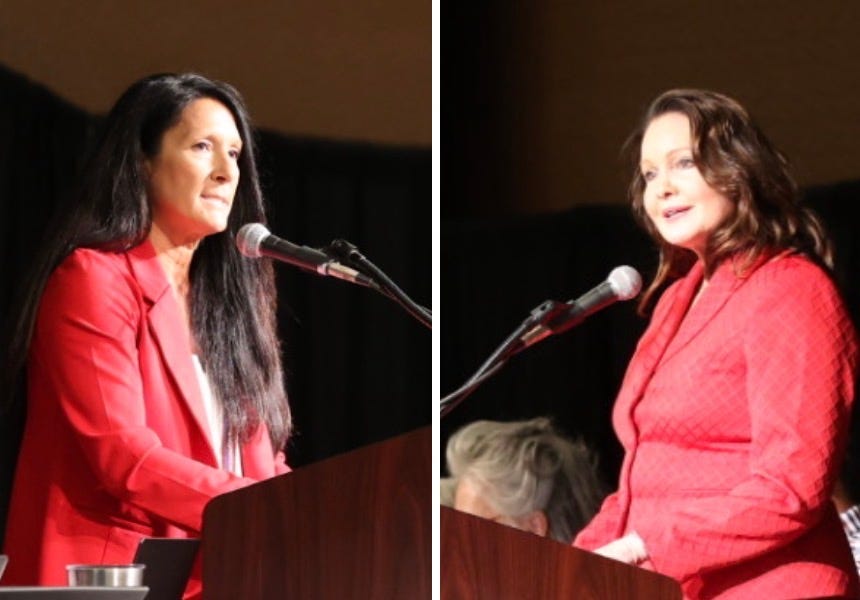
Secretary of State Monae Johnson failed to win the Republican nomination for a second term during the South Dakota Republican Party Convention Saturday in Rapid City, where GOP delegates instead favored another Pierre outsider to oversee the state’s elections for the next four years.
“When this office runs well, you don’t notice it. When it doesn’t, you feel it everywhere,” Rep. Heather Baxter told a capacity crowd of delegates and attendees at The Monument events center, where she received nearly 60 percent of votes cast by more than 700 party delegates.

Populist push falls short in South Dakota GOP contest for Public Utilities nod



-

 Crypto3 minutes ago
Elizabeth Warren Says US Enemies Exploiting Crypto To ‘Move Billions’ After Iran Reportedly Uses CoinEx T
-

 Finance6 minutes ago
Makhtar Diop, head of the IFC, the World Bank’s financial arm: ‘We want to use Madrid to channel more private investment to emerging markets’
-
Fitness11 minutes ago
Les Mills, NZ Olympian and founder of global fitness brand, dies aged 91
-

 Movie Reviews21 minutes ago
‘Balaramana Dinagalu’ review: A restrained look at the gangster mind
-
World33 minutes ago
A rights group warns Vietnam is ramping up arrests under broad laws to crush dissent
-
 Lifestyle1 hour ago
‘House of the Dragon,’ Season 3, Episode 2: Honey, I’m home!
-

 Technology1 hour ago
China’s Z.ai claims it can match Mythos on cybersecurity
-

 World1 hour ago
Shipping giant warns Strait of Hormuz chaos is ‘new normal’ as Tehran shifts 4M barrels

