South Dakota
Noem’s attempt to 'prioritize education' gets failing grade • South Dakota Searchlight


Soon Gov. Kristi Noem could be installed as the next Secretary of Homeland Security. In one of her last official acts as governor, Noem managed to instill some uncertainty in South Dakota’s public education system.
During her budget speech, Noem claimed she wanted to continue to “prioritize education.” Notice that she didn’t say “prioritize public education.” In what was likely her final budget address to the Legislature, Noem proposed an ongoing $4 million expenditure to help families pay for private school tuition and other forms of alternative instruction.
Her largesse toward families seeking to pay for a private school education came during a budget address in which she:
- Offered a paltry 1.25% funding increase for the “big three” of health care, public education and state employee salaries.
- Unveiled $71.9 million in budget reductions and discretionary changes.
- Included in the budget cuts a $2 million reduction for the Board of Regents and a $3.6 million cut for South Dakota Public Broadcasting.
Noem proposed that the state would pay about $3,000 per student annually for private school tuition or alternative instruction. Private schools, homeschoolers and other forms of alternative instruction operate under a different set of rules. It’s a veritable wild west of schools that can be unaccredited or accredited by someone other than the state. In other words, good luck figuring out how your tax dollars are being spent.
It’s probably possible to figure out how much money the state of South Dakota has invested in public education since statehood. Instead of doing the math, let’s just assume it totals in the billions of dollars. It seems at cross purposes for the state to make that kind of long-term investment in public education only to turn around and start funding its competitors.
Instead of tackling the bigger issues in public education, Noem has revved up the Legislature for a fight over an idea that’s trendy in conservative circles. It’s also an idea that the state can’t afford. Any state budget that proposes tens of millions in cuts isn’t likely to have a spare $4 million. If there is $4 million extra in the state budget, it should be funneled into teacher salaries.
Through neglect and short-sightedness lawmakers and the governor have let teachers’s salaries sink back near the bottom of the barrel nationally. Noem’s proposed 1.25% increase in education funding certainly isn’t going to do much to get South Dakota’s national teacher salary ranking out of the basement.
With its low teacher salary ranking, South Dakota’s universities find themselves training the next generation of teachers for the surrounding states that make a greater attempt to pay teachers what they are worth. When qualified teachers become harder to attract because of South Dakota’s low salaries, school districts will be forced to cut their offerings, hamstringing the very education that Noem says she has gone to such great lengths to “prioritize.”
The last time South Dakota made any progress in this area was in 2016 when Gov. Dennis Daugaard led an effort to raise the state sales tax by half a percent with some of the funds dedicated to raising teachers’ salaries. Since then, lawmakers have cut the state sales tax and mandated a $45,000 minimum salary for public school teachers without offering any extra funding to help schools reach that goal.
Given the state of the budget Noem proposed, lawmakers would do well to put their efforts into protecting public education and finding a funding source that could ensure that the state’s teacher salaries are no longer a national embarrassment.
GET THE MORNING HEADLINES.



South Dakota
USDA to offer distaster assistance to South Dakota agriculture producers impacted by winter storms

SIOUX FALLS, S.D. (Dakota News Now) – The U.S. Department of Agriculture is offering financial and technical assistance to South Dakota farmers and livestock producers who may have been impacted by the recent winter storms.
“I encourage impacted producers to contact their local USDA Service Center to report losses and learn more about program options available to assist in their recovery from crop, land, infrastructure, and livestock losses and damages.” said Richard Fordyce, Production and Conservation Under Secretary.
FSA’s Emergency Conservation Program and Emergency Forest Restoration Program can assist landowners with financial assistance to restore damaged land and conservation structures or forests.
“Our staff will work one-on-one with landowners to make assessments of the damages and develop methods that focus on effective recovery of the land.” said Jessica Michalski, Acting NRCS State Conservationist in South Dakota.
For more information about the disaster assistance program, click here.
Copyright 2026 Dakota News Now. All rights reserved.

South Dakota Gov. Larry Rhoden, left, and Lt. Gov. Tony Venhuizen unveil a plaque for retired U.S. Navy Capt. E. Royce Williams in the Hall of Honor at the Capitol in Pierre on March 25, 2026. (Photo by Meghan O’Brien/South Dakota Searchlight)
PIERRE, S.D. (South Dakota Searchlight) — There’s a new name in the South Dakota Hall of Honor at the state Capitol building.
One-hundred-year-old South Dakota native and retired U.S. Navy Capt. E. Royce Williams was celebrated at a Wednesday ceremony where a plaque honoring him was unveiled, although Williams did not attend.
“In spite of being outnumbered and facing incredible danger, Captain Williams engaged the enemy with courage and skill,” said Republican Gov. Larry Rhoden. “Our state has always had a strong tradition of service, and Captain Williams is the very best of that tradition.”
President Donald Trump awarded Williams the Medal of Honor, the country’s highest military honor, at the State of the Union address earlier this year. The medal honors actions by Williams that had been classified for decades.
“His story was secret for over 50 years, he didn’t even want to tell his wife, but the legend grew and grew,” Trump said during the speech in February. “But tonight, at 100 years old, this brave Navy captain is finally getting the recognition he deserves.”
On Nov. 18, 1952, over Korean coastal waters during the Korean War, then-Lt. Williams, from Wilmot, South Dakota, led three F9F Panthers against seven Soviet MiG-15s. He disabled three enemy jets and damaged a fourth.
The Soviet jets, according to the U.S. Naval Institute, were “superior to the F9F in almost every fashion.” The mission was the only direct overwater combat between U.S. Navy fighters and Soviet fighters during the Cold War.
Williams, one of 11 Medal of Honor recipients from South Dakota, now lives in California. The Hall of Honor at the South Dakota Capitol is located in the hallway that visitors enter immediately after going through security.

Red Flag Warnings are in effect across parts of the central High Plains and adjacent Rocky Mountain region on March 25, 2026, as meteorological conditions support critical fire weather across portions of Wyoming, Nebraska, South Dakota, and nearby areas.
The National Weather Service (NWS) offices in Cheyenne, Riverton, North Platte, Rapid City, Billings, Missoula, Grand Junction, and Hastings issued multiple coordinated warnings covering numerous fire weather zones, with the most widespread period of concern from late morning through the evening hours. In several areas of Nebraska and Wyoming, warnings extend into March 26.
Sustained west to southwest winds of 25–65 km/h (15–40 mph), with gusts reaching 65–95 km/h (40–60 mph), are forecast across much of the region. The strongest winds are expected in parts of Wyoming and Montana, including mountainous and foothill areas, where gusts may locally reach 95 km/h (60 mph).
Relative humidity values are forecast to drop to between 10–20% during peak heating, with some locations reporting minimum values near 10–12%.
Temperatures are expected to rise well above seasonal averages, with highs reaching the upper 20s to low 30s °C (upper 70s to lower 90s °F) across parts of Nebraska, Wyoming, and surrounding regions. This combination of warm temperatures and dry fuels significantly enhances the potential for ignition and rapid fire spread.
The Storm Prediction Center (SPC) identified a Critical Fire Weather area in its Day 1 Fire Weather Outlook for parts of central and eastern Wyoming into far western Nebraska and extreme southwest South Dakota, citing a strengthening surface pressure gradient and strong mid-level winds contributing to sustained surface winds of approximately 30–40 km/h (20–25 mph) and relative humidity near 15%.
The fire weather threat is forecast to shift southward in the coming days. The SPC Day 2 outlook highlights critical fire weather conditions across central New Mexico into the Texas and Oklahoma Panhandles and northwest Oklahoma, where low relative humidity and strengthening winds are expected to persist.
Additional hazards include the potential for isolated dry lightning, particularly across portions of western Nebraska and surrounding areas during the late afternoon and evening. Any lightning strikes in dry fuels may act as ignition sources, while associated outflow winds could lead to erratic fire behavior.

A cold front is forecast to move through the region late on March 25 into early March 26, bringing an abrupt wind shift from westerly to northerly directions with continued gusts of 30–70 km/h (20–45 mph). While cooler temperatures and slightly higher humidity may follow the frontal passage, the wind shift could exacerbate fire behavior in ongoing incidents.
Late March marks the beginning of the peak fire weather season across the central High Plains and adjacent regions, when dormant grasses and dry vegetation are highly receptive to ignition. Combined with frequent strong wind events and low humidity, this seasonal pattern increases the likelihood of fast-moving grassland fires.
Authorities advise against outdoor burning during the warning period, as even small ignition sources may lead to rapidly spreading fires under the prevailing conditions.
References:
1 Mar 25, 2026 Day 2 Fire Weather Outlook – NWS – March 25, 2026
2 Mar 25, 2026 Day 1 Fire Weather Outlook – NWS – March 25, 2026
3 Day 3-8 Fire Weather Outlook Issued on Mar 24, 2026 – NWS – March 24, 2026

Indiana coach Cignetti sends message to star transfer with pre-practice dress code lesson

Drone food delivery launches in New Jersey

FKA twigs sues ex-boyfriend Shia LaBeouf over ‘unlawful’ NDA
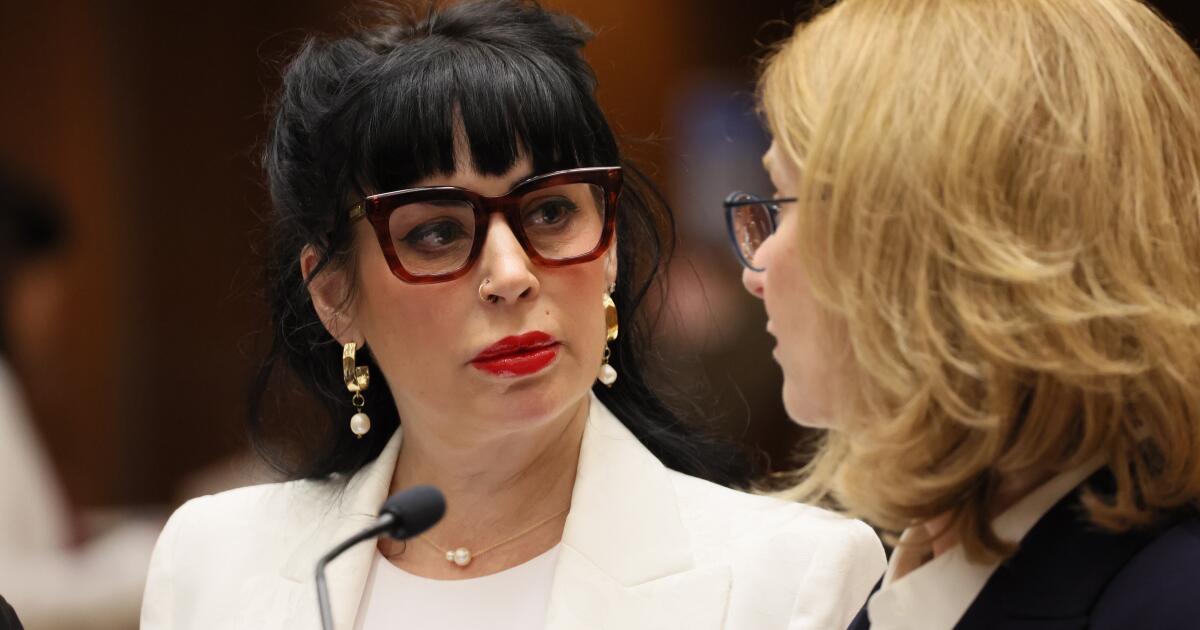
LAPD chief backed cops who shot at author, Weezer bassist’s ex; commission overruled him

What European Luxury Can Learn From American Fashion

Florida High School Football Rankings: Top 25 teams – Oct. 21

How old is Bo Nix? What to know about Oregon quarterback ahead of 2024 NFL Draft

Cleary's 21 help Le Moyne down Central Connecticut State 69-64 in OT

99th annual Pony Swim held in Virginia

Indiana Members Credit Union announced as new anchor tenant at Bottleworks District

Rubio joins crucial G7 talks as Iran war set to dominate second day

A surprise resignation could open the door for an independent to win a Montana Senate seat

Video: Savannah Guthrie Says She Believes Her Mother Was Taken for Ransom

Stefanik grills University of Michigan leader on lack of audit after string of Chinese national arrests

Photos: More than one million displaced by Israel’s evacuations in Lebanon
-

 Detroit, MI1 week ago
Drummer Brian Pastoria, longtime Detroit music advocate, dies at 68
-

 Science1 week ago
How a Melting Glacier in Antarctica Could Affect Tens of Millions Around the Globe
-

 Movie Reviews1 week ago
‘Youth’ Twitter review: Ken Karunaas impresses audiences; Suraj Venjaramoodu adds charm; music wins praise | – The Times of India
-
 Science1 week ago
I had to man up and get a mammogram
-

 Sports6 days ago
IOC addresses execution of 19-year-old Iranian wrestler Saleh Mohammadi
-

 New Mexico4 days ago
Clovis shooting leaves one dead, four injured
-

 Texas7 days ago
How to buy Houston vs. Texas A&M 2026 March Madness tickets
-

 Tennessee3 days ago
Tennessee Police Investigating Alleged Assault Involving ‘Reacher’ Star Alan Ritchson