South Dakota
From a South Dakota stage to a national platform: The winding road that got Tina Peters on the President’s radar


Mesa County’s former Clerk and Recorder has for months been a subject of national fascination, as well as a source of consternation for Colorado election officials. But it didn’t start out that way.
Tina Peters first made national headlines in the summer of 2021, when the state started looking into the tampering of the county’s voting machines. Almost immediately, the county District Attorney’s office and the FBI began an investigation into the release of information from Mesa County’s Dominion voting election system and the role Peters played in it.
At the start of the investigation, Peters was attending a cybersecurity conference headlined by Mike Lindell, the CEO of MyPillow, and a leading purveyor nationally of false claims about election security. She quickly became a cause celebre on the right in President Donald Trump’s MAGA world, when people like Steve Bannon defended her right to investigate claims of election rigging. But for four years, Trump himself remained silent on Peters, even as his allies continued to claim she was innocent.
“I’m not overly surprised that he didn’t have much to say during that time just because there was so much unknown, although that hasn’t stopped him in other ways,” said Republican Matt Crane, the executive director of the Colorado County Clerks Association, which has long pushed back against Peters’ efforts to try to prove election fraud.
Peters was indicted by a grand jury from Mesa county and a Republican district attorney prosecuted the case. A jury of her peers later found her guilty on seven counts, including four felonies.
“Ms. Peters has made this community a joke. She’s made respecting law enforcement a joke, made respecting court orders a joke. She’s not accepted any responsibility and considers this a badge of honor,” said Mesa County DA Dan Rubinstein during Peters’ sentencing hearing.
But even after her conviction and sentencing in the fall of 2024, still no word from Trump.
“I had hoped that somebody smart was in his ear telling him that all of this was a facade,” said Crane. “She found no evidence of fraud. This is not a person worth getting behind or using calories on because she didn’t find any fraud, and she was a useful idiot for grifters and bad actors.”
Meanwhile, Peters’ supporters wanted Trump to speak out and take action. Scott Bottoms, a Republican representative in the Colorado Statehouse and now candidate for governor, said a team comprised of Peters’ attorneys, members of her inner circle and people like himself staged a campaign to alert the president to her cause.
Bottoms thinks Trump didn’t initially weigh in because it was a state issue and also because he thinks the media was biased against Peters.
“The media has been very quiet or very one-sided on the issue.” He said that contributed to Trump not being directly engaged.
“I mean, how would he hear about a county clerk in Mesa County at the White House unless people had to just be beating on his door with it, and finally he opened his eyes and said, ‘Hey, this is a serious issue going on.’”
Peters’ conviction and sentence have stood out because other legal efforts related to 2020 election tampering have faltered. On Trump’s first day in office in his second term, he commuted the sentences of some of the people convicted of crimes stemming from the U.S. Capitol attack, and pardoned more than 1,200 people for crimes related to the January 6 riot.
Then, in March, the administration turned some attention to Peters. The U.S Department of Justice decided to review her case, and in May of 2025, President Trump released his first social media post calling for her release.
He referred to Peters as a hostage “being held in a Colorado prison by the Democrats, for political reasons. ” He asked the state to release her.
“FREE TINA PETERS, NOW!” Trump wrote to punctuate his message.
Trump has since ramped up efforts to secure her release, at one point telling state leaders to “rot in hell” and using Peters as a reason to punish the blue state, from efforts to cut federal funds to shutting down the National Center for Atmospheric Research and denying disaster emergency funding requests. Trump issued a symbolic federal pardon for her crimes, and Peters’ supporters are pushing for Democratic Gov. Jared Polis to commute her sentence.
Crane is urging the governor to hold firm and resist pressure from Trump and said any special treatment for Peters would invite people to do nefarious things in the name of proving fraud or “stopping the steal.”
“It shows that you can try to undermine our election community, that you can commit these types of crimes, and that there’s no significant consequence to it … It becomes open season on our elections and our election personnel that you can have somebody now and go and listen to some disinformation, not know their jobs and say, hey, ‘we’re going to go and prove this.’”
But for Peters’ supporters, like Bottoms, Trump’s involvement has been welcome news. Though Bottoms said he is discouraged that federal funding for Colorado is being taken away, he said it’s because of the “leftists and the Marxists who control our state,” and is glad Trump is stepping in.
Here is a timeline of Trump’s involvement in the Tina Peters case:
Aug. 12, 2024: A guilty verdict
After more than four hours of deliberation, a Mesa County jury finds Peters guilty on 7 charges, including four felony counts.
Oct. 3, 2024: Prison time for ‘a charlatan’
21st Judicial District Judge Matthew Barrett sentences Peters to more than 8 years in prison. At sentencing, 21st Judicial District Attorney Dan Rubinstein argued for a strict sentence given Peters’ refusal to take accountability for her actions.
“Ms. Peters has made this community a joke. She’s made respecting law enforcement a joke, made respecting court orders a joke. She’s not accepted any responsibility and considers this a badge of honor,” said Rubinstein.
Barrett lambasted Peters’ behaviour before handing down the prison time, noting that she was “as defiant a defendant as this court has ever seen.”
“You are no hero,” Barrett told Peters. “You’re a charlatan who used, and is still using, your prior position in office to peddle a snake oil that’s been proven to be junk time and time again.”
Mar. 3, 2025: Department of Justice gets involved
The federal government’s law enforcement arm wades into the Peters issue, announcing plans to review the state conviction. The Department of Justice submitted a statement of interest in district court. In it, the DOJ notes concerns about whether the case was political.
Mar. 10, 2025: Colorado GOP leader calls for federal government to hold back funds
While campaigning to lead the Colorado GOP, Darcy Schoening tells 9News the federal government should pull funding from projects in Colorado, specifically citing Peters’ sentence as rationale.
May 5, 2025: The Truth (social) comes out
President Donald Trump pours fuel onto the Peters issue with a social media post calling for her release. In it, Trump describes Peters as a political prisoner and directs the Department of Justice to “take all necessary action to help secure” her release.
Aug. 21, 2025: Trump takes aim at Colorado again, threatens harsh measures
Trump again calls for Peters’ release, this time while with a threat of consequences should she stay in prison.
Sept. 2, 2025: Space command move announced, signs of a pressure campaign begin
Trump announces he is moving Space Command to Huntsville, Alabama. The President did not mention Peters in the announcement, but Colorado Democrats called the decision “political.”
Nov. 12, 2025: Feds look to move Peters out of state custody
The Federal Bureau of Prisons sends a letter to the Colorado Department of Corrections requesting Peters’ be transferred to a federal facility. Such transfers from state to federal custody are rare and usually are reserved for cases involving long-term safety and security needs.
Colorado’s Attorney General Phil Weiser and 21st Judicial District Attorney Dan Rubinstein would later co-author a letter to the governor asking Polis to reject the request, saying it was an attempt to circumvent the prison sentence Peters received.
Dec. 8, 2025: Federal court rejects Peters’ habeas petition
A federal judge declines to consider Peters’ appeal, saying the state courts must settle the matter first. Peters’ legal team had been arguing that she should be eligible to post bond while the state appeal played out.
Dec. 11, 2025: Peters pardoned, kind of
Trump claims on social media to have pardoned Peters. The action is met with skepticism as Peters was convicted on state charges, and the presidential pardon is commonly understood to be limited to federal crimes.
Peters’ attorneys argue they have found a new read of the presidential pardon powers that could be read to apply to state charges as well.
Dec. 16, 2025: Trump administration vows to dismantle NCAR, Dems think Peters issue to blame
In another blow to federal funding in Colorado, the Trump Administration announces plans to cut funding to the National Center for Atmospheric Research in Boulder. Rep. Joe Neguse, a Democrat whose district includes Boulder, suggests it’s retaliation for Peters still being in prison.
Dec. 24, 2025: Peters’ attorneys ask appeals court to review presidential pardon
Just ahead of scheduled oral arguments, Tina Peters’ attorneys ask the Colorado Court of Appeals to consider whether they still have jurisdiction over the clerk’s case in light of Trump’s pardon.
Dec. 30, 2025: Trump vetoes Arkansas River Valley conduit
The bipartisan legislation would have helped finish a critical water project to benefit southeastern Colorado by giving local communities 100 years to pay back no-interest loans.
Dec. 31, 2025: ‘May they rot in hell’
Trump takes to social media to call Gov. Jared Polis a “scumbag” and says Rubinstein, the district attorney in Mesa County, is “disgusting.” He concludes the post: ‘May they rot in Hell. FREE TINA PETERS!”
Jan. 6, 2026: More cuts, more pressure from Trump Administration
The federal government freezes some childcare and food funding intended for Colorado.
Jan. 8, 2026: Colorado AG ratchets up legal challenge
Weiser expands the scope of a lawsuit against the federal government, arguing that the cuts to Colorado funding amounted to a pattern of unlawful behavior.
Jan. 8, 2026: Polis renews attention of his clemency powers with “harsh” comment
After publicly calling Peters’ prison sentence “harsh,” Polis kicks off a new wave of speculation that he might commute some of her sentence.
Jan 9, 2025:
Tina Peters’ attorney, Peter Ticktin, tells CPR News that her legal team has applied for clemency. The Governor’s office later told CPR that it could not confirm a request for clemency for Peters because and said under state law that clemency applications are not a public record.
Jan. 14, 2026: Peters’ case heard by Colorado appellate court
A panel of three Colorado Court of Appeals judges hears arguments as to whether Peters received a fair trial and sentence at the district court level.
Jan. 18, 2026: Peters is involved in a prison scrap
Peters is seen involved in a tussle with another inmate at the La Vista Correctional Facility in Pueblo.



SIOUX FALLS, S.D. (Dakota News Now) – One local artist is turning sneakers into support for Special Olympics athletes as they prepare to compete on a national stage.
What started as a simple idea quickly grew into something much larger for Team South Dakota. After discovering his work on social media, Special Olympics South Dakota reached out to artist Michael Middlen about designing a single custom shoe to auction off and raise funds.
“So I had stumbled upon him on Instagram and I just reached out and you know just kind of told our story of what USA games is and what it means to us and see if he wanted to partner with us to do a custom shoe and to raffle it off,” said Haley Zerr, head of sports and competition for Special Olympics South Dakota.
But after hearing more about the athletes and their journey, Middlen decided one pair wasn’t enough.
“So initially when we first started communicating, it was just going to be one pair of shoes, and then we met with him one day, and he brought it to our attention like, Hey, I would love to do a pair for everybody, so that was shocking to us but very rewarding,” Zerr said.
Instead, Middlen took on the task of hand-painting 67 custom pairs of shoes for every athlete and staff member representing South Dakota at the USA Games in Minneapolis.
“When I heard their story, it just really touched me and moved me, and I just felt that I needed to do something for them, and I just figured this would be the best way to do that,” Middlen said.
Each pair is uniquely designed, incorporating both the Special Olympics logo and the sport each athlete will compete in, adding a personal touch to every step they take.
“But I really wanted to do something to make it more personal, and I always try to do that with every custom to make it a little more personal to the individual that’s receiving them. So I thought it would be a really cool addition to add the sport logo of the sport that the athletes are competing in. So every athlete is going to get a pair in their own size, it will have the Special Olympics logo on one shoe, and then it will have the sport they are competing in on the other,” Middlen said.
Beyond design, the project carries a deeper meaning centered on unity and inclusion.
“I just wanted to really bring inclusion and help everyone, from staff to the athletes, to feel like they’re all one and just lift these athletes up and support them as they are going into the games,” Middlen said.
For many of the athletes, this is an experience they’ve never had before, making it all unforgettable.
“You know a lot of them have never received anything like this or gone to a USA Games, so it’s a big deal for all of our athletes attending,” Zerr said.
The custom shoes will also help Team South Dakota stand out as they represent their state during the opening ceremonies.
“And that was our whole thing behind this: we wanted to stand out when we go to the opening ceremonies. So just South Dakota and they all have matching shoes, custom shoes, so yeah, it’s a big deal for us,” Zerr said.
As excitement builds for the USA Games, leaders say the effort also highlights the broader need for community support.
“To be able to represent our state with the number of people we have going which is 67 to Minneapolis is a big important thing for us but the fundraising for that and raising money and awareness for getting our athletes there to compete is where we need help for the community as well,” said Nick Moen, president and CEO of Special Olympics South Dakota.
Middlen hopes the project encourages others to give back in their own way.
“I don’t think the public is completely aware of how much of a need there is to support them, and everything they rely on is donations, and you know, I think when people think of giving, they think that it’s gotta be money or whatever, but lots of times the best thing you can give is just your talent and your time,” Middlen said.
As Team South Dakota prepares to take the national stage, they’ll do so backed by more than just preparation, carrying with them a visible reminder of the support behind them.
More information on the Special Olympics of South Dakota and where to donate can be found here, and entering the custom shoe raffle drawing can be found here.
Copyright 2026 Dakota News Now. All rights reserved.


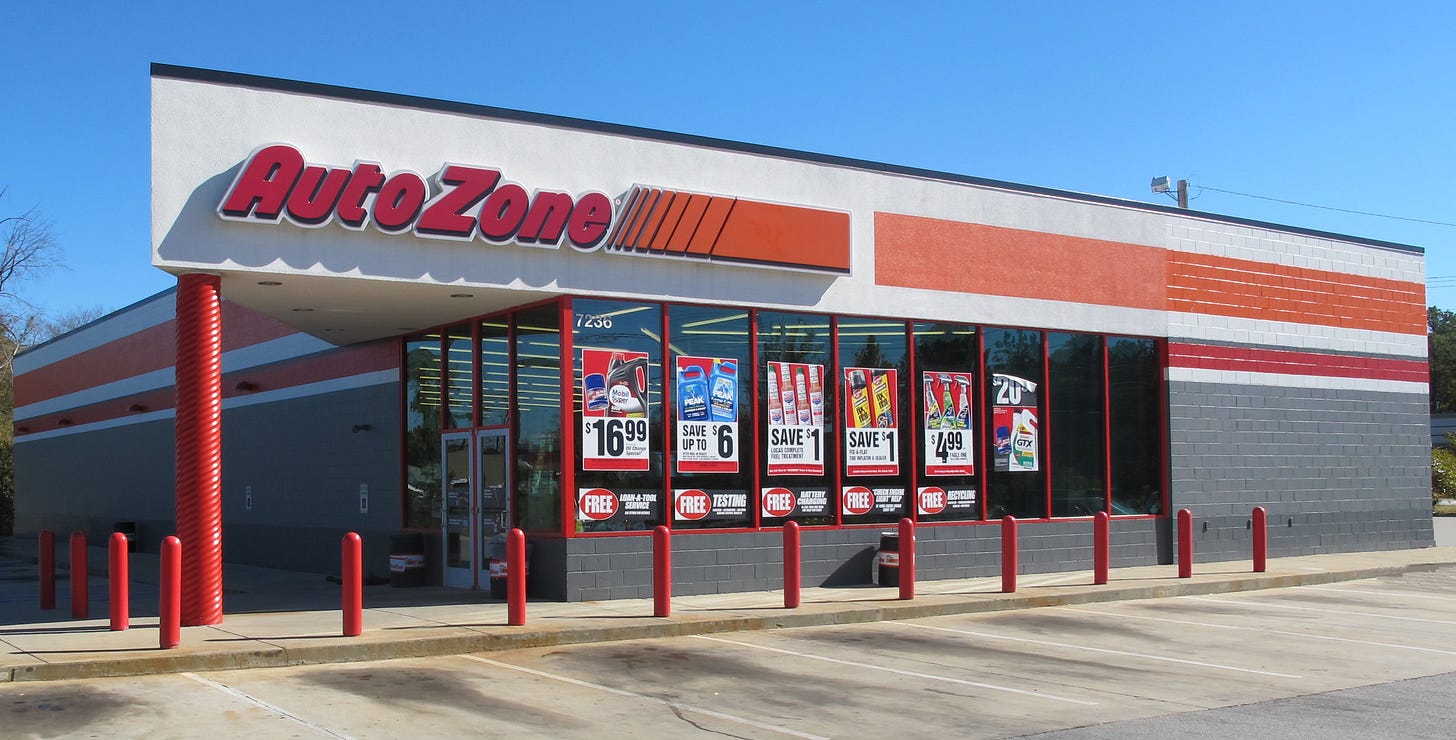
Two men who worked as managers at AutoZone stores in South Dakota have filed suit against the company, alleging the auto parts chain exploited them by not paying overtime.
Jay Grigsby was an employee of an AutoZone in Spearfish from 2021 to 2022, and Zakk Gill worked at the Rapid City AutoZone from 2013 to 2020. Both men had been plaintiffs in a class-action lawsuit brought in Montana. That suit – Richter v. AutoZoners represented plaintiffs in Montana, South Dakota, Wyoming and Idaho.
AutoZone filed a motion to have that lawsuit decertified as a class action. Last month, a judge ruled against the company, but the judge did rule he lacked jurisdiction over non-Montana residents, and the case for them was dismissed, albeit without prejudice, which allows them to refile a new case.




SIOUX FALLS, S.D. (Dakota News Now) – Spring planting season has officially begun, and Sioux Falls is taking new efforts to revitalize the city’s urban forest.
It’s all part of the new initiative through Sioux Falls and their CommuniTree program, which is going to plant roughly 150 plants a day to help protect and provide for our environment for decades to come.
This past fall, the city of Sioux Falls announced it had received a 3 million grant from the USDA Forest Service. The funds are being used to restore the city’s tree population by planting approximately 5000 trees over the course of a few years.
“If you have room to plant trees within the adjacent right-of-way and you have an approved planting permit, we will issue a $100 voucher per tree for the planting of those trees,” said Bryan Peterson, Urban Forestry Specialist. “Vouchers are only issued to approved planting locations. Vouchers are not issued to properties already enrolled in a city cost-sharing program focused on tree planting.”
Sioux Falls has lost 17,000 ash trees to the invasive emerald ash borers, and through the CommuniTree program, they hope to plant 1200 trees this spring. It’s voluntary, and residents have the option to choose from six trees.
“There’s a lot of trees and even within our park system where they get dinged with lawnmowers or string trimmers and that over time can actually kill the tree itself,” said Peterson in terms of how to take care of your trees.
Sioux Falls was selected for the grant based on the impact it would have on the city.
“We have several communities in Colorado that are currently working on them, but we also have some domestic grants that go directly through the state of South Dakota,” said Amanda Marr, who is with the USDA Forest Service. “And then South Dakota therefore passes it down through communities.”
After years of losing trees to invasive pests, Sioux Falls is turning over a new leaf. They encourage any resident to look into the program so they can help plant a tree in their own front yard and help make a difference.
Copyright 2026 Dakota News Now. All rights reserved.

Byron Allen’s “Comics Unleashed” replacing Colbert’s “Late Show”

SoMa residents file complaint with state, accusing SF of pushing unhoused resources to their area

CGY@DAL Postgame: Wyatt Johnston | Dallas Stars

Strong storm topples trees, damages homes in a Miami-Dade neighborhood, with days of cleanup ahead for residents

How RFK Jr. changed my mind about Dunkin’ – The Boston Globe

Florida High School Football Rankings: Top 25 teams – Oct. 21

How old is Bo Nix? What to know about Oregon quarterback ahead of 2024 NFL Draft

Cleary's 21 help Le Moyne down Central Connecticut State 69-64 in OT

99th annual Pony Swim held in Virginia

Indiana Members Credit Union announced as new anchor tenant at Bottleworks District

Democrat swing candidate called Biden’s border handling ‘a huge misstep’ after backing his approach as mayor

‘Policy of abuse’: Women march in Cuba against US energy blockade

Acting AG says ‘Nobody has any idea why’ Pam Bondi was fired except for Trump | CNN Politics

Ilhan Omar calls Trump an ‘unhinged lunatic,’ urges booting him out of office
Between Budapest and Brussels: Péter Magyar’s political tightrope
-

 Atlanta, GA3 days ago
1 teenage girl killed, another injured in shooting at Piedmont Park, police say
-

 South-Carolina1 week ago
South Carolina vs TCU predictions for Elite Eight game in March Madness
-

 Movie Reviews6 days ago
Vaazha 2 first half review: Hashir anchors a lively, chaos-filled teen tale
-

 Vermont1 week ago
Skier dies after fall at Sugarbush Resort
-

 Politics1 week ago
Trump’s Ballroom Design Has Barely Been Scrutinized
-

 Politics1 week ago
JD Vance says he was ‘obsessed’ with UFOs, believes aliens are actually ‘demons’
-

 Atlanta, GA1 week ago
Fetishist ‘No Kings’ protester in mask drags ‘Trump’ and ‘JD Vance’ behind her wheelchair
-
 Entertainment6 days ago
Inside Ye’s first comeback show at SoFi Stadium