South Dakota
Candidates for U.S. House pledge bipartisanship, clash on key issues • South Dakota Searchlight


SIOUX FALLS — Republican U.S. Rep. Dusty Johnson and Democratic challenger Sheryl Johnson both vowed to work across the aisle during their first and only debate on Tuesday, but revealed sharp contrasts on key issues like climate change, abortion, and gun violence.
Sheryl Johnson is the first Democratic challenger to Rep. Johnson since 2018, when the Congressman beat former judge Tim Bjorkman and a Libertarian Party candidate to secure the state’s lone U.S. House seat.
The debate at the South Dakota Public Broadcasting studio in Sioux Falls saw both candidates emphasize their commitment to pragmatism and civil discourse.
Dusty Johnson, who has held South Dakota’s sole U.S. House seat since 2018, pointed to his record of negotiating bipartisan legislation, and recognition as a problem solver by organizations like the nonpartisan Center for Effective Lawmaking.
Sheryl Johnson, a first-time congressional candidate and former Republican, framed herself as a political outsider. She touted her background as a mother of four, a public school employee and the owner of an part time, at-home business. Her campaign slogan, “SD Mom for Congress,” underscores her critique of the political establishment, which she says is out of touch with the needs of ordinary South Dakotans.
“They’re all fed up with politicians that don’t listen to them,” she said of the those she’s met on the campaign trial.
The debate also revealed the candidates’ ideological differences.
GET THE MORNING HEADLINES.
Dusty Johnson argued against sweeping mandates like the “Green New Deal.” The Green New Deal is a broad outline for revamping U.S. policy to focus on climate change by transitioning to renewable energy sources.
The Representative said Democratic climate policies have had a negative impact on the environment and national security by making the nation and its allies dependent on countries with less strict environmental regulations, like China and Russia.
Sheryl Johnson said “climate change is real,” and that she’s worried about the droughts and flooding that have increased in frequency in the Midwest as a result.
Even so, she is not comfortable with Summit’s proposed carbon capture pipeline, which she doesn’t see as a workable option to mitigate the impacts of climate change. The project aims to collect and store CO2 from 57 ethanol plants in South Dakota and other neighboring states, collecting federal clean energy tax incentives along the way.
On abortion, Dusty Johnson said the constitutional amendment South Dakota voters are considering this election cycle is not the answer because it allows no restrictions on abortion in the first trimester.
“Amendment G is extreme,” he said
Sheryl Johnson, however, described it as a reinstatement of Roe v. Wade, referencing the U.S. Supreme Court case that protecting abortion rights in 1972. The current Supreme Court overturned Roe two years ago in a case called Dobbs v. Jackson Women’s Health.
She called for the restoration of federal protections for reproductive rights, and said current laws in some states make it unclear if and when doctors can perform abortions to protect the life and safety of women.
The candidates also differed sharply on gun violence. Sheryl Johnson said she supports the Second Amendment, but said she’d like to see moderate gun safety measures like stricter background checks.
She said the U.S. is failing its children, and that it’s too easy to get a gun.
“Guns are not toys, and I think we glamorize them too much in today’s society,” she said.
Dusty Johnson emphasized the need to protect Second Amendment rights. He said the U.S. needs a comprehensive policy to address the mental health crisis he says has contributed to the epidemic of gun violence and suicides.
“President Biden signed a piece of gun control legislation,” he said. “Do any of us really think that has changed the trajectory of this violence?”
Both candidates talked about how their political experience or lack thereof would be an asset to South Dakotans. Dusty Johnson said his years in Congress have given him the skills to navigate Washington D.C.’s complexities and pass meaningful legislation. Sheryl Johnson argued that her outsider perspective makes her better equipped to address the concerns of everyday South Dakotans.
The founding fathers envisioned a citizen legislature in the U.S. House, she said, noting that she supports term limits for members of Congress.
“We need to send a fresh voice to Washington,” she said during closing remarks.
The candidates thanked one another for a cordial and respectful debate. Dusty Johnson said that in the current political climate, that kind of debate is not guaranteed.
“This could have devolved into a mess, like so many debates do, jagged insult hurling,” he said. “This could have been a Scandinavian night fight, Johnson versus Johnson, but we, I think, really gave South Dakotans the debate they deserved”
YOU MAKE OUR WORK POSSIBLE.



The South Dakota Lottery offers multiple draw games for those aiming to win big.
Here’s a look at June 29, 2026, results for each game:
Winning Powerball numbers from June 29 drawing
10-14-41-53-59, Powerball: 03, Power Play: 2
Check Powerball payouts and previous drawings here.
Winning Lotto America numbers from June 29 drawing
08-13-29-30-31, Star Ball: 04, ASB: 03
Check Lotto America payouts and previous drawings here.
Winning Millionaire for Life numbers from June 29 drawing
04-25-26-31-36, Bonus: 04
Check Millionaire for Life payouts and previous drawings here.
Feeling lucky? Explore the latest lottery news & results
Are you a winner? Here’s how to claim your prize
- Prizes of $100 or less: Can be claimed at any South Dakota Lottery retailer.
- Prizes of $101 or more: Must be claimed from the Lottery. By mail, send a claim form and a signed winning ticket to the Lottery at 711 E. Wells Avenue, Pierre, SD 57501.
- Any jackpot-winning ticket for Dakota Cash or Lotto America, top prize-winning ticket for Lucky for Life, or for the second prizes for Powerball and Mega Millions must be presented in person at a Lottery office. A jackpot-winning Powerball or Mega Millions ticket must be presented in person at the Lottery office in Pierre.
When are the South Dakota Lottery drawings held?
- Powerball: 9:59 p.m. CT on Monday, Wednesday, and Saturday.
- Mega Millions: 10 p.m. CT on Tuesday and Friday.
- Lucky for Life: 9:38 p.m. CT daily.
- Lotto America: 9:15 p.m. CT on Monday, Wednesday and Saturday.
- Dakota Cash: 9 p.m. CT on Wednesday and Saturday.
- Millionaire for Life: 10:15 p.m. CT daily.
This results page was generated automatically using information from TinBu and a template written and reviewed by a South Dakota editor. You can send feedback using this form.


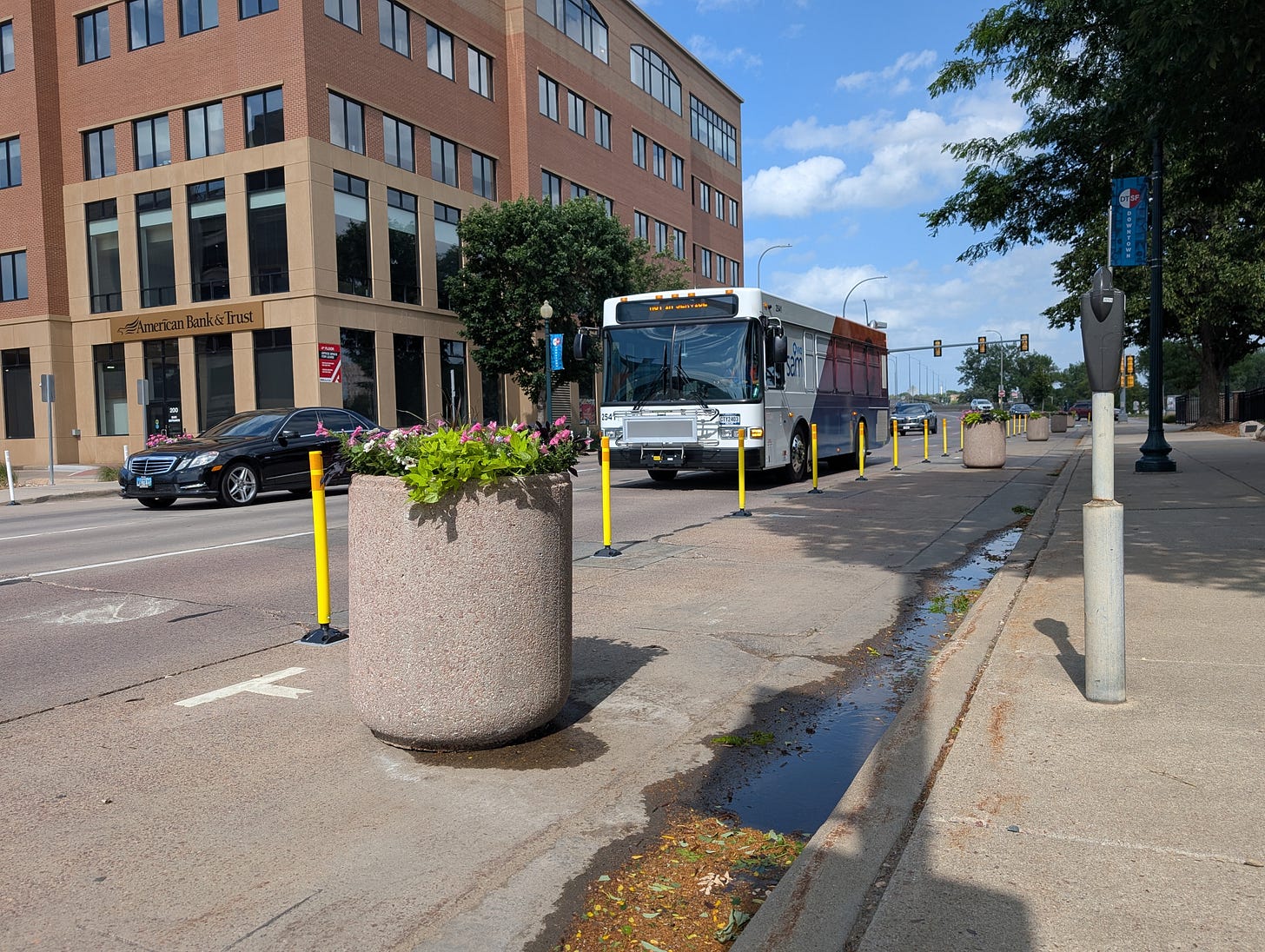
Deliberately slowed rush-hour traffic in downtown Sioux Falls is serving as a preview for commuters ahead of a major, yearslong overhaul of the city’s aging viaduct overpasses.
And Downtown Sioux Falls Inc. is using the opportunity to study traffic patterns in advance of the reconstruction of the 10th and 11th street overpasses on the east end of the core commercial district. Though the state-led project is still years away, the temporary traffic-calming measures are helping engineers gather data on vehicle speeds, volumes and behaviors.

2026 general election ballot set after referral effort falls short




Norma Lindell, 93, of Mitchell, SD, passed away Tuesday, March 31, 2026, at Avera Brady Health and Rehab in Mitchell. Visitation will be Saturday, July 18, from 1-4:00 PM at Bittner Funeral Chapel. Burial will be at St. John’s Lutheran Cemetery in Howard, SD.
NormaJean Marie (Callies) Lindell was born in Mitchell, SD, on April 18, 1932, to Peter C. and Norma A. (Killeaney) Christensen. She was the oldest daughter, along with her younger brother James N. Christensen. She lost her mother when she was eleven and helped her father raise her 2-year younger brother, Jimmy. Her grandmother also helped her dad raise her and her brother. Norma grew up in Howard, SD, and married Ira Callies. To this union were born four sons.
Norma liked working with people and eventually owned her own restaurant business in Howard. Previous to that, she worked for many years in the Black Hills area, where she managed a campground and worked at the well-known Chute Rooster in Hill City. After returning to Howard, she met and married Clyde Lindell of Milaca, Minnesota. Following his death in 1986, she moved back to South Dakota and lived in Centerville, Madison, and finally Mitchell until her death.
She was proud of her children, grandchildren, great-grandchildren, and great-great-grandchildren. She loved music and dancing. Her father taught her how to dance, and they attended many dances throughout the area.
Norma is survived by her sons: Byron (Kaelyn) Callies of Watertown, SD, Lonnie (Susan) Callies of Mitchell, SD, and Dana (Deb) Callies of South Venice, Florida, along with many generations of grandchildren.
She was preceded in death by her mother, father, brother Jimmy, and son Dale.
Celebrate a life with the whole community in The Dakota Scout. Contact obits@thedakotascout.com to have your loved one remembered today.
-

 North Carolina2 minutes ago
North Carolina budget nears completion with focus on pay raises
-

 North Dakota9 minutes ago
North Dakota water damage expert trains mold detection dog
-

 Ohio12 minutes ago
Central Ohio under extreme heat warning as heat index over 105 expected
-

 Oklahoma24 minutes ago
Oklahoma’s Kyle Dillingham, Peter Markes to perform at Great American State Fair
-

 Oregon27 minutes ago
Baker County was 1st official jurisdiction in Eastern Oregon – La Grande Observer
-

 Pennsylvania32 minutes ago
Editorial: Classrooms reflect Pennsylvania’s demographic reality
-

 Rhode Island39 minutes ago
Rhode Island wins 5 gold medals at 2026 Special Olympics
-

 South-Carolina42 minutes ago
Hricik launches no-money pledge campaign for SC attorney general

